SECTION XVII: First Fathers

The following timeline using biblical lifespans in Genesis 5 and 11 allow us to collate co-existing persons and their significant events in history.

From a biblical perspective, the historical millennia can be roughly categorized as:
  • Fourth Millennium BC (4000-3000’s BC): Adam to Noah, the natural lifespan of humans is 1,000 years, and they mingle freely with the gods on earth, Genesis 1-5
  • Third Millennium BC (2000’s BC): Noah’s first 600 years before the flood to Abram leaving Mesopotamia. Artifacts dated to this era include the highly developed pre-flood civilization brought to earth by the gods, its renaissance as best as could be recreated after the flood, as well as simultaneous rough necessities of life by refugees fleeing the tyranny of the gods. Genesis 6-12
  • Second Millenium BC (1000’s BC): Abraham in the land of his contemporaneous nephew Canaan to King David. Genesis 12-Ruth
  • First Millenium: (999-1 BC) I Samuel – Birth of Christ

Continue reading “SECTION XVII: First Fathers”

106) Sargon The Great

The name of Shem’s son Arph-axad is composed of two parts: “arpha” meaning “I shall fail” and “xad” meaning “gathering of the people”. As the name given to him by his father – not at birth – but to memorialize his notorious attributes, this is transparently a warning that his son would fail to defeat Melchizedek. We find this same warning prophecies some years later announced by Melchizedek Jacob / Israel.

“The sceptre shall not depart from [the current Melchizedekian designate] Judah, nor a lawgiver from between his feet, until Shiloh come; and unto HIM shall the gathering of the people be.” Genesis 49:10)

In flagrant defiance to his father (Luciferianism all over again!) Arphaxad dropped the “fail” part of his name and claimed HIS empire was the “gathering of the people”.

We can confidently identify Sargon of Akkad (r. 2334 – 2279 BCE) as Shem’s son Arph-axad because the similarities in Semitic languages, in conjunction with timelines and exploits, prove that “Axad” is one and the same as the founder of the city-state of Akkad and the Akkadian language.

Kin to both Hebrew and Sumerian languages, Akkadian served as the rival to YHVH’s language carried through the flood in Holy Scripture by righteous Melchizedek Noah and his successors. Given the wealth of documents unearthed by archeologists, none of which parallel the Hebrew records of Genesis, we must conclude that Hebrew is YHVH’s language for humanity.

Jews refer to Hebrew as lashon hakodesh, the sacred language (Berakhot 13a, Sotah 49b), in part because it is the language of the Jewish Bible, and also because, according to the Jewish scriptures, Hebrew played a key role in the creation of the world. In Genesis 1, God creates the world by speaking Hebrew.

This does not invalidate Josephus’ alternate interpretation of the meaning of the name Arpha-chshad as a combination of “extent, border; and כשד, Chesed / Kesed, the Hebrew word for Chaldeans (pronounced with a hard K, like “school” is also valid.

Behold the land of the Chaldeans / Kasdim, this people was not till the Assyrian / Assur, Arphaxad’s brother founded it for them that dwell in the wilderness: they set up the towers thereof, they raised up the palaces thereofBabylon, the glory of kingdoms, the beauty of the Chaldees’ excellency.” (Isaiah 23:13,19)

The earliest known mention of Babylon is as a small town, appearing on a clay tablet from 2217–2193 BC, consistent with Sargon’s early empire-building with the assistance of his architect brother Ashur. Arphaxad’s much younger cousin Nimrod seized Babel when his star ascended while aging Sargon’s fell. 

Continue reading “106) Sargon The Great”

107) Nimrod

“And Cush the son of Ham, the son of Noah, took a wife in those days in his old age, and she bare a son, and they called his name Nimrod.” (Jasher 7:23)

Staying consistent with the biblical euphemisms, “took a wife” means “become one“.  In Cush’s case and in this context, the sexual union included merging giant genes.

Like his brother Canaan, Cush had to back-breed with his mother to guaranteed match ups with the lone giant genes he had received from her. This is within feasible lifespans documented.

Being in the same generation of his cousin Arphaxad, Cush would have lived until he was about 450 years of age, so his “old age” could have been about 350 years after the Flood, at the same time that Noah died.

  • 2350 BC – the flood
  • 2050 BC – lifespans of generations born during this time had dropped to less than 200 years.
  • 2000 BCNoah dies, Nimrod is born in the same generation as cousin Salah lived ~450 years
  • 1500 BC – Nimrod dies during the Hebrews’ sojourn in Egypt.
  • 1450 BC – Hebrews Exodus from Egypt

Corresponding as Nimrod’s birthdate does with Noah’s death, it is likely that Cush waited until Noah wasn’t around to curse him as he did Canaan before he engaged in the same depraved act, and given the customs of marrying young women with longest fecund state, Noah’s wife is likely to have outlived Noah, and carrying powerful angel genes also lengthened her vitality. 

Continue reading “107) Nimrod”

108) Hammurabi

The historical Ham-mur-abi / Ham Is My Father was the First Dynasty, i.e. founder, of the Amorite city-state of Babylon – distinct from Sargon’s Akkadian city-state of the same name.

The genealogy and dates identify the historically named Hammurabi as the biblical Nimrod (grand)son of Ham. In the dynasties that followed many kings across the Near East claimed this Hammurabi / Nimrod as their ancestor. As with Arphaxad / Sargon who rejected his father Shem and his empowering God as his authority, the name “Ham Is My Father / Authority” dissociates Nimrod’s “heirs” by any genealogy from the God of Noah and connects them to the empowering Anti-Christ.

Archeologists have found a distinct although limited tradition in which Ham’s god was regarded either as 

  1. a god of equal status with the top two gods in the Sumerian pantheon
    1. Enlil / Melchizedek beginning with Adam carried through the flood in Noah
    2. and Anu / Ani YHVH,
  2. or as a king of the gods in his own right – blatantly Anti-Christ.

This was likely a process, beginning by claiming to be Noah’s rightful spiritual heir, then forced, by Shem’s opposing testimony in action, to become his rival.

In Mesopotamian art he was associated with boats, most certainly the still-famous Noah’s ark in which Ham had power of salvation from death and the end of the world.

Continue reading “108) Hammurabi”

109) Break It Up Folks!

“And the whole earth was of one language, and of one speech.” (Genesis 11:3)

Validating the biblical account, secular linguistics have determined that a single Superlanguage was spoken during the last ice age, corresponding to the glacial conditions that prevailed after Noah’s flood.

While Professor of Evolutionary Biology Mark Pagel and his team allocate 20,000 years for the separation of a Superlanguage into seven Eurasiatic language families, anthropologists validate the biblical timeline that by 2,000 BC a variety of languages were used across the entire world in a pattern consistent with a limited habitable area located centrally on the earth and surrounded by glacial conditions after the Flood.

“And it came to pass, as they journeyed from the east, that they found a plain in the land of Shinar; and they dwelt there. And they said one to another…Go to, let us build us a city and a tower, whose top may reach unto heaven; and let us make us a name, lest we be scattered abroad upon the face of the whole earth.” (Genesis 11:3-5)

Think Nazi Germany’s goal of entrenching itself in authority.

“And the LORD came down to see the city and the tower, which the children of men builded. And the LORD said, Behold,

  1. the people is one / united,
  2. and they have all one language;
  3. and this they begin to do:
  4. and now nothing will be restrained from them, which they have imagined to do…

So the LORD scattered them abroad from thence upon the face of all the earth:” (Genesis 11:5-9)

This was easily done at this stage since “all the earth” was still one mass of Pangea.

The scattering of the ancient arcane antediluvian technology into various languages spread across the world by fleeing refugees was a military countermeasure that effectively served to prevent exploitation of the masses of people by a handful of elites. Think German Jews fleeing Germany after Hitler began exploiting then exterminating them. The scattering of the inhabitants of an evil nation is not a punishment on the inhabitants, but an opportunity for them to find freedom from tyranny. 

Continue reading “109) Break It Up Folks!”

110) Divide And Scatter

From the age of ten I was forever memorialized by my sister for breaking the red mixing bowl. Based on her intense reaction, this was seemingly a situation as significant as Eber naming his son Peleg / divided, born about 100 years after the flood, for in his days / lifetime, about 250 years, the earth was divided…and his brother’s name [was] Joktan / made little.” (Genesis 10:25). Combining the names of the two brothers, the message is “the earth was divided into smaller living places for humanity”.
The existence of the original single landmass within living memory of its inhabitants is memorialized in the recorded ancient histories of the resulting dispersed nations.
The term “Middle-earth” in the Hobbits mythos by J.R.R. Tolkien comes from the Germanic source of the Old English word middan-geard / middle guard. Consistent with the biblical account, this is middle because it lays
  1. below the lands of Elves / righteous angels in heaven and the gods / fallen angels in the surrounding sea / chaos above the firmament
  2. and above the land of the Giants / demi-god] and the Dead.

The Bifrost Bridge, extended from Middle-earth to Asgard across the 1st heaven (atmosphere surrounding earth, the 2nd heaven (spiritual chaos of “outer space”), to the 3rd heaven, dwelling place of God and his righteous sons.

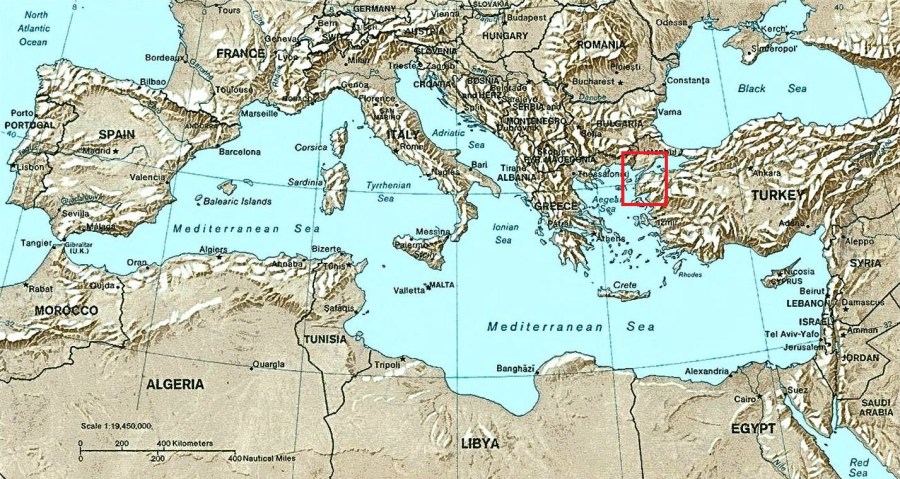
Geard / guard meaning  ‘enclosure’ is what the Greeks called the οικουμένη (oikoumenē) or “the abiding place of men”, what the Romans called the “Medi-terranean”, which remains the center of attention for both earth history and maps, and what the Hebrews called Eden / delight, the whole earth, not just the garden, since “the LORD God planted a garden eastward in Eden.”  (Genesis 2:8)

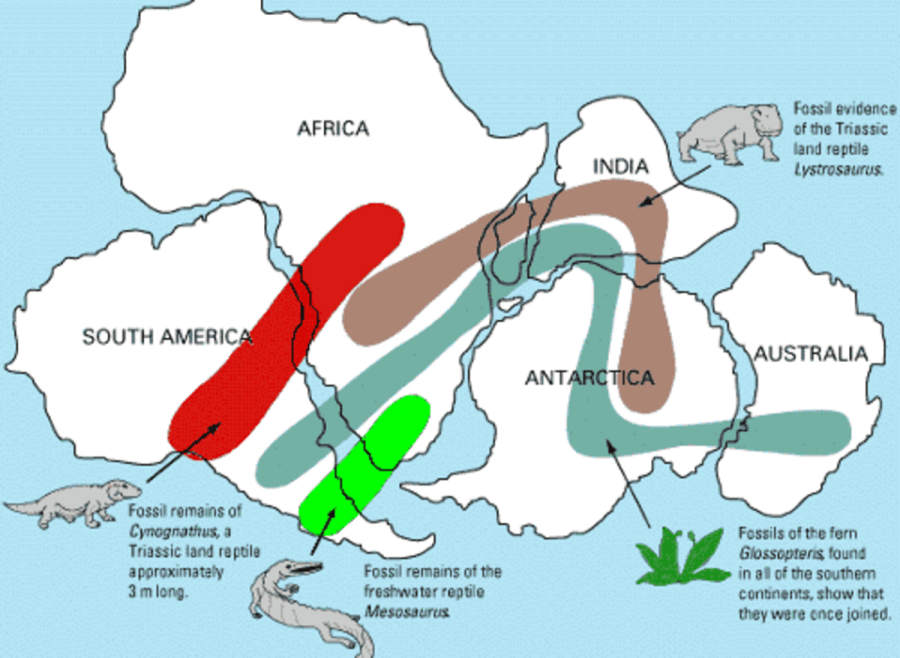
In 1912 the German geologist Alfred Wegener conceptualized Pan-gea/All-earth by recognizing that the recently unearthed fossil evidence connected the continents like puzzle pieces, imaginatively conceiving of continental drift as the mechanism for the breakup in order to support the unsubstantiated and actually disproven long earth ages theory for the evolutionary paradigm.

In 1960, scientific findings of seismic activity along the broken edges causing sudden, catastrophic and repeated volcanic shifts voided the concept of continental drift.

SECTION XVII: The Nations

The calendar in Genesis 11 allows us to date the breakup of Pangea at about 200 years after the flood. This correlates with scientific tracking of seismic activity following the initial breakup / all the fountains of the great deep broken up (Genesis 7:11, 8:2)

In seismology, an aftershock is a smaller earthquake that follows a larger earthquake, in the same area of the main shock, caused as the displaced crust adjusts to the effects of the main shock. Large earthquakes can have hundreds to thousands of instrumentally detectable aftershocks, which steadily decrease in magnitude and frequency according to a consistent pattern. In some earthquakes the main rupture happens in two or more steps, resulting in multiple main shocks. These are known as doublet earthquakes, and in general can be distinguished from aftershocks in having similar magnitudes and nearly identical seismic waveforms.

“Now these are the 1) generations / genetics / races of the sons of Noah, Shem, Ham and Japheth…2) in their nations:” (Genesis 10:1, 32)

https://en.wikipedia.org/wiki/Aftershock

There are different interpretations of what was actually divided. If we take a straightforward translation from the Hebrew we accept that the physical earth is what is reported here. Interpreting the report of this earth division as being caused by the usual aftershocks of the initial massive tectonic upheavals during the flood, as described in that post, is simply to be expected. Geological science confirms this interpretation.  

The breakup of Pangea into continents surrounded by oceans separated humanity into smaller isolates as well. Enforced inbreeding among geographically separated groups rapidly stabilized the genetic makeup of the groups, identifiable as paternal Y-chromosome and maternal mitochondrial haploid groups.

The breakup of one large landmass at this time would also certainly expedite the breakup of one empire into independent nations – 


socio-political groupings of people, not necessarily composed of people with common ancestry. One’s genetics – their family – is imposed, for better or for worse, and can’t be changed. But’s ones associates – social, political and religious identity – are valued assets often sought to improve one’s lot in life, which is why multitudes of people emigrate to another country where citizenship is a privilege bestowed on those on those deemed worthy of the benefits of belonging to that nation. 

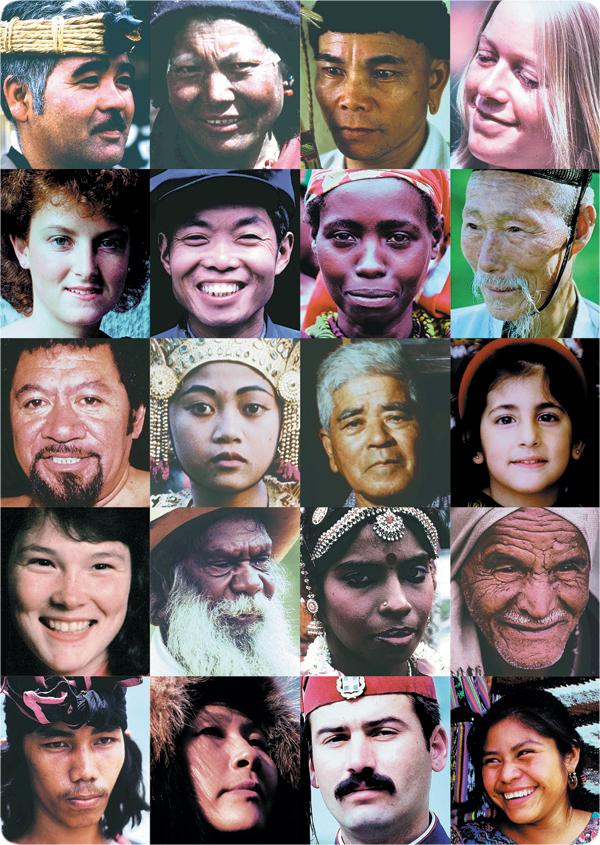
Semites is a term for racial group associated with people of the Middle East, including ArabsJewsAkkadians, and Phoenicians. First used in the 1770s by members of the Göttingen school of history, this biblical terminology for race was derived from Shem, but is now obsolete, and replaced by Mongoloid.

Hamites: now called the Negroid division of the human race, found wherever that Indian Ocean touches land, with dark-skin, strongly developed jaws, relatively long arms and kinky or frizzly hair.95b056b45a2129ff930cd0c8d6998704

Japhetites, found in ethnological and linguistic writing from the 18th to the 20th century for white people, now called the Caucasian race.

Different from race, a nation is a community of people who share the same language, history, ethnicity, i.e. culture – the knowledge, beliefs, arts, laws, customs, and habits of that defines and maintains the norms and expectations within a society.

“On the Day of Pentecost there many of these nations present: “Parthians, and Medes, and Elamites, and the dwellers in Mesopotamia, and in Judaea, and Cappadocia, in Pontus, and Asia [Minor], Phrygia, and Pamphylia, in Egypt, and in the parts of Libya about Cyrene, and strangers of Rome, Jews and proselytes.” (Acts 2:8-10)

Continue reading “SECTION XVII: The Nations”

111) The Gentiles

The flood apocalypse documented by the Hebrews as having occurred approximately 4,500 years ago has been memorialized throughout the world, with those closest to home being most familiar to Western society.

According to genetic studies, at one time in the past humanity experienced a “population bottlenecka sharp reduction in the size of a population due to environmental events such as…flood.” “[M]ost Eurasian men (living outside Africa)…can be traced back to four ancestors, consistent with the Hebrew account.

  1. Noah was…perfect in his generations [his genes had not been corrupted]. And Noah begat three sons,
    1. Shem,
    2. Ham, and
    3. Japheth.” (Genesis 6:9-10)

The Greek version of Noah is called Deucalion, matching the Greek word for 10 is deka with Noah as the 10th generation from Adam. Being in the high god’s favor, he and his wife survived the world-destroying flood in a boat, and were instructed to repopulate the earth.

Josephus reports that the “Japhethites” are the Indo-European speaking peoples, also defined as “Gentiles”.

The descendants of Japheth are grouped according to his sons.

Continue reading “111) The Gentiles”

112) Covenant vs Contract Nation

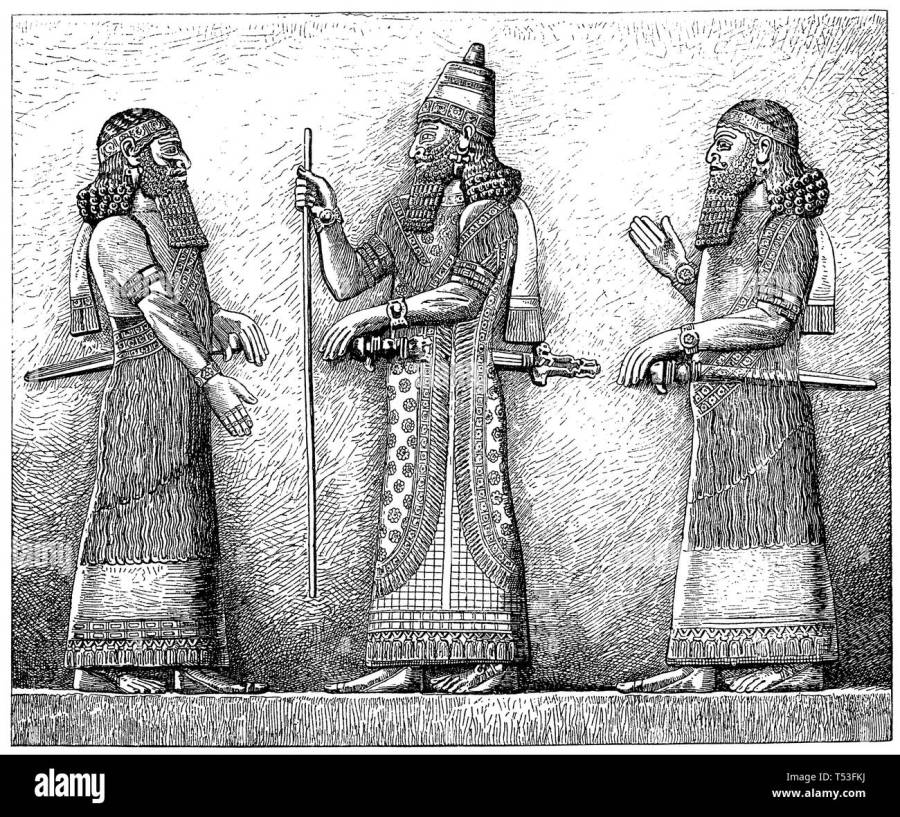
Both Hammurabi’s and Moses’ codes share the same claim to further the welfare, not just of one nation, but “for all of mankind”. The difference between the two codes – and this is huge – lies in the contractual nature of Hammurabi’s Law and the covenantal nature of the Mosaic Law. There is no consent of the governed in a contract – it is rule by a dictator by any title of king, president, etc., and human nature is such that the powerful rulers exploit the powerless masses.

The Greeks recognized this problem when they replaced their kings with new forms of government. First came Demo-cracy – People Power, as opposed to Aristo-cracy – rule by the aristocrates, or Theo-cracy – Rule by God or gods. In Athens, all male citizens were eligible to participate in the city’s governing assembly. Obviously, this only works in small city states, and most of all, worked because anyone who didn’t fit in was eliminated.

Ostracism was a democratic procedure in which any citizen could be expelled from the city-state of Athens for ten years. It was used as a way of neutralizing someone thought to be a threat to the state though in many cases popular opinion often informed the expulsion. The word “ostracism” continues to be used for various cases of social shunning.

Execution was also used to keep the status quo, Socrates being a famous example.

Socrates’ student Plato conceived of the Republic – from Latin rēs (thing) + pūblica (public); hence literally “the public thing”, i.e. rule of the people using representatives.

The Republic, one of the most important dialogues of the ancient Greek philosopher Plato, renowned for its detailed expositions of political and ethical justice and its account of the organization of the ideal state (or city-state)…what justice is and why it is in each person’s best interest to be just.

According to Plato, the ideal state comprises three social classes: rulers, guardians, and producers e.g., farmers and craftsmen. The rulers, who are philosophers, pursue the good of the entire state on the basis of their knowledge of the form of the Good and the form of the Just…Political justice, then, is the condition of a state in which each social class performs its own role properly, leaving aside the role of any other class.

Plato recognized that the individuals making up society must also be Good and Just for this system to work. Corresponding to the three social classes are the three parts of the individual soul:

  1. reason desires truth and the good of the whole individual
  2. spirit is preoccupied with honour and competitive values
  3. and appetite has the traditional low tastes for food, drink, and sex.

Justice in the individual, or ethics, is analogous to that of political justice—a state of psychic harmony in which each part of the soul performs its role properly. 

This is baseline Humanism, the belief that humans have the power to overcome the essential hormonal and neurological drives of the human body and soul, inherent to the mortality that allows growth and development as well as ultimately death.

the law is holy, and the commandment holy, and just, and good…but I am carnal [flesh, hormonal and neurotransmitter-driven]…what I would, that do I not; but what I hate, that do I. If then I do that which I would not, I consent unto the law that it is good…For to will is present with me; but how to perform that which is good I find not….O wretched man that I am! who shall deliver me from the body of this death…?

God sending his own Son in the likeness of sinful flesh, and for sin, condemned sin in the flesh: That the righteousness of the law might be fulfilled in us, who walk not after the flesh, but…[mind] the things of the Spirit [of God in us].” (Romans 7, 8:3-5)

Hammurabi’s and Moses’ codes both explicitly state that their purpose is “to bring about the rule of righteousness in the land.” Since mankind’s inherent life-sustaining nature is focused on personal growth and development, this requires a rule of law to prevent injustice.

And here is where the Mosaic Law – a covenant – absolutely did not plagiarize the Code of Hammurabi – a contract.

Hammurabi’s Laws assign socially approved / disallowed behaviors and punishments, while the Mosaic Law deals with the cause of destructive behavior, not just its effects, and prevents, not just punishes, social damage through its demands on personal and national holiness.

    Most of all, Hammurabi or the Supreme Court of the United States or any other leadership forum can’t simply arbitrarily call into existence the rightness or wrongness of actions. Just like defying laws of physics will inevitably cause destruction, so too breaking laws of human nature will inevitably lead to destruction.

    For example, Hammurabi’s code imposed a fine on anyone who caused a pregnant woman to lose her child, while the Book of the Covenant required a life for a life, not only recognizing but teaching the sanctity – and value – of life.

    “After nearly thirty years, the data suggest that abortion has been anything but good for the United States.” The economic consequences alone are that abortion (the modern clinically approved manner of child sacrifice)

    • reduced the size of the economy,
    • undercut one main cause of the American economy’s current dynamism: innovation,
    • reduced the standard of living of the average America household
    • is single-handedly responsible for anticipated imbalances in the Social Security retirement system,
    • is perhaps the single largest American economic event of the past century, more significant than the Great Depression or the Second World War.

    “the analysis warns that if it continues unchecked, legal abortion will progressively erode both America’s relative economic importance and her average absolute standard of living.”

    Another example of the impossibility of reversing a law of nature by decree is the massive numbers of innocent deaths by AIDS caused by unlimited political support of homosexuality. See relevant post for details. 

    The Melchizedekian Covenant, defined in great detail in the Mosaic Law, protects the disenfranchised members of society, regardless of their place or rank in society, while the Code of Hammurabi is interested only in the free men class and gives special protection to the middle and higher social classes of Babylon…the lower classes, the wardu (slaves) and the mushkenu (free person of low estate) have no such protection. Taking the life of your own slave was no-one’s business but your own, and taking the life of another man’s slave might only bring a fine.

    The superiority of God’s Laws is that obedience (and holiness) is the desired outcome, so that a relationship with God is made possible, but the Law of Hammurabi’s goal is for longevity of the king and prosperity for the nation’s elite class, regardless of who gets hurt.

    As much as irreligious people like to fault the laws of Moses, objectively speaking the Mosaic Covenant provides well for the quality of life of its subjects in the kingdom.

    There is a sharp contrast between contractual laws simply cursing the unrighteousness and covenant blessings giving second chances.

    The presumption here is not that loans are made to exploit commercial opportunity, but rather to avert disaster. Indeed the Mosaic law encourages such lending: “If there is a poor man among your brothers in any of the towns of the land that the LORD your God is giving you, do not be hardhearted or tightfisted toward your poor brother. Rather be openhanded and freely lend him what he needs.” (Deut. 15: 7-8, NIV)

    Compare the assurances of debt relief in the Mosaic Covenant with the Mesopotamian reactionary debt release practices during crises.

    In Hammurabi’s time…The peasantry was provided with land…tools, draught animals, livestock, and water for irrigation, so that they could grow food…they had to pay to the State as rent…When the harvest was poor, they accumulated debts. If peasants were unable to pay off their debts, they could also find themselves reduced to the condition of serfs or slaves…after 1400 BC; inequality increased and intensified. Land was taken over by big private land-owners and debt enslavement became commonplace. The ensuing centuries…have evidence of violent social struggles between creditors and debtors.”

    Contrast with the oversight and restrictions placed on leaders in God’s kingdom.

    “Now the sons of Eli [chief priest and judge over the kingdom of Israel] were sons of Belial; they knew not the LORD. And there came a man of God unto Eli and said unto him… Wherefore…  honourest thy sons above me, …thy two sons, on Hophni and Phinehas; in one day they shall die both of them.” (I Samuel 2:12-36)

    “And Samuel said to Saul, Thou hast done foolishly: thou hast not kept the commandment of the LORD thy God, which he commanded thee: for now would the Lord have established thy kingdom upon Israel for ever. But now thy kingdom shall not continue:” (I Samuel 13:13-14, Acts 13:22)

    The common feature between the two types of agreements is the eternal condition of the spiritual life of the ruler.

    • In contractual paganism, the ruler obeyed the demands of the god who experienced “life” by indwelling him – in short, demon possession – maximizing the quality of life of the god by plundering the lives of his worshippers. Can we not recognize this down through the ages by the exorbitant lifestyles of the rich and famous extracted by extortionate policies against the masses?
    • But under YHVH’s covenant, Melchizedek Adam lived on in the DNA of the Order of Melchizedek through a dynasty of heirs culminating in The Seed of the Woman who achieved eternal life through union with God for ALL kings AND subjects in his kingdom by gathering the people in, not an insurrection, but a resurrection.

    To determine the type of any nation, we only need to measure the morality of the ruler and the welfare of the people in action, not words. What is America in 2025?
    113) Covenant God vs Contract God

    As we read the following, compare Monotheism’s introduction to the Code of Hammurabi’s pagan preamble.

    Monotheism

     “I am / Ani the LORD / YHVH / Creator, and there is none else! there is no God beside me... 

    I the LORD do all these things…Woe unto him that striveth with his Maker!…Woe unto him that saith unto his father, What begettest thou? or to the woman, What hast thou brought forth?…

    • I have made the earth, and created man upon it..
    • I have raised him up in righteousness, and
    • I will direct all his ways: he shall build my city, and he shall let go my captives, not for price nor reward, saith the LORD of hosts….in chains they shall come over, and they shall fall down unto thee, they shall make supplication unto thee, saying, Surely God is in thee; and there is none else, there is no God…

    For thus saith the LORD that…formed the earth and made it; he hath established it, he created it not in vain, he formed it to be inhabited…I have not spoken in secret

    Assemble yourselves and come; draw near together, ye that are escaped of the nations: they have no knowledge that set up the wood of their graven image, and pray unto a god that cannot save….

    who hath declared this from ancient time? who hath told it from that time? have not I the LORD? and there is no God else beside ME; a just God and a Saviour; there is none beside ME.

    Look unto ME, and be ye saved, all the ends of the earth: for I am God / Power, and there is none else.” (Isaiah 45)

    Tragically, as evidenced by God’s plea, many people chose Luciferian Humanism. We can track YHVH’s rival through name changes over history by his claimed attributes of being present in the light of the sun giving life and wisdom. As there was nothing which he did not see, he was the judge of all. Hammurabi’s law code (1792-1750 BCE) based its authority on this god’s power to create – and enforce – his laws.

    We can even track this god into modern times through linguistics.

    Continue reading “113) Covenant God vs Contract God”