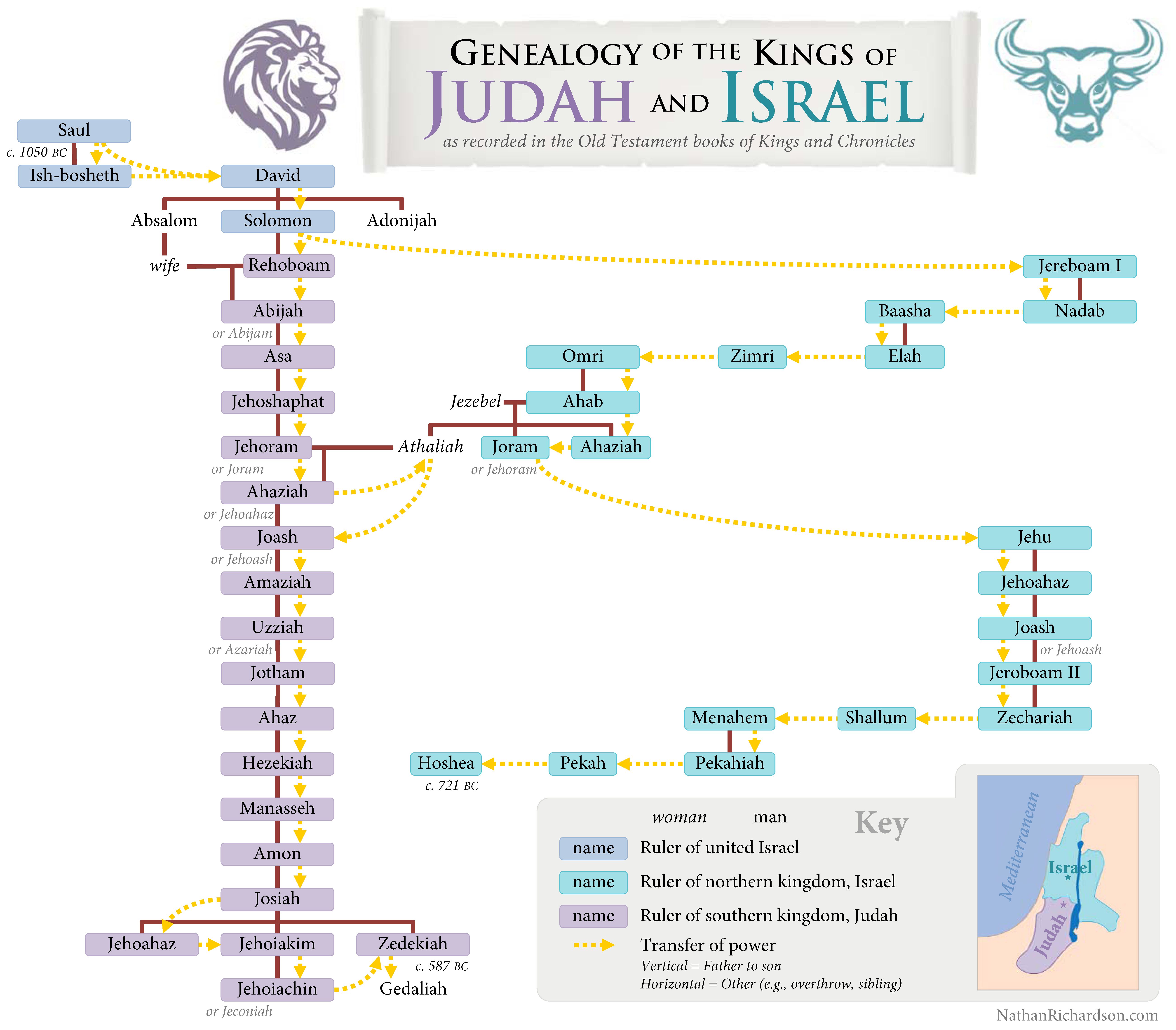
As this account progresses, it is important to maintain the timeline in the chapter numbers.
I Samuel 13:
“And the Philistines gathered themselves together to fight with Israel, thirty thousand chariots, and six thousand horsemen, and people as the sand which is on the sea shore in multitude: and they came up…then the people did hide themselves in caves, and in thickets, and in rocks, and in high places, and in pits… (I Sam 13:1-6)
Except for one intrepid teenager.
Chapter 14:
“Now it came to pass upon a day, that Jonathan the son of Saul said unto the young man that bare his armour, Come, and let us go over to the Philistines’ garrison, that is on the other side.
And between the passages, by which Jonathan sought to go over unto the Philistines’ garrison, there was a sharp rock on the one side, and a sharp rock on the other side: and the name of the one was Bozez / shining / in context of rock climbing, “smooth as ice, sheer face” and the name of the other Seneh / thorn / sharp, jagged rocks. (My son is a mountaineer and rock climber, that’s why I know this stuff.)


“And Jonathan said to the young man that bare his armour, Come, and let us go over unto the garrison of these uncircumcised / rejectors of YHVH’s covenant: it may be that the LORD will work for us: for there is no restraint to the LORD to save by many or by few. And his armourbearer said unto him, Do all that is in thine heart: turn thee; behold, I am with thee according to thy heart….And Jonathan climbed up upon his hands and upon his feet, and his armourbearer after him:
and they fell before Jonathan; and his armourbearer slew after him…and the earth quaked…
- and, behold, every man’s sword [of the Philistines’] was against his fellow,
- And Saul and all the people that were with him assembled themselves, and they came to the battle:
- the Hebrews that were with the Philistines before that time…turned to be with the Israelites that were with Saul and Jonathan.
- the men of Israel which had hid themselves in mount Ephraim, followed hard after them in the battle.
- So the LORD saved Israel that day: and the battle passed over unto Bethaven.” (I Samuel 14)
Naturally Jonathan’s fame as the champion of Israel spread throughout Israel.
Chapter 15:
“Samuel said unto Saul…thou hast rejected the word of the LORD…The LORD hath rent the kingdom of Israel from thee this day, and hath given it to a neighbour of thine / i.e. not your son.” (I Samuel 15:23-28)
Chapter 17:
“there went out a champion out of the camp of the Philistines, named Goliath, of Gath, whose height was six cubits and a span [9-10 feet]…Then said David to the Philistine, Thou comest to me with a sword, and with a spear, and with a shield: but I come to thee in the name of the Lord of hosts, the God of the armies of Israel, whom thou hast defied…So David prevailed over the Philistine with a sling and with a stone, and smote the Philistine, and slew him…And when the Philistines saw their champion was dead, they fled. And the men of Israel and of Judah arose, and shouted, and pursued the Philistines…to the gates of Ekron. (I Samuel 17:1-52)
When David returned triumphant from battle, Jonathan had a choice to make:
- compete with this most evidently exceptional rival to his popularity and heir to the throne, or
- accept YHVH’s choice of king and submit to him.
“the soul of Jonathan was knit with the soul of David, and Jonathan loved him as his own soul…Then Jonathan and David made a covenant, because he loved him as his own soul. And Jonathan stripped himself of the robe / like Joseph’s coat of many colors, insignia of royalty that was upon him, and gave it to David, and his garments, even to his sword, and to his bow, and to his girdle / belt to carry his weapons.” (I Samuel 18:1-4)
Jonathan’s behavior towards David is exactly what anyone who claims to accept the son of David as their lord and savior must do – publicly surrender to his authority, knit his soul and become one with the LORD’s anointed.
“And David sware moreover…truly as the LORD liveth, and as thy soul liveth, there is but a step between me and death. Then said Jonathan unto David, Whatsoever thy soul desireth, I will even do it for thee…Saul’s anger was kindled against Jonathan, and he said unto him…do not I know that thou hast chosen the son of Jesse to thine own confusion…For as long as the son of Jesse liveth upon the ground, thou shalt not be established, nor thy kingdom. Wherefore now send and fetch him unto me, for he shall surely die…And it came to pass in the morning, that Jonathan went out into the field at the time appointed with David…and they kissed one another, and wept one with another, until David exceeded. And Jonathan said to David, Go in peace, forasmuch as we have sworn both of us in the name of the LORD, saying, The LORD be between me and thee, and between my seed and thy seed forever. ” (I Samuel 20:3-42)
The covenant of everlasting peace between Jonathan and David is the same means by which all followers of the ultimate Chosen One / Christ are accepted into a covenantal relationship with God, whether under the old terms or the new.
“Henceforth I call you not servants; for the servant knoweth not what his lord doeth: but I have called you friends; for all things that I have heard of my Father I have made known unto you.” (John 15:15)
Righteous has always been defined, in God’s eyes, as restoring a right relationship with God. It starts by believing God but proceeds beyond that to acting in accordance with what pleases God. It’s like a marriage relationship. You can go through the ceremony and say the words “I do”, but unless you actually “do” and consummate the marriage you are not in a marriage relationship and it can be annulled.
This is what Yeshua meant when he said
“If any man come to me, and hate not [instead continue prefer and side with] his father, and mother, and wife, and children, and brethren, and sisters, yea, and his own life also, he cannot be my disciple.” (Luke 14:26)
Because his soul was knit with the Chosen One’s soul, i.e. his identity was now one with the LORD’s Anointed One, Jonathan gave up his own life in every way possible – family, social standing, even to death, to promote God’s Anointed Savior’s supreme reign.
“Now the Philistines fought against Israel: and the men of Israel fled from before the Philistines, and the Philistines followed hard upon Saul and upon his sons; and…Saul died, and his three sons, and his armourbearer, and all his men, that same day together.” (I Samuel 31:1-5)
“And David lamented with this lamentation over Saul and over Jonathan his son…
The beauty of Israel is slain upon thy high places: how are the mighty fallen!…the shield of the mighty is vilely cast away, the shield of Saul, as though he had not been anointed with oil…From the blood of the slain, from the fat of the mighty, the bow of Jonathan turned not back, and the sword of Saul returned not empty. Saul and Jonathan were lovely and pleasant in their lives, and in their death they were not divided: they were swifter than eagles, they were stronger than lions. Ye daughters of Israel, weep over Saul, who clothed you in scarlet, with other delights, who put on ornaments of gold upon your apparel. How are the mighty fallen in the midst of the battle! O Jonathan, thou wast slain in thine high places. I am distressed for thee, my brother Jonathan: very pleasant hast thou been unto me: thy love to me was wonderful, passing the love of women.” (II Samuel 1)
The magnificent historically based series A Song Of Fire And Ice provides the best extra-biblical example I know of what it means to be the Friend of God, where the role is called, quite logically, the “Hand of the King.”
The Hand of the King…is the most powerful appointed position in the Six Kingdoms, second only to the monarch in authority and responsibility. The Hand is the monarch’s closest advisor, appointed and authorized to make decisions in their name. The Hand is the highest-ranking member of the small council, and leads meetings of the council as proxy for the monarch when they are absent…During the reign of strong and able monarchs, the Hand is the chief agent for coordinating and carrying out their plans.
I can’t help imagining Yeshua’s eyes rolling as James’ and John’s mother ask him to delegate the highest governmental authority to her sons.
Seriously?
After what Jonathan did to prove his worth?