130) Melchizedeks Rescue From Sin And Death: Moses

        “And the king of Egypt spake to the Hebrew midwives…When ye do the office of a midwife to the Hebrew women, and see them upon the stools; if it be a son, then ye shall kill him: but if it be a daughter, then she shall live…And Pharaoh charged all his people [including his enslaved Hebrews], saying, Every son that is born ye shall cast into the river.” (Exodus 1)

        Infanticide has been the norm within many cultures throughout history.

        What Pharaoh didn’t know was just how much faith-based fight some of these Hebes had in them.

        “And there went a man of the house of Levi, and took to wife a daughter of Levi. And the woman conceived, and bare a son…And when she could not longer hide him, she took for him an ark of bulrushes…put the child therein; and she laid it in the flags by the river’s brink.

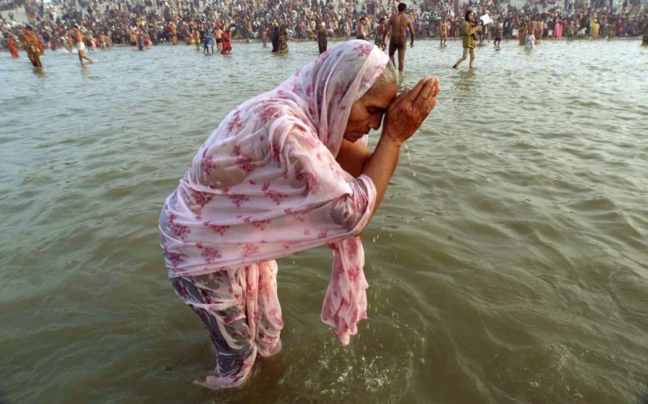
        4207365_a_hindu_woman_bathes_in_the_ganges_river_on_the_first_day_of_the_kumbh_mela_festival_in_alla-xlarge_trans_nvbqzqnjv4bqmuac98d-ja8s9oi1lbgosvxf650nygcxiusn5qkxotq

        “And the daughter of Pharaoh came down to wash herself at the river [doubtless during a religious festival such as is common in India] ...she saw the ark among the flags…when she had opened it, she saw the child: and, behold, the babe wept. And she had compassion on him, and said, This is one of the Hebrews’ children…and he became her son.

        And she called his name Moses…Because I drew him out of the water.” (Exodus 2:10)

        Let’s not be idiots and think this characterization memorializes a physical action. As a psychiatric provider my job is to identify the unseen psychological drives behind the seen actions. 

        The daughter of Pharaoh is publicly broadcasting her defiance of Pharoah’s order to “cast into” by “Drawn Out!”

        We’re not told if Pharaoh’s daughter was motivated by allegiance to the previous monotheism the current regime was overthrowing. It’s very likely that she was drawn to identify with the Hebrews because she, too, was abused by the royal family in some way. Not only is domestic violence a woman’s greatest risk for harm and death, she could have been barren from the consequences of all the diseases of **warning! ancient pornography!** hyper sexualized Egypt’s sexually transmitted diseases. Perhaps she was unmarriageable so childless in a society where “marriage was deeply involved in the exercise and manipulation of political power, in the creation and distribution of prestige.”

        We can certainly draw the conclusion that after she acted independently of her society’s rules she was “despised and rejected of men”. (Isaiah 53:3)

        Can we not recognize / know / honor this Egyptian woman for her contribution in Moses’ development into the greatest biblical leader the world has ever known, acknowledged even by humanists?

        Whoa! Wait! What about Jesus Christ?

        Straight up – without Moses Jesus Christ has no standing.

        “The LORD thy God will raise up unto thee a Prophet from the midst of thee, of thy brethren, like unto me [Moses]” (Deuteronomy 18:15)

        What is so Christ-like / prototypically Melchizedekian about Moses?

        Continue reading “130) Melchizedeks Rescue From Sin And Death: Moses”

        131) Melchizedeks Give Their Lives For Sinners: Moses

        “And YHVH said unto Moses, Come up unto the LORD…Moses alone shall come near the LORD [just like an attorney is the only one who confers with the judge]…And Moses was in the mount forty days and forty nights.” 

        And when the people saw that Moses delayed to come down out of the mount, the people gathered themselves together unto Aaron, and said unto him, Up, make us gods, which shall go before us; for as for this Moses, the man that brought us up out of the land of Egypt, we wot not what is become of him.”

        Continue reading “131) Melchizedeks Give Their Lives For Sinners: Moses”

        132) Melchizedeks Declared Identical To God: Moses

        Like almost all the men in the Order of Melchizedek, Moses is never explicitly called Melchizedek, but he doesn’t need to be. His function as Sacred King / Priest King leader of the Hebrew nation representing God to the whole world defines his position in this order.

        There are just too many verses using different words to express various aspects of Melchizedek of the Most High God’s salvation through identification with his Righteousness and Reconciliation that they can’t all be quoted here. Or to convince anyone who is not ready to accept a new idea. It’s like the classic story of three blind men only being able to lay hold of one part of an immense elephant and arguing amongst themselves that the others got the elephant’s features wrong. You’ve got to spend time exploring the entirety of the identity.

        Moses is explicitly called the LORD’s priest.

        “The LORD reigneth…let the earth be moved…Moses…among his priests…” (Psalm 99:1-6)

        Moses was Melchizedek Priest-King over the Hebrew nation. The passages in the New Testament letter to the Hebrews apply as much to Moses as it does to Jesus Christ of Nazareth. Moses functioned as Priest-King before the Levitical priesthood was set up for the nation of Israel.

        the LORD…said…thou shalt be to [Aaron] instead / Representative / of God.(Exodus 4:14-16)

        And Moses brought Aaron and his sons, and washed them with water. And he put upon him / Aaron the coat, and girded him with the girdle, and clothed him with the robe, and put the ephod upon him, and he girded him with the curious girdle of the ephod, and bound it unto him therewith. And he put the breastplate upon him: also he put in the breastplate the Urim and the Thummim. And he put the mitre upon his head; also upon the mitre, even upon his forefront, did he put the golden plate, the holy crown; as the LORD commanded Moses. 

        And Moses took the anointing oil, and anointed the tabernacle and all that was therein, and sanctified them. And he sprinkled thereof upon the altar seven times, and anointed the altar and all his vessels, both the laver and his foot, to sanctify them. And he poured of the anointing oil upon Aaron’s head, and anointed him, to sanctify him.” (Leviticus 8:6-12)

        Moses is also explicitly stated to be the king, which is, after all, a given, in an era and culture when all lawgivers, AKA rule-rs, were autocratic kings.

        Moses commanded us a law, even the inheritance of the congregation of Jacob. And he was king in Jeshurun, when the heads of the people and the tribes of Israel were gathered together…

        Continue reading “132) Melchizedeks Declared Identical To God: Moses”

        133) How To Be A Mensch Like Moses

        Mensch (Yiddishמענטשmentsh, from Middle High German Mensch, from Old High German mennisco; akin to Old English human beingman) means “a person of integrity and honor”,[1]  a decent human being…a caring, ethical human being. The term is used as a high compliment, implying the rarity and value of that individual’s qualities.

        It seems to me that the Yiddish word mensch, intentionally or not, blends the Old English “man” with the Hebrew word for man “ish”, identifying not maleness but “another one like him”, describing a human who is one with the Father.

        God created humans to be partners in the completion of the world. Who better than human, who are of this world and yet created in God’s likeness, to finish the work of creation?

        • “if ye will obey my voice indeed, and keep my covenant,
          • then…ye shall be unto me a kingdom of priests, and an holy nation.” (Exodus 19:5-6)
        • “Unto him that loved us, and washed us from our sins in his own blood,
          • And hath made us kings and priests unto God and his Father” (Revelation 1:5-7)

        Are these two entirely separate means of achieving the same goal?

        Or has Christianity skipped over the first pages in the instruction manual on how to be kings and priests to God the Father / Absolute Authority under the Great High Priest?

        Most of us are familiar with the Lord’s Prayer, AKA The Our Father, but are we as familiar with the introduction, which lists the qualifications for calling the Lord God our Father?

        Continue reading “133) How To Be A Mensch Like Moses”
        SECTION XXV: The Hebrew Priests Given An Offer They Can Refuse

        “And Moses went up unto God, and the LORD called unto him out of the mountain, saying, Thus shalt thou say

        1. to the house[hold] of Jacob,
        2. AND tell [a separate entity] the children of Israel,

        “Ye have seen what I did unto the Egyptians, and how I bare you on eagle’s wings, and brought you unto myself (Exodus 19:3-4)

        It is vitally important that we ascertain understanding of an ancient cultural practice that is taken for granted in this passage. “House” in this context includes both concrete meaning of a building for safety from the environment, and abstract meaning of all the people who were under the head man’s authority / protection.

        Continue reading “SECTION XXV: The Hebrew Priests Given An Offer They Can Refuse”

        134) The Nation Of Israel Agrees To Lead The Hebrew Commonwealth

        I think Sunday School is one of the worst experiences we give our children. The dumbed down and sanitized “stories” become permanently infantilized and lose their impact when the kids grow up into adults.

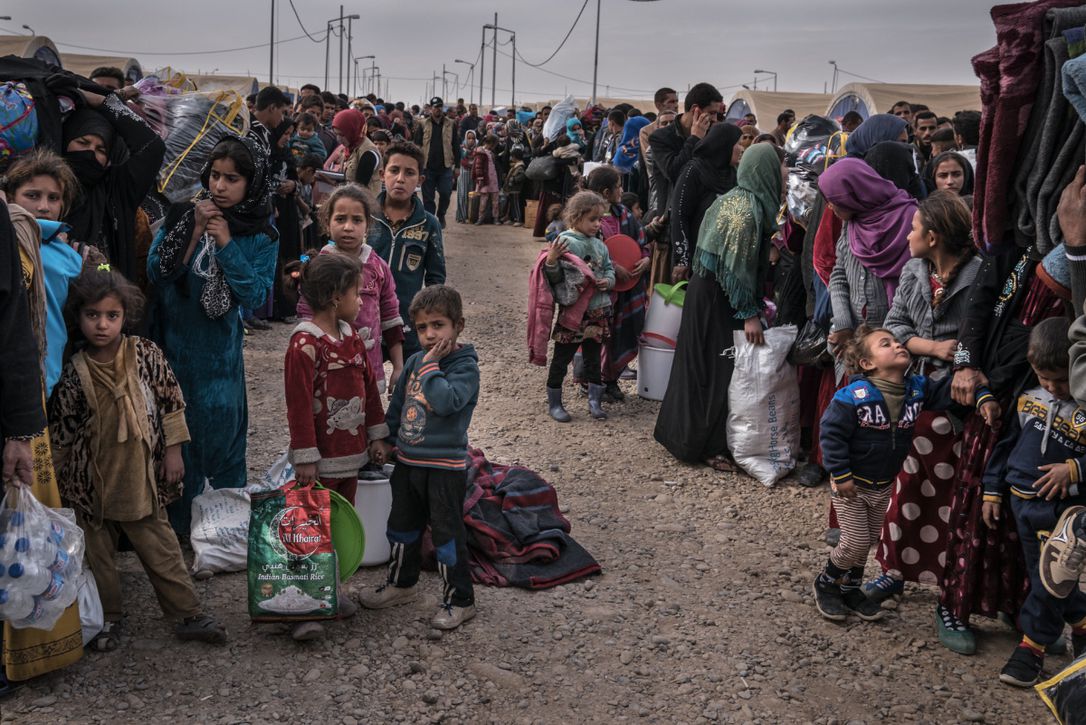
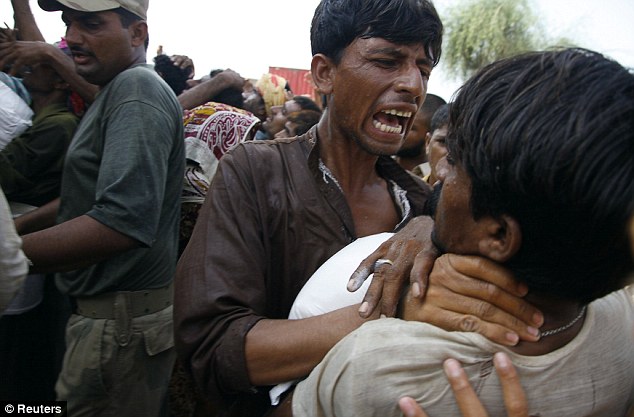
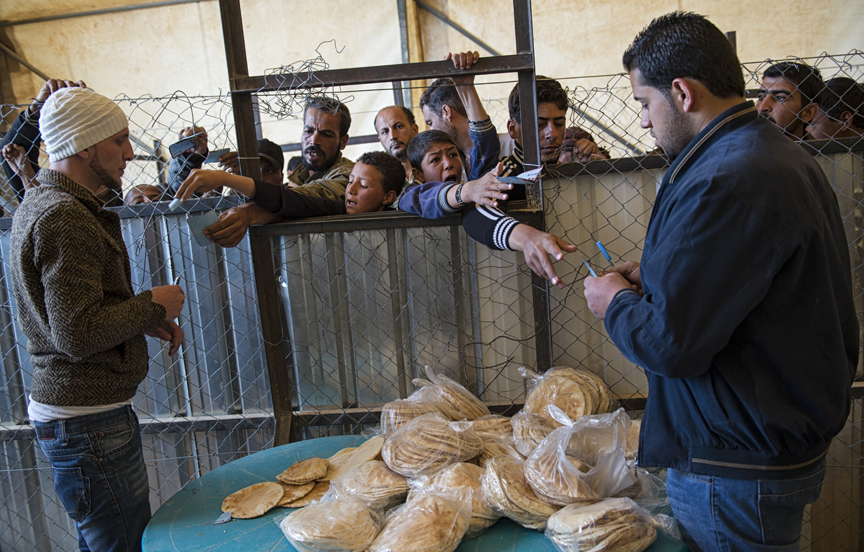
        What images come to your mind when you think of Moses leading 9 million refugees into the wilderness?

        iraq-refugees

        article-1305009-0ade0ae4000005dc-56_634x417Syrian refugees;syrians;jordan

        As of 2015, it was estimated that over 21 million people in the world were living in refugee situationsa majority are hosted in third world or developing countries, presenting…challenges such as terrorism and insecurity, nationalism, xenophobia and intolerance…the issue of protection of refugees, in the background of continued conflict remains a cause for concern in many countries…

        Most refugee camps do not have sufficient food to provide to their populations…caloric intake is further reduced as refugees tend to sell food rations for other non-food goods. Moreover…lack of food variety, fruits, and vegetables causes many refugees to suffer from deficiencies in essential vitamins and minerals, which can lead to a variety of diseases…

        more than half of the refugee camps in the world are unable to provide the recommended daily water minimum of 20 liters of water per person per day…with the presence of diseases such as diarrhea and cholera…

        The provision of adequate sanitation services is crucial to prevent communicable diseases and epidemics…still 30% of refugee camps do not have adequate waste disposal services or latrines…

        Malaria is infecting 200 million every year…increased presence of rodents, which causes an increased incidence of Lassa fever in West African countries.

        Continue reading “134) The Nation Of Israel Agrees To Lead The Hebrew Commonwealth”

        135) The Levites Turn A Curse Into A Blessing

        “And the LORD said unto Moses, Go, get thee down; for thy people, which thou broughtest out of the land of Egypt, have corrupted themselves / joined themselves with hyperdimensionals; They have turned aside quickly out of the way which I commanded them: they have made them a molten calf, and have worshipped it, and have sacrificed thereunto, and said, These be thy gods, O Israel, which have brought thee up out of the land of Egypt… 

        Put some life into God’s verbatim report! He is outraged and spitting it out! You can best believe Moses was mirroring God’s response when he stormed down the mountain.

        And Moses turned, and went down from the mount, And it came to pass, as soon as he came nigh unto the camp, that he saw the calf, and the dancing…Moses’ anger waxed hot, and he cast the tables out of his hands, and brake them beneath the mount. 

        Basically, Moses destroyed the covenant between these people and YHVH before they were completely wiped out under the terms of the covenant.

        Continue reading “135) The Levites Turn A Curse Into A Blessing”

        136) Who On Earth Is Jes(h)urun?

        SECTION XXVI: Melchizedek Is A Man Of War

        Knowing the parts of a story are essential for getting your story straight.

        1. Characters What do your characters want? 
          • In Netflix’s Apex, the main female character Sasha proves she is invincible by constantly courting death in extreme sports.
          • The lead male character is obsessed with taking revenge on his cruel mother.
        2. Setting – when and where your story takes place.
          • Exceptional mountainous and wilderness landscapes pulling the viewer into a personal adventure experience.
        3. Plot – the actual story–what happens, when, how, why, and what’s the result?
          • The two main characters meet their match, and are forced to confront how their internal drives are destroying themselves.
        4. Conflict – For a story to be interesting, there needs to be conflict.
          • The essential life-or-death battle between a well-matched pair, suspense raising the viewer’s own emotions.
        5. Resolution – By the end of your story, all of your conflicts should have a resolution.
          • Applause, applause for the victor, but more essentially, for that person’s recognition of personal flaws, demonstrated by a change in behavior focused on helping, not expressing superiority over, other people.
        6. Theme – your story’s main takeaway. answers the question: What’s the point? What have your characters learned? How are they changed, and what will they affect now that they are different?
          • The two main characters are forced into awareness, and a rethink, of the self-obsessed motivations ruling, and ruining, their lives.

        Some examples of themes include:

        • Forgiveness–trying to achieve it, avoiding it, accepting it
        • Death–overcoming it, processing it, fearing it
        • Empowerment
        • Injustice
        • Good versus bad

        These themes are exactly the themes in the Bible, which is why so much literature pulls from, or plays, on quotes from the Bible.

        As detailed in Genesis 1, the plot of of the Bible is mankind taking dominion over creation, resulting in war between the Seed of the Woman and his hosts and the Seed of the Serpent and his hosts.

        The re-establishment of humanity’s dominion over the earth is not a smooth transition of power that just happens by asking God to do it for us. It is an ongoing battle in which God’s people are expected to fight for what belongs to us, while acknowledging our unity with him.

        Continue reading “SECTION XXVI: Melchizedek Is A Man Of War”