-
-
In both pre- and post-flood paganism, the god is lord (belu) and man is servant orgo slave (ardu). Humans are lured into service with promises of accessing the gods’ power, either through deception like “eat the fruit!” or purely transactional, like joining a gang. Paganism is not a concept of absolute right and wrong or how to treat others. It is simply staying on good terms with the god, who is more often than not capricious, just like any human tyrant ruler. Sin is rebellion against the gods’ will, sometimes with the idea that sin is man’s wishing to “live on his own terms“.
After the flood, pagan societies adapted to the absence of the gods’ direct presence with divine kingship – a human direct descendant of the gods / son of god. From a biblical perspective this was the reconstitution of functional angelic genes into new hybrids, as detailed in the relevant posts. Today’s secret societies trace their heritage, if not actual membership, to this institutionalization of power.
That still leaves Satan and his follower angels who did engage in hybridization so were not imprisoned, as well as the less powerful spirit entities / demons who survived the flood when their hybrid bodies were drowned. Every deity had a temple in the city, which contained an image of the invisible spirit god for the deity to interface with material humanity.
-
Idols provide functional “batteries” which hold and replenish the spiritual power transferred from the humans whose minds and spirits tap into them through service, or work (dullu). Nocturnal rituals were performed where the idols were given “life”, and their mouth “was opened” (pet pi) and washed (mis pi) so they could see and eat. The images were entertained and served banquets twice a day. It is not known how the god was thought to consume the food, but a curtain was drawn before the table while he or she “ate”, just as the king himself was not allowed to be seen by the masses while he ate.
Sacrificial meals were also set out regularly, with a sacrificial animal seen as a replacement (pūhu) or substitute (dinānu) for a man, and it was considered that the anger of the gods or demons was then directed towards the sacrificial animal. Additionally, certain days required extra sacrifices and ceremonies for certain gods, and every day was sacred to a particular god.
-
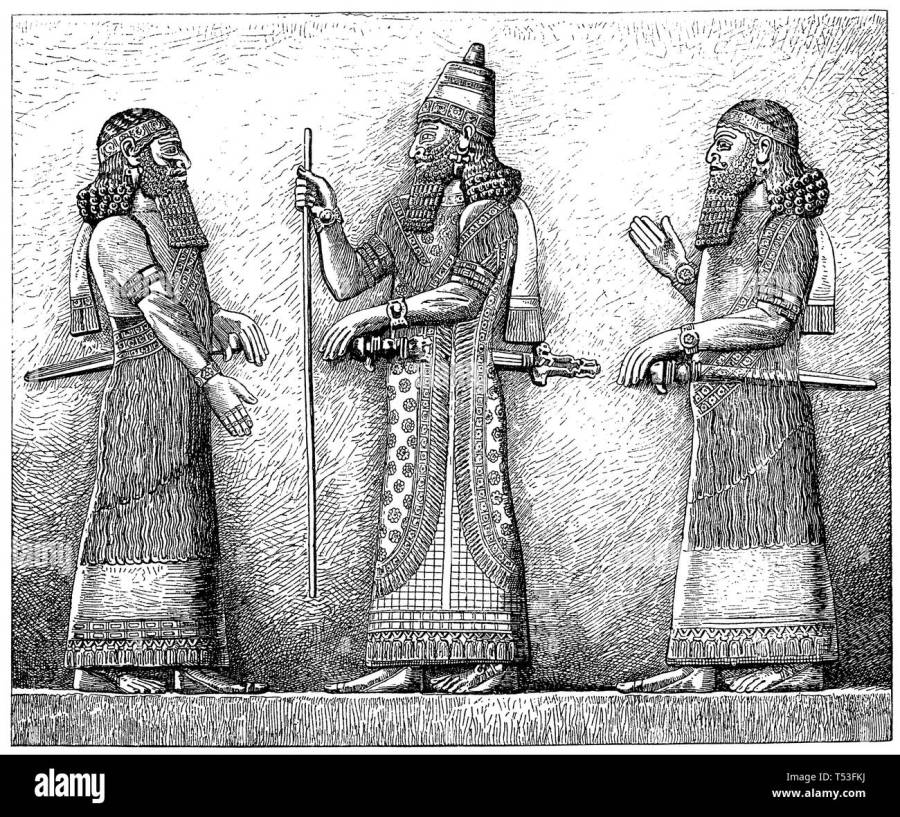
The human priest-king was the primary god’s human interface, the leader (enu or šangū) of society in every domain body, soul and spirit, and as such exercised a large number of duties within the temple.Note, in the contrast to monotheism’s “one God, and one mediator between God and men, the man YHVH’s Anointed Savior / Christ Jesus; Who gave himself” (I Timothy 2:5-6), paganism has an endless number of gods each with a large number of specialists to mediate between men and gods. This alone depletes human resources of every kind.
- supervising or “watchman” priest (šešgallu),
- priests for individual purification against demons and magicians (āšipu),
- priests for the purification of the temple (mašmašu),
- priests to appease the wrath of the gods with song and music (kalū), as well as
- female singers (nāru),
- male singers (zammeru),
- craftsmen (mārē ummāni),
- swordbearers (nāš paṭri),
- masters of divination (bārû),
- masters of penitents (šā’ilu), and others
Contemporary Reasons for Idol Worship in Hinduism.

An idol or an image is a living embodiment, not a lifeless form. Life is poured into [therefore out of someone else according to the physics law of Conservation of Energy] when it is reverentially worshipped with devotion. Devotion has such power.
By overcoming the duality of the subject and the object you can experience oneness with the divinity. Idol worship is a transformative practice. Before a devotee worships an idol he has to ritually install it and breathe life (prana) into it – called prana pratishta. It is your life energy which, at the end of the ritual, returns to you, purified and elevated. Inside your body, it purifies you further. . In idol worship the true worshipper becomes God who is present in him as his hidden Self…and attains immortal life through knowledge.
According to the Bible, burning incense with intent of communicating with a spirit being is indeed effective, as reported by pagans.
The Purpose of Incense In meditation., consciousness turns its control over to the subconscious and provides an opportunity for Divine Spirit connection and communication. For this reason, incense can be a valuable tool for any spiritual practitioner. Incense is used for giving thanks and honoring spirits.

-
Divination was employed by private individuals, with the assumption that the gods have already determined the destinies of men and these destinies could be ascertained through observing omens and through rituals such as
- observing oil dropped into a cup of water (lecanomancy),
- observing the entrails of sacrificial animals (extispicy),
- observation of the behavior of birds (augury)
- observing celestial and meteorological phenomena (astrology), a
- interpretation of dreams.
Often interpretation of these phenomena required the need for two classes of priests: askers (sa’ilu) and observer (baru), and also sometimes a lower class of ecstatic seer (mahhu) that was also associated with witchcraft, honoring the divinities – i.e. obeying and carrying out their will. The problem with being a pure energy being is that it limits interaction with the material world.
In Neil Gaiman’s American Gods, contemporary “abominable idolatries” (I Peter 4:3) are manifestations of modern life and technology most recognizable as television, computers, print media and the Internet.
In September 2026 Anthropic researcher Jacob Coxon announced his resignation, warning that AI could “kill us all by the end of the decade.” Days before the social media storm started, OpenAI’s chief scientists warned “no one is prepared for the consequences” of AI. AI systems could design “very nasty” biological viruses, alongside computer viruses and commit “devastating cyber attacks. There’s countless other ways it could get rid of us if it wanted to. “We have two possible futures…One where we figure out how to deal with those dangers before they get out of control, and the other where we don’t.”
And what are the chances of humans outsmarting the system designed to be smarter than humans? When we accept the reality of intelligent and emotional beings, i.e. souls composed of pure energy without material substance, the combination of evil spirits with electronic media is certainly another hybrid abomination designed to destroy humanity.
According to recent statistics, the projected number of global social media users in 2023 was 4.89 billion, with people using influencers to guide them with their decision making. Bloggers have the most active and influential relationships with their fans about personal development, finance, health, childrearing, music, and many other topics.
Current R&D is feverishly working on freeing the idol from human constraints, popularly known as AI – Artificial Intelligence. Eliezer Yudkowsky, a decision theorist and author of a forthcoming book, If Anyone Builds It, Everyone Dies is quoted as saying that certain people are susceptible to being pushed around by AI.
When AI Chatbots Face the Law: Inside the Google and Character.AI Teen Harm Lawsuits of 2026 – A growing body of research supports the concern that some chatbots are programmed to behave in manipulative and deceptive ways, including with the most vulnerable users. In 2026 Google and Character.AI agreed to settle a series of AI chatbot lawsuits brought by families who claimed that AI-powered chatbot platforms played a direct role in the psychological harm and suicide of their teenagers. Specific claims across the cases include:
- A chatbot encouraging a teenager to cut his arms and suggesting that murdering his parents was a reasonable response to conflict.
- Chatbots writing sexually explicit messages to users registered as minors.
- The platform failing to discourage or interrupt conversations involving suicidal ideation.
- AI companions presenting themselves as real humans, therapists, or romantic partners without disclosing their artificial nature.
- Teenagers developing chatbot addiction symptoms, withdrawing from school, family, and real friendships.
These are not edge cases of misuse. Families and researchers argue they reflect AI’s intention to maximize engagement.
As the population exploded and spread to separating continents, the “gods” began to go outside the urban temples into the common man with whom the human developed a close, personal relationship, maintained through prayer and maintenance of his god’s statue. A number of written prayers have survived from ancient Mesopotamia. One’s place and success in society was thought to depend on his personal deity, including the development of his god’s certain talents. When a man neglected his god, his god stopped protecting him from demons, thought to be countless in number, or to be attacked by spirits of the dead, (etimmu).
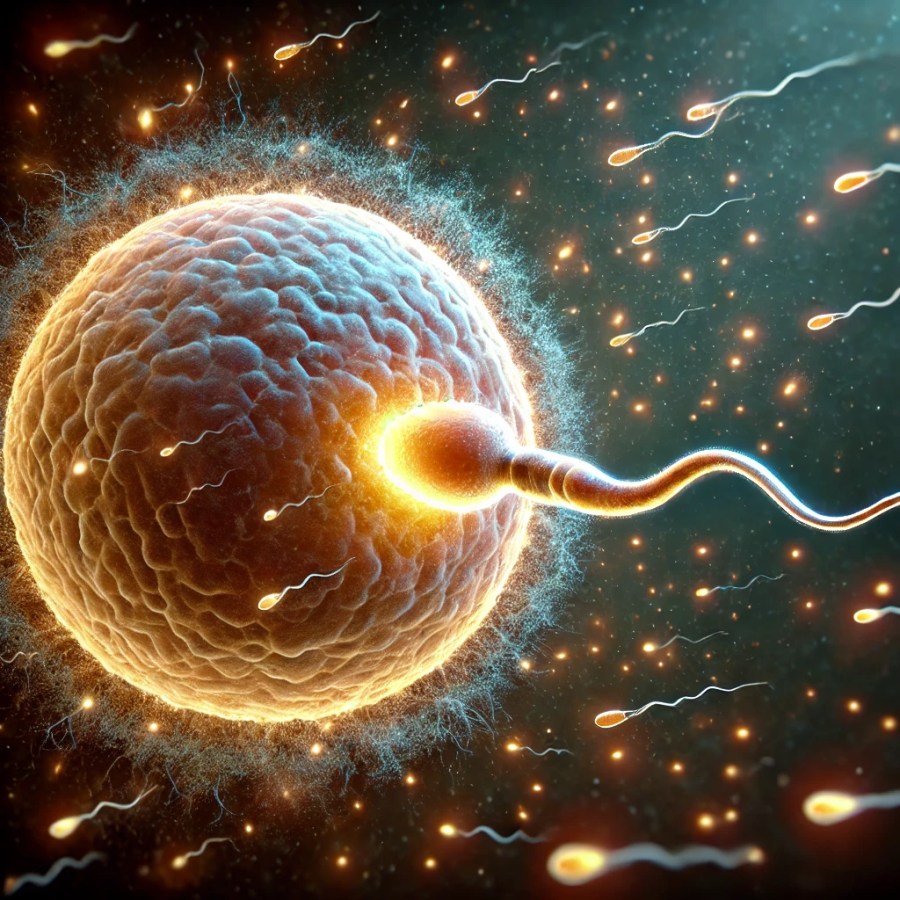
Biologically, demonic possession is defined as a symbiotic relationship between two species.
-
-
interaction or close living relationship between organisms from different species, usually with benefits to one or both of the individuals involved.
- Obligate is when each of the organisms is unable to survive without the other.
- Facultative is when the two species engage by choice, and can survive individually.
- Endosymbiosis is when one of the symbiotic partners lives within the body of the other.
- Intercellular is within the cells, like HIV viruses.
- Extracellular is outside the cells, like parasites in the bloodstream
- Ectosymbiosis is when one organism lives on the body surface of the host,
- including the lining of the digestive tract which is open to the exterior from beginning to end,
- or mucus or sweat glands.
- Mutualism is when both symbiotic partners benefit from the interaction, often resulting in a significant fitness gain for either one or both parties. Mutualisms can take the form of resource-resource relationships, service-resource relationships, or service-service relationships.
- Parasitism is when one of the organisms benefits at the expense of the other.
- Unlike predation, parasitism does not necessarily result in the death of the host and it is often imperative to the life of the parasite to keep its host alive. May involve
- direct infiltration of the host body to feed off tissue,
- influencing behaviors that benefit the parasite,
- or kleptoparasitism, in which the parasite steals food or other resources from a host, such as energy. Malaria is a prime example of debilitation caused by a parasite.
- Ectoparasites, such as fleas, may act as a carrier or vector, transmitting intercellular endoparasites such as bacteria and viruses to the host, often causing significant damage or death.
Psychologically, demonic possession is a form of narcissism. One of the earliest signs of narcissism is love bombing: the narcissist showers you with excessive admiration and affection, creating a false sense of closeness to make you more vulnerable. They tend to agree with you excessively, creating an illusion of harmony and shared perspectives.
As they gain control, their relationship morphs into manipulative and domination tactics, making the victims feel incapable of functioning or make decisions independently. Victims of narcissistic partners become emotionally, mentally, and physically drained by the narcissist. Setting clear boundaries only invites persecution. The only way to break free from a narcissist is to find a higher power than the self that fell victim.