146) A Fallen Woman Brings Down The House

The biblical account of the fall of the house of Ahab meets the high standards of any episode of Game of Thrones. I dare you to be bored with this historical account.

We have more records on Ahab and Jezebel than on any other kings besides David and Solomon for a reason. Jezebel is readily acknowledged to be the prototypical religious Whore of Babylon who rides / controls the political Beast during the greatest tribulation ever, driving God’s people to quit playing church and seriously seek a saving relationship with him. Many Israelites fled pagan Israel south to YHVHist Judah, as documented when King Josiah celebrates Passover for the first time in many generations with all Judah and Israel that were present.” (II Chronicles 35:17)

Continue reading “146) A Fallen Woman Brings Down The House”

147) Raising The Tabernacle Of David

Between 760 and 753 BC Amos prophecies the destruction of the nation of Judah.

“I saw the LORD standing upon the altar: and he said…I will slay the last of them with the sword: he that fleeth of them shall not flee away, and he that escapeth of them shall not be delivered…the Lord God of hosts is he that toucheth the land, and it shall melt, and all that dwell therein shall mourn…”

And then after pronouncing such extreme judgement, the LORD says:

“Are ye not as children of the Ethiopians unto me, O children of Israel?”

In context, the LORD must be comparing Israel’s curse to another cursed people, right?

Wrong.

In context, the LORD is comparing Israel to another blessed people as he elaborates “Have not I brought up / rescued

In an exquisite act of justice, since Israel snubbed YHVH’s act of grace in rescuing them from slavery in the Egyptian international empire, he will put them back where he found them.

Continue reading “147) Raising The Tabernacle Of David”

148) United We Stand

“The sceptre shall not depart from Judah, nor a lawgiver from between his feet, until Shiloh come; and unto him shall the gathering of the people be.” (Genesis 49:10)

Melchizedekian King Hezekiah, guided by the prophet Isaiah, demonstrates one episode of this prophecy coming to pass before its final fulfillment, which has not yet happened.

“And Hezekiah sent to all Israel and Judah, and wrote letters also to Ephraim and Manasseh, that they should come to the house of the LORD at Jerusalem, to keep the passover unto the Lord God of Israel…they established a decree to make proclamation throughout all Israel, from Beersheba even to Dan, that they should come to keep the passover unto the LORD God of Israel at Jerusalem…saying, Ye children of Israel, turn again unto the LORD God of Abraham, Isaac, and Israel, and he will return to the remnant of you, that are escaped out of the hand of the kings of Assyria…Now be ye not stiffnecked, as your fathers were, but yield yourselves unto the LORD, and enter into his sanctuary, which he hath sanctified for ever: and serve the LORD your God, that the fierceness of his wrath may turn away from you.

For if ye turn again unto the LORD your brethren and your children shall find compassion before them that lead them captive, so that they shall come again into this land: for the LORD your God is gracious and merciful, and will not turn away his face from you, if ye return unto him.

So the posts passed from city to city…they laughed them to scorn, and mocked them. Nevertheless divers of Asher and Manasseh and of Zebulun humbled themselves, and came to Jerusalem…And all the congregation of Judah, with the priests and the Levites, and all the congregation that came out of Israel, and the strangers that came out of the land of Israel, and that dwelt in Judah, rejoiced. So there was great joy in Jerusalem: for since the time of Solomon the son of David king of Israel there was not the like in Jerusalem.

Then the priests the Levites arose and blessed the people: and their voice was heard, and their prayer came up to his holy dwelling place, even unto heaven.” (II Chronicles 30)

Continue reading “148) United We Stand”

SECTION XXIX: A Prophet Like Moses – Take 1…2…3…!

“And Moses went up unto God, and the LORD called unto him out of the mountain, saying, Thus shalt thou say to

  1. the house / nation of Jacob,
  2. AND [also] tell the children / followers of Isra-el / Prince of El Most High God

IF ye will obey my voice indeed, and keep my covenant, THEN ye shall be a peculiar treasure unto me above all people: for all the earth is mine.” (Exodus 19:3-6)

For thy Maker is thine husband; the Lord of hosts is his name; and thy Redeemer the Holy One of Israel; The God of the whole earth shall he be called.” (Isaiah 54:5)

Continue reading “SECTION XXIX: A Prophet Like Moses – Take 1…2…3…!”

149) The Rod Of Judgment Is Ashur, God Of War

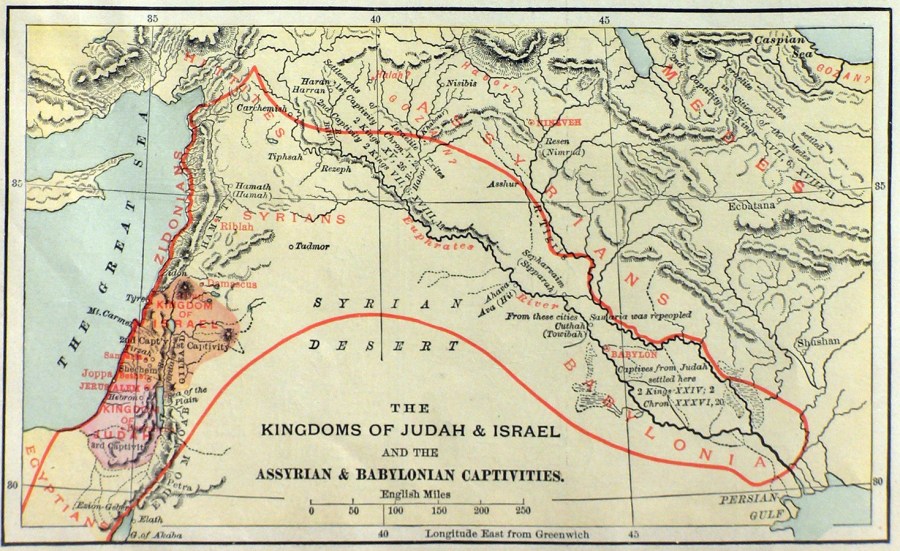
When we take God at his word we can recognize “the Assyrian” as Ashur, god of war. He first shows up in scripture infesting Shem’s son who helped Nimrod found the Babylonian Empire, then went on to found his own Assyrian Empire, Details in post XXI, The Assyrian Is Ashur, God Of War.

Out of that land went forth Asshur, and builded Nineveh, and the city Rehoboth, and Calah, And Resen between Nineveh and Calah: the same is a great city.” (Genesis 10:8-12)

And Asshur didn’t stop there. He resurfaces and time and again in history.

740-700 BC – “O Assyrian, the rod of mine anger, and the staff in their hand is mine indignation. I will send him against an hypocritical nation, and against the people of my wrath will I give him a charge, to take the spoil, and to take the prey, and to tread them down like the mire of the streets….Howbeit he meaneth not so, neither doth his heart think so [to fulfill God’s will]…he saith, By the strength of my hand I have done it, and by my wisdom…[Not so!] For the LORD God of hosts shall make a consumption, even determined, in the midst of all the land.” (Isaiah 10)

722 BC – “ Israel is a scattered sheep; the lions have driven him away:

Continue reading “149) The Rod Of Judgment Is Ashur, God Of War”

150) The Crossroads Of The Nations

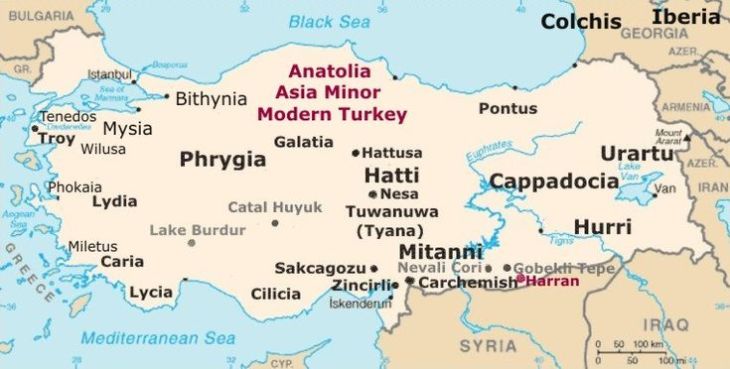
Unless otherwise referenced the following is taken from CHRONOLOGY OF ASIA MINOR (ANATOLIA) 500.000 BC – 330 AD. This review only covers ancient history to 400 AD, with the more commonly known Western Civilization history thereafter embedded in the other topics covered.

cdaf721f42945e530ee11878d9b4e553-black-people-turkey

Continue reading “150) The Crossroads Of The Nations”

151) The Crux Of All World Empires

As any real estate agent will tell you – Location, location, location.

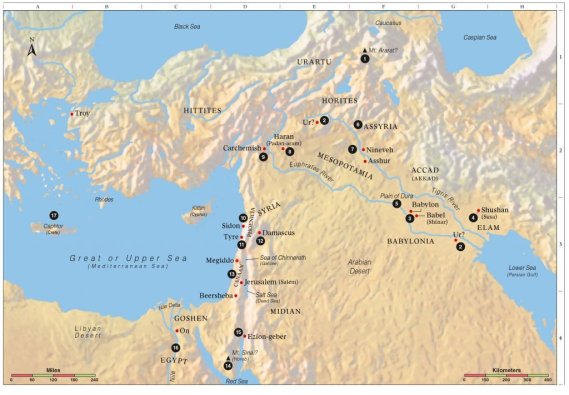
Given its location as the most accessible, ergo profitable, commercial connector between contrasting climates providing desirable products for nations that can’t produce these themselves, the Middle East has always served as the crossroads of empires. Across this narrow bridge the religion, art, and civilization of the East as far as India found their way into Greece; and passed back again, adapted by Greece.

And it was a narrow bridge. The eastern sub-basin of the Mediterranean, known as the Levantine Sea, is surrounded on its three sides by natural barriers.

4nszsqn4-1024x711-1

  • To the south in Africa is the vast expanse of the Sahara and Libyan Deserts.
  • To the north, in Asia Minor / Turkey are the high and rugged Taurus Mountains, with a mean elevation of 6,500 feet but rising at intervals to 10,000 feet or more.
  • To the east is another line of mountains from the Amanus Range in northern Syria to the towering Mount Sinai (8,530 feet) in the south, with a second line of mountains paralleling the first, rising to the imposing height of Mount Hermon (9,020 feet) in the north, beyond which stretch the Syrian and Arabian Deserts to the banks of the Euphrates.

There are only two partial breaches, one at each extremity of the eastern mountain ranges, both in Syria, funneling commercial traffic and military invasions through Syria, 

Continue reading “151) The Crux Of All World Empires”

152) The Trojan War Spawns Western History

“As current director of the excavations, I am continually asked if Homer’s Trojan War really happened…everything currently suggests that Homer should be taken seriously, that his story…is based on a memory of historical events.” Current archeological excavations show that Troy is about fifteen times larger than previously thought, with a strong citadel surrounded, like a castle’s moat, by a ditch hewn into bedrock, approximately eleven and a half feet wide and six and a half feet deep.

0e5940332_1487513515_chronological-life-application-bible-study-timeline.pdf

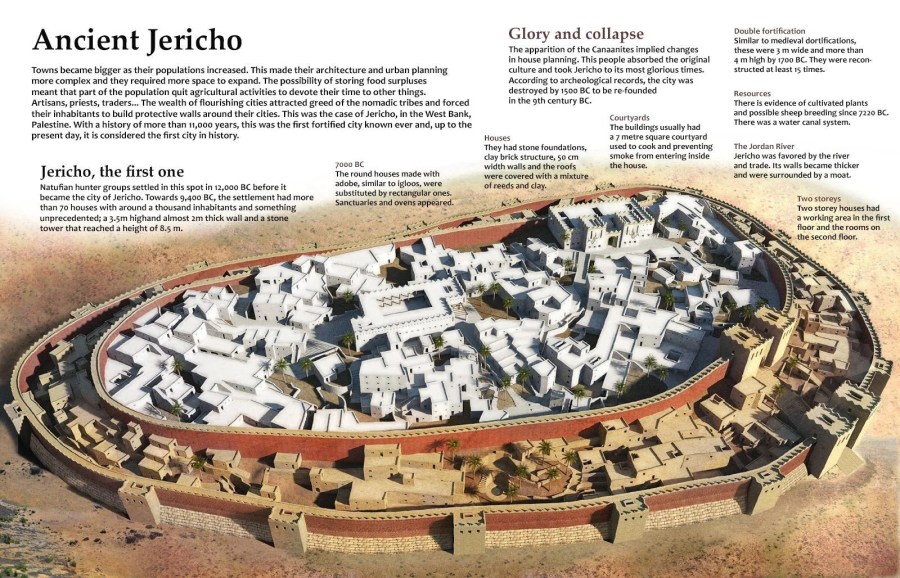
Archeological excavations have unearthed an equivalent city’s impenetrable walls that stood 43-41 feet high and six feet thick at Jericho in the land of Canaan.

~1200 BC At the same time as the Trojan war the Hebrews leave Egypt’s certified monumental empire and the mighty fortress of Jericho miraculously falls. 

Homer’s the Odyssey tells how Odysseus, king of the Bronze Age city-state of Ithaca who allied with Greece fighting the Trojan war,  spends ten years perseveres against a wide variety of obstacles to get back home to his faithful wife.  By codifying Greek ideals in a memorable, adaptable form, the Odyssey became a cultural touchstone—a work that defined what it meant to be Greek and continues to shape Western thought.

Virgil’s Aeneid depicting the Trojans’ quest for a replacement homeland was written about 700 years after Homer’s Odessey. Since both depict some of the same locations, the same difficulties and the same strange creatures such as the Cyclops, academics claim that this means he plagiarized Homer’s mythology.

Discounting multiple historians is one means by which academics can discount the validity of ancient accounts, therefore dismiss them as myth, most importantly, the ancient biblical record of the hyperdimensional aspect of reality. 

“there we saw the giants, the sons of Anak, which come of the giants: and we were in our own sight as grasshoppers, and so we were in their sight.” (Numbers 13:32-33)

The reality is that all the nations at this stage of early post-flood history report gods-empowered heroes battling monsters.

Continue reading “152) The Trojan War Spawns Western History”

153) The Fourth Empire’s Legs Veiled From View

 
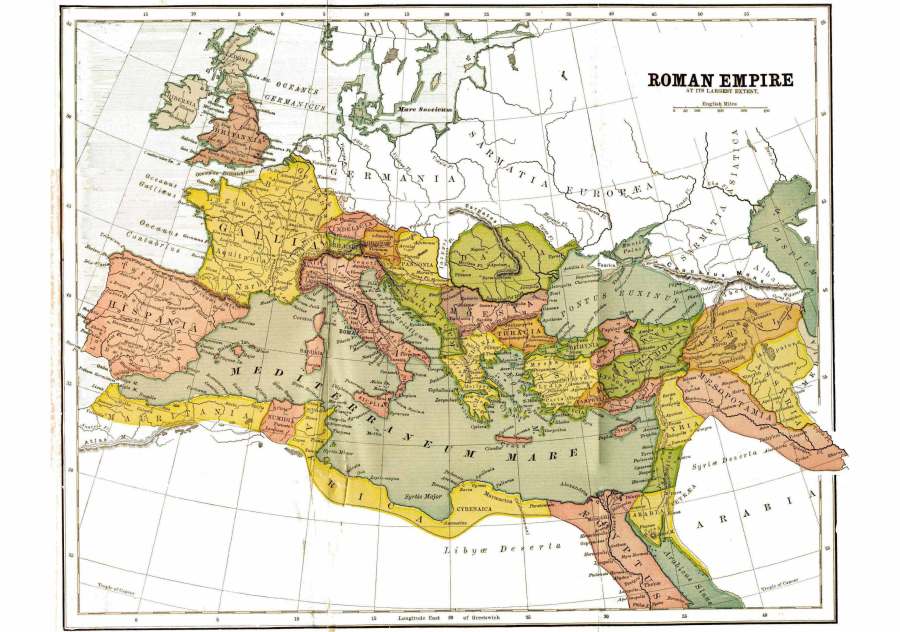
Contemporary society thinks in terms of the West vs the East, but in Biblical times the geopolitics were arranged north and south of the Mediterranean, and contemporary Christianity thinks of Greece as Dani
 
By 168 BC Rome became fully absorbed into Greece Cleopatra VII, the Greek Ptolemy Queen of Egypt, and her consort, the Roman general Marc Antony. His political ambitions, up to then as Octavian’s strongest political military and political supporter to replace assassinated Julius Caesar, was to use this Greco-Roman base to position him as the next Roman Emperor. Marc Antony
 
Islam is without question a major player as well in the fourth empire, details in the relevant post.
 
Rome’s rise to world power begins in 100 BC with Gaius (first name) Julius (last name / father’s family or clan name, in this case dating back to Julius, son of Aeneas) Caesar (a sub-branch of the Julian family recorded since 208 BC) is born into prophecy written by Virgil. Details in relevant post.

154) Tracking The King Of The North From Constantine The Great To Charles The Great

Rome having fallen into a state of interminable civil war, in 284 Diocletian Augustus restores stability by the only means possible – an authoritarian system of government in which the title of the emperor changed from princeps, or “first among equals,” to dominus, or “master”. He reorganizes the administrative and military machinery with Maximian Augustus managing the west, and himself the east, and appoints Constantius I and Galerius as caesars / heirs in hopes of a smooth transition of power to well-trained successors. 

305 – Diocletian and Maximian abdicate and are succeeded by their chosen heirs, but upon the death of Constantius in 306 the hoped-for smooth transition fails when Constantius’ army makes their choice, proclaiming his son Constantinus the next augustus (emperor) at Eboracum (York, England) and wars of succession ensued against the emperors Maxentius and Licinius

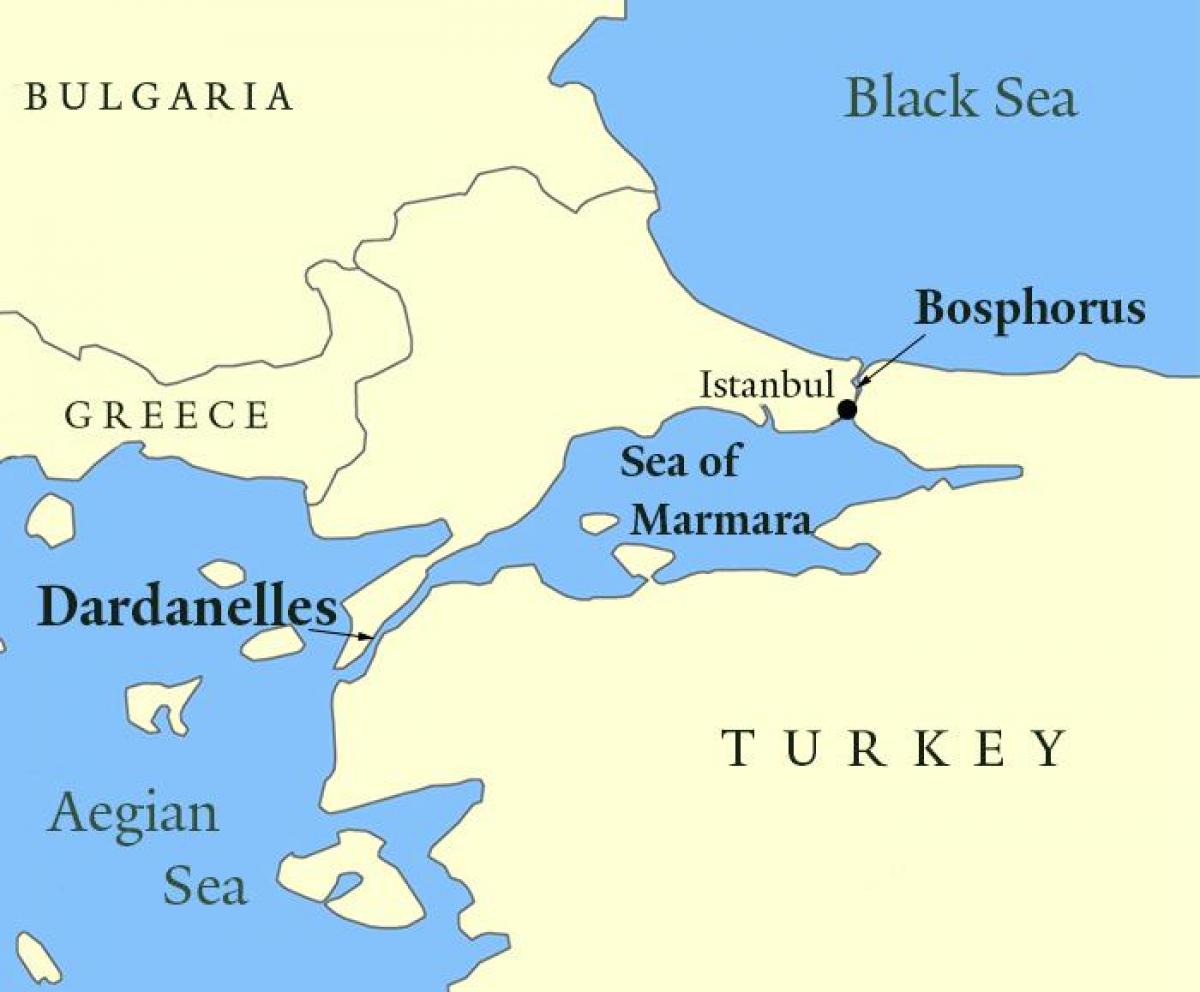
324 – Constantine “The Great” wins the contest and re-asserts the tried-and-true means of stability through authoritarianism, becoming the sole ruler of the Roman Empire. Using the strategic military and commercial location of the Greek city of Byzantion on the European side of the Bosphorus straits – just a short trip north of ancient Troy, he relocates his capitol to what he first called Nova Roma, then changed to glorify himself and his god to Constantinople, later changed again after Islamic takeover to Istanbul.


380 the emperor Theodosius I published the Edict of Thessalonica making Nicene Christianity the state church of the Roman Empire, and, in the first known secular law defining national religious orthodoxy. Barbarian tribes eager to become friends with benefits with Rome were required to enforce nation-wide conversion to Christianity as a stipulation of Rome making an alliance or accepting surrender. The Code also repressed Christians deemed heretics for rejecting Nicene teaching. 

This is a key identifier of the fourth empire that imposes an apostate religious orthodoxy.

“And he shall speak great words against the most High, and shall wear out the saints of the most High.” (Daniel 7:25)

Rome’s Christianity was simply a veneer over a hybrid paganism.

Continue reading “154) Tracking The King Of The North From Constantine The Great To Charles The Great”