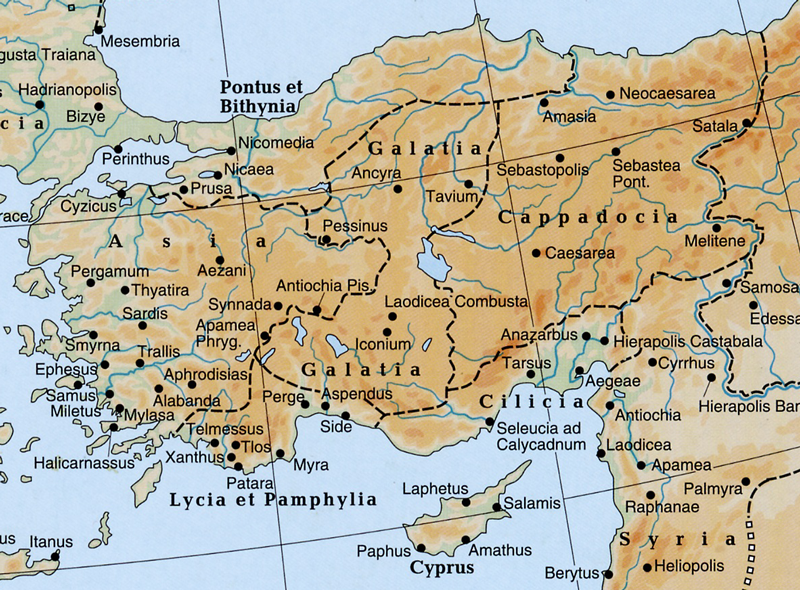
Given its location, from the beginning of history the Middle East has always served as the crossroads of empires, a battlefield of conquest and culture between the East and the West. Across this narrow bridge the religion, art, and civilisation of the East found their way into Greece; and passed back again, adapted by Greece, across the same bridge to conquer the East and revolutionise Asia as far as the heart of India.
For the last 5,000 years the Middle East has been the most accessible, ergo profitable, commercial connector between contrasting climates providing desirable products for nations that can’t produce these themselves.
Just one sticking point. The eastern sub-basin of the Mediterranean, known as the Levantine Sea, is surrounded on its three sides by natural barriers.

- To the south in Africa is the vast expanse of the Sahara and Libyan Deserts.
- To the north, in Asia Minor / Turkey are the high and rugged Taurus Mountains, with a mean elevation of 6,500 feet but rising at intervals to 10,000 feet or more.
- To the east is another line of mountains from the Amanus Range in northern Syria to the towering Mount Sinai (8,530 feet) in the south, with a second line of mountains paralleling the first, rising to the imposing height of Mount Hermon (9,020 feet) in the north, beyond which stretch the Syrian and Arabian Deserts to the banks of the Euphrates.
There are only two partial breaches at each extremity of the eastern mountain ranges.
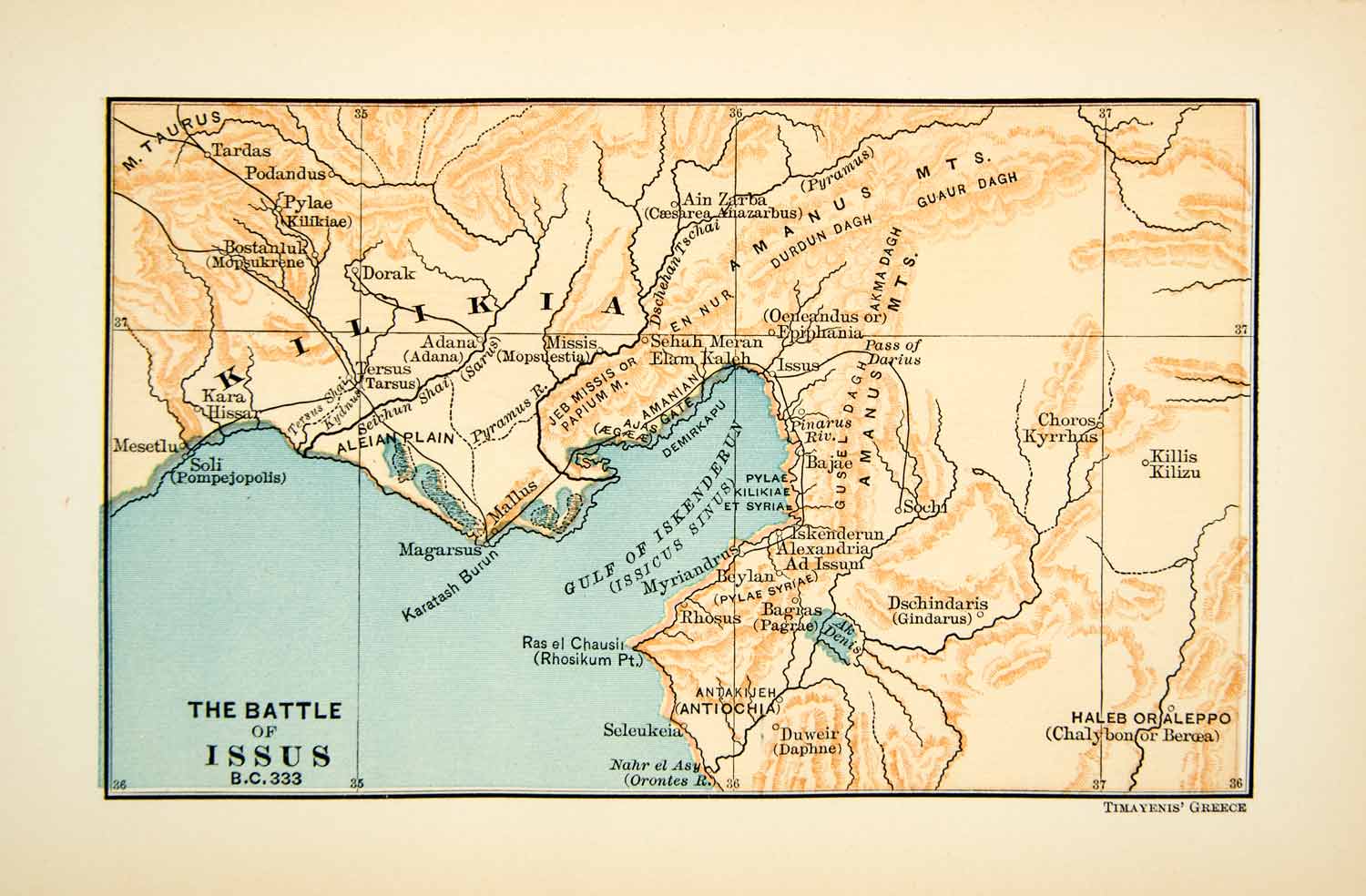
The Gulf of Alexandretta (Iskenderun), the ancient Gulf of Issus, drives a marine wedge fifty miles back into the coast line of northern Syria. The mountain barrier also contracts and drops to the single, relatively low chain of the Amanus Range. This was crossed in ancient times by three pass routes.
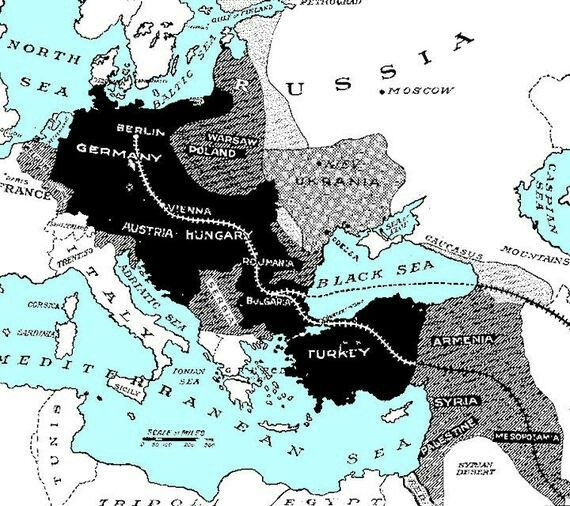
One is the route used for Germany’s Bagdad Railroad during its alliance with the Ottoman Empire.
The second route was used by Darius’ army after being routed by Alexander’s army at the battle of Issus in 332 BC.
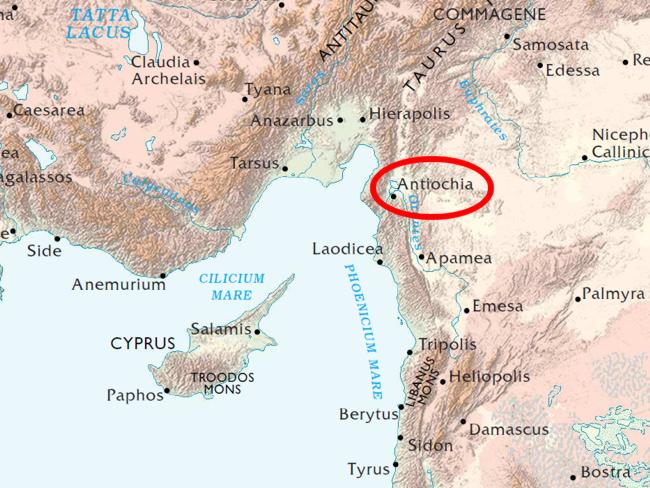 But it was the great pass city of Antioch and its port Selucia which exploited their geographical position as the natural western termini of the great trade route to the East.
On the side – this explains why Antioch was the first city in which pagan Gentiles were evangelized into salvation by YHVH’s Savior. This city and its traveling salesmen were in position to proselytize the entire known world.
There is just 100 miles through a short low section of the Amanus Range, across a grassy plain from Selucia to a western bend of the Euphrates River, giving access to the great valley of the twin rivers, stretching southwest for 800 miles to the Persian Gulf.
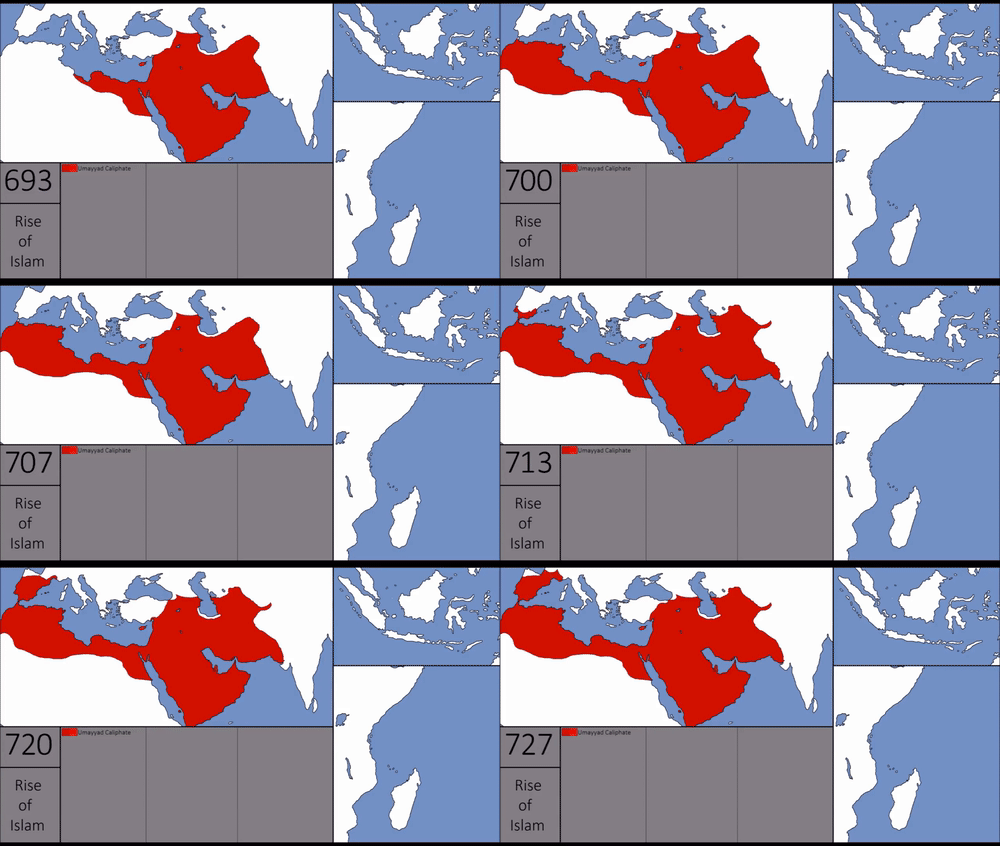
In 610 Muhammed – following in Moses’ footsteps – leads his pagan Arab people to return to the original monotheism of the prophets Adam, Noah, Abraham, Moses, David, Solomon and even Jesus with submission / Islam to the will of God. This return to faith in Creator God’s authority over righteous daily submission in contrast to paganism, including in Christianity with its transactional nature, the false doctrine of the Trinity, and the use of idols in its churches spread like wildfire through the next centuries.
This Back To The One True God faith spread rapidly through most of the Roman Empire in the next 100 years. There is no way this hugely significant world-changing religious and political condition splitting the Roman Empire’s territory into two legs is not included in Daniel’s prophesy of world history.
1090 – While one motley crew of illiterate peasants seizing control of a wilderness island at the edge of the known world at the Battle of Hastings was heralded as a great feat, the Seljuq Turks in a whirlwind advance seized control of the most civilized and wealthy territories of what is known today as Iran, Turkmenistan, and northern Afghanistan, and kept on going.

The Great Seljuk empire was made up of an astoundingly diverse range of linguistic and ethnic groups, and religions including Muslims, Christians, Jews, and Zoroastrians in a loose political confederation meeting mutual interests. Like OPEC.
True to the endless battle for control of the land east of Eden, Rome’s East Thema / Eastern Administrative Division at Constantinople battled for control of the area against the Arab Islamic Caliphates in eight major Crusades between 1096 and 1291. Later historians – NOT documents at that time – designated the region controlled by Rome the Byzantine Empire, after the original Greek name of Byzantium, changed by Roman Emperor into his name of Constantinople. Whether or not intentionally, this deflects attention from Rome’s continuous control in this regions. The more reality-grounded sailors called this territory The Levant which meant ‘the rising’ or ‘to rise’ referring to how the land rose up out on the horizon of the sea when sailing towards it, and this appellation has stuck to this day.
The Crusades were a series of military campaigns launched by the papacy between 1095 and 1291 as part of a wider crusading movement. The First Crusade was proclaimed by Pope Urban II, whose position as head of the Catholic Church had strengthened through wars on the frontiers of Western Christendom to direct armed force in the name of religious causes. Over time, the crusading movement expanded to include campaigns against pagans, Christian dissidents, and other enemies of the papacy into the 18th century.
The Massacre of Jerusalem was a mass slaughter of thousands of Muslims and Jews by the sieging Crusaders in mid-July 1099. Historians and eyewitness crusader accounts emphasize that the massacre was especially brutal, even by the standards of ancient and medieval warfare, a “juxtaposition of extreme violence and anguished faith. Eyewitnesses described it as “more of a slaughter than a fight”, “the slaughter was so great that our men waded in blood up to their ankles”, and at “the porch of Solomon men rode in blood up to their knees and bridle reins… the blood flowed so forcefully and deeply that it carried the severed limbs and heads down the avenues of the city.”The death toll in the temple alone reached 10,000″ and “none of them were left alive; neither women nor children were spared.” Crusaders brutalized the bodies of dead Muslims, “eviscerating them from the head to the kidneys and cutting them lengthwise from left to right,” and many were decapitated, hit with arrows, and burned alive. The Crusaders then ran amok through the streets of the city, stabbing everyone they encountered – Muslim, Jew and Orthodox Christian alike. From a population which had numbered 40,000 the few remaining were sold into slavery. Such a massacre in the city has seldom been paralleled in the history of war. 22
In 1187 Salah Al-Din Al-Ayyubi—known in the West as ‘Saladin’—recovered Jerusalem. In contrast to the Crusaders’ slaughter, he granted amnesty and free passage not only to the resident Catholics but also to the defeated Christian soldiers, as long as they were able to pay a paltry ransom for themselves. He allowed the native Christians to remain and Jews who had been expelled from Jerusalem by the Crusaders to resettle in the city. Salah Al-Din also restored the rights of pilgrimage to several eastern Christian denominations who were condemned as heretics under Rome’s Theodosian Code.
This fits a prophecy from Isaiah 41:25
- “I have raised up one from the north / , and he shall come:
- from the rising of the sun [east] shall he [another] call upon my name: and HE shall come…as the potter treadeth clay [crushing the northern king].

As noted above, the primary passage through the Middle East was through the northern mountain breach. There was a second pass however, to the south, where the Suez Isthmus affords a short and level passage to the Red Sea. However,
- year-round violent northwest winds in the Gulf of Suez and the upper half of the Red Sea,
- a broad belt of coral reefs along the shores,
- desert coasts, and for the most part desert hinterland
all combined to make navigation dangerous for sailing vessels and to reduce the profits of commercial voyages. Therefore, the time and cost of sailing 7,000 kilometres from the Mediterranean circumnavigating the entire continent of Africa to the southern Indian ocean was mandatory.
A canal through the Suez Isthmus, envisioned and even attempted from very ancient times, was only finally realized during Industrial Revolution under the British. And thereby becoming a major asset drawing political, international, and military attention.

The 193.30 km (120 miles)-long Suez Canal is an artificial sea-level waterway located in Egypt connecting the Mediterranean Sea with the Gulf of Suez, a northern branch of the Red Sea, and from there to all points east.
Officially opened in November 1869, the Suez Canal was vital to the British Empire’s economy as it provided a shorter sea route to its colonies and the oilfields of the Persian Gulf.
Britain strengthened its control over Egypt in 1875, invaded Egypt in 1882 sending forces to protect the canal until 1922 following WWI when Britain provided nominal independence to Egypt. In 1936 with the winds of WWII blowing Britain resumed complete control of the Suez Canal, again deploying troops. In 1956 Egyptian President Gamal Abdel Nasser nationalized the Suez Canal which caused the invasion of Egypt by the UK, France, and Israel. It was only after the intervention of the United Nations, the three forces withdrew from Egypt, allowing the country to reopen the canal for commercial shipping.
Making the Suez Canal an essential asset for any aspiring world ruler.