SECTION XXVI: Melchizedek Is A Man Of War

Knowing the parts of a story are essential for getting your story straight.

  1. Characters What do your characters want? 
    • In Netflix’s Apex, the main female character Sasha proves she is invincible by constantly courting death in extreme sports.
    • The lead male character is obsessed with taking revenge on his cruel mother.
  2. Setting – when and where your story takes place.
    • Exceptional mountainous and wilderness landscapes pulling the viewer into a personal adventure experience.
  3. Plot – the actual story–what happens, when, how, why, and what’s the result?
    • The two main characters meet their match, and are forced to confront how their internal drives are destroying themselves.
  4. Conflict – For a story to be interesting, there needs to be conflict.
    • The essential life-or-death battle between a well-matched pair, suspense raising the viewer’s own emotions.
  5. Resolution – By the end of your story, all of your conflicts should have a resolution.
    • Applause, applause for the victor, but more essentially, for that person’s recognition of personal flaws, demonstrated by a change in behavior focused on helping, not expressing superiority over, other people.
  6. Theme – your story’s main takeaway. answers the question: What’s the point? What have your characters learned? How are they changed, and what will they affect now that they are different?
    • The two main characters are forced into awareness, and a rethink, of the self-obsessed motivations ruling, and ruining, their lives.

Some examples of themes include:

  • Forgiveness–trying to achieve it, avoiding it, accepting it
  • Death–overcoming it, processing it, fearing it
  • Empowerment
  • Injustice
  • Good versus bad

These themes are exactly the themes in the Bible, which is why so much literature pulls from, or plays, on quotes from the Bible.

As detailed in Genesis 1, the plot of of the Bible is mankind taking dominion over creation, resulting in war between the Seed of the Woman and his hosts and the Seed of the Serpent and his hosts.

The re-establishment of humanity’s dominion over the earth is not a smooth transition of power that just happens by asking God to do it for us. It is an ongoing battle in which God’s people are expected to fight for what belongs to us, while acknowledging our unity with him.

Continue reading “SECTION XXVI: Melchizedek Is A Man Of War”

137) Taking Dominion Against Genocide

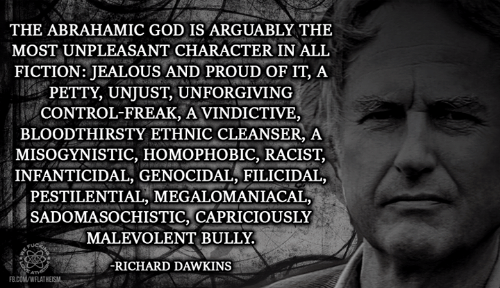
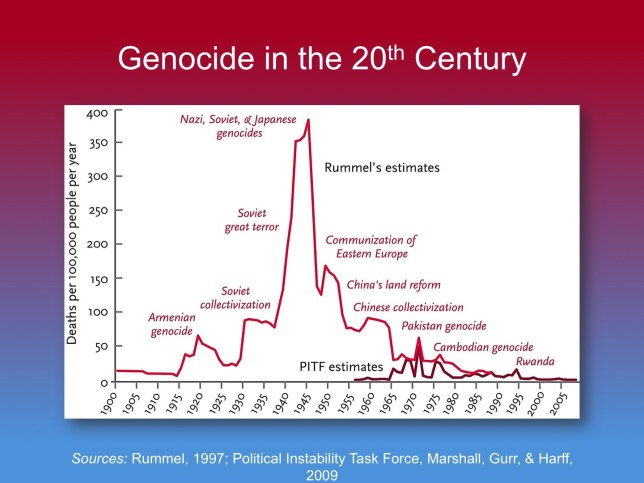
Richard Dawkins enjoys the freedom of speech in a country that won the right to do so by going on the offensive against the Nazi and Japanese regimes which were slaughtering millions of people.

sleeping-giant-800-x-400_text-800x400-1

Success in WWII led to a massive reduction in genocide worldwide.
genocide_since_1900

The overriding theme in every single account of biblical battle is how the current Melchizedek leads God’s people into delivery from the Adversary determined to wipe out God’s people.

So why don’t the historians who demonize the fledgling nation of Israel who were destroying monsters at this same time in history demonize the Sea Peoples who utterly destroyed an entire civilized world?

Continue reading “137) Taking Dominion Against Genocide”

138) Melchizedeks In The Running

After Moses the Levite dies he is succeeded by Joshua the Ephrathite who leads the newly constituted nation of Israel into the Promised land. He is succeeded by a variety of tribal leaders within the scattering and burgeoning twelve tribes.

Ironically, the social peace brought about by following God’s ways, which by natural law allows prosperity, by human nature relaxes one’s reliance on God, promotes a prideful conviction of achievement by one’s one efforts with a sense of entitlement and results in a cycle of domestic violence on a grand scale.

If you’ve ever poured your life into improving someone else’s only to have them put you down, you’ll understand how God feels.

Continue reading “138) Melchizedeks In The Running”

139) The Man Who Wouldn’t Be King

As this account progresses, it is important to maintain the timeline in the chapter numbers.

I Samuel 13:

“And the Philistines gathered themselves together to fight with Israel, thirty thousand chariots, and six thousand horsemen, and people as the sand which is on the sea shore in multitude: and they came up…then the people did hide themselves in caves, and in thickets, and in rocks, and in high places, and in pits… (I Sam 13:1-6) 

Except for one intrepid teenager.

Chapter 14:

“Now it came to pass upon a day, that Jonathan the son of Saul said unto the young man that bare his armour, Come, and let us go over to the Philistines’ garrison, that is on the other side.

And between the passages, by which Jonathan sought to go over unto the Philistines’ garrison, there was a sharp rock on the one side, and a sharp rock on the other side: and the name of the one was Bozez / shining / in context of rock climbing, “smooth as ice, sheer face” and the name of the other Seneh / thorn / sharp, jagged rocks. (My son is a mountaineer and rock climber, that’s why I know this stuff.)

112366586_smallmed_1494300816


article-2138404-12e1abaa000005dc-687_964x633

“And Jonathan said to the young man that bare his armour, Come, and let us go over unto the garrison of these uncircumcised / rejectors of YHVH’s covenant: it may be that the LORD will work for us: for there is no restraint to the LORD to save by many or by few. And his armourbearer said unto him, Do all that is in thine heart: turn thee; behold, I am with thee according to thy heart….And Jonathan climbed up upon his hands and upon his feet, and his armourbearer after him:

and they fell before Jonathan; and his armourbearer slew after him…and the earth quaked… 

  • and, behold, every man’s sword [of the Philistines’] was against his fellow,
  • And Saul and all the people that were with him assembled themselves, and they came to the battle:
  • the Hebrews that were with the Philistines before that time…turned to be with the Israelites that were with Saul and Jonathan.
  • the men of Israel which had hid themselves in mount Ephraim, followed hard after them in the battle.
  • So the LORD saved Israel that day: and the battle passed over unto Bethaven.” (I Samuel 14) 

Naturally Jonathan’s fame as the champion of Israel spread throughout Israel. 

Chapter 15:

Samuel said unto Saul…thou hast rejected the word of the LORD…The LORD hath rent the kingdom of Israel from thee this day, and hath given it to a neighbour of thine / i.e. not your son.” (I Samuel 15:23-28)

Chapter 17:

there went out a champion out of the camp of the Philistines, named Goliath, of Gath, whose height was six cubits and a span [9-10 feet]Then said David to the Philistine, Thou comest to me with a sword, and with a spear, and with a shield: but I come to thee in the name of the Lord of hosts, the God of the armies of Israel, whom thou hast defiedSo David prevailed over the Philistine with a sling and with a stone, and smote the Philistine, and slew him…And when the Philistines saw their champion was dead, they fled. And the men of Israel and of Judah arose, and shouted, and pursued the Philistines…to the gates of Ekron. (I Samuel 17:1-52)

When David returned triumphant from battle, Jonathan had a choice to make:

  1. compete with this most evidently exceptional rival to his popularity and heir to the throne, or
  2. accept YHVH’s choice of king and submit to him.

“the soul of Jonathan was knit with the soul of David, and Jonathan loved him as his own soul…Then Jonathan and David made a covenant, because he loved him as his own soul. And Jonathan stripped himself of the robe / like Joseph’s coat of many colors, insignia of royalty that was upon him, and gave it to David, and his garments, even to his sword, and to his bow, and to his girdle / belt to carry his weapons.” (I Samuel 18:1-4) 

Jonathan’s behavior towards David is exactly what anyone who claims to accept the son of David as their lord and savior must do – publicly surrender to his authority, knit his soul and become one with the LORD’s anointed.

And David sware moreover…truly as the LORD liveth, and as thy soul liveth, there is but a step between me and death. Then said Jonathan unto David, Whatsoever thy soul desireth, I will even do it for thee…Saul’s anger was kindled against Jonathan, and he said unto him…do not I know that thou hast chosen the son of Jesse to thine own confusion…For as long as the son of Jesse liveth upon the ground, thou shalt not be established, nor thy kingdom. Wherefore now send and fetch him unto me, for he shall surely die…And it came to pass in the morning, that Jonathan went out into the field at the time appointed with David…and they kissed one another, and wept one with another, until David exceeded. And Jonathan said to David, Go in peace, forasmuch as we have sworn both of us in the name of the LORD, saying, The LORD be between me and thee, and between my seed and thy seed forever. ” (I Samuel 20:3-42)

The covenant of everlasting peace between Jonathan and David is the same means by which all followers of the ultimate Chosen One / Christ are accepted into a covenantal relationship with God, whether under the old terms or the new.

“Henceforth I call you not servants; for the servant knoweth not what his lord doeth: but I have called you friends; for all things that I have heard of my Father I have made known unto you.” (John 15:15)

Righteous has always been defined, in God’s eyes, as restoring a right relationship with God. It starts by believing God but proceeds beyond that to acting in accordance with what pleases God. It’s like a marriage relationship. You can go through the ceremony and say the words “I do”, but unless you actually “do” and consummate the marriage you are not in a marriage relationship and it can be annulled.

This is what Yeshua meant when he said

“If any man come to me, and hate not [instead continue prefer and side with]  his father, and mother, and wife, and children, and brethren, and sisters, yea, and his own life also, he cannot be my disciple.” (Luke 14:26)

Because his soul was knit with the Chosen One’s soul, i.e. his identity was now one with the LORD’s Anointed One, Jonathan gave up his own life in every way possible – family, social standing, even to death, to promote God’s Anointed Savior’s supreme reign.

 “Now the Philistines fought against Israel: and the men of Israel fled from before the Philistines, and the Philistines followed hard upon Saul and upon his sons; and…Saul died, and his three sons, and his armourbearer, and all his men, that same day together.” (I Samuel 31:1-5)

“And David lamented with this lamentation over Saul and over Jonathan his son…

The beauty of Israel is slain upon thy high places: how are the mighty fallen!…the shield of the mighty is vilely cast away, the shield of Saul, as though he had not been anointed with oil…From the blood of the slain, from the fat of the mighty, the bow of Jonathan turned not back, and the sword of Saul returned not empty. Saul and Jonathan were lovely and pleasant in their lives, and in their death they were not divided: they were swifter than eagles, they were stronger than lions. Ye daughters of Israel, weep over Saul, who clothed you in scarlet, with other delights, who put on ornaments of gold upon your apparel. How are the mighty fallen in the midst of the battle! O Jonathan, thou wast slain in thine high places. I am distressed for thee, my brother Jonathan: very pleasant hast thou been unto me: thy love to me was wonderful, passing the love of women.” (II Samuel 1)

The magnificent historically based series A Song Of Fire And Ice provides the best extra-biblical example I know of what it means to be the Friend of God, where the role is called, quite logically, the “Hand of the King.”

The Hand of the King…is the most powerful appointed position in the Six Kingdoms, second only to the monarch in authority and responsibility. The Hand is the monarch’s closest advisor, appointed and authorized to make decisions in their name. The Hand is the highest-ranking member of the small council, and leads meetings of the council as proxy for the monarch when they are absent…During the reign of strong and able monarchs, the Hand is the chief agent for coordinating and carrying out their plans. 

I can’t help imagining Yeshua’s eyes rolling as James’ and John’s mother ask him to delegate the highest governmental authority to her sons.

Seriously?

After what Jonathan did to prove his worth?

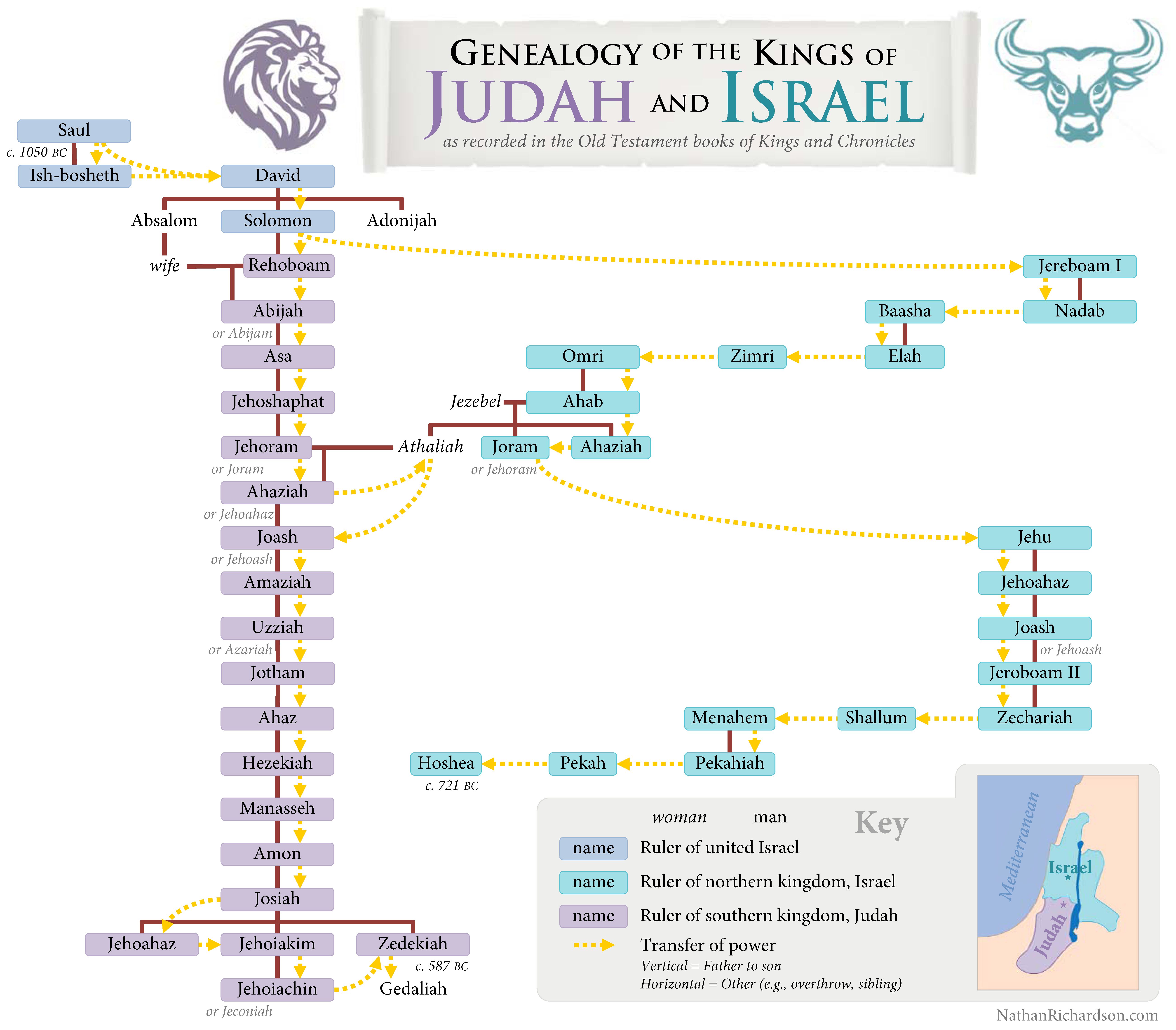
140) Judah’s First Melchizedek. Finally.

“And Jacob [the current Melchizedek] called unto his sons, and said,

  1. Gather / אָסַף yourselves together / removing any discord]that I may tell you that which shall befall you in the last days / end of space-time
  2. Gather /  קָבַץ yourselves together / a different word, meaning bring together what was scattered] Prophetically this is noted by James, brother of Jesus, writing to “the twelve tribes which are scattered abroad” (James 1:1) and hear / pay attention to this message ye sons of Jacob; and hearken/ respond obediently unto Isra-el / The Prince of El your father.

“Judah is a lion’s whelp: from the prey, my son, thou art gone up: he stooped down, he couched as a lion, and as an old lion; who shall rouse him up?

As evidenced by cave paintings, lions have been symbolic of power since the most ancient times. Since the earliest historical times in Mesopotamia lions symbolized kingship, being associated with Nimrod / Gilgamesh. depicted in Assyrian art and architecture, notoriously at the Ishtar Gatein Babylon, in Egypt, throughout  East Asia, Classical Greek and Roman culture, into modern times. 

No question about it, Judah is being declared Adam’s successor King of the World in opposition to the Adversary’s Pretenders.

“The sceptreshall NOT depart from Judah,” 

Continue reading “140) Judah’s First Melchizedek. Finally.”

141) The Sacral King David

After Shem and Abram, King David has the only other Old Testament explicit declaration of filling the position of Melchizedek, consistent with the first documented mention of Melchizedek by name honoring Abram for the “slaughter of the kings”. He brings peace the only way possible when evil rules – by fighting back.

The LORD hath sworn, and will not repent, Thou art a priest for ever after the order of Melchizedek [through his genetics and epigenetics passed down through his seed]

  • The LORD at thy right hand shall strike through kings in the day of his wrath.
  • He shall judge among the heathen,
  • he shall fill the places with the dead bodies;
  • he shall wound the heads over many countries.” (Psalm 110)

“I have found David my servant; with my holy oil have I anointed him: With whom my hand shall be established: mine arm also shall strengthen him…my faithfulness and my mercy shall be with him: and in my name shall his horn be exalted…

He shall cry unto me, Thou art my father, my God, and the rock of my salvation. Also I will make him my firstborn / heir, higher than the kings of the earth…His seed also will I make to endure for ever, and his throne as the days of heaven. ” (Psalm 89:20-37)

The following excerpt from James M. Gibbs, Ph.D.’s doctoral dissertation on the meaning of “son of God” is very enlightening.

Continue reading “141) The Sacral King David”

142) Righteousness Is Fulfilling All God’s Will

“the LORD hath sought him a man after his own heartbecause thou [Saul] hast not kept that which the LORD commanded thee.” (I Samuel 13:14)

What commandment is this?  It cannot be any one of the commandments given to the nation of Israel at Mount Sinai, which include Thou shalt not kill” and Thou shalt not commit adultery, both of which David transgressed.

” I have found David the son of Jesse, a man after mine own heart, which shall fulfil all my will.” (Acts 13:22),

And what is YHVH’s Prime Directive Will? For man to take dominion!

I grew up in your basic Baptist church with a list of “Thou shalt not…” As long as you abstained from sexual immorality, drinking and drugs, and dancing, you were a righteous person. It’s not that you went to hell because you committed these sins, it’s that the commission of these sins proved you never seriously asked Jesus to come into your heart in the first place.

I know everyone doesn’t think like that, but there’s no question that a certain self-righteousness permeates Christianity, consigning “for all have sinned” to degrees of sinfulness of which the lesser sort are easily overlooked. Like pride in one’s good behavior.

In my lifetime I’ve discovered that the people who are the most ashamed, most regretful, most sorrowful, most aware of how far short they’ve fallen, are most appreciative and grateful of God’s mercy and aware of the price paid to redeem them and most committed to reflecting God’s light and love in a dark world.

And David is the prototype of the repentant sinner, and through that process, becomes the prototype redeemed son of God, fulfilling all God’s will for mankind.

Continue reading “142) Righteousness Is Fulfilling All God’s Will”

SECTION XXVII: What God Hath Joined Together, Let Not Man Put Asunder

Solomon, the first heir to this dynasty, was known for his wisdom, documented in his collection of Proverbs. Yet he let his emotional and physical feeling overwhelm his better judgment, as anyone who allowed themselves to be overwhelmed by sex hormones can attest.

“Then did Solomon build an high place for Chemosh, the abomination / hybrid demi-god of Moab, in the hill that is before Jerusalem, and for Molech, the abomination / hybrid demi-god of the children of Ammon. And likewise did he for all his strange wives, which burnt incense and sacrificed unto their gods. And the LORD was angry with Solomon, because his heart was turned from the Lord God of Israel, which had appeared unto him twice…he kept not that which the LORD commanded.” (I Kings 11:7-12)

But God had covenanted with Solomon’s father to guarantee an everlasting kingdom.

“[this is how] I will stablish the throne of his kingdom for ever…If he commit iniquity, I will chasten him with the rod of men, and with the stripes of the children of men…And thine house and thy kingdom shall be established for ever.” (II Samuel 7:1-14)

Continue reading “SECTION XXVII: What God Hath Joined Together, Let Not Man Put Asunder”

143) The Sins Of Jeroboam

And the children of Israel that were present kept the passover at that time, and the feast of unleavened bread seven days. And there was no passover like to that kept in Israel from the days of Samuel the prophet.” (II Chronicles 35:17-18)

And Jeroboam said in his heart…If this people go up to do sacrifice in the house of the Lord at Jerusalem, then shall the heart of this people turn again unto their lord, even unto Rehoboam king of Judah, and they shall kill me. Whereupon the king…said unto them, It is too much for you to go up to Jerusalem:

And God wasn’t having it.

“Thus saith the Lord God of Israel, Forasmuch as I exalted thee from among the people, and made thee prince over my people Israel, And rent the kingdom away from the house of David, and gave it thee: and yet thou hast not been as my servant David, who kept my commandments, and who followed me with all his heart, to do that only which was right in mine eyes; But hast done evil above all that were before thee: for thou hast gone and made thee other gods, and molten images, to provoke me to anger, and hast cast me behind thy back:

Continue reading “143) The Sins Of Jeroboam”