-
Alfred Wegener (1880–1930), a German meteorologist and geophysicist observed that the continents of South America and Africa looked like they would fit together remarkably well. Similar fossils were found on continents separated by oceans, additional evidence that perhaps the landforms had once been joined. He hypothesized that all of the modern-day continents had previously been clumped together in a supercontinent he called Pangaea from ancient Greek, meaning “all lands” or “all the Earth”. Think Pan American Airlines.
This is consistent with the biblical account that “God said, Let the waters under the heaven be gathered together unto one place, and let the [singular] dry land appear: and it was so.” (Genesis 1:13)
Another source of evidence of the breakup of a single land mass into many are the deep scratches and sediments deposits left behind when a melting glacier moves past a smooth rock. The Palaeozoic glaciation on Pangea left scratches on rocks, which today are several continents and far away from each other but match up like scattered puzzle pieces.
Wegener did not know what drove this movement so in keeping with the recently proposed long age speculation to support the new idea of evolution, assigned millions of years of “drift”. Only decades later, in the 1960s technologies adapted from warfare made it possible to more thoroughly study Earth with scientific equipment such as seismometers and magnetometers.
-
Geological research however, replaced continental [slow] drift with [sudden] plate tectonics.
16) Climate Change Is Rapid, Widespread And Intensifying

In 1883, Krakatau’s dormant volcano erupted to stupendous effect, obliterating its three islands, and killing tens of thousands of people.
The sound of the eruption alone… “was heard as far as 3,000 miles…the equivalent of a blast in Dublin being heard in New York. Half the crew of British ship some 40 miles away reported having their ear drums “shattered”—if they had been closer, they might well have been killed by the force of the sound alone...
“the subsequent tsunami…reached over a hundred feet (30 meters) in height, sweeping 165 coastal villages and settlements out to sea. The wave is said to have traveled around the globe three and a half times at astonishing speed, causing tsunamis as far as South Africa and flinging huge chunks of coral reef onto the land as it went. Some of these sections of coral weighed as much as 600 tons…
There was a lasting effect on the world’s climate, too: aerosols emitted into the atmosphere by the blast led global air temperatures to drop by as much as 2.2 degrees Fahrenheit (1.2 degrees Celsius).
According to a 2006 article in the journal Nature, the volcano caused oceans to cool for as much as a century, offsetting the effect of human activity on ocean temperatures. If the volcano had not erupted, the authors argue, our sea levels might be much higher than they are today.
Continue reading “16) Climate Change Is Rapid, Widespread And Intensifying”

SECTION III: Evolution Is Unscientific Dogma
A theory is a principle that has been substantiated by data through rigorous experimentation and control, but is not scientifically considered to have been proven to be truth.
A hypothesis is an assumption, something proposed for the sake of argument so that it can be tested to see if it might be true.
In the scientific method, the hypothesis is constructed before any applicable research has been done, apart from a basic background review. You ask a question, read up on what has been studied before, and then form a hypothesis.
Evolution has been aggressively advertised as scientific truth in opposition to religious dogma since its inception in the 19th century. But when we review the basis to the claims of Evolution we find it absolutely cannot claim to be even a hypothesis.
Continue reading “SECTION III: Evolution Is Unscientific Dogma”

17) The Bone Wars
The Bone Wars, also known as the Great Dinosaur Rush,[1] was a period of intense and ruthlessly competitive fossil hunting…marked by a heated rivalry between Edward Drinker Cope (of the Academy of Natural Sciences of Philadelphia) and Othniel Charles Marsh (of the Peabody Museum of Natural History at Yale). Each of the two paleontologists used underhanded methods to try to outdo the other in the field, resorting to bribery, theft, and the destruction of bones. Each scientist also sought to ruin his rival’s reputation and cut off his funding, using attacks in scientific publications…
The paleontologists had a habit of making hasty telegrams eastward describing their finds, only publishing fuller accounts after returning from trips. Among the new specimens described by the men were Uintatherium, Loxolophodon, Eobasileus, Dinoceras, and Tinoceras. The problem was that many of these finds were not uniquely different from each other…
The Bone Wars of the mid-1800s resulted in a lot of dubious species
Continue reading “17) The Bone Wars”

18) Evidence For Genus Homo Begins With Species Sapiens
From The Smithsonian Institute: While people used to think that there was a single line of human species, with one evolving after the other…we now know this is not the case.
Then why is Evolution still being presented – and accepted – as a known single line of precursor species evolving into modern humans?
Fossil evidence for the human species begins with the human species.
The early fossils are not considered ancestors to Homo sapiens but are important to the study of the lineage. After the beginning of the Holocene, [consistent with the 6th day of creation] all fossils are Homo sapiens (anatomically modern humans).
Continue reading “18) Evidence For Genus Homo Begins With Species Sapiens”
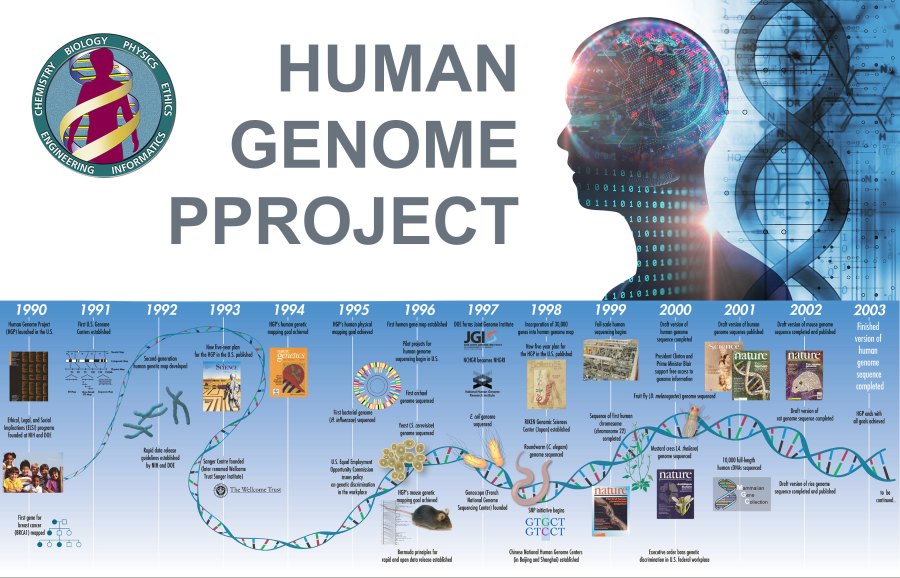
19) The Human Genome Project Debunks Evolution
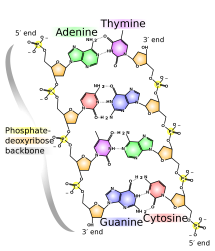 In 1944 DNA was identified as the structure of inheritance. As complex as that process is, it was determined to consist of just four different molecules. And then these four always combine in the same two base pairs – C with G and A with T.
Compare this to digital computers which perform calculations using the simplest binary code of 0-1.
As with computers, the two DNA base pairs can be lined up in an infinite variety of sequences and lengths to form genes. All living things are distinguished by the number and arrangements of the same two base pairs of molecules.
It took the advent of highly functioning computers in the 1990’s to unravel and catalogue the complete sequence of human DNA in The Human Genome Project.
Continue reading “19) The Human Genome Project Debunks Evolution”
In 1944 DNA was identified as the structure of inheritance. As complex as that process is, it was determined to consist of just four different molecules. And then these four always combine in the same two base pairs – C with G and A with T.
Compare this to digital computers which perform calculations using the simplest binary code of 0-1.
As with computers, the two DNA base pairs can be lined up in an infinite variety of sequences and lengths to form genes. All living things are distinguished by the number and arrangements of the same two base pairs of molecules.
It took the advent of highly functioning computers in the 1990’s to unravel and catalogue the complete sequence of human DNA in The Human Genome Project.
Continue reading “19) The Human Genome Project Debunks Evolution”

20) The Genetic Mutation Factors Study Debunks Evolution
The FACT is that science acknowledges what the Bible documents, that one mother and one father parented all human beings alive today. As detailed in the previous post, Eve has been tracked through mitochondrial DNA passed down the generations only in the mother’s egg cell. Adam has been tracked through the male-only Y chromosome on which geneticists have isolated distinct human Y-chromosome DNA haplogroups / differences due to mutations.
According to extensive DNA-sequencing analysis of the Y chromosome, “Every time human DNA is passed from one generation to the next it accumulates 100–200 new mutations.”
However, by arbitrarily applying a low calculation that the human Y-chromosome accumulates only 1-2 mutations per generation, Adam is estimated to have lived roughly 236,000 years ago.
When we apply the scientifically known factor of 100-200 mutations per generation, we arrive at the calculation of only 2,000 -4,000 years since the Most Common Ancestor. This is consistent with the biblical account of the creation of mankind in 4,000 BC and Noah having inherited Adam’s unmutated DNA about 2350 BC.
The mutations found in world-wide male Y-chromosomes have been categorized into “haplo-groups” of mutations unique to – never shared by – each haplogroup, labeled groups A-T.
Can we not recognize the entrenched bias in Evolution ignoring all scientific research fundamentals?
The equally entrenched racism by the elites inventing Evolution at the time colonial Europeans were cruelly enslaving non-whites is also flagrantly exhibited in the study’s use of apes to date the stages of human evolution from non-whites to whites.
The ancestral state of a Y-SNP marker is usually determined by comparison to a chimpanzee DNA sequence for the same marker (Underhill et al. 2000).

21) The Missing Link From Past To Present
Missing link term is frequently used now, mostly by journalists and in popular literature. Specialists understand perfectly that formation of Homo sapience species is a long process, and as evolution is continuous, it is obvious that there were MANY SPECIES between a modern human and our ancestral ape living about 10 mya. These species were slowly, one by one, discovered by anthropologists for the last 100 years. As a result we see not just a link, but a chain of intermediate species.
- This insults the reader’s intelligence. “A specialist would understand perfectly…” A child can understand how the lack of connecting pieces between the parts renders the entirety nonfunctional.
- This is cultic, requiring the reader to accept the word of the “authority” without question.
- This is Newspeak, avoiding the very real issue of the failure of anthropology to discover the stages of change between species by replacing that fundamental claim of Evolution with an unquestionable but irrelevant scientific knowledge of the existence of similar species.
- There is no evidence that these extinct species represent a chain of development from one to another.
And to stop beating a dead horse, I will end by pointing out the gross deception of “we see not just a link, but a chain,” stated with the same flourish of a magician’s misdirection.
Continue reading “21) The Missing Link From Past To Present”

22) What Darwin Got Right
-
-
Jerry Fodor, the American philosopher [and writer of] What Darwin Got Wrong, the new book he has co-authored with the cognitive scientist Massimo Piattelli-Palmarini.
He hadn’t just identified evidence that natural selection was more complicated than previously thought…Natural selection, he explains, simply “cannot be the primary engine of evolution”.
The irony in all this is that Darwin himself never claimed that it was. He went to his deathbed protesting that he’d been misinterpreted: there was no reason, he said, to assume that natural selection was the only imaginable mechanism of evolution.
But rejection of an intelligent designer Creator was and remains a pillar of the concept, so the only other mechanism of evolution is survival of the fittest through intentional measures.
-
SECTION IV: The Reality Option
From Forbes Magazine:
Scientific Proof Is A Myth
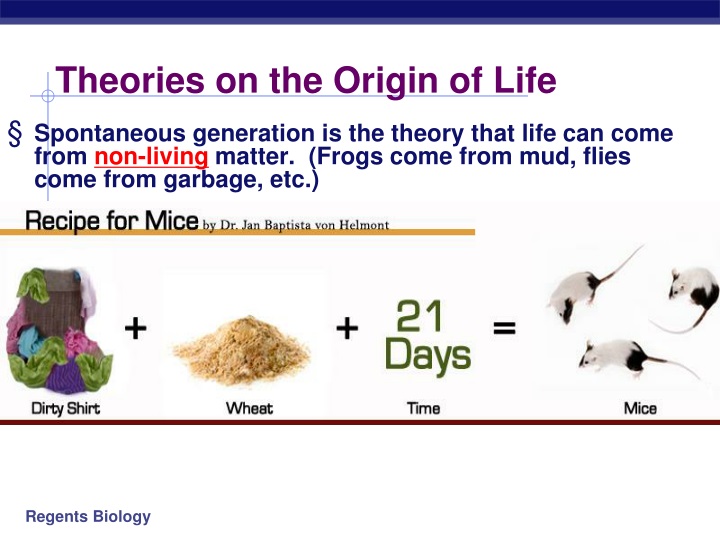
You’ve heard of our greatest scientific theories: the theory of evolution, the Big Bang theory, the theory of gravity. You’ve also heard of the concept of a proof, and the claims that certain pieces of evidence prove the validities of these theories. Fossils, genetic inheritance, and DNA prove the theory of evolution. The Hubble expansion of the Universe, the evolution of stars, galaxies, and heavy elements, and the existence of the cosmic microwave background prove the Big Bang theory. And falling objects, GPS clocks, planetary motion, and the deflection of starlight prove the theory of gravity.
Except that’s a complete lie...when it comes to science, proving anything is an impossibility.
Continue reading “SECTION IV: The Reality Option”