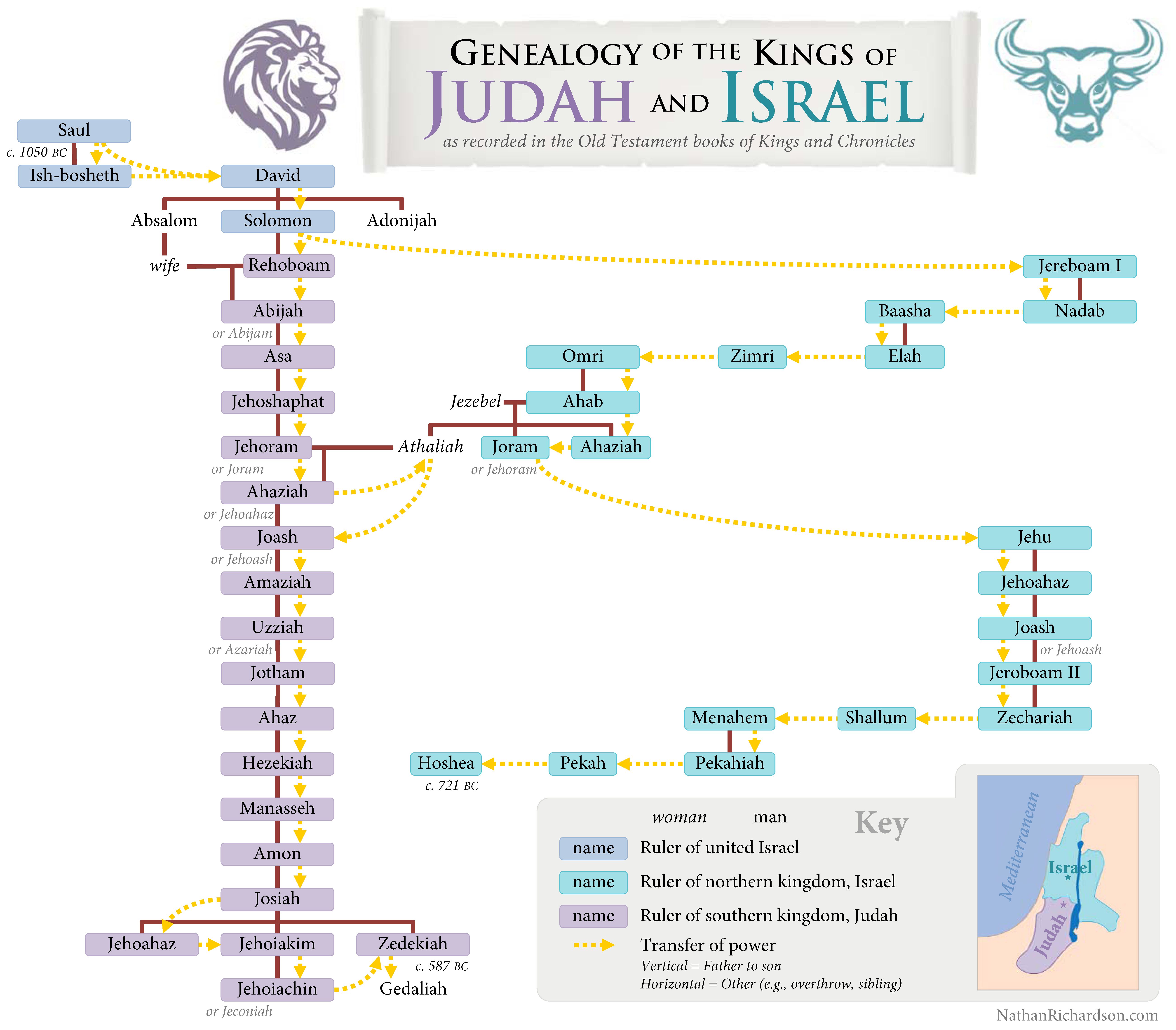
SECTION XXV: Be Ye Not Unequally Yoked With Unbelievers

Intermarriage between royal dynasties has been a political strategy as far back as the Late Bronze Age...

  • avoided the inevitable border conflicts
  • promoted peace and trade between nations
  • secured a military alliance against a third dynasty,
  • provided a legal claim of inheritance to expand into the allied territory whenever the allied monarch failed to leave an undisputed heir. (Emphasis added.) 

We see this strategy being accomplished under King David in his extension of the boundaries of Israel.

Absalom the son of Maacah the daughter of Talmai king of Geshur…(II Samuel 3:3)

geshur

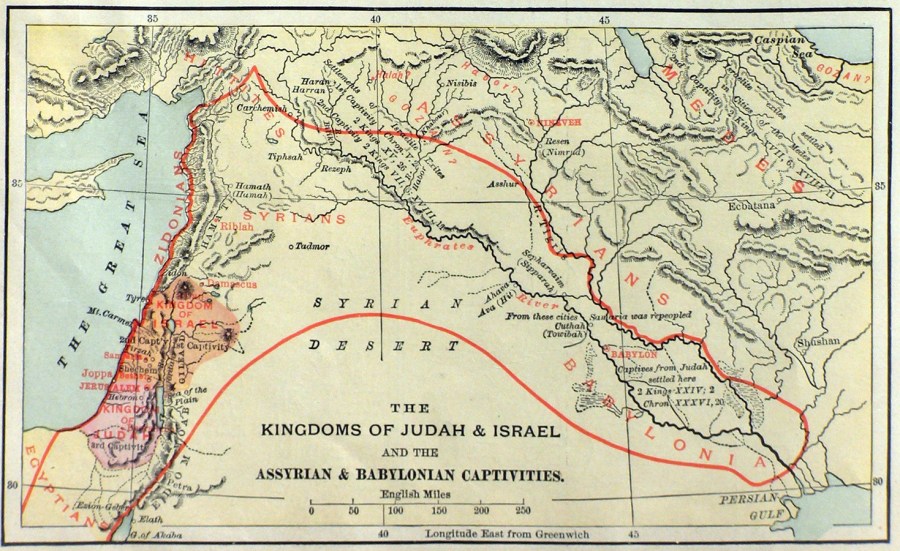
Geshur was a powerful nation holding a military advantage with what is now called the Golan Heights. This is such strategic high ground that in our day the United Nations maintains a peacekeeping force there.

When Absalom fled to Geshur to escape the legal consequences of murdering his brother, King David did not extradite him. Undoubtedly partly because of his love for Absalom, partly because of his own blood guilt over Uriah the Hittite, but very likely because of the geographical ability of Geshur to harbor their son and the high number of deaths that would cost to storm their stronghold.

Continue reading “SECTION XXV: Be Ye Not Unequally Yoked With Unbelievers”

143) What God Hath Joined Together, Let Not Man Put Asunder

Solomon, the first heir to this dynasty, was known for his wisdom, documented in the collection of Proverbs. Yet, in a process well known to psychology, he let his emotional and physical desires overwhelm his better judgment.

“Then did Solomon build an high place for Chemosh, the abomination / hybrid demi-god of Moab, in the hill that is before Jerusalem, and for Molech, the abomination / hybrid demi-god of the children of Ammon. And likewise did he for all his strange wives, which burnt incense and sacrificed unto their gods.

And the LORD was angry with Solomon, because his heart was turned from the Lord God of Israel, which had appeared unto him twice, And had commanded him concerning this thing, that he should not go after other gods: but he kept not that which the Lord commanded.” (I Kings 11:7-12)

But God had covenanted with Solomon’s father to guarantee an everlasting kingdom.

“God is not a man, that he should lie; neither the son of man, that he should repent: hath he said, and shall he not do it? or hath he spoken, and shall he not make it good? (Numbers 23:19-20)

Father God isn’t trapped, unlike most parents.

Continue reading “143) What God Hath Joined Together, Let Not Man Put Asunder”

144) The Sins Of Jeroboam

Jeroboam…an Ephrathiteruler over all the charge of the house of Josephthe prophet Ahijah the Shilonite…said to Jeroboam…thus saith the LORD, the God of Israel, Behold, I will rend the kingdom out of the hand of Solomon, and will give ten tribes to thee:” (I Kings 11:26-31)

An “Ephrathite” is someone from the tribe of Ephraim, one of Joseph’s two sons who Jacob adopted as his immediate heirs. He is the logical alternate to a ruler from the tribe of Judah, since Jacob split the Melchizedekian blessing between Judah and Joseph through Ephraim.

“And Joseph called the name of…[his younger son] Ephraim: For God hath caused me to be fruitful in the land of my affliction…And Israel stretched out his right hand, and laid it upon Ephraim’s head, And he blessed Joseph, and said, God, before whom my fathers Abraham and Isaac did walk…The Angel which redeemed me from all evil, bless the lads;

  • and let my name [parent rather than grandparent] be named on them [for the purpose of greater share of inheritance instead of splitting Joseph’s share] 
  • and the name / title of my fathers Abraham and Isaac [clearly, Melchizedek];
  • and let them grow into a multitude in the midst of the earth…truly [Ephraim’s] seed shall become a multitude of nations…

And Israel said unto Joseph…I have given to thee one portion above thy brethren.” (Genesis 41:52, 48:14-22)

Note – that’s one portion above Judah as well. And it shows when Jeroboam the Ephrathite is awarded political rule over 10 out of the 12 tribes of Israel.

This certainly didn’t stop these ten tribes from making the Passover pilgrimage to YHVH in Jerusalem, but – unlike King Hiram at Tyre, Jeroboam was afraid he would lose power, so he plagiarized the true worship of YHVH into his own denomination.

Continue reading “144) The Sins Of Jeroboam”

145) A Kingdom Divided Against Itself Cannot Stand

Despite the fulfillment of the prophecy that God would hand over to him the majority of the kingdom of Israel without a fight, Jeroboam failed to trust God for an everlasting kingdom.

And Jeroboam said in his heart…If this people go up to do sacrifice in the house of the Lord at Jerusalem, then shall the heart of this people turn again unto their lord, even unto Rehoboam king of Judah, and they shall kill me. Whereupon the king…said unto them, It is too much for you to go up to Jerusalem:

The natural consequence of distrust is a never-satisfied need to control to feel safe, leading to tyranny.

Continue reading “145) A Kingdom Divided Against Itself Cannot Stand”

146) A Fallen Woman Brings Down The House

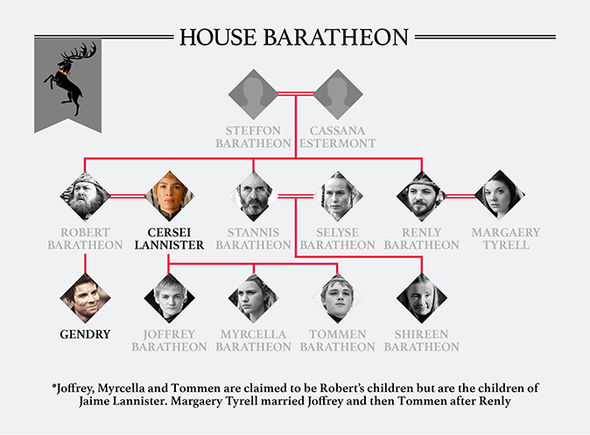
The biblical account of the fall of the house of Ahab meets the high standards of any episode of Game of Thrones. I dare you to be bored with this historical account.

We have more records on Ahab and Jezebel than on any other kings besides David and Solomon for a reason. Jezebel is readily acknowledged to be the prototypical Whore of Babylon, the Woman who rides the Beast during the greatest tribulation ever. When we take the time to study these precursor events referenced by future prophecies, we find that, despite doing more to provoke the LORD God of Israel to anger than all the kings of Israel that were before him, God gave Jezebel plenty of time and rope to hang herself.

One reason, surely, is for chastening – for correction – of his people. Certainly many Israelites fled south to Judah, as we find that many years later when King Josiah celebrates Passover for the first time in many generations, that it is recorded that “And there was no passover like to that kept in Israel from the days of Samuel the prophet; neither did all the kings of Israel keep such a passover as Josiah kept, and the priests, and the Levites, and all Judah and Israel that were present, and the inhabitants of Jerusalem.” (II Chronicles 35:17-19)

But there is undoubtedly more to it.

When I read that Ahab remained propped up in his chariot all day after he was mortally wounded, bleeding to death, my first reaction is that he was a fighter, rather heroic. But he wasn’t being heroic when he asked Jehoshaphat to cover for him, so another explanation for his behavior is that he was simply being stubborn. Reminds me of Pharaoh. And that fits.

Continue reading “146) A Fallen Woman Brings Down The House”

147) Melchizedek Overcomes Treason

  1. Ahaziah Jehoram’s son was 22 years old when he began to reign; and he reigned one year in Jerusalem. And his mother’s name was Athaliah, the daughter of Omri king of Israel. (II Kings 8:24-26)
  2. Ahaziah the son of Jehoram king of Judah was 42 years old when he began to reign, and he reigned one year in Jerusalem. His mother’s name also was Athaliah the daughter of Omri. (II Chronicles 22:21-23)

Whoah! Mistake!!! Therefore proving the Bible is not infallible and not the inerrant word of God!

Only bias immediately jumps to a desired conclusion.

At this point this is only an inconsistency. And inconsistencies are the best clues to uncovering secrets, like murderers, so this is where it’s important to dig in and do the detective work.

Continue reading “147) Melchizedek Overcomes Treason”

SECTION XXVI: Israel’s Witness To The World

Melqart (also Melkarth or Melicarthus) was an important Phoenician god and patron deity of the city of Tyre. Associated with the monarchy, sea, colonization, and commercial enterprise…Melqart’s stature is attested by the reverence the god was accorded by two of the Phoenician’s immediate successor cultures in the ancient Mediterranean: Greece and Carthage

While Baal, El, and Baalat were important deities…Melqart was considered the head of the pantheon at Tyre. Indeed, his very name means ‘king of the city’ (melek-qart) and he was referred to as Baal de Sor or ‘Lord of Tyre’. Melqart, in addition, assumed some of the characteristics of both Adonis and Eshmun as he was the focus of a festival of resurrection each year in the month of Peritia (February-March) in which a sacrifice was made by fire or a figure of the god was ritually burnt. Hence, his other name the ‘fire of heaven’.

Remember, Lucifer is equated with the King of Tyre, and the Seed of the Serpent was Tyre’s chief god.

The god had a long-lasting temple dedicated in his name at Tyre, built during the reign of Hiram in the 10th century BCE.

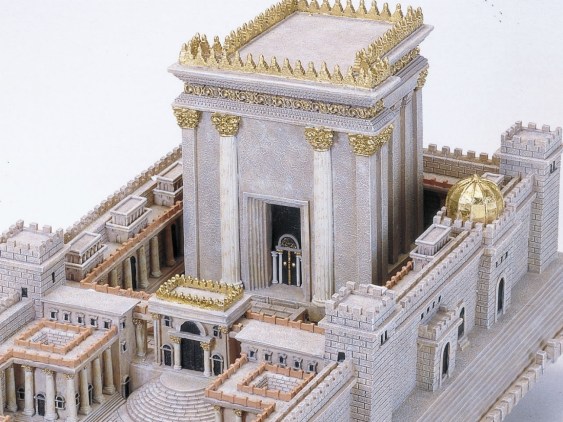
The date is the same as Solomon’s reign, establishing that this is the same Hiram documented in the Bible. Additionally, the style of Hiram’s temple at Tyre matches that of Solomon’s temple in Jerusalem.

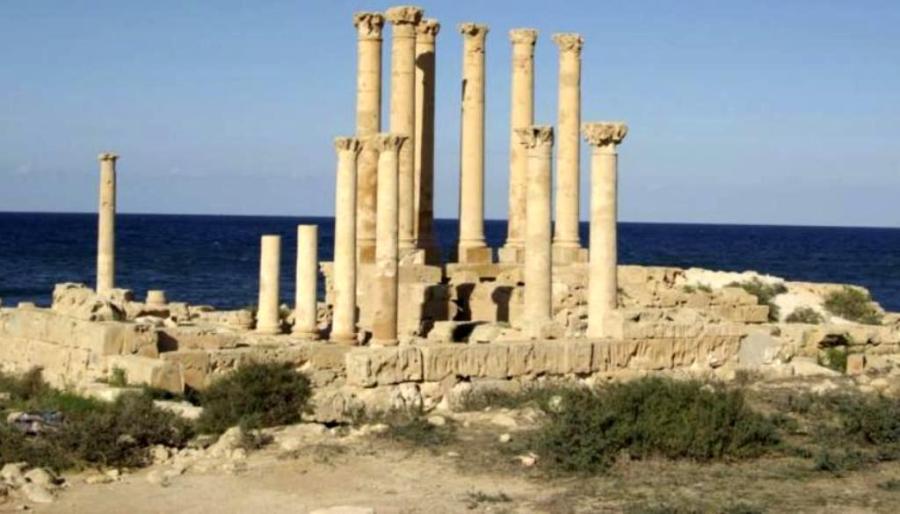
Melqart’s temple was famously visited by Herodotus in the 5th century BCE who described its impressive entrance as having two columns.

Just like those at Solomon’s temple.

Hiram appears to have copied the form of Solomon’s magnificent temple to El. 

solstemple

Continue reading “SECTION XXVI: Israel’s Witness To The World”

148) A Prophet Like Moses

I will raise them up a Prophet from among their brethren, like unto thee, and will put my words in his mouth; and he shall speak unto them all that I shall command him.” (Exodus 19:3-6, 32:1; Deuteronomy 18:15-16)

The King James Bible capitalizes “Prophet” in this passage, suggesting that Jesus Christ is the single person being referenced here. But none of the ancient languages used capital letters, so that is a late-date interpreter’s imposition.

True, Jesus the Christ is targeted here, as detailed in the New Testament.

“Jesus Christ, which before was preached unto you…which God hath spoken by the mouth of all his holy prophets since the world began. For Moses truly said unto the fathers, A prophet shall the Lord your God raise up unto you of your brethren, like unto me; him shall ye hear [as in “Hear! Hear!” – be in agreement] in all things whatsoever he shall say unto you.” (Acts 3:20-22)

But we can’t overlook the mention in the same breath of

all the prophets from Samuel and those that follow after, as many as have spoken, have likewise foretold of these days when…” (Acts 3:23).

So we can’t understand “the days” of Jesus without first being grounded in the prophets.

“We have found him, of whom Moses in the law, and the prophets, did write,” (John 1:45)

Heads up. There is more than one iteration of The Prophet Like Moses.

Continue reading “148) A Prophet Like Moses”

149) Whom The LORD Loves He Chastens

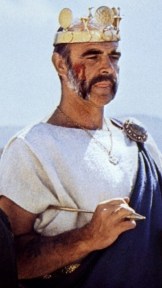
homme-qui-voulut-ii-1975-08-gMortal four-dimensional humans cannot survive an encounter with hyperdimensional God. This is based on physics, not an arbitrary mandate, and is witnessed throughout world religions. The movie The Man Who Would Be King fastens the fatal hubris of the main character to this concept. The imposter god’s mortality is revealed by the woman who, in terror for her life when he tried to embrace her, lashes out, drawing blood.

Mortals need mortal witnesses of God’s past occasions of salvation in order to put their trust in him for their current and future deliverance from certain destruction.

Continue reading “149) Whom The LORD Loves He Chastens”

150) Raising The Tabernacle Of David

“Are ye not as children of the Ethiopians unto me, O children of Israel? saith the LORD. Have not I brought up Israel out of the land of Egypt?…

Behold, the eyes of the LORD God are upon the sinful kingdom, and I will…sift the house of Israel among all nations…

  • In that day will I raise up the tabernacle of David that is fallen
  • AND of all the heathen, which are called by my name, saith the LORD that doeth this.” (Amos 9:7-12)

The definition of tabernacle as a temporary dwelling place covers a variety of agents:

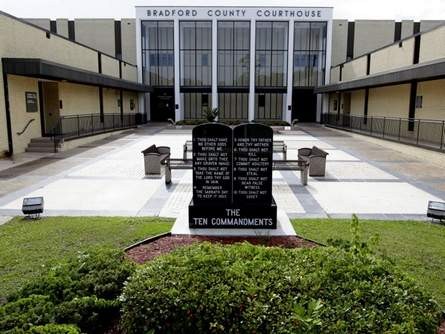
“For there was a tabernacle made…after the second veil, the tabernacle which is called the Holiest of all; Which had the golden censer, and the ark of the covenant overlaid round about with gold, wherein was the golden pot that had manna, and Aaron’s rod that budded, and the tables of the covenant / Ten Commandments; And over it the cherubims of glory shadowing the mercyseat; of which we cannot now speak particularly.” (Hebrews 9)

Why couldn’t the writer of Hebrews speak particularly about the ark of the covenant? Because it had been lost to sight.

That is not to say it had been lost.

“For the eyes of the LORD run to and fro throughout the whole earth, to shew himself strong in the behalf of them whose heart is perfect toward him.” (II Chronicles 16:9)

Continue reading “150) Raising The Tabernacle Of David”