180) Christ Is The End Of What Law?

Now they [Jewish believers] which were scattered abroad upon the persecution that arose about Stephen [in Jerusalem] travelled as far as Phenice [Lebanon], and Cyprus, and Antioch,

  • preaching the word to none but unto the Jews only….
  • when they were come to Antioch, spake unto the Grecians…

a great number believed, and turned unto the Lord. And the disciples were called Christians first in Antioch.” (Acts 11)

Supercessionist theologians consider this to be the flashing red sign that God replaced the Jews with the Gentiles.

But the Jewish believers were “preaching the word”. And what would that be? At this time, only the Old Testament – describing its way of salvation.

Continue reading “180) Christ Is The End Of What Law?”

181) Paul Did Not Found Christianity

Paul himself never claimed to found a new religion. He states multiple times that he was a follower of Jesus of Nazareth because Jesus was the fulfillment of Judaism’s Old Testament prophecy. 

“Ananias the high priest descended with the elders, and with a certain orator named Tertullus, who informed the governor against Paul…we have found this man a pestilent fellow…a ringleader of the sect of the Nazarenes…

Then Paul…answered, after the way which they call heresy, so worship I the God of my fathers, believing [present tense!] all things which are written in the law and in the prophets: And have hope toward God, which they themselves also allow, that there shall be a resurrection of the dead, both of the just and unjust…I came to bring alms to my nation, and offerings...certain Jews from Asia found me purified in the temple…” (Acts 24:1-18)

Paul clearly articulates that the law of Moses, which did not institute but rather affirmed the earlier practice of the identifying mark of circumcision, was never an element of salvation for the Jews but a code of righteous conduct for a select leadership who are already in a faith-based relationship with the LORD God.

“For what saith the scripture? Abraham believed God, and it was counted unto him for righteousness…And he received the sign of circumcision, a seal of the righteousness of the faith which he had yet being uncircumcised…being fully persuaded that, what he [God] had promised, he was able also to perform. And therefore it was imputed to him for righteousness.

Now it was not written for his sake alone, that it was imputed to him; But for us also, to whom it shall be imputed, if we believe on him that raised up Jesus / YHVH’s Savior our Lord from the dead; Who was delivered for our offences, and was raised again for our justification.” (Romans 4:1-25)

Therefore we conclude that a man is justified by faith without the deeds of the law. Is he the God of the Jews only? is he not also of the Gentiles? Yes, of the Gentiles also.” (Romans 3:19-29)

Continue reading “181) Paul Did Not Found Christianity”

182) Paul Never Identified As Christian

There was a significant difference between the converts to the recently resurrection Yeshua of Nazareth of the Jews.

  1. The Jews based their understanding of Yeshua’s claim to be the Son of God on the scriptures, the word of God.
  2. The scripturally illiterate Gentiles based their understanding of “Son of God”. on their religious backgrounds. Certain concepts were alien, such as:

“Now when the [Roman] centurion, and they [other Romans]  that were with him [managing the crucifixion], watching Jesus, saw the earthquake, and those things that were done, they feared greatly, saying, Truly this was the Son of God.” (Mark 15:39)

The text is very clear that the basis for the Roman observers’ conviction / faith that Jesus was the Son of God was based on the associated signs of hyperdimensional power over the natural order at his death. They could easily believe that Jesus King of the Jews had achieved immortality – i.e. godhood – after he died and his soul ascended into Heaven because this was a common occurrence among the pagan divine and semi-divine monarchies within the Roman Empire.

But this is not saving faith. The end game of biblical saving faith is not power for power’s sake. It is power for righteousness’ sake. 

Continue reading “182) Paul Never Identified As Christian”

There was a significant difference between the converts to the recently resurrection Yeshua of Nazareth of the Jews.

  1. The Jews based their understanding of Yeshua’s claim to be the Son of God on the scriptures, the word of God.
  2. The scripturally illiterate Gentiles based their understanding of “Son of God”. on their religious backgrounds. Certain concepts were alien, such as:

“Now when the [Roman] centurion, and they [other Romans]  that were with him [managing the crucifixion], watching Jesus, saw the earthquake, and those things that were done, they feared greatly, saying, Truly this was the Son of God.” (Mark 15:39)

The text is very clear that the basis for the Roman observers’ conviction / faith that Jesus was the Son of God was based on the associated signs of hyperdimensional power over the natural order at his death. They could easily believe that Jesus King of the Jews had achieved immortality – i.e. godhood – after he died and his soul ascended into Heaven because this was a common occurrence among the pagan divine and semi-divine monarchies within the Roman Empire.

But this is not saving faith. The end game of biblical saving faith is not power for power’s sake. It is power for righteousness’ sake. 

Continue reading “182) Paul Never Identified As Christian”

183) Paul Publicly Repudiated Christianity

“Now when [the Roman governor] Festus was come into the province…the high priest and the chief of the Jews informed him against Paul…and laid many and grievous complaints against Paul, which they could not prove.

Festus inherited and greatly inflamed the social unrest problems of his predecessor Felix. “He valued peace with the Jews more than justice and, despite determining his prisoner was innocent” refused to release Paul. In his quest for a political alliance with the Jewish rulers, Festus publicly dismissed their clear homicidal intentions towards Paul as a simple religious dispute. He actually tried to give up Paul to the Jewish rulers by encouraging him to go back to Jerusalem to be judged by them, knowing it would result in his death.

Paul was not so heavenly minded as to be no earthly good. He operated in close connection to his social environment. Judea had been fomenting revolution for at least fifty years, and was a tinderbox needing just one last strike to blow. If Festus allowed this revolution to happen, it would result in Festus’ disgrace and demotion by Rome, quite likely even his death – if not by a Jewish mob, by an irate Roman politician looking for a scapegoat.

Paul’s only safety net was Festus’ sensible greater fear of Roman over Jewish reprisal if he didn’t treat Paul as the Roman citizen that he was when he appealed to Caesar. You can imagine the efforts of the Jews to get Festus to turn a blind eye on that one. 

But Paul was a legal expert Pharisee who was trained by what amounted to a Supreme Court Judge,  Gamiel

When he answered for himself, “Neither against the law of the Jews, neither against the temple, nor yet against Caesar, have I offended any thing at allI stand at Caesar’s judgment seat, where I ought to be judged: to the Jews have I done no wrong, as thou very well knowest. I appeal unto Caesar.”  

Paul’s transfer here of his legal status as a Jew under the Jewish politico-religious authorities is exactly the same action taken when Paul transferred his religious affiliation from the Jewish authorities in Rome to Gentiles. 

Continue reading “183) Paul Publicly Repudiated Christianity”

“Now when [the Roman governor] Festus was come into the province…the high priest and the chief of the Jews informed him against Paul…and laid many and grievous complaints against Paul, which they could not prove.

Festus inherited and greatly inflamed the social unrest problems of his predecessor Felix. “He valued peace with the Jews more than justice and, despite determining his prisoner was innocent” refused to release Paul. In his quest for a political alliance with the Jewish rulers, Festus publicly dismissed their clear homicidal intentions towards Paul as a simple religious dispute. He actually tried to give up Paul to the Jewish rulers by encouraging him to go back to Jerusalem to be judged by them, knowing it would result in his death.

Paul was not so heavenly minded as to be no earthly good. He operated in close connection to his social environment. Judea had been fomenting revolution for at least fifty years, and was a tinderbox needing just one last strike to blow. If Festus allowed this revolution to happen, it would result in Festus’ disgrace and demotion by Rome, quite likely even his death – if not by a Jewish mob, by an irate Roman politician looking for a scapegoat.

Paul’s only safety net was Festus’ sensible greater fear of Roman over Jewish reprisal if he didn’t treat Paul as the Roman citizen that he was when he appealed to Caesar. You can imagine the efforts of the Jews to get Festus to turn a blind eye on that one. 

But Paul was a legal expert Pharisee who was trained by what amounted to a Supreme Court Judge,  Gamiel

When he answered for himself, “Neither against the law of the Jews, neither against the temple, nor yet against Caesar, have I offended any thing at allI stand at Caesar’s judgment seat, where I ought to be judged: to the Jews have I done no wrong, as thou very well knowest. I appeal unto Caesar.”  

Paul’s transfer here of his legal status as a Jew under the Jewish politico-religious authorities is exactly the same action taken when Paul transferred his religious affiliation from the Jewish authorities in Rome to Gentiles. 

Continue reading “183) Paul Publicly Repudiated Christianity”

184) Paul Identified As Hebrew

Paul’s claim to be an Hebrew, and a consummate one at that, confirms that there is a religious significance to this identification, which precedes and is separate from the Israelite national identification, and is important enough for Paul to brag about.

From II Corinthians 11:22

  1. Are they Hebrews? so am I.
  2. Are they Israelites? so am I.
  3. Are they the seed of Abraham? so am I.”

From Philippians 3:5-6

  1. “Circumcised the eighth day,
  2. of the stock of Israel,
  3. of the tribe of Benjamin,
  4. an Hebrew of the Hebrews;
  5. as touching the law, a Pharisee.”

Continue reading “184) Paul Identified As Hebrew”

SECTION XXX: From Faith To Faith

  1. the righteousness of God [is] revealed from faith to faith: as it is written, The just shall live by faithFor/ contrasting with 
  2. the wrath of God is revealed from heaven against all ungodliness and unrighteousness of men, who hold the truth in unrighteousness;” (Romans 1:17-18)

Faith in the One true God means

  1. believing in the trustworthiness of the one making a promise of resurrection because of his past record in creation,
  2. then submitting to his authority over our mortal life because we’ve come to know his way alone is constructive
  3. and we want to share his life now and after death by uniting with him as reflected in shared values and behaviors.

How awful that this concept is better understood and deeply expressed by Satan’s fans in the final episode ‘The Wrath of the Lamb” of the top rated TV show Hannibal, than by followers of the actual Lamb.

Continue reading “SECTION XXX: From Faith To Faith”

185) Salvation Has Always Been By Grace Through Faith In God’s Word

When, like Timothy, we know the Old Testament scriptures, we see that the plan of salvation by grace through faith, and not the works of the law, was not a new development revealed by Jesus to Paul. The Old Testament word of God reveals the fundamental doctrine of salvation by grace through faith.

We can’t overlay an theological interpretation that Jesus gave Paul a unique revelation about a Gentile-only church,

Continue reading “185) Salvation Has Always Been By Grace Through Faith In God’s Word”

186) The First Principles Of The Oracles Of God

OK, lets go back to the first principles of the oracles of God which were given, not to Israel, but to the Hebrews.

Abraham, the father of the original assembly of post-flood international believers before there was a nation of Israel, is stated in the New Testament to continue to be the father of the same assembly of believers after the establishment of the nation of Israel.

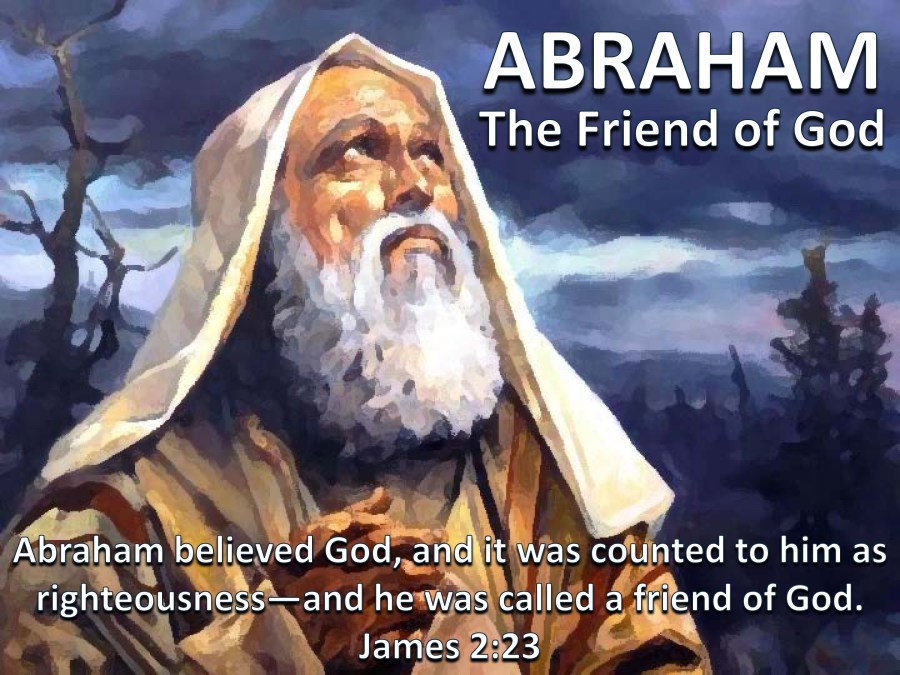
“What shall we say then that Abraham our father, as pertaining to the flesh, hath found?…what saith the scripture? Abraham believed God, and it was counted unto him for righteousness… faith was reckoned to Abraham for righteousness…the promise, that he should be the heir of the world, was…through the righteousness of faith…of Abraham; who is the father of us all…

Now it was not written for his sake alone, that it was imputed to him; But for us also, to whom it shall be imputed, if we believe on him that raised up Jesus our Lord from the dead; Who was delivered for our offences, and was raised again for our justification. (Romans 4)

Can we understand that becoming Abraham’s seed / children as a “Friend / bosom buddy of God” is a real national identity, based on established social principles, in effect during – and since – Abraham’s day?

When we apply the full meaning of father as we’ve come to understand it in ancient culture (see post on Father Abraham if you don’t understand this), we understand the extent of Paul’s claim to Gentile believers.

He is not allegorizing a relationship. He is stating a fact that Gentiles have equal standing with the physical descendants because all the children only qualify as legitimate children when they are acknowledged by the Father.

Continue reading “186) The First Principles Of The Oracles Of God”

187) The Hebrew Torah Authenticates All Subsequent Word From God

 “To the law [Exodus – Deuteronomy) and to the testimony (of the old ones compiled in Genesis): if they speak not according to this word, it is because there is no light in them.” (Isaiah 8:20)

biblical canon or canon of scripture is a set of texts (or “books”) which a particular Jewish or Christian religious community regards as authoritative scripture. The English word canon comes from the Greek κανών, meaning “rule” or “measuring stick”. Christians were the first to use the term in reference to scripture, butEugene Ulrich regards the notion as Jewish.

  • The books of Moses, consisting of Genesis – Deuteronomy, were preserved over the years by the priests.
  • The Psalms of David and other song leaders and wisdom writings of Solomon were authenticated as consistent with the Torah by the priests at the time they were written and likewise safeguarded.
  • The historical records known to us as Joshua, Judges, I&II Kings, etc. were written and safeguarded by official scribes (which, interestingly are making a comeback in the medical field where meticulous accuracy is of paramount importance), but there are other historical writings, e.g. Jasher, Enoch and others, that, while referenced in the Bible and included in the first edition of the King James Bible in 1611, aren’t included in later editions and other Bible translations for whatever reason.

The Prophets are the real question.  Who decided which of the many sermons and predictions were truly from God and which weren’t?

Continue reading “187) The Hebrew Torah Authenticates All Subsequent Word From God”

188) One Hebrew Commonwealth Under YHVH’S King

Jesus himself established that the criteria for entrance into God’s eternal kingdom is not calling on the Romanized name of Jesus Christ but by the way we treat his people.

 “When the Son of man shall come in his glory, and all the holy angels with him, then shall he sit upon the throne of his glory: And before him shall be gathered all nations: and he shall separate them one from another, as a shepherd divideth his sheep from the goats: And he shall set the sheep on his right hand, but the goats on the left.

Then shall the King say unto them on his right hand, Come, ye blessed of my Father, inherit the kingdom prepared for you from the foundation of the world: For I was an hungred, and ye gave me meat: I was thirsty, and ye gave me drink: I was a stranger, and ye took me in: Naked, and ye clothed me: I was sick, and ye visited me: I was in prison, and ye came unto me. Then shall the righteous answer him, saying, Lord, when saw we thee an hungred, and fed thee? or thirsty, and gave thee drink? When saw we thee a stranger, and took thee in? or naked, and clothed thee? Or when saw we thee sick, or in prison, and came unto thee?

And the King shall answer and say unto them, Verily I say unto you, Inasmuch as ye have done it unto one of the least of these my brethren, ye have done it unto me.” (Matthew 25:31-40)

This concept is central to the Godfather saga, of which the first movie in the trilogy is considered by many critics to be the best movie of all time.

Continue reading “188) One Hebrew Commonwealth Under YHVH’S King”