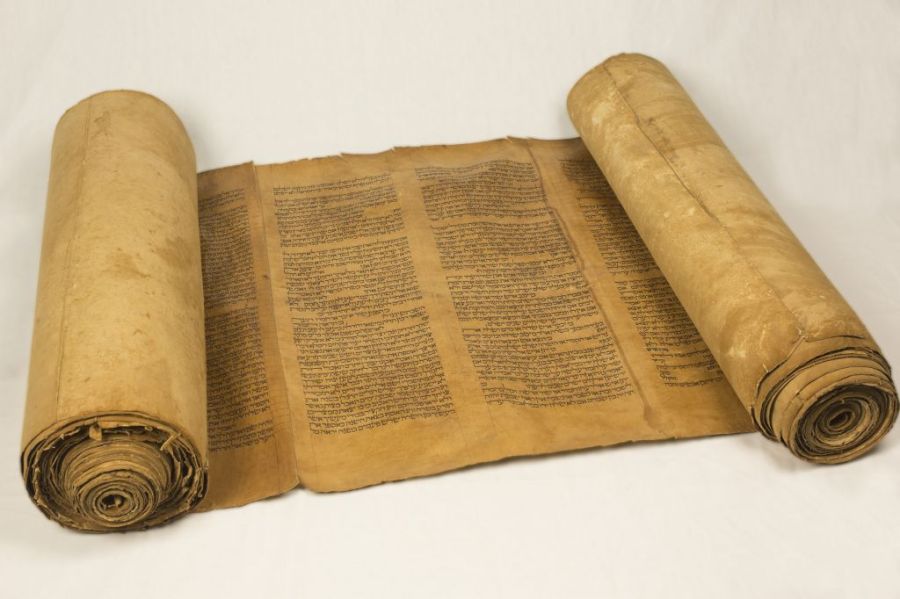
A biblical canon or canon of scripture is a set of texts (or “books”) which a particular Jewish or Christian religious community regards as authoritative scripture. The English word canon comes from the Greek κανών, meaning “rule” or “measuring stick”.
- The books of Moses, consisting of Genesis – Deuteronomy, were preserved over the years by the priests.
- The Psalms of David and other song leaders and wisdom writings of Solomon were authenticated as consistent with the Torah by the priests at the time they were written and likewise safeguarded.
- The historical records were written and safeguarded by official scribes (which, interestingly are making a comeback in the medical field where meticulous accuracy is of paramount importance).
- For whatever reasons, there are other historical writings, in particular Jasher and Enoch, that, while referenced in the Bible and included in the first edition of the King James Bible in 1611, aren’t included in later editions.
Most of all, the concepts of justice, righteousness and freedom are articulated by the Prophets in hundreds of prophecies of judgment for failing to follow these precepts that came true, especially for rejecting the law of the LORD / Creator.
- Isaiah 3:15, 5:8, 10:1-2 “What mean ye that ye beat my people to pieces, and grind the faces of the poor? saith the LORD God of hosts…Woe unto them that join house to house, that lay field to field, till there be no place [for others], that they may be placed alone in the midst of the earth!…Woe unto them that decree unrighteous decrees, and that write grievousness which they have prescribed; To turn aside the needy from judgment, and to take away the right from the poor of my people, that widows may be their prey, and that they may rob the fatherless!”
- James 1:27 “Pure religion and undefiled before God and the Father is this, To visit the fatherless and widows in their affliction, and to keep himself unspotted from the world.”
- Jeremiah 5:1, 7:5-11 “Will ye steal, murder, and commit adultery, and swear falsely, and burn incense unto Baal, and walk after other gods whom ye know not; And come and stand before me in this house, which is called by my name, and say, We are delivered to do all these abominations? Is this house, which is called by my name, become a den of robbers in your eyes?”
- Matthew 21:12-14 “And Jesus went into the temple of God, and cast out all them that sold and bought in the temple, and overthrew the tables of the moneychangers, and the seats of them that sold doves, And said unto them, It is written, My house shall be called the house of prayer; but ye have made it a den of thieves.”
- Ezekiel 5:5-14 “Thus saith the LORD God; This is Jerusalem: I have set it in the midst of the nations and countries that are round about her. And she hath changed my judgments into wickedness more than the nations, and my statutes more than the countries that are round about her…therefore…I will make thee waste, and a reproach among the nations that are round about thee, in the sight of all that pass by.”
- Matthew 24 “And Jesus went out, and departed from the temple: and his disciples came to him for to shew him the buildings of the temple. And Jesus said unto them, See ye not all these things? verily I say unto you, There shall not be left here one stone upon another, that shall not be thrown down…then shall be great tribulation, such as was not since the beginning of the world to this time, no, nor ever shall be. And except those days should be shortened, there should no flesh be saved: but for the elect’s sake those days shall be shortened….Verily I say unto you, This generation shall not pass, till all these things be fulfilled.”
“if thou wilt not hearken unto the voice of the LORD thy God, to observe to do all his commandments and his statutes which I command thee this day; that all these curses shall come upon thee…thou shalt serve thine enemies in hunger, and in thirst, and in nakedness, and in want of all things…the LORD shall scatter thee among all people, from the one end of the earth even unto the other; and there thou shalt serve other gods… (Deuteronomy 28)
”What is so astounding is how this unlikely prophecy was literally fulfilled through the Jewish people…In history, the Jewish people were by far the most scattered people on earth, especially given their population. Since their forced exile from the land of Israel…the Jewish people over time established communities across the globe…and no other people could historically make a similar claim. The Gypsies, who were relatively widespread in many areas, came no where close to the Jewish dispersion across the earth…the bible clearly predicted a number of times that the Jewish people would be spread out in communities around the globe…and this is precisely what happened. This worldwide dispersal was predicted long before it happened, it was not a likely occurrence, it was not self-fulfilled, and it was not foreseeable. This is a fulfilled prophecy.”
The canonization of scripture was unique to Judaism, and became integral to the strengthening and expansion of faith in the God of Abraham, Isaac and Jacob not only among the Jews but among the nations where the Jews were scattered.
When, after the priests returned to Jerusalem for the express purpose of reestablishing the center of worship of the God of Israel, the prophets Nehemiah, Haggai and Zechariah / Zacharias were instrumental in energizing the leaders to resume the work, but it wasn’t until Ezra, a priest with peerless credentials, spurred a Great Awakening in Judaism as the equivalent of the Protestant Reformation. Like King David before him, Ezra, organized the service of worship to fit current circumstances and ensure the learning and practice of the law by the general population.
The scattering of Jews in foreign countries without access to Jerusalem’s temple led to the practice of gathering for instruction in conveniently located local assemblies, known at this time in the local language as “bet ha-keneset (also spelled knesset),” i.e. “house of assembly”. This term was carried forward from the time of Moses and can be recognized in the New Testament letter where the writer warns the Hebrews “Not forsaking the assembling of ourselves together…but exhorting one another…” (Heb 10:25). Knesset translates in the Greek and thence to English, as “synagogue.”
But it is not enough to attend a communal gathering on holy days – the Word / doctrine should be read / heard / recited daily be so integrated into one’s thoughts that decisions and actions automatically fall into line with God’s thoughts and ways. After Alexander the Great conquered and ruled the Persian Empire, Greek became the common language of much of the ancient world, including many Jews who began to speak Greek as their primary language. This led to a Greek translation of the Old Testament, called the Septuagint which is often quoted verbatim rather than the Hebrew in the New Testament.
The Great Knesset/Assembly consisted of 120 Jewish scribes, sages, and prophets who were the theocratic rulers. The current Israeli secular governing body derives its name “Knesset” and composition directly from this historical body. The religious Great Knesset canonization of the Jewish writings provided the necessary legal evidence to prove that Jesus was “the Christ”, i.e. the promised redeemer, in “the law of Moses, the prophets, and the psalms.” This is “the faith that was once delivered unto the saints” (Jude 1:3), called The Old Testament by Christianity and the Tanakh by Judaism.
The significance of the singular Jewish practice of assembling locally and regularly for study of authorized scripture can be measured by the equivalent torrent of conversions to the God of the Bible during the Protestant Reformation after the translation of scripture into vernacular languages.
And so the scattering of the Jews among the Gentiles accomplished YHVH’s plan for the whole world.
“Who will have all men to be saved, and to come unto the knowledge of the truth. For there is one God, and one mediator between God and men, the man Christ Jesus; Who gave himself a ransom for all, to be testified in due time. Whereunto I [Paul] am ordained a preacher, and an apostle, (I speak the truth in Christ, and lie not;) a teacher of the Gentiles in faith and verity.” (I Timothy 2:4-7)