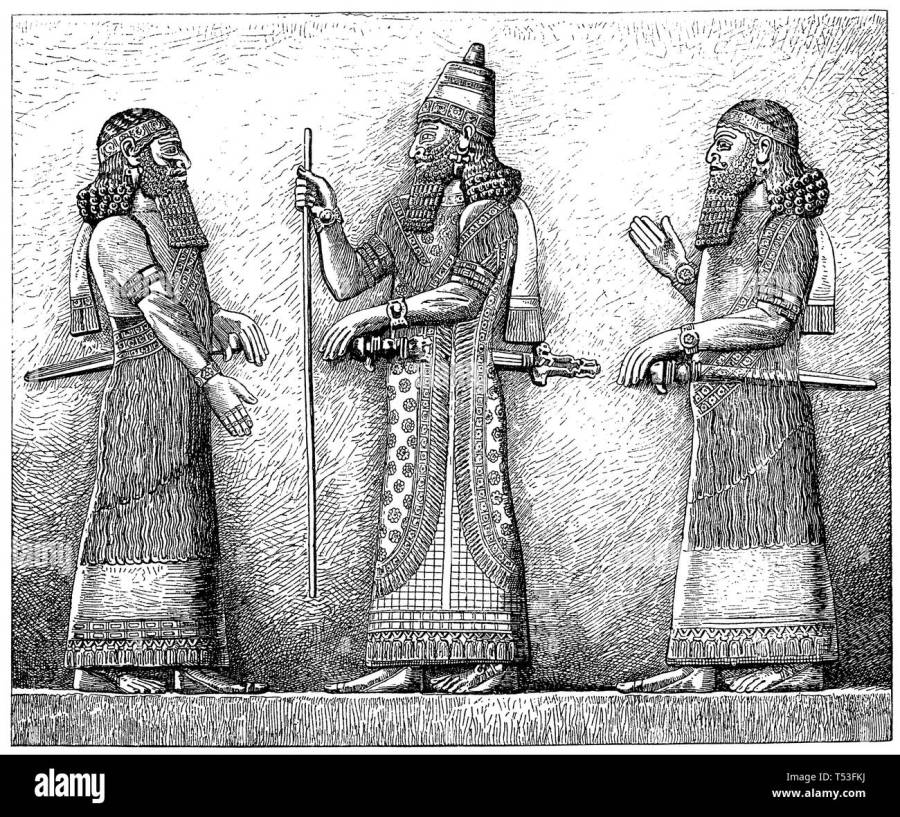
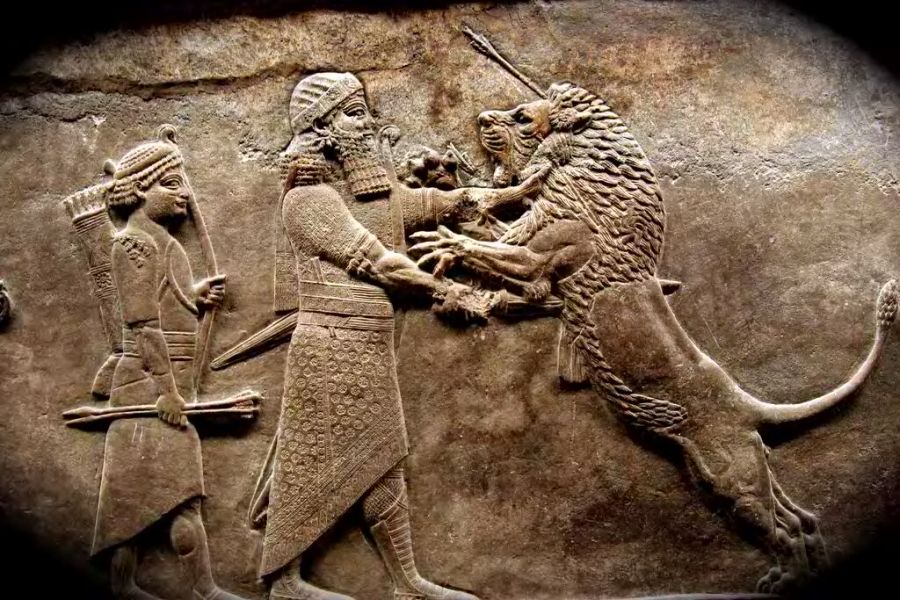
The Legend of Sargon of Akkad describes the king’s humble origins and rise to power. Mesopotamian naru literature is characterized by a formal self-introduction of the writer by his name and titles and a narrative in the first person, like the autobiographies written by American Presidents.
The entire body of “naru literature” consists of only a small group of inscriptions in the name of famous god-kings of a bygone, i.e. pre-flood, age. In his autobiography, however, Sargon, went completely against the standards by aligning himself with a human father.
We can confidently identify Sargon of Akkad (r. 2334 – 2279 BCE) as Shem’s son Arph-axad because the similarities in Semitic languages, in conjunction with timelines and exploits, prove that “Axad” is one and the same as the founder of the city-state of Akkad and the Akkadian language.
The name of Shem’s son Arph-axad is composed of two parts: “arpha” meaning “I shall fail” and “xad” meaning “gathering of the people”. As the name given to him by his father – not at birth – but to memorialize his notorious attributes, this is transparently a warning that his son would fail to defeat Melchizedek. We find this same warning prophecies some years later announced by Melchizedek Jacob / Israel.
“The sceptre shall not depart from [the current Melchizedekian designate] Judah, nor a lawgiver from between his feet, until Shiloh come; and unto HIM shall the gathering of the people be.” Genesis 49:10)
In flagrant defiance to his father (Luciferianism all over again!) Arphaxad dropped the “fail” part of his name and claimed HIS empire was the “gathering of the people”.
Kin to both Hebrew and Sumerian languages, Akkadian served as the rival to YHVH’s language carried through the flood in Holy Scripture by righteous Melchizedek Noah and his successors. Given the wealth of documents unearthed by archeologists, none of which parallel the Hebrew records of Genesis, we must conclude that Hebrew is YHVH’s language for humanity.
Jews refer to Hebrew as lashon hakodesh, the sacred language (Berakhot 13a, Sotah 49b), in part because it is the language of the Jewish Bible, and also because, according to the Jewish scriptures, Hebrew played a key role in the creation of the world. In Genesis 1, God creates the world by speaking Hebrew.
This does not invalidate Josephus’ alternate interpretation of the meaning of the name Arpha-chshad as a combination of “extent, border; and כשד, Chesed / Kesed, the Hebrew word for Chaldeans (pronounced with a hard K, like “school” is also valid.
“Behold the land of the Chaldeans / Kasdim, this people was not till the Assyrian / Assur, Arphaxad’s brother founded it for them that dwell in the wilderness: they set up the towers thereof, they raised up the palaces thereof…Babylon, the glory of kingdoms, the beauty of the Chaldees’ excellency.” (Isaiah 23:13,19)
The earliest known mention of Babylon is as a small town, appearing on a clay tablet from 2217–2193 BC, consistent with Sargon’s early empire-building with the assistance of his architect brother Ashur. Arphaxad’s much younger cousin Nimrod seized Babel when his star ascended while aging Sargon’s fell.








 Kingdom Come