106) Nimrod Is Amraphel – Father Of The Giant People

“And Cush the son of Ham, the son of Noah, took a wife in those days in his old age, and she bare a son, and they called his name Nimrod.” (Jasher 7:23)

Staying consistent with the biblical euphemisms, “took a wife” means “become one“.  In Cush’s case and in this context, the sexual union included merging giant genes.

Like his brother Canaan, Cush had to back-breed with his mother to guaranteed match ups with the lone giant genes he had received from her. This is within feasible lifespans documented.

Being in the same generation of his cousin Arphaxad, Cush would have lived until he was about 450 years of age, so his “old age” could have been about 350 years after the Flood, at the same time that Noah died.

  • 2350 BC – the flood
  • 2050 BC – lifespans of generations born during this time had dropped to less than 200 years.
  • 2000 BCNoah dies, Nimrod is born in the same generation as cousin Salah lived ~450 years
  • 1500 BC – Nimrod dies during the Hebrews’ sojourn in Egypt.
  • 1450 BC – Hebrews Exodus from Egypt

Corresponding as Nimrod’s birthdate does with Noah’s death, it is likely that Cush waited until Noah wasn’t around to curse him as he did Canaan before he engaged in the same depraved act, and given the customs of marrying young women with longest fecund state, Noah’s wife is likely to have outlived Noah, and carrying powerful angel genes also lengthened her vitality. 

Continue reading “106) Nimrod Is Amraphel – Father Of The Giant People”

107) Hamite Giant Clans

“the (4) sons of Ham;

    1. Canaan – the first to breed giants who naturally immediately seized the most valuable land – gateway to Paradise (Genesis 10:6-7)
    2. Cush and the sons of Cush;
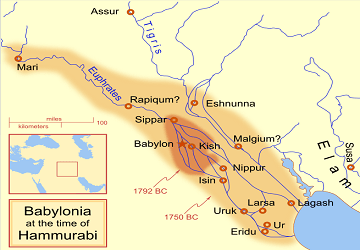
      1. Nimrod who famously restored Babylon, “gateway of the gods” at the Euphrates River to access their power.
      2. Seba
      3. Havilah – where there is gold
      4. Sabtah
      5. Sabtechah:
      6. Raamah and the sons of Raamah;
        1. Sheba – precious stones, spices, gold
        2. Dedan.
    3. P(h)ut / Libya
    4. Mizraim / Egypt

Continue reading “107) Hamite Giant Clans”

SECTION XX: The Age Of Heroes Was Monstrous

Hesiod’s Age of Heroes is the transition between the Bronze Age in which gods and immortal giants inhabited the world and the current “Age of Iron,” defined by purely human toil and corruption. Based on oral history written down by Hesiod’s fellow poet, following a great flood which wiped out the previous rule of the gods and demigods, these lesser demigods traced their power, not directly from parent gods, but from their lineages of the pre-flood demigods.

Larger than typical size continued to be a characteristic of hybrids, with archeological and paleontological findings providing evidence for the existence of giants in the post-flood nations.

giant_skeletons_chart

Compelling reports and traces of fierce giants terrorizing the local population are found in virtually every ancient culture.

87046205267679858_xh909jod_b


l1-4alkyoneus

Continue reading “SECTION XX: The Age Of Heroes Was Monstrous”

108) The Canaanites Kindle World War

In the mid-fifth century BC, the Father of History Greek researcher Herodotus of Halicarnassus visited Tyre, spoke to a priest, and learned that the town and the temple of Melqart were, at that time, believed to be 2,300 years old. In other words, the city was founded in the twenty-eighth century BC, prior to the biblical date of the Flood ~2350 BC.

Herodotus does not mention a world-wide flood, but he would have known of it as he systematically gathered history from multiple cultures. It is likely he saw no reason to report the histories and wisdom of “the world that then was” which was already preserved through the Flood in vaults or on the ark, then gathered in libraries available to Herodotus and other sages.

In support of this consideration, Herodotus likewise does not give an account of Assyria’s origin or of the history of the Semites in Mesopotamia. It’s as if he consigns these records to the same category as known history in the collected works of the sages. Instead, Herodotus’ account most evidently picks up Japhethite / European history where the holy scriptures drops it to focus on the Hebrew nation, immediately after the dispersal of nations from Babel.

Herodotus reports that the Phoenicians / Canaanites had “recently come from that which is called the Erythraian Sea / Persian Gulf to this of ours / Mediterranean Sea, and having settled in the coastland  where they continue even now to dwell, set themselves forthwith to make long voyages by sea.”

picture6

This account provides a reliable “absolute” vs “relative” date for this event as occurring during early emigration from the Mesopotamian / Land between Two Rivers and development into distinct people groups.

“And conveying merchandise of Egypt and of Assyria…”

This confirms the above date being after Asshur separated from Nimrod at Babylon and started his Assyrian Empire.

“they arrived at other places…”

Continue reading “108) The Canaanites Kindle World War”

109) The Trojan War

We can only understand the Trojan War in the context of its trigger – competition between nations to create weaponized hybrid beings. Mistake the Trojan War for a myth and you won’t understand what is assumed you know, so minimally detailed, in Revelation regarding the same military tactic at the end of time.

To begin with, Greece of this era was not in any way a nation. Instead, the rocky peninsulas and archipelagoes housed a number of small but powerful city-states, each of whom considered themselves proudly independent. So it was no mean feat when Agamemnon managed to bind them together into a unified force for the assault on Asian Troy. The equivalent situation in modern times is the European Union’s support of Ukraine against Russia’s invasion.

Trojan / Canaanite King Priam and Crown Prince Hektor assembled their allies from city- states all along the western Anatolian coastal regions (modern Turkey) and as far away as Elam (modern Iran). The equivalent modern situation is North Korean troops joining Russian forces in Ukraine.

The reason for the war was that Hamites weren’t the only ones parenting supermen. Every nation that aspired to power required a Mother of gods carrying hyper dimensional genes in her ovum. And the Trojans’ seizure of Helen was the equivalent of stealing the ways and means to produce nuclear weapons.

Before Helen, there was Medea. Even more famous than Helen in Greek mythology. Medea appears in the majority of the most ancient sources, including Argonautica by Apollonius Rhodius, Histories by Herodotus, Theogony by Hesiod, Metamorphoses by Ovid, and in several plays including Medea by Euripides.

Medea was the daughter of King Aeetes of Colchis, who traced his [pre-Flood] lineage to Apollo and an Oceanid, i.e. a female hybrid, so Medea carried hyperdimensional genes in her ovum. Medea was also priestess to the goddess of witches, Hecate. Altogether Medea was a prime acquisition for the western-most recently settled colonies of pioneers in Europe at this time when she fled her home with Jason of the Argonauts. However, she used her power to cut a swath of destruction across Greece in every city-state she visited.

Cersei Lannister, unquestionably named after Medea’s aunt and fellow sorceress Circe, can’t hold a candle to this pair of evil queen mothers.

Continue reading “109) The Trojan War”

110) The Biblical Perspective Of Virgil’s Aeneid

Troy having been destroyed beyond repair and the Greeks having been decimated, the survivors on both sides, led by their respective heroes Trojan Aeneas and Greek Odysseus, sail west over the same sea.

Accordingly the much later Roman account, the Aeneid, has both groups visited some of the same locations, experienced the same difficulties and encountered the same strange creatures such as the Cyclops. This is academically accounted for by Virgil’s plagiarism of Homer’s epics the Iliad and the Odyssey, but the sea between Troy and Greece isn’t so large so the shipping lanes so numerous as to assume out of hand that the two groups wouldn’t run into the same remarkable circumstances. 

Gathering scattered auspicious lines from Roman Virgil’s Aeneid:

The Trojan chief [Aeneas] appear’d in open sight,
August [godly] in visage, and serenely bright.
His mother goddess, with her hands divine
Had form’d his curling locks, and made his temples…
Like polish’d ivory…Or Parian marble, when enchas’d in gold [anticipating Caesar’s statues]…
goddess-born…the great Aeneas…from celestial seed your lineage

“O hospitable Jove / Jupiter / Zeus! we thus invoke,
With solemn rites, thy sacred name and pow’r…

To the Cumaean coast at length he came,

Where there is a resident prophetess of Apollo,

Continue reading “110) The Biblical Perspective Of Virgil’s Aeneid”

111) Break It Up Folks!

“And the whole earth was of one language, and of one speech.” (Genesis 11:3)

This could be Arphaxad’s Semitic Akkadian, although after defeating Sargon of Akkad, it is more likely that Hamite Nimrod devised his own post-Sumerian language, which was fragmented following the breakup of his empire.

Validating the biblical account, secular linguistics have determined that a single Superlanguage was spoken during the last ice age, corresponding to the glacial conditions that prevailed after Noah’s flood.

While Professor of Evolutionary Biology Mark Pagel and his team allocate 20,000 years for the separation of a Superlanguage into seven Eurasiatic language families, anthropologists validate the biblical timeline that by 2,000 BC a variety of languages were used across the entire world in a pattern consistent with a limited habitable area located centrally on the earth and surrounded by glacial conditions after the Flood.

“And it came to pass, as they journeyed from the east, that they found a plain in the land of Shinar; and they dwelt there. And they said one to another…Go to, let us build us a city and a tower, whose top may reach unto heaven; and let us make us a name, lest we be scattered abroad upon the face of the whole earth.” (Genesis 11:3-5)

Think Nazi Germany’s goal of entrenching itself in authority.

“And the LORD came down to see the city and the tower, which the children of men builded. And the LORD said, Behold,

  1. the people is one / united,
  2. and they have all one language;
  3. and this they begin to do:
  4. and now nothing will be restrained from them, which they have imagined to do…

So the LORD scattered them abroad from thence upon the face of all the earth:” (Genesis 11:5-9)

This was easily done at this stage since “all the earth” was still one mass of Pangea.

The scattering of the ancient arcane antediluvian technology into various languages spread across the world by fleeing refugees was a military countermeasure that effectively served to prevent exploitation of the masses of people by a handful of elites. Think German Jews fleeing Germany after Hitler began exploiting then exterminating them. The scattering of the inhabitants of an evil nation is not a punishment on the inhabitants, but an opportunity for them to find freedom from tyranny. 

Continue reading “111) Break It Up Folks!”

112) Divide And Scatter

From the age of ten I was forever memorialized by my sister for breaking the red mixing bowl. Based on her intense reaction, this was seemingly a situation as significant as Eber naming his son Peleg / divided, born about 100 years after the flood, for in his days / lifetime, about 250 years, the earth was divided…and his brother’s name [was] Joktan / made little.” (Genesis 10:25). Combining the names of the two brothers, the message is “the earth was divided into smaller living places for humanity”.
The existence of the original single landmass within living memory of its inhabitants is memorialized in the recorded ancient histories of the resulting dispersed nations.
The term “Middle-earth” in the Hobbits mythos by J.R.R. Tolkien comes from the Germanic source of the Old English word middan-geard / middle guard. Consistent with the biblical account, this is middle because it lays
  1. below the lands of Elves / righteous angels in heaven and the gods / fallen angels in the surrounding sea / chaos above the firmament
  2. and above the land of the Giants / demi-god] and the Dead.

The Bifrost Bridge, extended from Middle-earth to Asgard across the 1st heaven (atmosphere surrounding earth, the 2nd heaven (spiritual chaos of “outer space”), to the 3rd heaven, dwelling place of God and his righteous sons.

Geard / guard meaning  ‘enclosure’ is what the Greeks called the οικουμένη (oikoumenē) or “the abiding place of men”, what the Romans called the “Medi-terranean”, which remains the center of attention for both earth history and maps, and what the Hebrews called Eden / delight, the whole earth, not just the garden, since “the LORD God planted a garden eastward in Eden.”  (Genesis 2:8)

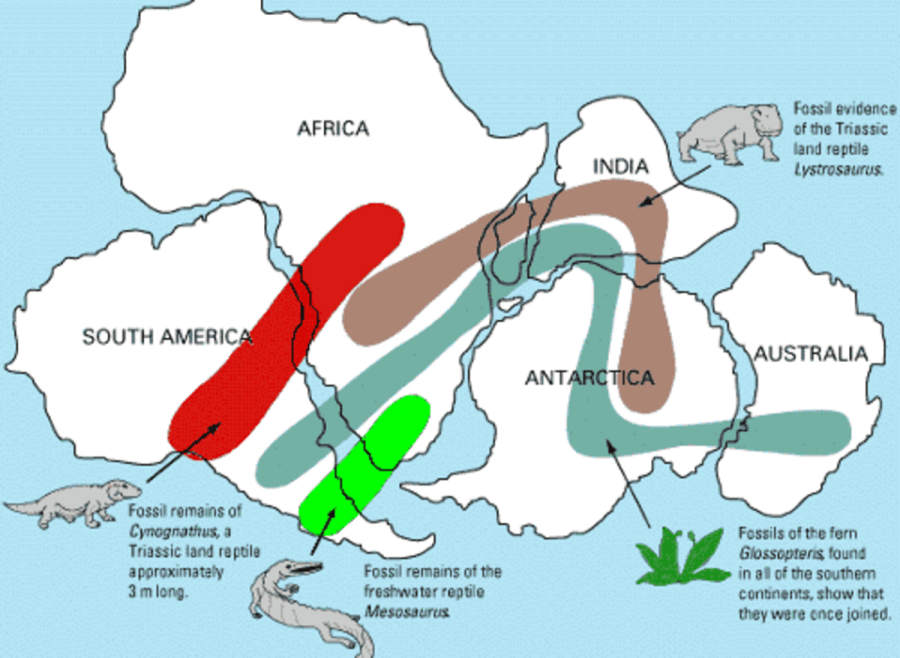
In 1912 the German geologist Alfred Wegener conceptualized Pan-gea/All-earth by recognizing that the recently unearthed fossil evidence connected the continents like puzzle pieces, imaginatively conceiving of continental drift as the mechanism for the breakup in order to support the unsubstantiated and actually disproven long earth ages theory for the evolutionary paradigm.

In 1960, scientific findings of seismic activity along the broken edges causing sudden, catastrophic and repeated volcanic shifts voided the concept of continental drift.

SECTION XXI: The Nations

The calendar in Genesis 11 allows us to date the breakup of Pangea at about 200 years after the flood. This correlates with scientific tracking of seismic activity following the initial breakup / all the fountains of the great deep broken up (Genesis 7:11, 8:2)

In seismology, an aftershock is a smaller earthquake that follows a larger earthquake, in the same area of the main shock, caused as the displaced crust adjusts to the effects of the main shock. Large earthquakes can have hundreds to thousands of instrumentally detectable aftershocks, which steadily decrease in magnitude and frequency according to a consistent pattern. In some earthquakes the main rupture happens in two or more steps, resulting in multiple main shocks. These are known as doublet earthquakes, and in general can be distinguished from aftershocks in having similar magnitudes and nearly identical seismic waveforms.

“Now these are the 1) generations / genetics / races of the sons of Noah, Shem, Ham and Japheth…2) in their nations:” (Genesis 10:1, 32)

https://en.wikipedia.org/wiki/Aftershock

There are different interpretations of what was actually divided. If we take a straightforward translation from the Hebrew we accept that the physical earth is what is reported here. Interpreting the report of this earth division as being caused by the usual aftershocks of the initial massive tectonic upheavals during the flood, as described in that post, is simply to be expected. Geological science confirms this interpretation.  

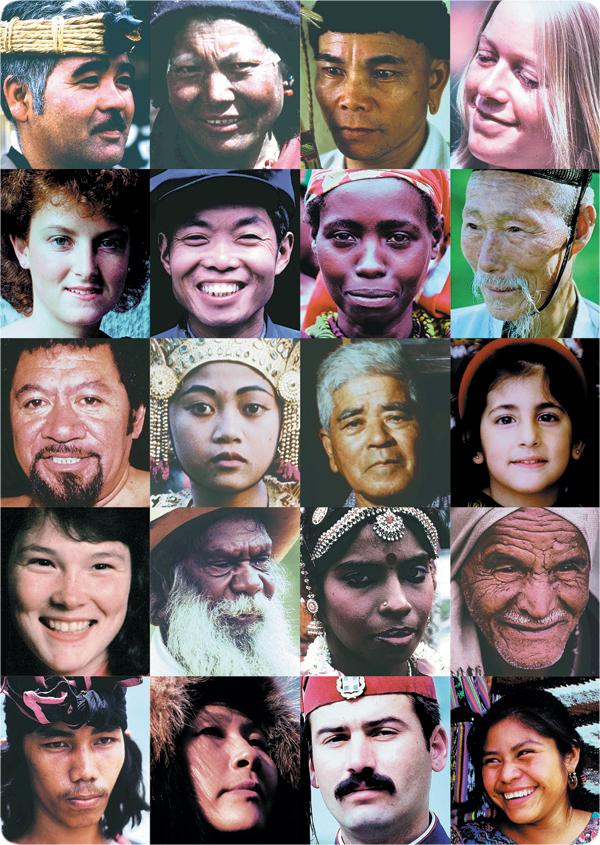
The breakup of Pangea into continents surrounded by oceans separated humanity into smaller isolates as well. Enforced inbreeding among geographically separated groups rapidly stabilized the genetic makeup of the groups, identifiable as paternal Y-chromosome and maternal mitochondrial haploid groups.

The breakup of one large landmass at this time would also certainly expedite the breakup of one empire into independent nations – socio-political groupings of people, not necessarily composed of people with common ancestry. One’s genetics – their family – is imposed, for better or for worse, and can’t be changed. But’s ones associates – social, political and religious identity – are valued assets often sought to improve one’s lot in life, which is why multitudes of people emigrate to another country where citizenship is a privilege bestowed on those on those deemed worthy of the benefits of belonging to that nation. 

Semites is a term for racial group associated with people of the Middle East, including ArabsJewsAkkadians, and Phoenicians. First used in the 1770s by members of the Göttingen school of history, this biblical terminology for race was derived from Shem, but is now obsolete, and replaced by Mongoloid.

Hamites: now called the Negroid division of the human race, found wherever that Indian Ocean touches land, with dark-skin, strongly developed jaws, relatively long arms and kinky or frizzly hair.95b056b45a2129ff930cd0c8d6998704

Japhetites, found in ethnological and linguistic writing from the 18th to the 20th century for white people, now called the Caucasian race.

Different from race, a nation is a community of people who share the same language, history, ethnicity, i.e. culture – the knowledge, beliefs, arts, laws, customs, and habits of that defines and maintains the norms and expectations within a society.

“On the Day of Pentecost there many of these nations present: “Parthians, and Medes, and Elamites, and the dwellers in Mesopotamia, and in Judaea, and Cappadocia, in Pontus, and Asia [Minor], Phrygia, and Pamphylia, in Egypt, and in the parts of Libya about Cyrene, and strangers of Rome, Jews and proselytes.” (Acts 2:8-10)

Continue reading “SECTION XXI: The Nations”

114) Contract God vs Covenant God

Every nation appeals to a Supreme Authority for its legitimacy to govern.

Take Iran’s Constitution, for example.

“The Islamic Republic is a system based on the faith in

  1. One God (“There is no god but God”), the exclusive attribution of sovereignty and the legislation of law to Him, and the necessity of surrender to His commands;
  2. divine inspiration and its foundational role in the articulation of the laws;
  3. resurrection and its constructive role in explanation of laws;
  4. the justice of God in creation and legislation…”

In contrast, the 1993 Constitution of the atheist Russian Federation [of states] is frankly humanist. “We, the multinational people…adopt the Constitution Of the Russian Federation”.

The same humanistic authority is stated in the 1787 Constitution of the United States of America. “We the People…do ordain and establish this Constitution for the United States of America.

The Code of Hammurabi, the first post-flood king of Babylon, consists of a set of laws, inscribed on a diorite stela set up in Babylon’s temple of Marduk, the national god of Babylonia. based its authority on Hammurabi’s delegated power from Marduk, Antichrist, claimed heir of the Creator.

Continue reading “114) Contract God vs Covenant God”