190) YHVH Does His Own New Thing

From Isaiah 41-42

  • “Who raised up the righteous man from the east…gave the nations before himI the LORD, the first, and with the last; I am he…
    • The isles / Gentile nations saw it, and feared…helped everyone his neighbor [to destroy you]
      • But! thou, Israel, art my servant / government minister…the seed of Abraham my friend…Fear not, for I am with thee...I will uphold thee with the right hand of my righteousness..
  • AND I will give to Jerusalem one that bringeth good tidings.
    • For I beheld, and there was no man; even among them, and there was no counsellor, that, when I asked of them, could answer a word. Behold, they [my ministers] are all vanity;
  • Behold my servant, whom I uphold; mine elect, in whom my soul delighteth; I have put my spirit upon him:
    • HE shall bring forth judgment to the Gentiles
    • I the LORD…give THEE [alternate to the nation of Israel] for a covenant of the people, for a light of the Gentiles…HE will magnify the law, and make it honourable…

This condemnation is clearly not just that the Jewish leadership rejected Yeshua as their king, nor that the Jews in general were not walking in the law of Moses, but specific to this denouncement by Isaiah that the Jews were rejecting their God-given Melchizedekian mandate to “be unto me a kingdom of priestsin order to lead all the other nations of the world to love the LORD God.

From Isaiah 42-43:

“Who gave Jacob for a spoil, and Israel to the robbers? did not the LORD, he against whom we have sinned? for they would not walk in his ways, neither were they obedient unto his [primary] law [to take Melchizedian dominion over the WHOLE earth].

now thus saith the LORD that created thee, O Jacob, and he that formed thee, O Israel –

“I” [since “you” aren’t doing your job] will bring…my sons from far, and my daughters from the ends of the earth; Even every one that is called by MY name [of YHVH, in contrast to Israelite or Jew].

Let [command!] ALL the nations be gathered together!

All means all – including the nation of Israel into this new coalition.

Behold, I will do a new thing; THIS people [coalition of all nations in contrast to just the nation of Israel] have I formed for myself; THEY shall shew forth my praise.” 

Continue reading “190) YHVH Does His Own New Thing”

SECTION XXXIV: Paul Transfers Kingdom Rule To Gentiles

As the capitol of the Empire, Rome had become home to a vast population of Jews who had been brought back as slaves after wars, or had emigrated voluntarily for economic opportunities. 

[Writing in 59 BC] “You know what a big crowd it is, how they stick together, how influential they are in informal assemblies….” Cicero’s remarks…indicate misgivings about their separatist tendencies. “[T]he great section of Rome on the other side of the Tiber is occupied and inhabited by Jews, most of whom were…brought as captives to Italy [then] liberated by their owners… [T]hey have houses of prayer and meet together in them, particularly on the sacred Sabbaths when they receive as a body of training in their ancestral philosophy…

[In AD 41 The Emperor] Claudius…ordered them, while continuing their traditional mode of life, not to hold meetings”….

[and then] “Since the Jews constantly made disturbances at the instigation of Chrestus, he expelled them from Rome…” 

[Another Roman historian writes] Claudius expelled the Jews from Rome because in their resentment against Christ they were continually creating disturbances…’

And when we came to Rome [about AD 60]Paul called the chief of the Jews together: and when they were come together, he said unto them…for the hope of Israel I am bound with this chain.

And they said unto him, We neither received letters out of Judaea concerning thee, neither any of the brethren that came shewed or spake any harm of thee. But we desire to hear of thee what thou thinkest: for as concerning this sect [obviously of Judaism], we know that every where it is spoken against. And when they had appointed him a day, there came many to him into his lodging; to whom he expounded and testified the kingdom of God, persuading them concerning Jesus [as the prince who is to comeboth out of the law of Moses, and out of the prophets.

And some [of the Jewish leaders in Rome] believed the things which were spoken, and some believed not. And when they agreed not among themselves, they departed, after that Paul had spoken one word; Well spake the Holy Ghost by Esaias the prophet (chapter 6) unto our fathers, 

  • Saying, Go unto this people, and say, Hearing ye shall hear, and shall not understand; and seeing ye shall see, and not perceive:
  • Be it known therefore unto you, that the salvation of God is sent unto the Gentiles, and that they will hear / receive it.” (Acts 28)

This sentence has been grossly misinterpreted to deny salvation to the Jews.

It is not.

Continue reading “SECTION XXXIV: Paul Transfers Kingdom Rule To Gentiles”

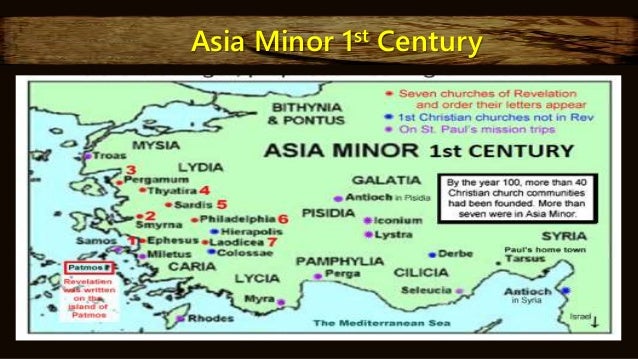
192) The Crisis Church Rev 2:8-11

Smyrna

“And unto the angel of the church in Smyrna write; These things saith the first and the last, which was dead, and is alive; I know thy works, and tribulation, and poverty, (but thou art rich) and I know the blasphemy of them which say they are Jews, and are not, but are the synagogue of Satan.” 

During the Roman period, Smyrna was apparently a city of great beauty and impressive architecture that circled Mount Pagus like a “crown”... (cf. Revelation 2:10 “crown of life”). Walking through the city, one would a see…temples to Zeus (including a large altar), Cybele (the Mother Goddess, near the harbor), Aphrodite, Dionysius, and the Emperors (probably Tiberius in 26 AD and Domitian before 96 AD), the harbor, a library, and a massive agora…In the 2nd century AD, Smyrna built another imperial temple to Hadrian. Along with inscriptions honoring the emperors and statues of Domitian and Trajan, coins issued by the city often depicted emperors and even the imperial temples, so it is obvious that Smyrna was dedicated to the worship of the emperor and the imperial cult.

Continue reading “192) The Crisis Church Rev 2:8-11”

193) The Cowering Church Rev 2:12-17

Revelation 2:12-17

“And to the angel of the church in Pergamos write; These things saith he which hath the sharp sword with two edges; I know thy works, and where thou dwellest, even where Satan’s seat is: and thou holdest fast my name, and hast not denied my faith, even in those days wherein Antipas was my faithful martyr, who was slain among you, where Satan dwelleth.”

Wow. Satan’s seat, his government headquarters where he keeps a permanent residence, would be the equivalent of Washington DC. Wouldn’t that be in Rome? But our Lord is telling us that it is in Pergamos! Why on earth in Pergamos?

Pergamon, whose ancient name…means “people of the high city”, had been inhabited since prehistory.

There must surely be a connection with the nearby prehistoric temple complex Gobekli Tepe.

Continue reading “193) The Cowering Church Rev 2:12-17”

194) The Corrupt Church Rev 2:18-29

Revelation 2:18-29

“And unto the angel of the church in Thyatira write; These things saith the Son of God, who hath his eyes like unto a flame of fire, and his feet are like fine brass; I know thy works, and charity, and service, and faith, and thy patience, and thy works; and the last to be more than the first. 

Notwithstanding I have a few things against thee, because thou sufferest that woman Jezebel, which calleth herself a prophetess, to teach and to seduce my servants to commit fornication, and to eat things sacrificed unto idols. And I gave her space to repent of her fornication; and she repented not. Behold, I will cast her into a bed, and them that commit adultery with her into great tribulation, except they repent of their deeds. And I will kill her children with death; and all the churches shall know that I am he which searcheth the reins and hearts: and I will give unto every one of you according to your works. 

[Jan] Crouch was, perhaps, one of the most influential televangelists of the modern era.On television, she played the role of wife and mother, wearing elaborate outfits and outsized wigs and falsies; nodding along to her husband’s sermons, swaying to that idiosyncratic sound of Christian contemporary music and, of course, testifying about the good will of God.

“Momma Jan” was part of a multi-billion dollar empire. With her husband Paul Crouch, Jan founded Trinity Broadcast Network (now called TBN) in 1973, the 24-hour network dedicated to a particular kind of Christian programming. Crouch and her husband, long-time hosts of Praise the Lord, were the very memorable faces of “prosperity gospel,” a controversial brand of Evangelical Christianity that has a laser focus on “give and you will receive.” TBN, and the Crouches, raked in millions of dollars as they solicited donations from their sleek television sets while enacting a kind of contemporary worship…

Continue reading “194) The Corrupt Church Rev 2:18-29”

195) The Corpse Church Rev 3:1-6

Sardis

“And unto the angel of the church in Sardis write; These things saith he that hath the seven Spirits of God, and the seven stars; I know thy works, that thou hast a name that thou livest, and art dead.” (Revelation 3:1)

Around 612 BCE, the Assyrian Empire was conquered by the Neo-Babylon Empire. This opened up new horizons for the wealthy kingdom of Lydia in Anatolia, with its capitol at Sardis, which turned its attention from defending the eastern front to overrunning its western rivals, the Greek Ionian cities along the coast.

Lydian rulers, however, admired the Greeks and treated the Ionian cities leniently… Croesus, the last Lydian king, even paid for the construction of the temple of Artemis, which became one of the Seven Wonders of the Ancient World. Thus, the Ionian coast city-states and the Lydians remained on peaceful terms with very tight cultural and commercial relations. Sardis was a centre for the traffic of goods and ideas between Mesopotamia and the Greek Ionian settlements, a crossroad of trade, and an ideal meeting point for the exchange of ideas, beliefs, customs, knowledge, and new insights. This rich exchange was one of the factors that, around 600 BCE, allowed the Ionian cities to turn into the intellectual leaders of the Greek world.

Continue reading “195) The Corpse Church Rev 3:1-6”

196) The Closed Church Rev 3:7-13

Philadelphia was established in 189 BC by King Eumenes II of Pergamon I[who] named the city for…his brother, who would be his successor, Attalus II (159–138 BC), whose loyalty earned him the nickname, “Philadelphos”, literally meaning “one who loves his brother”.

Philadelphia was included in the kingdom of Pergamum that Attalus III Philometer bequeathed to his Roman allies when he died in 133 BC, assigned to the administrative district of Sardis. As noted above in the section on Sardis, the Jewish population was influential in Sardis and there was a synagogue of Hellenizing Jews in Philadelphia.

“And to the angel of the church in Philadelphia write; These things saith he that is holy, he that is true, he that hath the key of David, he that openeth, and no man shutteth; and shutteth, and no man openeth; I know thy works: behold, I have set before thee an open door, and no man can shut it: for thou hast a little strength, and hast kept my word, and hast not denied my name. 

Continue reading “196) The Closed Church Rev 3:7-13”

197) The Cool Church Rev 3:14-19

“And unto the angel of the church of the Laodiceans write; These things saith the Amen, the faithful and true witness, the beginning of the creation of God; I know thy works, that thou art neither cold nor hot: I would thou wert cold or hot. So then because thou art lukewarm, and neither cold nor hot, I will spue thee out of my mouth. Because thou sayest, I am rich, and increased with goods, and have need of nothing; and knowest not that thou art wretched, and miserable, and poor, and blind, and naked:I counsel thee to buy of me gold tried in the fire, that thou mayest be rich; and white raiment, that thou mayest be clothed, and that the shame of thy nakedness do not appear; and anoint thine eyes with eyesalve, that thou mayest see.” (Revelation 3:14-19)

Laodicea was built by Antiochus II Theos in ~ 250 BC in honor of his wife Laodice. In 188 BC, the city passed to the Kingdom of Pergamon, and therefore after 133 BC fell under Roman control.

Continue reading “197) The Cool Church Rev 3:14-19”

SECTION XXXV: Divide And Conquer

The early church was Jewish in leadership and membership. It functioned in synagogues and had Pharisaic traditions and it never lost its traces of Rabbinic Halakha [religious law]

But as Gentiles were being converted to the God of Israel, too many power-hungry men saw an opportunity to use Gentiles who were poorly educated in the Jewish scriptures to build up their personal power base.

The split between Judaism and Christianity was gradual and happened at different rates in different places…from the middle of the first century CE to the middle of the fourth CE…

The process by which this happened was to split off the Jewish Scriptures.

Scholars propose that it was Melito of Sardis [d.180 AD] who originally coined the phrase Old Testament.

Continue reading “SECTION XXXV: Divide And Conquer”