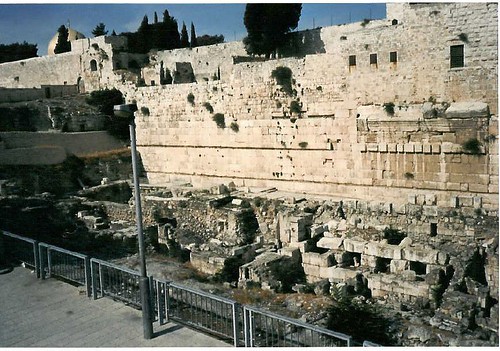
178) The Hebrew Torah Authenticates All Subsequent Word From God

A biblical canon or canon of scripture is a set of texts (or “books”) which a particular Jewish or Christian religious community regards as authoritative scripture. The English word canon comes from the Greek κανών, meaning “rule” or “measuring stick”. Christians were the first to use the term in reference to scripture.

  • The books of Moses, consisting of Genesis – Deuteronomy, were preserved over the years by the priests.
  • The Psalms of David and other song leaders and wisdom writings of Solomon were authenticated as consistent with the Torah by the priests at the time they were written and likewise safeguarded.
  • The historical records were written and safeguarded by official scribes (which, interestingly are making a comeback in the medical field where meticulous accuracy is of paramount importance). For whatever reasons, there are other historical writings, in particular Jasher and Enoch, that, while referenced in the Bible and included in the first edition of the King James Bible in 1611, aren’t included in later editions.

Judaism…a concept that there is a single incorporeal God who gives commandments which constitute a moral law for all humanity…This divine moral law is embodied in the codes set out in the first five books of the Bible, known as the Torah…rules about justice, equality before the law, loving-kindness, social welfare, and the ideals of peace and political freedom.

Each of us make our contribution to making the world in the Creator’s vision, or in destroying it. It all depends on how we take dominion – for the LORD or the Adversary.

Most of all, the concepts of justice, righteousness and freedom are articulated by the Prophets in hundreds of prophecies that came true, especially for rejecting the law of the LORD / Creator.

Continue reading “178) The Hebrew Torah Authenticates All Subsequent Word From God”

179) From Faith To Faith

“Going my way?” What a loaded question. It’s…delivered to Will with rakish charm by Hannibal…Is Will going Hannibal’s way? Is he finally becoming like Hannibal…or is he sacrificing himself to save the world…? And in the end, is there a difference?…

Will bends Hannibal to his will by saying the words he wants to hear: “I need you, Hannibal. Please…”  a truly glorious fight sequence…their blood-soaked embrace was payoff galore…with Hannibal getting everything he has ever wantedand in that moment I think he was perfectly content to die.

Shocking to equate God’s plan of salvation with a ghastly TV show? What I find really shocking is just how tepid the Christian church experience has become. Including and especially identifying with Jesus Christ, with whom salvation is achieved by identifying with him in his blood sacrifice.

“I am crucified with Christ: nevertheless I live; yet not I, but Christ liveth in me: and the life which I now live in the flesh I live by the faith of the Son of God, who loved me, and gave himself for me. I do not frustrate the grace of God: for if righteousness come by the law, then Christ is dead in vain…

For I am not ashamed of the gospel of Christ: for it is the power of God unto salvation to every one that believeth; to the Jew first, and also to the Greek. For therein is the righteousness of God revealed from faith to faith: as it is written, The just shall live by faith.” (Galatians 2:20-21, Romans 1:16-17)

Hebrews chapter 11 tracks the righteousness of God revealed

  • from faith in the promised Savior through substituting animal deaths
  • to faith in the Savior who died in our place
  • as the same faith in the yet-to-come resurrection of our mortal bodies.

Not the faith of Judaism changed to different faith of Christianity.

  •  [Genesis 4] By faith Abel offered unto God a more excellent sacrifice than Cain, by which he obtained witness that he was righteous” because he acted on God’s notice that “without shedding of blood is no remission” of sin. (Hebrews 9:22)
  • [Genesis 6] By faith Noah, being warned of God of things not seen as yet, moved with fear, prepared an ark to the saving of his house;” the same situation looming as world war the near future “then shall be great tribulation, such as was not since the beginning of the world to this time…as the days of Noah were, so shall also the coming of the Son of man be.” (Matthew 24:21-22, 37)

Continue reading “179) From Faith To Faith”

180) Christ Is The End Of What Law?

From Romans 10:

“Christ is the end of the law for righteousness to every one that believeth.”

There we have it. End of Judaism, beginning of easy believe Christianity.

Or is it?

  • For Christ / The Messiah / Anointed Lamb of God which taketh away the sin of the world” (John 1:25, 29) is the end of the law requiring a substitute animal blood sacrifice  
  • for [establishing God’s] righteousness to every one that believeth…
    • For the scripture saith…there is no difference between the Jew and the Greek: for the same Lord over all is rich unto all that call upon him. For whosoever shall call upon the name of the Lord shall be saved.” 

“For Moses describeth the righteousness which is of the law, That the man which doeth those things shall live by them. But the righteousness which is of faith speaketh on this wise, Say not in thine heart, Who shall…bring Christ down from above:) Or, Who shall…bring up Christ again from the dead.)”

Paul didn’t make up this scenario. Clearly, many Jews were rejecting the claims of Jesus the Christ being the only begotten son of God, proven by his resurrection from the dead, and therefore denying YHVH himself, and their need to be saved from their sin.

Back up a  verse to get the entire argument in view.

going about to establish their own righteousness, [Israel] have not submitted themselves unto the righteousness of God.”

Continue reading “180) Christ Is The End Of What Law?”

SECTION XXXVI: Paul Did Not Found Christianity

It is highly significant that, while encouraging Gentiles to identify with God’s people without full conversion to Judaism, Paul himself never relinquished his elite Jewish Pharisee identity.

  • “I also am [present tense] an Israelite, of the seed of Abraham, of the tribe of Benjamin.” (Romans 11:1)
  • “Circumcised the eighth day, of the stock of Israel, of the tribe of Benjamin, an Hebrew of the Hebrews; as touching the law, a Pharisee;” (Philippians 3:4-5)
  • “among mine own nation at Jerusalem, know all the Jews; if they would testify, that after the most straitest sect of our religion I lived a Pharisee.
  • And now I stand and am judged for the hope of the promise made of God, unto our fathers: Unto which promise our twelve tribes, instantly serving God day and night, hope to come.” (Acts 26)

Paul’s ostracism by the Jews proves that no Gentile Christian church was established during the Acts of the Apostles. There was only a Jewish Messianic sect that was fiercely opposed by mainstream Judaism, especially Paul’s claim that the HEBREW scriptures allowed non-practicing Gentiles into their assembly!!

  1. Acts 9: in Damascus: And straightway he preached Christ in the synagogues…And the Jews took counsel to kill him:
  2. Act 9: in Jerusalem: And when Saul was come…he disputed against the Greeks [philosophically adulterated sect of liberal Jews: but they went about to slay him. 
  3. Acts 14: in Iconium…there was an assault made both of the Gentiles, and also of the Jews with their rulers, to use despitefully / torture, and to stone them.
  4. Acts 14: they fled unto Lystra and Derbe…And there came thither certain Jews from Antioch and Iconium, who persuaded the people, and having stoned Paul, drew him out of the city, supposing he had been dead.

Paul himself never claimed to found a new religion. He states multiple times that he was a follower of Jesus of Nazareth because Jesus was the fulfillment of Judaism’s Old Testament prophecy.

“Ananias the high priest descended with the elders, and with a certain orator named Tertullus, who informed the governor against Paul…we have found this man a pestilent fellow…a ringleader of the [Jewish] sect of the Nazarenes…

Then Paul…answered, after the way which they call heresy, so worship I the God of my fathers, believing [present tense!] all things which are written in the law and in the prophets: And have hope toward God, which they themselves also allow, that there shall be a resurrection of the dead, both of the just and unjust…I came to bring alms to my nation, and offerings…certain Jews from Asia found me purified in the temple…” (Acts 24:1-18)

Paul clearly articulates that the law of Moses, which did not institute but rather affirmed the earlier practice of the identifying mark of circumcision, was never an element of salvation for the Jews but a code of righteous conduct for a select leadership who are already in a faith-based relationship with the LORD God.

“For what saith the scripture? Abraham believed God, and it was counted unto him for righteousness…And he received the sign of circumcision, a seal of the righteousness of the faith which he had yet being uncircumcised…being fully persuaded that, what he [God] had promised, he was able also to perform. And therefore it was imputed to him for righteousness.

Now it was not written for his sake alone, that it was imputed to him; But for us also, to whom it shall be imputed, if we believe on him that raised up Jesus / YHVH’s Savior our Lord from the dead; Who was delivered for our offences, and was raised again for our justification.” (Romans 4:1-25)

Therefore we conclude that a man is justified by faith without the deeds of the law. Is he the God of the Jews only? is he not also of the Gentiles? Yes, of the Gentiles also.” (Romans 3:19-29)

It is precisely BECAUSE the Jewish national heritage has NOTHING to do with the MEANS of salvation by faith that the reverse is likewise true.

Accepting salvation by faith in Jesus Christ doesn’t change Jewish national heritage. They are two separate gifts of God.

Continue reading “SECTION XXXVI: Paul Did Not Found Christianity”

181) Paul Never Identified As Christian

There was a significant difference between the converts to the recently resurrection Yeshua of Nazareth of the Jews.

  1. The Jews based their understanding of Yeshua’s claim to be the Son of God on the scriptures, the word of God.
  2. The scripturally illiterate Gentiles based their understanding of “Son of God”. on their religious backgrounds. Certain concepts were alien, such as:

“Now when the [Roman] centurion, and they [other Romans]  that were with him [managing the crucifixion], watching Jesus, saw the earthquake, and those things that were done, they feared greatly, saying, Truly this was the Son of God.” (Mark 15:39)

The text is very clear that the basis for the Roman observers’ conviction / faith that Jesus was the Son of God was based on the associated signs of hyperdimensional power over the natural order at his death. They could easily believe that Jesus King of the Jews had achieved immortality – i.e. godhood – after he died and his soul ascended into Heaven because this was a common occurrence among the pagan divine and semi-divine monarchies within the Roman Empire.

But this is not saving faith. The end game of biblical saving faith is not power for power’s sake. It is power for righteousness’ sake. 

Continue reading “181) Paul Never Identified As Christian”

There was a significant difference between the converts to the recently resurrection Yeshua of Nazareth of the Jews.

  1. The Jews based their understanding of Yeshua’s claim to be the Son of God on the scriptures, the word of God.
  2. The scripturally illiterate Gentiles based their understanding of “Son of God”. on their religious backgrounds. Certain concepts were alien, such as:

“Now when the [Roman] centurion, and they [other Romans]  that were with him [managing the crucifixion], watching Jesus, saw the earthquake, and those things that were done, they feared greatly, saying, Truly this was the Son of God.” (Mark 15:39)

The text is very clear that the basis for the Roman observers’ conviction / faith that Jesus was the Son of God was based on the associated signs of hyperdimensional power over the natural order at his death. They could easily believe that Jesus King of the Jews had achieved immortality – i.e. godhood – after he died and his soul ascended into Heaven because this was a common occurrence among the pagan divine and semi-divine monarchies within the Roman Empire.

But this is not saving faith. The end game of biblical saving faith is not power for power’s sake. It is power for righteousness’ sake. 

Continue reading “181) Paul Never Identified As Christian”

182) Paul Publicly Repudiated Christianity

“Now when [the Roman governor] Festus was come into the province…the high priest and the chief of the Jews informed him against Paul…and laid many and grievous complaints against Paul, which they could not prove.

Festus inherited and greatly inflamed the social unrest problems of his predecessor Felix. “He valued peace with the Jews more than justice and, despite determining his prisoner was innocent” refused to release Paul. In his quest for a political alliance with the Jewish rulers, Festus publicly dismissed their clear homicidal intentions towards Paul as a simple religious dispute. He actually tried to give up Paul to the Jewish rulers by encouraging him to go back to Jerusalem to be judged by them, knowing it would result in his death.

Paul was not so heavenly minded as to be no earthly good. He operated in close connection to his social environment. Judea had been fomenting revolution for at least fifty years, and was a tinderbox needing just one last strike to blow. If Festus allowed this revolution to happen, it would result in Festus’ disgrace and demotion by Rome, quite likely even his death – if not by a Jewish mob, by an irate Roman politician looking for a scapegoat.

Paul’s only safety net was Festus’ sensibly greater fear of Roman over Jewish reprisal if he didn’t treat Paul as the Roman citizen that he was when he appealed to Caesar. You can imagine the efforts of the Jews to get Festus to turn a blind eye on that one. 

Continue reading “182) Paul Publicly Repudiated Christianity”

“Now when [the Roman governor] Festus was come into the province…the high priest and the chief of the Jews informed him against Paul…and laid many and grievous complaints against Paul, which they could not prove.

Festus inherited and greatly inflamed the social unrest problems of his predecessor Felix. “He valued peace with the Jews more than justice and, despite determining his prisoner was innocent” refused to release Paul. In his quest for a political alliance with the Jewish rulers, Festus publicly dismissed their clear homicidal intentions towards Paul as a simple religious dispute. He actually tried to give up Paul to the Jewish rulers by encouraging him to go back to Jerusalem to be judged by them, knowing it would result in his death.

Paul was not so heavenly minded as to be no earthly good. He operated in close connection to his social environment. Judea had been fomenting revolution for at least fifty years, and was a tinderbox needing just one last strike to blow. If Festus allowed this revolution to happen, it would result in Festus’ disgrace and demotion by Rome, quite likely even his death – if not by a Jewish mob, by an irate Roman politician looking for a scapegoat.

Paul’s only safety net was Festus’ sensibly greater fear of Roman over Jewish reprisal if he didn’t treat Paul as the Roman citizen that he was when he appealed to Caesar. You can imagine the efforts of the Jews to get Festus to turn a blind eye on that one. 

Continue reading “182) Paul Publicly Repudiated Christianity”
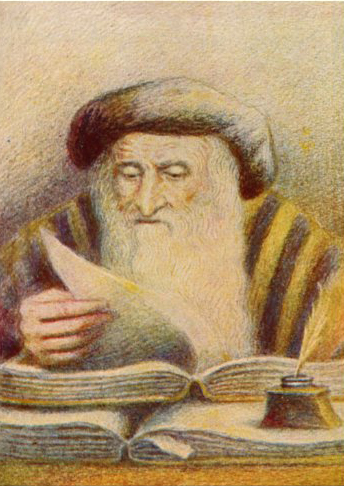
183) Paul Identified As Hebrew

Paul’s claim to be a Hebrew, and a consummate one at that, confirms that there is a religious significance to this identification, which precedes and is separate from the Israelite national identification, and is important enough for Paul to brag about.

“Are they Hebrews? so am I. Are they Israelites? so am I. Are they the seed of Abraham? so am I.” ( II Corinthians 11:22) of the stock of Israel, of the tribe of Benjamin, an Hebrew of the Hebrews; as touching the law, a [superstrict] Pharisee.” (Philippians 3:5-6)

The home New Testament Church was led by ultra-religious James the brother of Jesus in Jerusalem. I’m one of six daughters of a total of nine children and let me tell you the competition for recognition was intense. James must have grown up constantly attempting, and failing, to prove his worth against his perfect older brother Jesus. A perfectionist habit that stuck. It stands to reason that Paul was never made welcome at James’ home church.

Paul’s base was in Gentile Asia, but even Paul’s Gentile churches rejected him when at the end of his ministry he pushedfor the Gentiles to identify themselves with Jews. Consider what Paul was asking them to do at this point in history! To share the Jews’ political status as hated enemies and enslaved losers of the 70 AD war. It was the equivalent of establishing a home-mosque in New York City right after 9-11.

With this in mind, re-read Paul’s exhortation to Ephesian Gentile believers.

“For this cause I The Jew Paul, the prisoner of the Jewish rival to Caesar YHVH’s Messiah for you Gentiles…by revelation he made known unto me the mystery…which in other ages was not made known unto the sons of men, as it is now revealed unto his holy apostles and prophets by the Spirit;

That the Gentiles should be fellowheirs, and of the same body, and partakers of his promise in Christ by the gospel:” (Ephesians 3:1-6)

Paul had before established in his earlier letters that Jews and non-Jews alike are saved by faith, not works of the law, so he is not referring to salvation.

An heir is granted power and authority to govern.  This is the mystery that Paul is revealing, and why he is praying that they would be strengthened with might to pick up and carry this heavy burden.

And in this light, this was the purpose for writing the letter to his fellow, but mainly ignorant, Hebrews.

I am aware how sharply this contrasts with the orthodox Christian analysis of the letter to the Hebrews. “With its myriad references to Hebrew customs and the Old Testament, the book was likely sent to a Jewish Christian community.”

This is illogical for starters. The Messianic Jews did not need to be educated on the holy scriptures. It was the influx of scripturally illiterate Gentile believers who did.

This assumption also betrays ignorance that the identity of Hebrew / international followers of Eber encompasses, but is not synonymous with, the children of Israel.

Continue reading “183) Paul Identified As Hebrew”

SECTION XXXVI: One Hebrew Commonwealth Under YHVH’S Priest-King

Jesus himself established that the criteria for entrance into God’s eternal kingdom is not calling on the Romanized name of Jesus Christ but by the way we treat his people.

 “When the Son of man shall come in his glory, and all the holy angels with him, then shall he sit upon the throne of his glory: And before him shall be gathered all nations: and he shall separate them one from another, as a shepherd divideth his sheep from the goats: And he shall set the sheep on his right hand, but the goats on the left.

Then shall the King say unto them on his right hand, Come, ye blessed of my Father, inherit the kingdom prepared for you from the foundation of the world: For I was an hungred, and ye gave me meat: I was thirsty, and ye gave me drink: I was a stranger, and ye took me in: Naked, and ye clothed me: I was sick, and ye visited me: I was in prison, and ye came unto me. Then shall the righteous answer him, saying, Lord, when saw we thee an hungred, and fed thee? or thirsty, and gave thee drink? When saw we thee a stranger, and took thee in? or naked, and clothed thee? Or when saw we thee sick, or in prison, and came unto thee?

And the King shall answer and say unto them, Verily I say unto you, Inasmuch as ye have done it unto one of the least of these my brethren, ye have done it unto me.” (Matthew 25:31-40)

This concept is central to the Godfather saga, of which the first movie in the trilogy is considered by many critics to be the best movie of all time.

Continue reading “SECTION XXXVI: One Hebrew Commonwealth Under YHVH’S Priest-King”

184) The General Assembly

” ye are not come unto the mount [Sinai] that might be touched, and that burned with fire…

The writer is clearly speaking to non-Jews.

“ye are come unto…the general assembly and church of the firstborn, which are written in heaven, and to God the Judge of all, and to the spirits of just men made perfect,

And to Jesus the mediator of the new covenant…See that ye refuse not him that speaketh. For if they escaped not who refused him that spake on earth, much more shall not we escape, if we turn away from him that speaketh from heaven…let us…serve God acceptably with reverence and godly fear: For our God is a consuming fire.” (Hebrews 12:22-29)

And so while Paul’s letter to the 1st century AD Gentile believers at Ephesus parallels their vocation to the nation of Israel’s in the 2nd millennium BC, he exhorts them that their calling carries even more responsibility.

  • he hath chosen us in him before the foundation of the world,
  • that we should be holy 
  • predestinated us unto the adoption of children
  • made known unto us the mystery of his will that in the dispensation of the fulness of times he might gather together in one all things in The Promise Seed / Christ
  • ye being in time past Gentiles in the flesh, aliens from the commonwealth of Israel, and strangers from the covenants of promise are made nigh by the blood of The Promised Seed / Christ
  • For he is our peace, who hath made both one, and hath broken down the middle wall of partition between us
  • Now therefore ye are no more strangers and foreigners, but fellowcitizens with the saints, and of the household of God
  • To the intent that now unto the principalities and powers in heavenly places might be known by the congregation of believers including those following Moses at mount Sinai / church the manifold wisdom of God
  • According to the eternal purpose which he purposed in Christ Jesus our Lord
  • Of whom the whole family in heaven and earth is named, (Ephesians 3)

Peter and John bear witness to Paul’s claim that the Gentile Christians from the 1st century onward parallel the Messianic role of Cyrus the Persian and of Moses the Hebrew over the nation of Israel.

Continue reading “184) The General Assembly”

185) Outcasts Of Israel Qualify For Leadership

The penultimate proof of this post’s claim is Jesus Christ himself, who was rejected by the rulers of the Jews. 

Another individual whose preaching was rejected by the rulers of the Jews was Daniel.

We all know that Jesus accepted Daniel as Prophet of God. 

“When ye therefore shall see the abomination of desolation, spoken of by Daniel the prophet, stand in the holy place, (whoso readeth, let him understand:)” (Matthew 24:15)

What is overlooked is that Daniel was an outcast from Israel.

“And the LORD gave Jehoiakim king of Judah into his hand…And the king spake unto Ashpenaz the master of his eunuchs, that he should bring certain of the children of Israel…in whom was no blemish, but well favoured, and skilful in all wisdom, and cunning in knowledge, and understanding science, and such as had ability in them to stand in the king’s palace…among these were of the children of Judah, Daniel…he gave the name Belteshazzar.” (Daniel 1:2-7)

The process of being made a citizen of a competing sacral kingdom – demonstrated by changing Dani-el’s ID to align with their goddisqualified Daniel from citizenship in YHVH’s sacral kingdom.

“He that is wounded in the stones, or hath his privy member cut off, shall not enter into the congregation of the LORD.” (Deuteronomy 23:1)

If Daniel’s condition is an unknown factoid readily dismissed for its disturbing sexual content, check out Daniel chapter one where his status is stated no less than seven times.

Continue reading “185) Outcasts Of Israel Qualify For Leadership”