107 Nimrod

“And Cush the son of Ham, the son of Noah, took a wife in those days in his old age, and she bare a son, and they called his name Nimrod.” (Jasher 7:23)

Staying consistent with the biblical euphemisms, “took a wife” means “become one“.  In Cush’s case and in this context, the sexual union included merging giant genes.

Like his brother Canaan, Cush had to back-breed with his mother to guaranteed match ups with the lone giant genes he had received from her. This is within feasible lifespans documented.

Being in the same generation of his cousin Arphaxad, Cush would have lived until he was about 450 years of age, so his “old age” could have been about 350 years after the Flood, at the same time that Noah died.

  • 2350 BC – the flood
  • 2050 BC – lifespans of generations born during this time had dropped to less than 200 years.
  • 2000 BCNoah dies, Nimrod is born in the same generation as cousin Salah lived ~450 years
  • 1500 BC – Nimrod dies during the Hebrews’ sojourn in Egypt.
  • 1450 BC – Hebrews Exodus from Egypt

Corresponding as Nimrod’s birthdate does with Noah’s death, it is likely that Cush waited until Noah wasn’t around to curse him as he did Canaan before he engaged in the same depraved act, and given the customs of marrying young women with longest fecund state, Noah’s wife is likely to have outlived Noah, and carrying powerful angel genes also lengthened her vitality. 

Continue reading “107 Nimrod”

108) Gilgamesh

This post picks up from the post Cain’s King list which matches the biblical pre-flood Anti-Christ Priest-Kings / Melchizedeks with the pagan Sumerian King List, / SKL.

The Sumerian King List presents kingship as a divine gift which had been bestowed upon mankind in primordial times by the Creator, passed down from king to king and from city to city, and held by only one person at a time. 

After the Flood had swept thereover,
when the kingship was lowered from heaven [again], the kingship was in Kic / Kis[h], translates as “the whole world”.

Me-bara-si / Priest who completely fills the throne/ Priest-king / Melchizedek] became king and reigned 900 years;

Aga / “Made by a god”  [the son of me-bare-si], reigned 625 years.

We can reasonably match the Sumerian record of the two first post-flood kings’ reigns with the biblical account of Noah’s lifespan of 950 years and Shem’s lifespan of 600 years when we

  • include their pre-flood lifespans
  • and acknowledge their entire lifetime as Melchizedeks either active or chosen heirs.

But why would the SKL acknowledge the true Melchizedeks? 

For starters, there weren’t a lot of candidates to draw from, but mainly, it was essential to trace “godhood” back to the source, the acknowledged Creator. As the head of the only family to survive God’s judgment, Noah and his begotten son were clearly God’s chosen ones.

But why would Noah establish his reign in Kish instead of Jerusalem?

For the same reason that God sent Abram to the land of Canaan. In order to take dominion God’s people must take action against the adversary.

Kish was one of the pre-eminent powers in the Ubaid / pre-flood period, evidenced by its early use of record-keeping. It was in Kish that archeologists excavated the oldest known document. Written in a pictographic code that does not correspond to any known language, it has not been deciphered but dated to c. 3500–2900 BC, i.e. in the time of Jared – Lamech when hybridization by fallen angels with women and animals resulted in such extreme violence that God wiped them out.

Continue reading “108) Gilgamesh”

109) Sargon The Great

This post continues from the previous post 98 The Seed Of The Serpent Carried Through The Flood – Gilgamesh, which ended with the defeat of Agga / Shem at Kish by Gilgamesh, who in a major plot twist is named as Shem’s son Arphaxad. 

The earliest known king to assume, rather than inherit, the title “King of Kish” upon usurping his father’s rule was Sargon I whose reign archeologists date to c. 2300 BC, i.e. when Arphaxad was about 50 years old. 

The Sumerian King List records that when Kic / Kish was defeated, Mec-ki-aj-gacer, the son of [the god] Utu, became lord and king; he ruled for 324 years.

This latest new ID / title glorifies him as having captured from Kish a list of sacred items in order of importance, equivalent to the Philistines capture of the ark of the covenant.

  1. IThe “mes” was a collection of divine decrees, each one a “me” described in the poem, “Enki and the World Order” foundational to Sumerian religious and social institutionstechnologies, behaviors, mores, and human conditions of Mesopotamian civilization via the relationship between humanity and the gods. These would be the words of YHVH’s prophets such as Adam, Enoch, Lamech and Noah, the “Books of Judgment” equivalent to our Bible’s books of Isaiah, Daniel, Revelation, etc., written in the years of wickedness leading up to the judgment of flood. Safeguarded through the flood by Noah, excerpts of which Moses included in the books of Genesis and Enoch.
  2. Ki” is the earth 
  3. Agga we know is Shem
  4. Sher means “reddened [i.e. bloodied and/or burned, tortured], bound and fettered”, Shem’s condition after being captured as a prisoner by Gilgamesh as detailed in Gilgamesh and Agga.

When Gilgamesh “carried away” the mes, he replaced YHVH’s Books of Judgment promoted by Noah and Shem at Kish with the pre-flood Sumerian decrees safeguarded in pyramids built to withstand the flood, and gathered and implemented after the flood. These are no doubt some of the quests in The Epic Of Gilgamesh for which Gilgamesh is hailed the “archetypal hero” by humanists.

This account confirms Gilgamesh’s identity as Shem’s son in two ways. First, his lifespan matches that of the generation of Shem’s sons, born after the flood.

Secondly, as detailed in the previous post on Gilgamesh, during this era of even the ungodly rulers had to be in Noah’s Melchizedekian bloodline to support their claim of being in the lineage of god-men rulers back through the recent flood.

We can confidently identify Sargon of Akkad (r. 2334 – 2279 BCE) as Shem’s son Arph-axad because the similarities in Semitic languages, in conjunction with timelines and exploits, prove that “Axad” is one and the same as the founder of the city-state of Akkad and the Semitic language of Akkadian, kin to Hebrew and Sumerian languages, as the rival to the religious language of Hebrew or its prototype carried through the flood in Holy Scripture by righteous Melchizedek Noah and his successors.

The name of Shem’s son Arph-axad is composed of two parts: “arpha” meaning “I shall fail” and “xad” meaning “gathering of the people”. As the name given to him by his father, not at birth, but to memorialize his notorious attributes, this is transparently a warning that his son would fail to defeat Melchizedek. We find this same warning prophecies some years later announced by Melchizedek Jacob / Israel.

“The sceptre shall not depart from [the current Melchizedekian designate] Judah, nor a lawgiver from between his feet, until Shiloh come; and unto him shall the gathering of the people be.” Genesis 49:10)

In flagrant defiance to his father (Luciferianism all over again!) Arphaxad dropped the “fail” part of his name and claimed his empire was the “gathering of the people”.

Josephus’ alternate interpretation of the meaning of the name Arpha-chshad as a combination of “extent, border; and כשד, Chesed / Kesed, the Hebrew word for Chaldeans (pronounced with a hard K, like “school” is also valid since Babylon is the alternate to the City of God.

Behold the land of the Chaldeans / Kasdim, this people was not till the Assyrian / Assur, Arphaxad’s brother founded it for them that dwell in the wilderness: they set up the towers thereof, they raised up the palaces thereofBabylon, the glory of kingdoms, the beauty of the Chaldees’ excellency.” (Isaiah 23:13,19)

The earliest known mention of Babylon is as a small town, appearing on a clay tablet from 2217–2193 BC, consistent with Sargon’s early empire-building with the assistance of his architect brother Ashur. Arphaxad’s much younger cousin Nimrod seized Babel when his star ascended while aging Sargon’s fell. 

111) The Assyrian

Archeologists have unearthed the complete sequence of Mesopotamian development. From a biblical perspective this matches the sequence of events of 

  1. Cain’s preflood evil hybrid megalithic preflood civilization destroyed by Noah’s flood.
  2. The renaissance of this same civilization including hybrid demigod rulers immediately in the 1st generation born after the flood due to giant genes passing through the flood in Noah’s wife, evil spirit empowerment and rebellious human nature.
  3. The prompt development of fertile hybrids by the 2nd generation born after the flood, in particular Ham’s sons Canaan & Cush – through backcrossing genetics with their captured and prostituted grandmother as Queen of Heaven.
  4. The resumption of hybrid giant rule by the 3rd generation – Sargon’s grandson Naram-Sin at Babylon, Canaanite giants and Cushite giant Nimrod / Hammurabi, by mass production of lineages of hybrid giants through incest between hybrids carrying the same giant genes, and reconstruction of the pre-flood monumental temples such as Bab-el / Gate of the Gods by the giants to resume pre- to post-flood control by the same gods / fallen angels.
  5. The renaissance of the pre-flood Luciferian rebellion against YHVH’s Chosen by the Assyrian.

Exactly like Homer’s Greek heroes / demigods during this era, (think Trojan war), a Bronze Age Middle Hittite oral tradition calls Sargon and his immediate successors “Sargonic heroes / deified kings“.

The Assyrian’s first mention in scripture defines him as Asshur, brother of Arphaxad. Accordingly, this post follows chronologically from the preceding post on Sargon the Great.

Continue reading “111) The Assyrian”

112) Hammurabi

The historical Ham-mur-abi / Ham Is My Father was the First Dynasty, i.e. founder, of the Amorite city-state of Babylon – distinct from Sargon’s Akkadian city-state of the same name.

The genealogy and dates identify the historically named Hammurabi as the biblical Nimrod (grand)son of Ham. In the dynasties that followed many kings across the Near East claimed this Hammurabi / Nimrod as their ancestor. As with Arphaxad / Sargon who rejected his father Shem and his empowering God as his authority, the name “Ham Is My Father / Authority” dissociates Nimrod’s “heirs” by any genealogy from the God of Noah and connects them to the empowering Anti-Christ.

Archeologists have found a distinct although limited tradition in which Ham’s god was regarded either as 

  1. a god of equal status with the top two gods in the Sumerian pantheon
    1. Enlil / Melchizedek beginning with Adam carried through the flood in Noah
    2. and Anu / Ani YHVH,
  2. or as a king of the gods in his own right – blatantly Anti-Christ.

This was likely a process, beginning by claiming to be Noah’s rightful spiritual heir, then forced, by Shem’s opposing testimony in action, to become his rival.

In Mesopotamian art he was associated with boats, most certainly the still-famous Noah’s ark in which Ham had power of salvation from death and the end of the world.

Continue reading “112) Hammurabi”

114) The Killing Fields

Did the Canaanites really ritually burn their children? The revisionists say no. Any mention of Canaanite child sacrifice in the Bible is just propaganda to justify the subjection of Canaan.

However, recent scientific studies give us good reason to believe the Bible did not exaggerate Canaanite horrific cruelty.

Humans either trust the God Father to give his children what is best for them, or trust their own judgment by joining forces with someone who has the resources to give them what they want. This is achieved partially through psychological submission, social adoration, but mainly by bribing with valuable resources. Think Trump’s beneficiaries of his political and economic power, who pay tremendous financial, political, social and personal costs for the privilege. It’s always a losing proposition in the end.

In religion, this is called worship.

Luciferian Cain and his successor Anti-Christs’ desire for power through worship of the highest pagan god Satan / Enki and his hybrid son Marduk passed down through time and cultures into the Western gods named Zeus (Greek) / Jupiter (Latin) and his cloned son Apollo who fathered multiple hybrid gods.

After the flood, when the fallen angel gods no longer took human women at will to produce hybrids mighty men, and humanity was dependent solely on hybrid women’s reproductive apparatus to reproduce hybrids, there came an even greater dependence on / worship of a female goddess mother as the essential carrier of the energy-producing mitochondria for life itself, expressed as physical and psychological nurturing of her wishes.

Think an ordinary man who thinks his wife is a real benefit to him, but at soon as tries to express some independence from her he finds he’s trapped.

This shift in the balance of power is the plot of the mesmerizing book turned into a movie, Gone Girl, and, in the common Arab idiom “the mother of” as meaning any extreme example.

As in the Canaanite and all successor pagan religions.

Because they have forsaken me, and have…burned incense in it unto other gods…and have filled this place with the blood of innocents…They have built also the high places of Baal, to burn their sons with fire for burnt offerings unto Baal, which I commanded not, nor spake it, neither came it into my mind:” (Jeremiah 19:4-5)

Continue reading “114) The Killing Fields”

114) Break It Up Folks!

“And the whole earth was of one language, and of one speech.” (Genesis 11:3)

Validating the biblical account, secular linguistics have determined that a single Superlanguage was spoken during the last ice age, corresponding to the glacial conditions that prevailed after Noah’s flood.

While Professor of Evolutionary Biology Mark Pagel and his team allocate 20,000 years for the separation of a Superlanguage into seven Eurasiatic language families, anthropologists validate the biblical timeline that by 2,000 BC a variety of languages were used across the entire world in a pattern consistent with a limited habitable area located centrally on the earth and surrounded by glacial conditions after the Flood.

“And it came to pass, as they journeyed from the east, that they found a plain in the land of Shinar; and they dwelt there. And they said one to another…Go to, let us build us a city and a tower, whose top may reach unto heaven; and let us make us a name, lest we be scattered abroad upon the face of the whole earth.” (Genesis 11:3-5)

Think Nazi Germany’s goal of entrenching itself in authority.

“And the LORD came down to see the city and the tower, which the children of men builded. And the LORD said, Behold,

  1. the people is one / united,
  2. and they have all one language;
  3. and this they begin to do:
  4. and now nothing will be restrained from them, which they have imagined to do…

So the LORD scattered them abroad from thence upon the face of all the earth:” (Genesis 11:5-9)

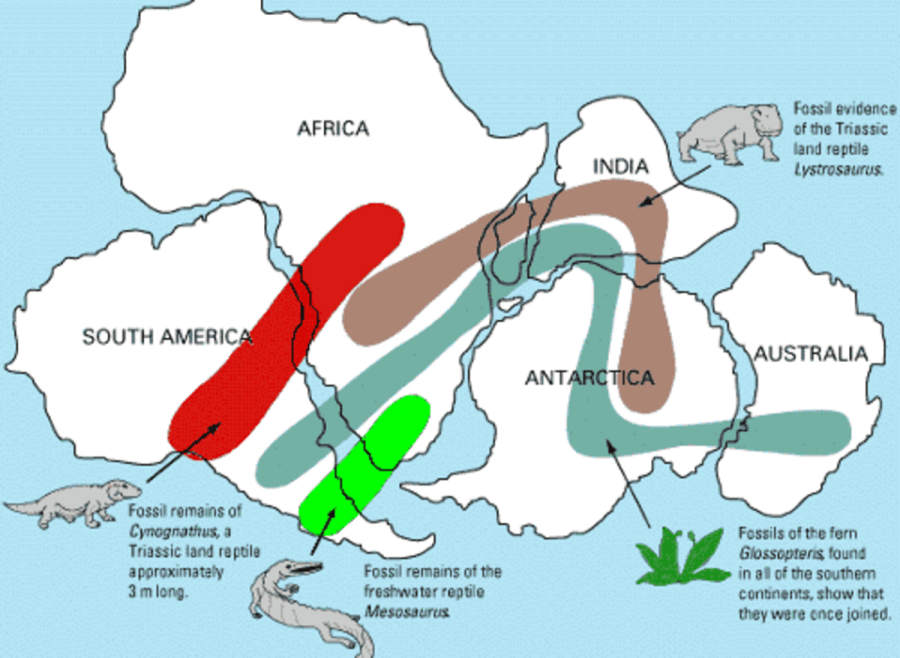
This was easily done at this stage since “all the earth” was still one mass of Pangea.

The scattering of the ancient arcane antediluvian technology into various languages spread across the world by fleeing refugees was a military countermeasure that effectively served to prevent exploitation of the masses of people by a handful of elites. Think German Jews fleeing Germany after Hitler began exploiting then exterminating them. The scattering of the inhabitants of an evil nation is not a punishment on the inhabitants, but an opportunity for them to find freedom from tyranny. 

Continue reading “114) Break It Up Folks!”

115) Divide And Scatter

The originally single mass of earth called Pangea breaks up shortly after the flood. This is scientifically expected from the aftershocks of the volcanic and cosmic beating that precipitated the flood waters on the earth.

From Genesis 11:11-19:

      • Noah’s grandson Arphaxad born two years after the flood
        • Salah born when his father was 35 years old
          • Eber born when his father was 30 years old
            • Peleg born when his father was 34 years old, i.e. 100 years after the Flood, and lived for another 239 years, i.e. died 339 years after the Flood.

At some point during Peleg’s lifetime he was associated in some way with what would have been the deadliest natural disaster since the Flood. Think the 2004 tsunami in Indonesia. Since, unlike Nimrod, he was not personally responsible for the notoriety, it was most likely at birth, like Jacob and Esau, that he was memorialized by the name / noun “Peleg / divided“for in his days / beginning at birth was the earth [verb] divided” (Genesis 11:10-19). (Like Peleg, from the age of ten my forever memorialized with breakage was in my case the red mixing bowl.)

“In his days”, from about 100 years post-Flood up to about another 100-200 years, the earth underwent shattering aftershocks. This is consistent with geological and astronomical findings.

Through the International Ocean Discovery Project, U.S. National Science Foundation-funded scientists have discovered an immense amount of information about the effects on earth in the aftermath following the immediate damage from an asteroid’s impact. Continue reading “115) Divide And Scatter”

) First Fathers

From Josephus’ Antiquities of the Jews 1:6:4: Shem, the third son of Noah, had five sons (Genesis 10:22), who inhabited the land that began at Euphrates, and reached to the Indian Ocean.

babylonian-empire-1

  1. Elam left behind him the Elamites, the ancestors of the Persians / Iranians.
  2. Aram had the Aramites, which the Greeks called Syrians.
  3. Arphaxad named the Arphaxadites, who are now called Chaldeans / Ir-aq (we can hear the continuation of Ar-ax), who held onto Nimrod’s Babylon, and are considered to be the live continuation of all the indigenous, i.e. “first people” of Mesopotamia.
  4. Lud – The Book of Jubilees says that Lud received the mountains of Asshur and all appertaining to them till it reaches the Great / Mediterranean Sea, and also locates Japheth‘s son Javan’s portion as Greek islands in this sea in front of Lud’s portion. We can phonetically trace the name of the seacoast portion of this territory – “Lyd-ia” – back to “Lud”. Ezekiel 27:10 names Lud as a warrior people who with Phut – Lud’s first cousin from uncle Ham (Genesis 10:6) – were mercenary soldiers of the Canaanites / Phoenicians. Very early on in history, then, we would find the Ludites fighting on Phoenician Troy’s side against the Greeks at the Trojan War. Between geography and deduction we can track the lost nation of Ludites as having transitioned from paid mercenaries to full amalgamation into notorious Canaanite Hittite Empire. Its capitol city was the massive fortress of Hattusa, which had existed, like Troy, since before Noah’s Flood, and was able to repulse attacks by Sargon the Great of Akkad.
  5. Ashur / Assur, (for some people “s” and “sh” sound the same) was originally confederate with his uncle Ham’s grandson Nimrod in building Babel, but two megalomaniacs can’t get along by definition, so he established his own nation’s capitol city Nineve; located in what is now northern Iraq and southeastern Turkey. Naming his subjects after himself, he proved himself superior to his rival when the Assyrians became the most fortunate, i.e. wealthy and powerful, nation, beyond others.

Too often the biblical record is treated as a series of events, when we know that all literature, media and documentation is limited to describing single events with flashbacks – “meanwhile, back at the ranch” – to acknowledge overlapping timelines. The following timeline using biblical lifespans in Genesis 5 and 11 allow us to collate co-existing persons and their significant events in history.

Continue reading “) First Fathers”