
The Problem: By the mid 19th century it was obvious that Earth was much older than 6000 years,
It was not obvious.
There is no evidence for this claim. It was asserted out of the rejection of biblical moral authority as the article itself admits. “After all, if the Earth were too young for there to have been time for evolution, the evolution debate would be over.”
Initially, three lines of evidence for long ages of earth’s existence were pursued.
Each failed
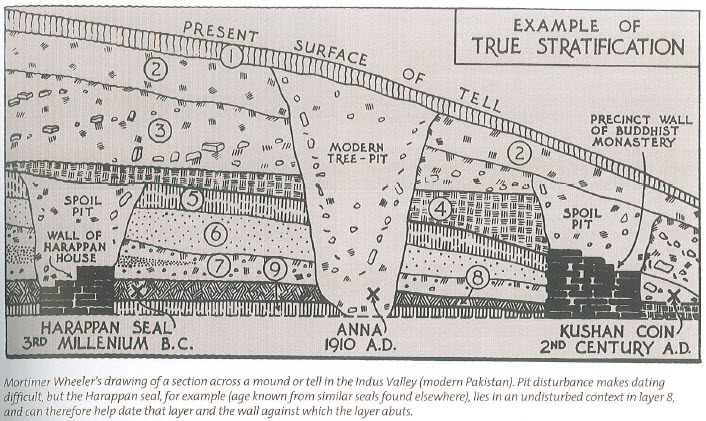
- Hutton attempted to estimate age based on the application of observed rates of sedimentation to the known thickness of the sedimentary rock column, achieving an approximation of 36 million years. This was based on three false assumptions that 1) sedimentation occurs at a constant rate over time, 2) no compression has occurred in lower levels of sedimentary rock, and 3) no erosion or disruption of sedimentary layers has occurred in the 36 million years that have passed.
- Ocean salinity: In 1889 John Joly, acting on suggestion of Edmund Halley, attempted estimate based on the salinity of the ocean. He calculated the amount of salt [currently] being transported into the oceans by rivers and compared this to the salinity of sea water [assuming it was initially fresh water], obtaining an age of 90 million years. Joly missed that salt is removed from the oceans by various processes.
- Thermodynamics: Sir William Thomson, Lord Kelvin, during the late 19th century, assumed that the Earth had originally been molten then, using average melting point of rocks and the laws of thermodynamics, determined that the Earth would completely solidify within 20 million years. At the time the process of radioactive decay inside the earth generating new heat had not been discovered.
Continue reading “14) Dating The Earth”







 Kingdom Come
