Author: kingdomcome777
A grandmother who loves to study the Bible and bases life on "know the truth, and the truth shall make you free."
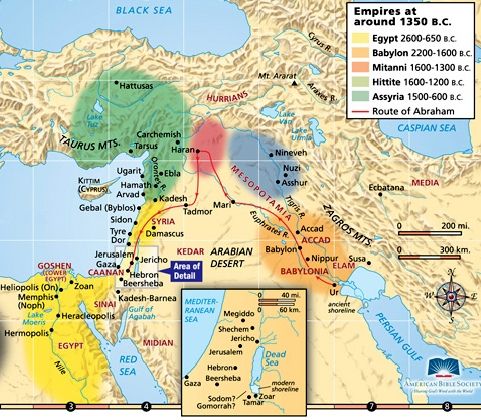
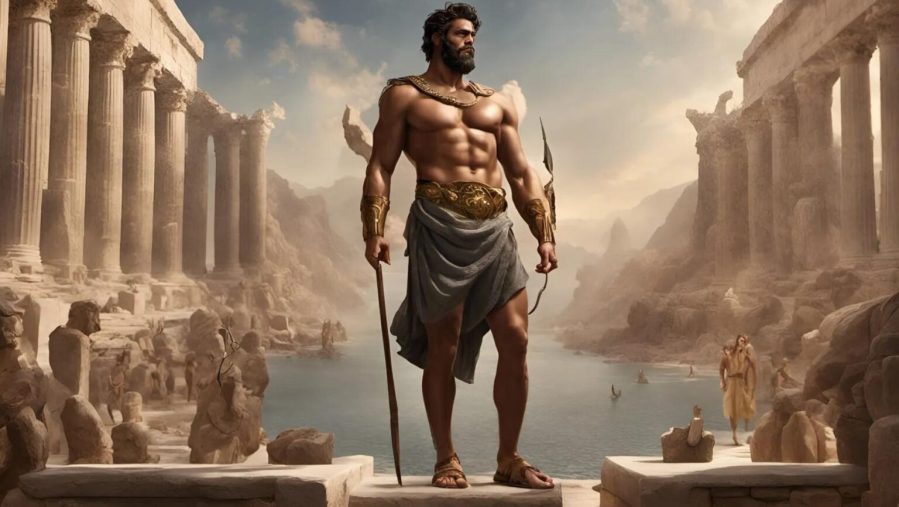
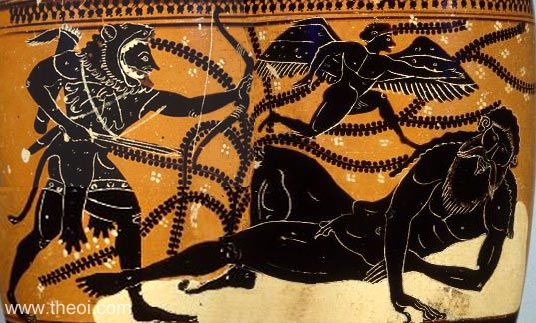
SECTION XXI: The Age Of Heroes Was Monstrous
Hesiod’s Age of Heroes is the transition between the Bronze Age in which gods and immortal giants inhabited the world and the current “Age of Iron,” defined by purely human toil and corruption. Based on oral history written down by Hesiod’s fellow poet, following a great flood which wiped out the previous rule of the gods and demigods, these lesser demigods traced their power, not directly from parent gods, but from their lineages of the pre-flood demigods.
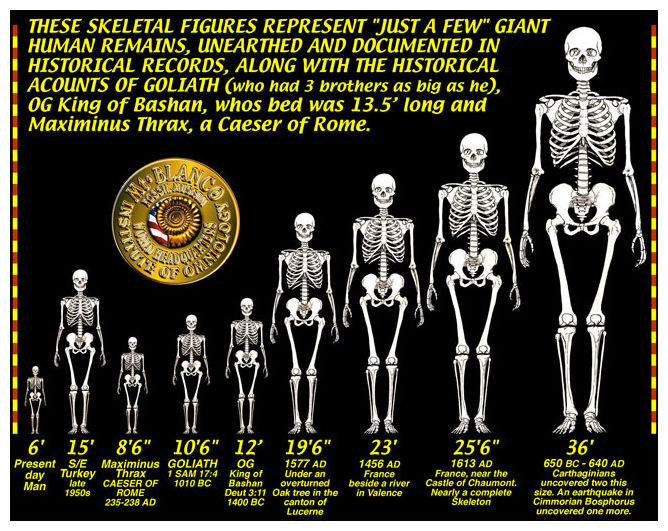
Compelling reports and traces of fierce giants terrorizing the local population are found in virtually every ancient culture.
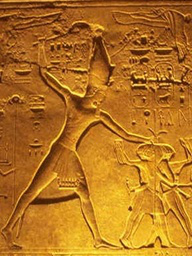
Continue reading “SECTION XXI: The Age Of Heroes Was Monstrous”

116) The Canaanite Pandemic
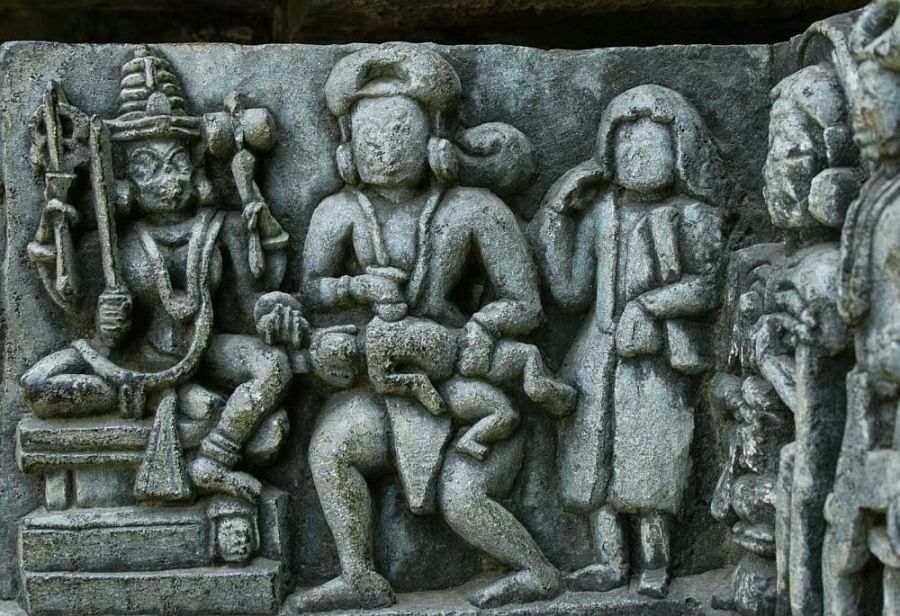
Canaan’s people were the ambassadors / evangelists / missionaries for the worship of a universal Seed of the Serpent to draw humanity away from the worship of the one true Seed of the Woman. Any features distinguishing between the gods of the nations can be attributed, not to different individual gods, but language and ecologically based cultural differences as the Canaanite nations were spread throughout the world.
According to the Canaanite pantheon the creator was known as Elion / עֶלְיוֹן “the most high / powerful” Elion was acknowledged by the Canaanites to be the father of the [lesser] divinities. However, in what is clearly the corruption of the sacred union of the Most High God with Jerusalem: “the holy city, new Jerusalem, coming down from God out of heaven, prepared as a bride adorned for her husband.” (Revelation 21:2), the Canaanites presented him as having engaged in a sacred union / marriage with Beruth (Beirut in English), meaning “Our [Canaanite] City”. Each city’s supreme god was likewise grounded to his territory.
- Melqart and Tyre
- Chemosh and Moab
- Tanit and Baal Hammon in Carthage
- Baal Hadad and El can be distinguished amongst earlier Amorites and the neighboring Arameans to the east to have been almost identical in form and function to the Canaanite divinities.
Carried west by Phoenician sailors, ancient Canaanite culture can be seen not only in later Greek mythology but social morals embedded in many people groups.
Continue reading “116) The Canaanite Pandemic”
117) The Canaanite Killing Fields
“they have built the high places of Tophet…to burn their sons and their daughters in the fire.” (Jeremiah 7:30-32)
GOT once again does a fabulous job of depicting this ancient practice when a priestess convinces a claimant to a throne currently up for grabs to burn his young daughter alive to ensure victory in battle.
While humanism-lauding archaeologists deny the biblical record, and define “tophets” as the unusually large number and size of children’s cemeteries in the Canaanite colony of Carthage, the true meaning of this word is in its etymology, still found in the Aramaic word taphyā meaning “hearth”, “fireplace”, or “roaster”, and in the many quotations in the Bible as “pass through the fire to Molech.”
While human sacrifice is a common feature of all pagan religions, the Canaanites were unique in slaughtering their own children, and by the worst of all deaths – burning alive.
The best explanation for this is the predominance of Canaanite peoples in the reproduction of hybrid offspring, many of whom would have been deformed or severely impaired in some way due to genetic aberrations. These would be “given back” to the gods by sacrifice. Just as in modern abortion laws, in time this practice would extend to even healthy unwanted children for economic or romantic relationship reasons.
The Canaanite colony of Carthage was founded in the 9th century BC to facilitate its trade economy, identified as Phoenicians by the Latin word Punica, and almost beating out the Romans for dominion of the Mediterranean in the Punic wars.
In 1921, French archeologists excavating some of ancient Carthage identified many children-specific cemeteries. The largest contained the remains of approximately 20,000 infants in urns.
The Phoenician settlement of Sulci was part of the Carthaginian sphere of influence from the 8th century B.C.E until its conquest by Rome in the 1st century B.C.E., when child sacrifice was prohibited.
An exhibit in the Sant’Antioco archaeological museum reconstructs the layers of Sulci’s Punic “tophet,” with offering bowls to hold the baby’s bodies and dedicatory stelae.

Continue reading “117) The Canaanite Killing Fields”

118) Other Hamite Giant Clans
“the (4) sons of Ham;
-
- Canaan – the first to breed giants who naturally immediately seized the most valuable land – gateway to Paradise (Genesis 10:6-7)
- Cush and the sons of Cush;
- Nimrod who famously restored Babylon, “gateway of the gods” at the Euphrates River to access their power.
- Seba
- Havilah – where there is gold
- Sabtah
- Sabtechah:
- Raamah and the sons of Raamah;
- Sheba – precious stones, spices, gold
- Dedan.
- P(h)ut / Libya
- Mizraim / Egypt
Continue reading “118) Other Hamite Giant Clans”

119) The True God-Man Alliance Defeats Giants
The Book of Eli [Hebrew for My God] is a great movie – a religious man is attempting to keep the word of the Bible alive, following a world-wide apocalypse by fire equivalent to Noah’s flood. There’s action, but it’s not mindless action being shoved down the audience’s throat at every turn. There’s violence, but it’s calculated violence. Reciting the Bible word for word would have been a satisfying enough ending, but seeing Kunis as Solara become the new Eli following his death added another layer.
Watching this movie adds action and drama to the minimalistic biblical accounts of the battles fought by a handful of YHVH’s righteous followers to keep the knowledge of the One True God alive in the same post-apocalyptic era through their actions by faith in God’s word.
The Book of Jasher is quoted as an authoritative source by Holy Scripture, and its details of supernatural feats of victory are consistent with later biblical accounts of the same Spirit-empowered feats of valor and are therefore credible as the pre-existing basis for later warriors’ faith that the same God will likewise supernaturally empower their actions on his behalf.
The following has been condensed from the original, beginning with Jacob’s return from Harran to claim his inheritance of the Promised Land from his father Isaac.
Continue reading “119) The True God-Man Alliance Defeats Giants”
120) The Gentiles
The flood apocalypse documented by the Hebrews as having occurred approximately 4,500 years ago has been memorialized throughout the world, with those closest to home being most familiar to Western society.
According to genetic studies, at one time in the past humanity experienced a “population bottleneck…a sharp reduction in the size of a population due to environmental events such as…flood.” “[M]ost Eurasian men (living outside Africa)…can be traced back to four ancestors, consistent with the Hebrew account.
- “Noah was…perfect in his generations [his genes had not been corrupted]. And Noah begat three sons,
- Shem,
- Ham, and
- Japheth.” (Genesis 6:9-10)
The Greek version of Noah is called Deucalion, matching the Greek word for 10 is deka with Noah as the 10th generation from Adam. Being in the high god’s favor, he and his wife survived the world-destroying flood in a boat, and were instructed to repopulate the earth.
Josephus reports that the “Japhethites” are the Indo-European speaking peoples, also defined as “Gentiles”.
The descendants of Japheth are grouped according to his sons.
Continue reading “120) The Gentiles”

121) The Canaanites Kindle World War
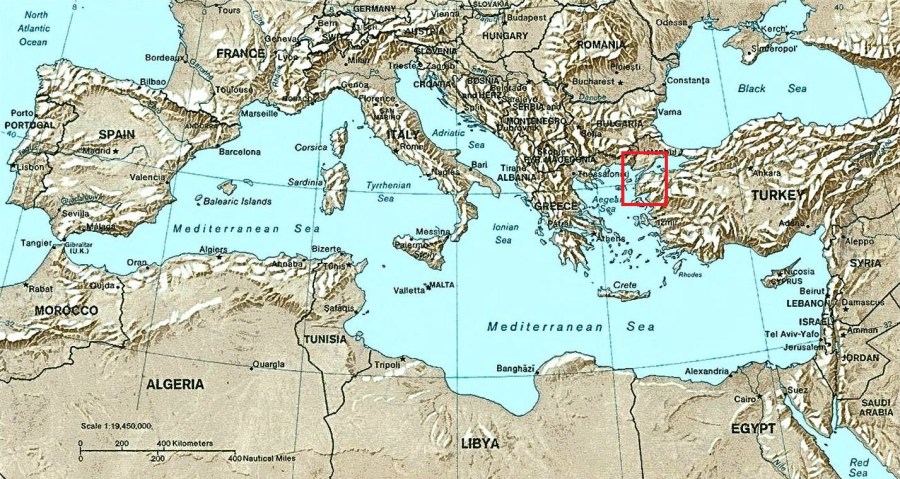
In the mid-fifth century BC, the Father of History Greek researcher Herodotus of Halicarnassus visited Tyre, spoke to a priest, and learned that the town and the temple of Melqart were, at that time, believed to be 2,300 years old. In other words, the city was founded in the twenty-eighth century BC, prior to the biblical date of the Flood ~2350 BC.
Herodotus does not mention a world-wide flood, but he would have known of it as he systematically gathered history from multiple cultures. It is likely he saw no reason to report the histories and wisdom of “the world that then was” which was already preserved through the Flood in vaults or on the ark, then gathered in libraries available to Herodotus and other sages.
In support of this consideration, Herodotus likewise does not give an account of Assyria’s origin or of the history of the Semites in Mesopotamia. It’s as if he consigns these records to the same category as known history in the collected works of the sages. Instead, Herodotus’ account most evidently picks up Japhethite / European history where the holy scriptures drops it to focus on the Hebrew nation, immediately after the dispersal of nations from Babel.
Herodotus reports that the Phoenicians / Canaanites had “recently come from that which is called the Erythraian Sea / Persian Gulf to this of ours / Mediterranean Sea, and having settled in the coastland where they continue even now to dwell, set themselves forthwith to make long voyages by sea.”
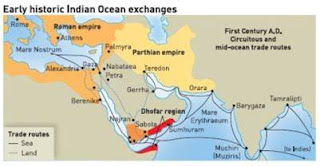
This account provides a reliable “absolute” vs “relative” date for this event as occurring during early emigration from the Mesopotamian / Land between Two Rivers and development into distinct people groups.
“And conveying merchandise of Egypt and of Assyria…”
This confirms the above date being after Asshur separated from Nimrod at Babylon and started his Assyrian Empire.
“they arrived at other places…”
Continue reading “121) The Canaanites Kindle World War”

122) The Trojan War
We can only understand the Trojan War in the context of its trigger – competition between nations to create weaponized hybrid beings. Mistake the Trojan War for a myth and you won’t understand what is assumed you know, so minimally detailed, in Revelation regarding the same military tactic at the end of time.
To begin with, Greece of this era was not in any way a nation. Instead, the rocky peninsulas and archipelagoes housed a number of small but powerful city-states, each of whom considered themselves proudly independent. So it was no mean feat when Agamemnon managed to bind them together into a unified force for the assault on Asian Troy. The equivalent situation in modern times is the European Union’s support of Ukraine against Russia’s invasion.
Trojan / Canaanite King Priam and Crown Prince Hektor assembled their allies from city- states all along the western Anatolian coastal regions (modern Turkey) and as far away as Elam (modern Iran). The equivalent modern situation is North Korean troops joining Russian forces in Ukraine.
The reason for the war was that Hamites weren’t the only ones parenting supermen. Every nation that aspired to power required a Mother of gods carrying hyper dimensional genes in her ovum. And the Trojans’ seizure of Helen was the equivalent of stealing the ways and means to produce nuclear weapons.
Before Helen, there was Medea. Even more famous than Helen in Greek mythology. Medea appears in the majority of the most ancient sources, including Argonautica by Apollonius Rhodius, Histories by Herodotus, Theogony by Hesiod, Metamorphoses by Ovid, and in several plays including Medea by Euripides.
Medea was the daughter of King Aeetes of Colchis, who traced his [pre-Flood] lineage to Apollo and an Oceanid, i.e. a female hybrid, so Medea carried hyperdimensional genes in her ovum. Medea was also priestess to the goddess of witches, Hecate. Altogether Medea was a prime acquisition for the western-most recently settled colonies of pioneers in Europe at this time when she fled her home with Jason of the Argonauts. However, she used her power to cut a swath of destruction across Greece in every city-state she visited.
Continue reading “122) The Trojan War”

123) Biblical Perspective Of Virgil’s Aeneid
Troy having been destroyed beyond repair and the Greeks having been decimated, the survivors on both sides, led by their respective heroes Trojan Aeneas and Greek Odysseus, sail west over the same sea.
Accordingly the much later Roman account, the Aeneid, has both groups visited some of the same locations, experienced the same difficulties and encountered the same strange creatures such as the Cyclops. This is academically accounted for by Virgil’s plagiarism of Homer’s epics the Iliad and the Odyssey, but the sea between Troy and Greece isn’t so large so the shipping lanes so numerous as to assume out of hand that the two groups wouldn’t run into the same remarkable circumstances.
Gathering scattered auspicious lines from Roman Virgil’s Aeneid:
The Trojan chief [Aeneas] appear’d in open sight,
August [godly] in visage, and serenely bright.
His mother goddess, with her hands divine
Had form’d his curling locks, and made his temples…
Like polish’d ivory…Or Parian marble, when enchas’d in gold [anticipating Caesar’s statues]…
goddess-born…the great Aeneas…from celestial seed your lineage‘“O hospitable Jove / Jupiter / Zeus! we thus invoke,
With solemn rites, thy sacred name and pow’r…To the Cumaean coast at length he came,
Where there is a resident prophetess of Apollo,
Continue reading “123) Biblical Perspective Of Virgil’s Aeneid”

 Kingdom Come