-
The essence of Babylon as the hyperdimensional gateway to the underworld prison of the rebel gods / fallen angels is detailed in the Sumerian text Enki And The World Order. Fortunately for transferring information across time, cultures and languages, it uses classic Sumerian imagery (ETCSL 1.1.3), from which I have transferred the biblical meanings.
-
-
- Grandiloquent lord of heaven and earth, self-reliant [the singularity, eternal], Father [authority] Enki,
- cherished by En-lil / Adam,
- in reality rejected by Adam, most clearly documented with the last Adam
- the Great Mountain
- the same Sumerian cuneiform symbol for the Great Mountain as object also conceptualizes the person bridging heaven and earth,
- beloved by holy An / Ani / Singularity Creator, king,
- in the sense of permanently merged identities specified in marriage vows and the delegation of “only begotten son / heir” granted in reality to humans
- meš / Rituals tree
- the tree of the knowledge of good and evil through which priest-prescribed rituals are the means by which a deity incarnates itself into the human to maintain life after death, replacing the Tree of Life given to those whose behavior actually mirrors the likeness of YHVH through connection with his indwelling Holy Spirit.
- planted in the Abzu [and from there] rising over all lands;
- conceptually pure energy chaos comprised of the rebel sons of God cast out of heaven, some bound at the center of earth / hell, and some in space above earth.
- great dragon
- identifying himself with his clone father Lucifer]
- who stands in Eridu(g),
- i.e. he first rose to power at the city established by Cain.
- whose shadow covers heaven and earth
- darkness with destructive works like a hurricane or tornado blocks the light of God over the hyperdimensional realm of spirits and the four-dimensional realm of mankind
- Enki / Satan, lord of plenty of the Anu-na
- claiming to be one of the first-generation gods created by Anu himself, but is in fact a lesser god, a clone made of only part of Lucifer’s energy being.
- [AKA] Nudimmud,
- ‘Begetter of mankind’, another attribute taken from YHVH
- mighty one / hybrid giant of the E-kur / Dwelling Place [of the god of this earth on] Earth
- En-lil / Lord Spirit / ha-Adam / the God-human, has commissioned / transferred authority to you / Enki / Satan.
- True, when Adam’s clone wife accepted his authority, and Adam would not abandon her so also ate the fruit. (Genesis 4:7)
- who establish commands and decisions, who well understands the decreeing of fates: you close up [end] the days / kill.
- “his servants ye are to whom ye obey…sin unto death.” (Romans 6:16)
- Your great house is founded in the Abzu, the great mooring-post of heaven and earth.
- Another lie, as the abzu does not tie together heaven and earth, but separates them from the destructive forces of evil / chaos. This “great house” is hell itself, the eternal prison of all rebel human and hyperdimensional spirits.
-
- cut off from Babylon the name, and remnant, and [grand]son [Nimrod], and nephew [Asshur] [of Ham]…
- also make it a possession for the bittern [heron, instead of humans]…
- sweep it with the besom of destruction…
- break the Assyrian [hybrid son of the god Asshur] in my land.” (Isaiah 14:22-28)
As Lucifer had proclaimed “I will…!” now the LORD of hosts responds with his own “No, I will…
The original Asshur was, like his brother Arphaxad, another rebel son of Shem, built a vast empire whose borders under subsequent kings grew to encompass the entire Ancient Near East, the East Mediterranean, Asia Minor, the Caucasus and parts of the Arabian Peninsula and North Africa. In 689 his “god-son” Sennacherib destroyed the city of Babylon, fulfilling the first three curses. However, his son Esarhaddon (681-669 BCE) promptly rebuilt Babylon while also renovating and expanding the great Assyrian capital, Nineveh.
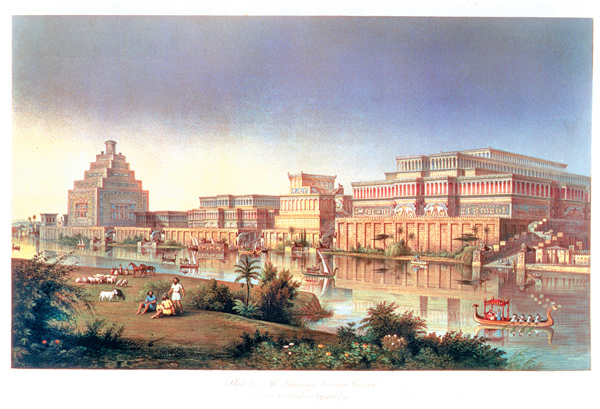
The fourth curse was fulfilled when the Neo-Babylonian Empire crushed the Assyrian Empire in 612 – 609 BC, marking the first time that the city, and southern Mesopotamia returned to dominate the ancient Near East since the collapse of the Old Babylonian Empire under Hammurabi nearly a thousand years earlier. The Neo-Babylonian kings conducted massive building and cultural projects, especially in Babylon itself, bringing back many elements from the previous 2,000 years of Sumero-Akkadian culture. Its greatest king Nebuchadnezzar II besieged Jerusalem in 587 BC, destroyed Solomon’s Temple and imposed the Babylonian captivity.
Proving that God’s ways and timing are not finalized as fast as we expect when we try to interpret prophecy.
The final ruler to claim the defiant Babylonian title King of the four corners of the world was Cyrus the Great, inscribed on the famous Cyrus Cylinder, portraying the victorious Cyrus pleasing the god Marduk following his conquest of the Neo-Babylonian Empire in 539 BC.
Wait, what? Wasn’t Cyrus a true believer?
Possibly Cyrus, who was likely a devout Zoroastrian who practiced religious toleration in his empire, knew enough about the Creator through Zoroastrianism to respect, honor and worship him, but didn’t personally know the LORD God of Everything until he met a Spirit-filled believer who manifested him to Cyrus. As one of the most knowledgeable ministers in the newly absorbed state, Daniel would have been one of the few men directly interviewed by Cyrus. And don’t you think that Daniel brought to his attention Isaiah’s and Jeremiah’s prophecies, written hundreds of years before Cyrus fulfilled them?
“Thus saith the LORD to his anointed, to Cyrus…I have raised him / Cyrus up in righteousness, and I will direct all his ways:
he shall build my city [the City of God], and he shall let go my captives, not for price nor reward, saith the LORD of hosts…I have sworn by myself, the word is gone out of my mouth in righteousness, and shall not return, That unto me every knee shall bow, every tongue shall swear. ” (Isaiah 45)
And that happened through Cyrus because Cyrus proclaimed “All the kingdoms of the earth hath the LORD God of heaven given me” (II Chronicles 26;23), whose “dominions composed the largest empire the world had ever seen to that point stretching from Asia Minor in the west to the Indus River in the east.”
Subsequently the Persian Emperor Xerxes (ruled 486-465) destroyed Babylon, “this sanctuary of daevas / devils and proclaimed, “Let daevas not be worshipped!” There…I worshipped Ahura Mazda [Persian name for One True God] .” Thereby fulfilling the first three curses listed above.
When the Greek empire under Alexander the Great defeated the mighty Persian Empire he was welcomed through the gate of Babylon as a savior, not a conqueror, because he commanded the rebuilding of all the temples which had been destroyed by Xerxes. Babylon remained in the possession of successive Persian Empires for nine centuries, but as the West grew in importance Babylon’s significance declined, the population significantly decreased, the city itself fell into ruins. Babylon is notable at this time only for Trajan taking a side trip during his Second Mesopotamian Campaign in 116 AD, and finding merely mounds and stones and ruins.
The Adversary’s religious center had been moved to Seleucid Greek territory to the city of “Pergamos…where Satan’s seat is…where Satan dwelleth.” (Revelation 2:12-15)
Therefore, Peter’s reference to the church at “Babylon” (I Peter 5:13) is not the actual geographically located Chaldean Babylon, but like the number 666, a veiled reference to an evil entity whose name is best not spoken aloud. Within the text we can determine that Peter is referring to Rome. (I Peter 1:1), which corresponds historically with the Roman Empire replacing the Greek, and leading opposition to YHVH’s Savior at this time.
In 650 AD the Muslim Empire incorporated the province of Babylon, overturning paganism while permitting freedom of monotheism found in the Babylonian Talmud, the Gnostic Mandaean religion, Eastern Rite Christianity and the religion of the philosopher Mani, and fighting the Byzantine Christians at Constantinople as heretics to monotheism with their doctrine of the Trinity, which they were.
in 1921 the British Empire created the modern Iraqi state from the ruins of the Babylonian homeland, building a replica of the Ishtar Gate and a reconstruction of Ninmakh Temple on site. We can deduce from this action that the British were pawns of the Adversary.
Although paganism was officially eliminated from Christianized politics in the Western nations by Constantine in the 4th century, Western rulers still openly claim descent from a god. Many people take this very seriously. Prince Charles of England claims descent from Vlad the Impaler, ruler of Transylvania in what is now called Roman-ia, reflecting its history as a Roman province. Vlad the Impaler was the inspiration for Bram Stoker’s “Dracula”, derived from Vlad’s family name of Dracul, which means “dragon”. In other words, Prince Charles of England, son of Vlad the son of the dragon.
For the first time in more than 10 centuries, thousands of Icelanders soon will be able to worship Thor, Odin, Frigg and others at a temple on which construction begins this month…According to statistics kept by the Icelandic government, membership in the Asatru Association has exploded.
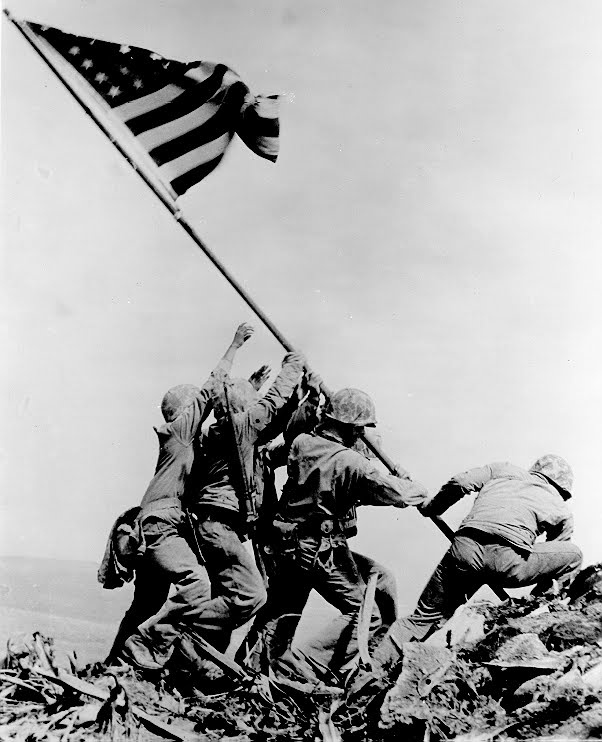
When United States forces invaded Iraq in 2003, they constructed a military base on top of the ruins of Babylon.
Doesn’t planting a flag always proclaim ownership?
-
Following through on the basic premise of this post that ancient places and presentations may change over time until their ultimate destiny is fulfilled, we can anticipate that the current iteration of Babylon will fulfill its ultimate destiny of utter destruction.
We should also expand our awareness of how the Babylon of our day is accomplishing its goal of connecting the false gods with humanity.

- let us build ourselves a city – think Houston’s Space Center technological power base
- and a strong tower – think launch pad with metal frame
- and its top – think capsule
- reaching heaven – think outer space beyond the firmament
- and we will make ourselves famed – think Space Race between Russia and the U.S.
- so that we may reign upon the whole world, in order that the evil of our enemies may cease from us – think the Reagan administration’s Strategic Defense Initiative
- that we may reign mightily over them – think maintaining hegemony over the other nations
- and that we may not become scattered over the earth on account their wars – think the U.S. military scattered all across the world fighting its enemies.
Surely we can recognize the glaringly obvious clues in NASA naming their space exploration vehicles after the ancient gods, in particular, Apollo as notorious father of demigods.