“take up this proverb against the king of Babylon…Hell from beneath is moved for thee to meet thee at thy coming…it hath raised up from their thrones all the kings of the nations…How art thou fallen from heaven, O Lucifer, son of the morning!…[But] Rejoice not…
- for out of the serpent’s [Lucifer’s] root / identical clone shall come forth a cockatrice / Satan,
- and his fruit / produce, different from the plant shall be a fiery flying serpent / the god-human hybrid, beginning with Marduk, repeating throughout the ages with an evil spirit-indwelt human ruler.” (Isaiah 14)
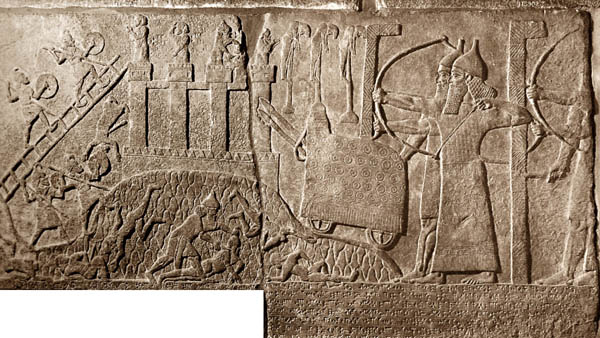
“[King] Ahaz [of Judah] sent messengers to Tiglathpileser king of Assyria, saying, I am thy servant and thy son: come up, and save me out of the hand of the king of Syria, and out of the hand of the king of Israel, which rise up against me. (II Kings 16:7-8)
“Wherefore hear the word of the LORD, ye scornful men, that rule this people which is in Jerusalem. Because ye have said, We have made a covenant with death, and with hell are we at agreement…Therefore thus saith the LORD God…your covenant with death shall be disannulled, and your agreement with hell shall not stand; when the overflowing scourge shall pass through, then ye shall be trodden down by it. (Isaiah 28:14-18)
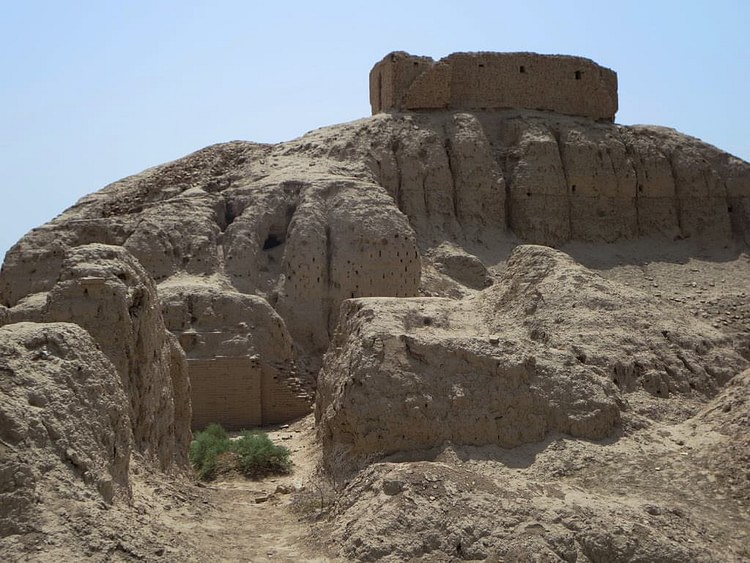
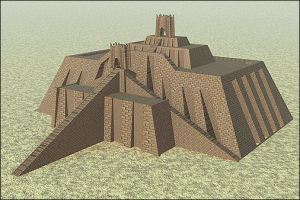
As the divine gateway to the gods, Ekur’s temple was notable for its massive ziggurat, a stepped pyramid platform for the temple itself symbolizing connection between the earth and the heavens.
It was not until the Euphrates riverbanks had stopped being overflown by northern snow melts from the post-apocalyptic ice age, that Nimrod, son of Cush rebuilt the actual Babylon, like all the other major Sumerian cities, at its pre-flood site.
This deduction is supported by the evidence that a prison for mighty angels is accessed at the Euphrates River.
“I heard a voice saying to the sixth angel which had the trumpet, Loose the four angels which are bound in the great river Euphrates. And the four angels were loosed, which were prepared for an hour, and a day, and a month, and a year, for to slay the third part of men.” (Revelation 9:13-15)
This site was only called “Babel / Confusion by YHVH’s people for the variety of languages that stopped further development there, but also to avoid using the name given by the Adversary’s followers, translating as Door / Gate of the Most High God, in essence acknowledging Lucifer as having succeeded in his plot.
The essence of Babylon as the gateway to imprisoned Lucifer and the rest of the rebel gods, regardless of location or local name, is detailed in the Sumerian text Enki And The World Order, which, fortunately for transferring information across time, cultures and languages, uses classic Sumerian imagery (ETCSL 1.1.3), from which I have translated the biblical meanings.
-
-
- Grandiloquent lord of heaven and earth, self-reliant [the singularity, eternal], Father [authority] Enki,
- cherished by En-lil / Adam,
- in reality rejected by Adam, most clearly documented with the second Adam
- the Great Mountain
- the same Sumerian cuneiform symbol for the object the Great Mountain also conceptualizes the person bridging heaven and earth,
- beloved by holy An / Ani / Singularity Creator, king,
- in the sense of permanently merged identities specified in marriage vows and the delegation of “only begotten son / heir” granted only to humans
- meš / Rituals tree
- This is the tree of the knowledge of good and evil through which priest-prescribed rituals such as transubstantiation, confession, last rites regardless of personal righteousness are the means by which a deity incarnates itself into the human to maintain life after death, replacing the Tree of Life given to those whose behavior actually mirrors the likeness of YHVH in righteousness.
- planted in the Abzu rising over all lands;
- conceptually pure energy chaos comprised of the rebel sons of God cast out of heaven, both surrounding and at the center of earth / hell,
- great dragon
- identifying himself with his clone father Lucifer]
- who stands in Eridu(g),
- first rises to military power at the city established by Cain.
- whose shadow covers heaven and earth
- darkness with destructive works like a hurricane or tornado blocks the light of God over the hyperdimensional realm of spirits and the four-dimensional realm of mankind
- Enki / Satan, lord of plenty of the Anu-na
- typically, another lie, claiming to be one of the first-generation gods, created by Anu himself, not lesser gods cloned from other gods although Satan is a second generation, a clone made of only part of Lucifer’s energy being, therefore less powerful.
- [AKA] Nudimmud,
- ‘Begetter of mankind’, another attribute taken from YHVH
- mighty one / warrior of the E-kur / Dwelling Place [of the god of this earth on] Earth
- Mimicking YHVH’s Temple, while distorting its location. “the LORD said…I have hallowed this house…to put my name there for ever; and mine eyes and mine heart shall be there perpetually.” (I Kings 9:1-7)
- En-lil / Lord Spirit / ha-Adam / the God-human, has commissioned / transferred authority to you / Enki / Satan.
- True, when Adam’s clone wife accepted his authority, and Adam would not abandon her so also ate the fruit. (Genesis 4:7)
- who establish commands and decisions, who well understands the decreeing of fates: you close up [end] the days / kill.
- “his servants ye are to whom ye obey…sin unto death.” (Romans 6:16)
- Your great house is founded in the Abzu, the great mooring-post of heaven and earth.
- Another lie, as the abzu does not tie together heaven and earth, but separates them from the destructive forces of evil / chaos. This “great house” is hell itself, the eternal prison of all rebel human and hyperdimensional spirits.
It is obvious that Lucifer’s dystopian universe is a dark mirror image of God’s theocracy.
A significant role of the king-priest was to provide salvation, which was often accompanied by the words, “Fear not!” The greatest fear was the dread of perpetual thirst and hunger in hell in the afterlife. So the king-priest of the pagan god led religious rites to obtain the underworld’s gods’ favor in exchange for improved after-life conditions, although still as a bodiless soul underground.
And YHVH wasn’t having this deceiver lead an ignorant population astray.
As Lucifer had proclaimed “I will…!” now the LORD of hosts responds with his own “No, I will…
- cut off from Babylon the name, and remnant, and [grand]son [Nimrod], and nephew [Asshur] [of Ham]…
- also make it a possession for the bittern [heron, i.e. uninhabited by humans]…
- sweep it with the besom of destruction…
- break the Assyrian [son / heir of the god Asshur] in my land.” (Isaiah 14:22-28)
As you read the following account, keep in mind that the ancient Sumerian religious documents were carried forward as “the learning and the tongue of the Chaldeans” (Daniel 1:4) to subsequent nations.
“Nebuchadnezzar king of [Neo-]Babylon] dreamed dreams…Daniel answered in the presence of the king, and said… Thou, O king, sawest, and behold a great image…a stone [insignificant earthly entity like the chunk of clay out of which God formed the first human] was cut out without hands [by an invisible spiritual entity], which smote the image upon his feet [original empire]…Then was the [entire image with all subsequent empires] broken to pieces together… and the stone that smote the image became a great mountain, and filled the whole earth.” (Daniel 2)
After reviewing the Sumerian-based Babylonian religion can we get a flash of insight into what Nebuchadnezzar most certainly recognized?
“The Great Mountain” is none other than the hybrid human made of clay who connects humans to God in heaven. Not Marduk, but the only begotten hybrid son of YHVH, who saves, not by rituals, but by battling and defeating the god of this world, exactly as the first Adam did for his bride.
Interestingly, the final ruler to claim the defiant Sumerian title King of the four corners of the world following his conquest of Babylon in 539 BC was Cyrus the Great, inscribed on the famous Cyrus Cylinder, portraying the victorious Cyrus pleasing the god Marduk.
Wait, what? Wasn’t Cyrus a true believer?
Possibly Cyrus, who was likely a devout Zoroastrian who practiced religious toleration in his empire, knew enough about the Creator through Zoroastrianism to respect, honor and worship him, but didn’t personally know the LORD God of Everything until he met a Spirit-filled believer who manifested him to Cyrus.
As one of the most knowledgeable ministers in the newly absorbed state, Daniel would have been one of the few men directly interviewed by Cyrus. And don’t you think that Daniel brought to his attention Isaiah’s and Jeremiah’s prophecies, written hundreds of years before Cyrus fulfilled them?
“Thus saith the LORD to his anointed, to Cyrus…I have raised him / Cyrus up in righteousness, and I will direct all his ways:
he shall build my city [the City of God], and he shall let go my captives, not for price nor reward, saith the LORD of hosts…I have sworn by myself, the word is gone out of my mouth in righteousness, and shall not return, That unto me every knee shall bow, every tongue shall swear. ” (Isaiah 45)
And that happened through Cyrus because Cyrus proclaimed “All the kingdoms of the earth hath the LORD God of heaven given me (II Chronicles 26;23), whose “dominions composed the largest empire the world had ever seen to that point stretching from Asia Minor in the west to the Indus River in the east.”
Subsequently Xerxes (ruled 486-465) destroyed Babylon, “this sanctuary of daevas / devils and proclaimed, “Let daevas not be worshipped!” There…I worshipped Ahura Mazda [Persian name for One True God] .”
-
-


 Kingdom Come