199) The Closed Church Rev 3:7-13

Philadelphia was established in 189 BC by King Eumenes II of Pergamon I[who] named the city for…his brother, who would be his successor, Attalus II (159–138 BC), whose loyalty earned him the nickname, “Philadelphos”, literally meaning “one who loves his brother”.

Philadelphia was included in the kingdom of Pergamum that Attalus III Philometer bequeathed to his Roman allies when he died in 133 BC, assigned to the administrative district of Sardis. As noted above in the section on Sardis, the Jewish population was influential in Sardis and there was a synagogue of Hellenizing Jews in Philadelphia.

“And to the angel of the church in Philadelphia write; These things saith he that is holy, he that is true, he that hath the key of David, he that openeth, and no man shutteth; and shutteth, and no man openeth; I know thy works: behold, I have set before thee an open door, and no man can shut it: for thou hast a little strength, and hast kept my word, and hast not denied my name. 

Continue reading “199) The Closed Church Rev 3:7-13”

200) The Cool Church Rev 3:14-19

“And unto the angel of the church of the Laodiceans write; These things saith the Amen, the faithful and true witness, the beginning of the creation of God; I know thy works, that thou art neither cold nor hot: I would thou wert cold or hot. So then because thou art lukewarm, and neither cold nor hot, I will spue thee out of my mouth. Because thou sayest, I am rich, and increased with goods, and have need of nothing; and knowest not that thou art wretched, and miserable, and poor, and blind, and naked:I counsel thee to buy of me gold tried in the fire, that thou mayest be rich; and white raiment, that thou mayest be clothed, and that the shame of thy nakedness do not appear; and anoint thine eyes with eyesalve, that thou mayest see.” (Revelation 3:14-19)

Laodicea was built by Antiochus II Theos in ~ 250 BC in honor of his wife Laodice. In 188 BC, the city passed to the Kingdom of Pergamon, and therefore after 133 BC fell under Roman control.

Continue reading “200) The Cool Church Rev 3:14-19”

SECTION XXXII: Divide And Conquer

The early church was Jewish in leadership and membership. It functioned in synagogues and had Pharisaic traditions and it never lost its traces of Rabbinic Halakha [religious law]

But as Gentiles were being converted to the God of Israel, too many power-hungry men saw an opportunity to use Gentiles who were poorly educated in the Jewish scriptures to build up their personal power base.

The split between Judaism and Christianity was gradual and happened at different rates in different places…from the middle of the first century CE to the middle of the fourth CE…

The process by which this happened was to split off the Jewish Scriptures.

Scholars propose that it was Melito of Sardis [d.180 AD] who originally coined the phrase Old Testament.

Continue reading “SECTION XXXII: Divide And Conquer”

201) God Has Not Cast Away The Jews

Dispensationalism is a theological system of interpretation that makes a distinction between the church and the nation of Israel. Its roots are found in the earliest days of the apostate Christian church. 

Justin Martyr is an imposing figure in the days of the early church, a philosopher by trade, and very skilled in the art of rhetoric. Justin noticed “several different economies”, i.e. dispensations, in the Old Testament in which history is revealed. There was an age prior to circumcision, an age prior to the law, and an age after the law. 

Not according to Paul, there wasn’t.

Paul himself proved by his obedience to the law that he remained a law-abiding Jew to his death – as was Jesus the Christ. It is only Gentiles who are not required to follow certain elements of the law, such as circumcision, since these don’t apply to God’s people not living in the land of Israel.

Continue reading “201) God Has Not Cast Away The Jews”

202) Wresting The Scriptures

“our beloved brother Paul also according to the wisdom given unto him hath written…in all his epistles, speaking in them of these things; in which are some things hard to be understood, which they that are unlearned and unstable wrest, as they do also the other scriptures, unto their own destruction.” (II Peter 3:15-16)

Philo of Alexandria (30 BCE – 45 CE) is a good example of a Jew who wrested the scriptures to suit his personal preference. He identified with Judaism through following ritual law while also identifying with high, i.e. Greek, society by melding Judaism’s God with the Greek concept of God, despite their inherent contradictions. The Greeks believed that God was inherently “unknowable.” Yahweh was the opposite – easily accessible and constantly occupied with the details of everyday life, reached easily just by calling out to him.

Philo postulated a two-part God: 1) an ousia of God, or a singular essence, which is the unknowable, and 2) an energeiai (energy) / Spirit which was the very thoughts of God. God’s energy could interact and touch the lives of mortals despite the remote ousia which was inaccessible to man through The Logos – a mediator for God; making it possible to realize the energy of God, and thus, by extension, the impossible ousia of God Himself.

Heraclitus of Ephesus used the word Logos around 500 BCE to describe his concept of the universe as a divine machine invisibly regulated by the Logos (literally the reason). The Greek cult of Hermes played on this construct, reporting that their prophet, in a trance state, met “the Mind of Authority” who shows the mystic a great light / reality and a great darkness / matter. From the Mind comes “a Holy Logos,” …the “shining Son of God.”

Philo’s Logos / Word was extremely popular among Jews and non-Jews alike because it allowed ecumenicalism in a multicultural empire, especially for those aspiring to be accepted by the ruling classes.

Continue reading “202) Wresting The Scriptures”

203) Splitting God

Splitting is a way for individuals to cope with conflicting emotions or thoughts by dividing them into polarized categories – all one or the other. People prone to splitting often have polarized opinions without considering complexities. This polarized viewpoint hampers growth within relationships. Splitting can wreak havoc on relationships, leading to frequent conflicts and struggle with maintaining stable connections.

This is particularly true when it comes to splitting the Singularity into three persons.

The doctrine of the Trinity is foundational to the Christian faith. It is crucial for properly understanding what God is like, how he relates to us, and how we should relate to him. 

The doctrine of the Trinity means that there is one God who eternally exists as three distinct Persons — the Father, Son, and Holy Spirit. Stated differently, God is one in essence and three in person. These definitions express three crucial truths: (1) the Father, Son, and Holy Spirit are distinct Persons, (2) each Person is fully God, (3) there is only one God.

The problem with this is obvious once we recognize that the Bible defines a person as a distinct soul, an autonomous individual. Surely we’ve come to understand that there is no such thing as “Separate but Equal.”

The doctrine of the Trinity is not found in either the New or the Old Testaments.

Continue reading “203) Splitting God”

204) A Pagan Son of A God Replaces YHVH’s Human Messiah

After the original witnesses of Jesus the Christ’s resurrection died off, false teachers sprang up to dispute the faith of those who had heard about this savior. Was He man? Was He God? Was He God appearing as a man? Was He an illusion? Was He a mere man who became God? Was He created by God the Father, or did He exist eternally with the Father?

This was not accidental. The intent and inevitable results of the early Church councils convened to answer these questions was to divide and conquer God’s people. They were clearly heretical, because Jesus had answered those questions.

  1. “If ye had known me, ye should have known my Father also:
  2. he that hath seen me hath seen the Father; and how sayest thou then, Show us the Father?
  3. Believest thou not that I am in the Father, and the Father in me?
  4. the words that I speak unto you I speak not of myself: but the Father that dwelleth in me,
  5. he doeth the works. Believe me that I am in the Father, and the Father in me.” (John 14:7-18)

Continue reading “204) A Pagan Son of A God Replaces YHVH’s Human Messiah”

SECTION XXXIII: I Will Send My Messenger Before Judgment

In the transformation of Rome from a publicly pagan to a publicly Christian Empire which was in reality just a new face on the old Mithraism, is God going to stand by and do nothing?

Not according to his word, he’s not.

“Behold, I will send my messenger, and he shall prepare the way before me: and the LORD, whom ye seek, shall suddenly come to his temple…

And I will come near to you to judgment; and…fear not me, saith the LORD of hosts. For I am the LORD, I change not…

Then they that feared the LORD spake often one to another…and a book of remembrance was written before him for them that feared the LORD / YHVH, and that thought upon his name / attributes of Singularity and righteousness...” (Malachi 3)

Was it even possible to find a righteous Messenger to the peoples of the world from Christianity? It is a fact that Christianity had become thoroughly corrupted after its politicization within the Roman Empire in the 4th Century.

And what to my wondering eyes should appear, but Muhammad c. 570 CE – 8 June 632 CE), the founder of Islam. He claimed to be God’s Messenger, the final prophet of God sent to restore orthodox monotheism previously preached by Adam, Noah, and leaders of the Hebrews including Abraham, Moses, Jesus and Paul.

Contrary to what became a tenant of faith of Christianity, Paul based his gospel of salvation not on knowing and calling on the name of Jesus Christ but on the preceding scriptures of the prophets which prove Jesus Christ’s role in salvation as the Son of God.

to him [that is God only, NOT Jesus Christ, see below] that is of power to stablish you according to my gospel, and the preaching of Jesus Christ, according to the revelation of the mystery, which was kept secret since the world began, But now is made manifest, and by the scriptures of the prophets, according to the commandment of the everlasting God, made known to all nations for the obedience of faith: To God only wise, be glory through Jesus Christ for ever. Amen.” (Romans 16:26-27)

Moslems categorize themselves, Jews and Christians on the basis of God’s word. That is a value judgment if ever there was one. So before denouncing Islam out of hand, we need to examine the basic tenants of the faith.

Continue reading “SECTION XXXIII: I Will Send My Messenger Before Judgment”

205) Can Any Good Thing Come Out Of Islam?

Believers in the Qur’aan love Jesus / Esa or Isa, honor him, and believe in him. Muslims respect and venerate Jesus Christ. They consider him to be one of Almighty God’s greatest messengers to humankind. 

Every nation and every people, from the Aztecs to the Greeks, have received a Prophet or a Messenger from Almighty God: “So then faith cometh by hearing, and hearing by the word of God. But I say, Have they not heard? Yes verily, their sound went into all the earth, and their words unto the ends of the world.” (Romans 10:17-180

Each of the many Messengers spoke a different language and followed varied customs. Yet the core faith taught by each was the same: surrender your imperfect and fickle will to the perfect will of the Power that is greater than you. You will then find the peace and freedom that only the Creator of all things can provide. Then you must do what is right and good to your fellow creatures. This way of life is called Islam in Arabic – Surrender.

In this sense, he was “a word” of Almighty God’s and a special sign for humanity. In fact, Jesus the Messiah / Christ was the last in a long line of religious guides sent to the Jews: “I am not sent but unto the lost sheep of the house of Israel.” (Matthew 15:24)

Continue reading “205) Can Any Good Thing Come Out Of Islam?”

206) Righteousness Is Not A Religion

From the last chapter in the Bible:

“Behold, I come quickly: blessed is he that keepeth the sayings of the prophecy of this book…for the time is at hand.

  • He that is unjust, let him be unjust still: and he which is filthy, let him be filthy still:
  • and he that is righteous, let him be righteous still: and he that is holy, let him be holy still.

And, behold, I come quickly; and my reward is with me, to give every man according as his work shall be. I am Alpha and Omega, the beginning and the end, the first and the last. 

Blessed are they that do his commandments, that they may have right to the tree of life, and may  enter in through the gates into the city. And the Spirit and the bride say, Come. And let him that heareth say, Come.

And let him that is athirst come. And whosoever will, let him take the water of life freely.” (Revelation 22)

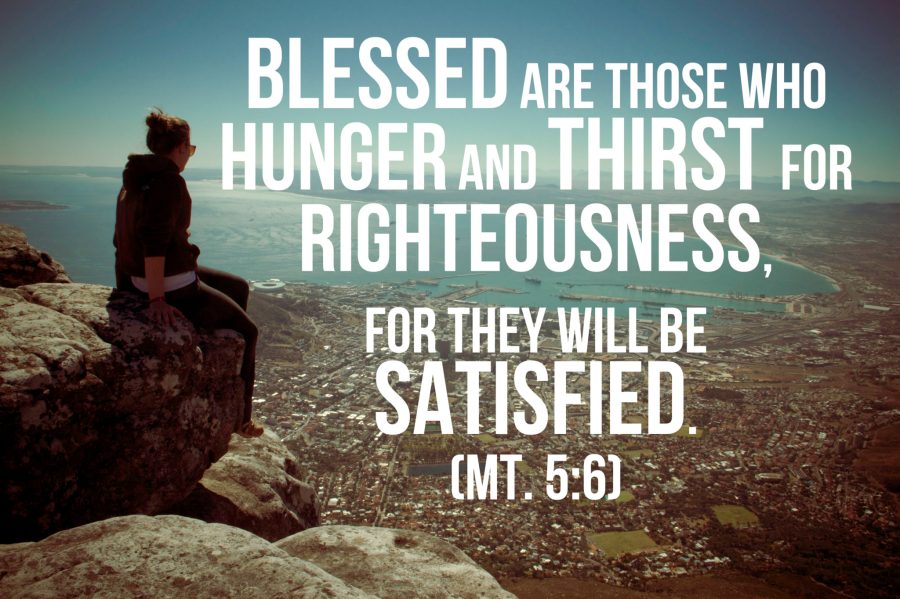
Athirst for what? Jesus defines this for us.

“Blessed are they which do hunger and thirst after righteousness: for they shall be filled.” (Matthew 5:6)

Christianity has been thoroughly paganized by its reliance on calling on the name of a god to improve one’s state in the afterlife while free to continue enjoying the pleasures of sin on earth. Anyone who has truly bonded with the Holy Spirit abhors the sight and sound and touch of sinful behavior for the utter corruption that it is! Who wants to eat rotted meat? Who wants to physically engage in intimate behavior with a corpse? 

“ye are a chosen generation, a royal priesthood, an holy nation, a peculiar people; that ye should shew forth the praises of him who hath called you out of darkness into his marvellous light…Dearly beloved, I beseech you as strangers and pilgrims, abstain from fleshly lusts, which war against the soul; Having your conversation honest among the Gentiles: that, whereas they speak against you as evildoers, they may by your good works, which they shall behold, glorify God in the day of visitation.” (I Peter 2:9-12)

For a long time Christianity regarded itself as part of Judaism.

Continue reading “206) Righteousness Is Not A Religion”