After the Western Powers defeated the Ottoman Empire in WWI, they enriched themselves by forming business partnerships between elites on both sides, without regard to the rights or even basic needs of the local inhabitants.
Palestine

The history of the Palestinian national identity begins in biblical times. In 1919 Palestinian Muslims and Christians constituting 90 percent of the population of the British-assigned post-WWI mandate of Ottoman Palestine as a highly homogeneous community sharing an ancient cultural and ethnic identity with a specific language of Palestinian Arabic.
The West Bank of the Jordan River is the larger of the two sections of territory assigned to Palestinians under the British Mandate, the other being the Gaza Strip., Since 1967, the territory has been, although illegal by international law, Israeli occupation, which calls it instead “Samaria and Judea”.
Afghanistan
Between 562,000 and 2 million Afghans were killed, 6 million people became refugees mainly in Pakistan and Iran, provoking an Islamic fundamentalist group of “Students” / Taliban to establish the Islamic Emirate of Afghanistan, providing Osama bin Laden’s al-Qaeda sanctuary from which to lead his Islamic revolution.
In 2021 the Taliban swiftly overtook provincial capitals, and the world watched in real time television broadcasting as Islamic Turkish President Erdogan stepped into a position of power in Afghanistan.
Egypt
Egypt controls the Suez Canal. Opened in 1869, it remains one of the world’s most critical marjitime chokepoints. As of early 2022, an estimated 10% of global trade, including 7% of the world’s oil, flows through the Suez Canal. In 2022 Qatar began economically supporting Egypt, This Qatari economic investment in Egypt has manifested in animosity toward Israel, as well as support for Hamas and Iran.
Iraq
Iraq as a named territory dates back to the founding of Islam,becoming the centre of Islamic rule, with Baghdad becoming a global hub for culture, science, and intellectualism.
Turkey’s security forces maintain a string of bases in northern Iraq. Iran’s Islamic Revolutionary Guard Corps (IRGC) is also present in Iraq, mostly to coordinate with pro-Iran militias. When Iraqi Prime Minister Mustafa al-Kadhimi came to power in 2020, he used the personal ties he developed while serving as Iraq’s intelligence chief to improve relations with Egypt, Jordan, Saudi Arabia, and the United Arab Emirates.
Saudi Arabia
In 1933 full diplomatic relations with Saudi Arabia were established with U.S. businesses involved in Saudi Arabia’s oil industry.The Standard Oil Company of California (now Chevron) won a sixty-year concession to explore, forming a partnership with Texaco, Exxon and Mobil helped Saudi Arabia become one of the world’s largest oil exporters. This business relationship was governmentally formalized under the 1951 Mutual Defense Assistance Agreement. The U.S. provides military protection to the Kingdom in exchange for a reliable oil supply and support for American foreign policy, despite the Saudi government’s human rights abuses and lack of democratic representation documented annually by the State Department.
Iran
Known as Persia until 1935 – beginning in 1950, the popularly elected 30th Prime Minister of Iran, a member of the Iranian Parliament since 1923, Mohammad Mosaddegh introduced a range of social and political measures, with his most significant policy being the nationalisation of the Iranian oil industry to fund benefits to the masses of Iranian people. In response, the Western Bloc engineered the Iranian coup d’étatto set up Shah Mohammad Reza Pahlavi to rule in favor of Western interests against the Iraqi peoples’, leading to the arrest and exile of opposition Islamic religious leader Ayatollah Khomeini in 1964. In 1978, strikes and demonstrations paralyzed the country, and engineered the Ayatollah’s return to re-establish an Islamic state in early 1979.
Washington quickly learned that it failed to account for the role of government legitimacy in maintaining regime stability.
Syria
Diplomatic relations between Syria and the West began in 1935 during the French Mandate, and were continued following Syria’s independence in 1944. After the militant Islamic Ba’athist Party seized power in 1963, Syria severed diplomatic relations with the United States during 1967’s Arab-Israeli War. In 1979 the US government added Syria, ruled by the autocratic Assad family, to its first list of “State Sponsors of Terrorism”. From the period of the “War on Terror“, the U.S. government has imposed economic sanctions on Syria and supported rival militant group’s attempts to overthrow the Assad regime, which they achieved in 2025, following which the U.S. has no clear relationship with Syria.
Pakistan
In 1946, Britain announced it would grant independence to the Indian subcontinent.The population was about 25% Muslim, with the rest mostly Hindu. “Partition seemed to be a quick and simple solution.”
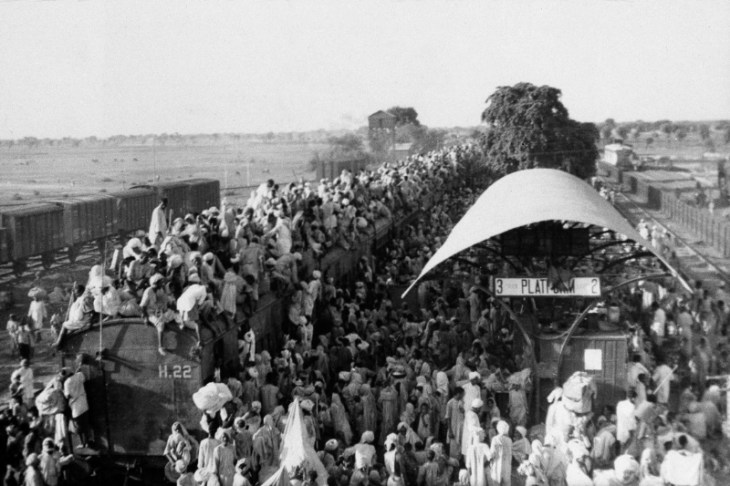
About 15 million people travelled, often hundreds of miles, to cross the new frontiers.

Left to their own devices, “The Muslim League formed militias and so did right-wing Hindu groups.” Between 200,000 and one million people are estimated to have been killed or died of disease in refugee camps.
On 15 August 1947, one day after the independence of Pakistan… the United States became one of the first nations to establish relations with Pakistan.
The challenge of dealing with Pakistan is subsumed in the broader challenge of managing US relations with the Islamic world. In countries whose leaders receive financial incentives to promote America’s objectives rather than the values and welfare of their population, authoritarian measures are inevitably required to enforce America’s demands and the leadership’s continued power and wellbeing, inevitably leading to popular opposition to local leadership and the American Way. Specifically with respect to Pakistan, religious extremism thus came to find wider sponsorship and popular support.
Pakistan has the world’s sixth-largest standing armed forces. It is a declared nuclear-weapons state, and is designated as a major non-NATO ally by the United States.
Jordan
After the Ottoman defeat in World War I, the British created the Emirate of Transjordan out of their total Palestinian Mandate in order to pay the leader of the Hashem Arabian tribe for his support in fighting the Ottomans. This new country achieved formal independence from Britain as the Kingdom of Transjordan in 1946.
Sudan
Sudan is in north-east Africa and is one of the largest countries on the continent. Like Egypt’s Suez Canal, Sudan’s Red Sea is geostrategically important to U.S. maritime interests.
Since gaining independence in 1956, Sudan has endured chronic instability marked by 20 coup attempts, prolonged military rule, two devastating civil wars. Consequently Sudan is also one the poorest countries in the world. in 2022 its 46 million people were living on an average annual income of $750 (£600) a head.
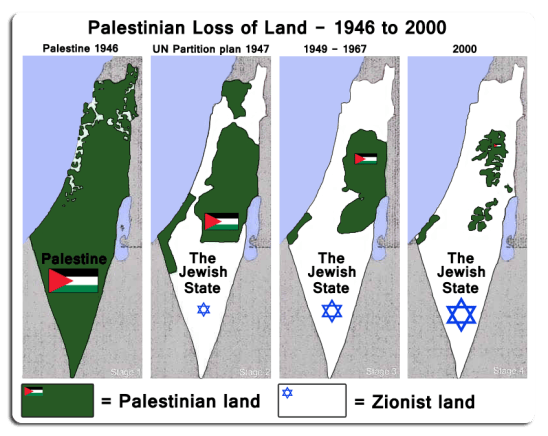
During the Six-Day War in June 1967Israel seized Egyptian-assigned Sinai Peninsula and the Gaza Strip from Egypt; the West Bank and East Jerusalem from Jordan; and the Golan Heights from Syria. The brief war significantly altered the map of the Mideast and gave rise to lingering geopolitical friction.
Wow. That’s a massive understatement.
Hundreds of thousands. of Palestinians were displaced and in the decade following the 1967 war an average of 21,000 Palestinians per year were forced out of Israeli-controlled areas.
Syria
Syria became a refuge for one hundred thousand Palestinians who were expelled from Palestine by the state of Israel in 1948,
As a result of Black Septemberin Jordan and the Lebanon War,the number of Palestinians seeking refuge in Syria swelled to over 350,000, but contrary to other nations, only about 1/3 live in refugee camps. Despite remaining permanent refugees without the option of citizenship, the Syrian government paved the way for their integration into the Syrian socioeconomic structure while preserving their separate Palestinian identity.
In contrast to American-backed Jordan, Syria continued to support stateless Palestinian opposition to Israel’s seizure of Palestinian land and expulsion of Palestinians, and in 1979 Syria was placed on the U.S. list of state sponsors of terrorism.
On 8 December 2024, the Assad regime collapsed during a major offensive mainly by the Turkish-backed Syrian National Army.
Egypt, AKA The Suez Canal
In 1952 Gamal Abdel Nasser toppled the British-backed monarchy and nationalized the Suez Canal.
In 1956-1957 during the Suez CrisisAmerican-backed Israel attempted to take possession of the canal, opposed by French and British troops who blockaded the canal for some months.
From 1968-1970 The War of Attrition raged across the Suez Canal.
In 1973 when Anwar Sadat launched the Yom Kippur War he physically barricaded both ends of the canal opening of the canal until a cease-fire was secured by the United States.
In 2025, supporting Palestinians under siege by Israel in Gaza, Houthi attacks on ships in the Red Sea at the eastern end of the Suez Canal led to a 79.6 percent drop in drybulk carriers going through the Suez Canal in June 2024 versus June 2023. Catch the perpetuation of the EIC’s interest in this region? As of March 2025 Suez Canal revenues dropped as much as 60%, meaning billions in losses for Egypt and forcing many shipping companies to divert to alternative routes, such as the longer shipping route via the Cape of Good Hope, increasing costs to customers.
In 1992 in North Africa and South Asia the Islamic Jihad’s political conflicts with secular Western-oriented government authorities led to bloody civil wars, resulting in the exile of many Islamist activists to Europe and the Americas and led many others to join such military fronts as the Afghan Jihad.
In 1999 ISIL or ISIS (depending on the translation) – the Islamic State of Iraq and the Levant – was created as the latest iteration of Pan-Arabism against Western interference into Islamic operations. It introduced itself by pledging allegiance to Al-Qaeda and participating in the Iraqi insurgency following the 2003 invasion of Iraq by Western forces. In 2014, the group proclaimed itself a worldwide caliphate by which it claimed religious, political, and military authority over all Muslims worldwide, changing its name to Islamic Statewhich claims to be a global caliphate by co-opting existing Islamist insurgencies.
Lebanon
The historically significant Maronite Catholic Christians had formally united with the Roman Catholic Church during the Crusades. The state of Greater Lebanon was created as a safe haven for the Christian minority in the Middle East and the Maronites given a leading position in Parliament.
After the 1948 and 1967 wars an influx of thousands of Palestinian refugees led by the PLO created their own state-within-a-state, weaponizing a dozen Palestinian refugee camps around Beirut and in South Lebanon, and triggering the 1975-1990 Lebanese Civil War resulting in an estimated 150,000 fatalities and the exodus of almost one million Lebanese.
In 1982 Israel invaded Lebanon to evict the PLO, destroying 80% of villages in Southern Lebanon in the process and causing around 400,000 refugees to flee their homes, leading to the formation of Hezbollah, an Iran-backed Shia Islamist militia. as an armed organization.
Lebanon demonstrates that economics, as much as war, is a weapon of mass destruction.
The reason was that Lebanon built up a debt equivalent to 150% of national output – total value of goods and services produced within a country. When banks no longer had enough dollars to pay depositors queuing outside, they simply shut their doors and peoples’ life savings were gone.
Hmm, sounds familiar.
By December 2024 the United States Government had built up a debt of 124% of the country’s gross domestic product, and we can substitute the following analysis for either country.
An economy in deep crisis:
_______________ has been in a prolonged economic meltdown since 2019, marked by hyperinflation and soaring poverty levels. The currency has lost over 90% of its value, drastically reducing purchasing power and leading to widespread economic hardship. A lack of foreign exchange reserves has crippled imports, causing fuel, medicine, and food shortages.
The banking sector has effectively collapsed, with depositors locked out of their savings. Government corruption and financial mismanagement have exacerbated the crisis, with no clear recovery plan in place.
Businesses struggle to operate amid currency instability, power outages, and rising operational costs. Many skilled professionals have emigrated in search of better opportunities.
While negotiations with the International Monetary Fund (IMF) have stalled, a bailout program remains the best hope for recovery, but political paralysis continues to block meaningful progress. The road to recovery will be long and uncertain.
66osive war zone of the fragmented Ottoman Empire.
“Rejoice not thou, whole Palestina, because the rod of him that smote thee [the Ottoman Sultan] is broken: for out of the serpent’s root shall come forth a cockatrice [Northern King], and his fruit / successor shall be a fiery flying serpent…
Howl, O gate; cry, O city; thou, whole Palestina, art dissolved: for there shall come from the north a smoke, and none shall be alone in his appointed times.” (Isaiah 14:29-32)
This alerts us to the role of the Palestinians as victims, not oppressors, of the incoming Jewish invasion with the support of the Western world leader.
Blasphemy!! Really? Somebody please quote scripture to me – either New or Old Testament – showing Holy God’s backing of unrighteous actions by his people. This writer has provided multiple proofs that modern Israel and Christianity are facing God’s wrath for their blasphemous abuse of religious power.