-
-
This law alone utterly denies the proposition that the universe developed from chaos to an orderly state without the input of c2 / force / Intelligent Design.
This law also accounts for the intransigent flow forward of time, never backward, since events and matter cannot reconstruct themselves to the more ordered entropic condition of the past.
This law also explains the physical state of eternity as the constant maintenance of the entropic state at a certain moment in time by a force external to the isolated system whether material or energy – and of the need for a force integral to the system to prevent degradation into disorder.
-
In contrast to the “Perverse disputings of men of corrupt minds, and destitute of the truth” (I Timothy 6:5a0, the horizontal layers of rock on the Grand Canyon’s walls provides an indisputable timeline of the formation of the earth in the six stages documented in Genesis, via the same processes observable to this day.
Day 1 Genesis 1:1-2: “God created 1) the [singular] heaven and 2) the [singular] earth [not as one of multiple planets]. And the earth was / became without form, and void [emptied].”
This damage could only come from the only other location – heaven. The Hayabusa mission spacecraft brought back samples from the surface of an S-type asteroid which demonstrated that much of earth’s water came from these S-type asteroids.
-
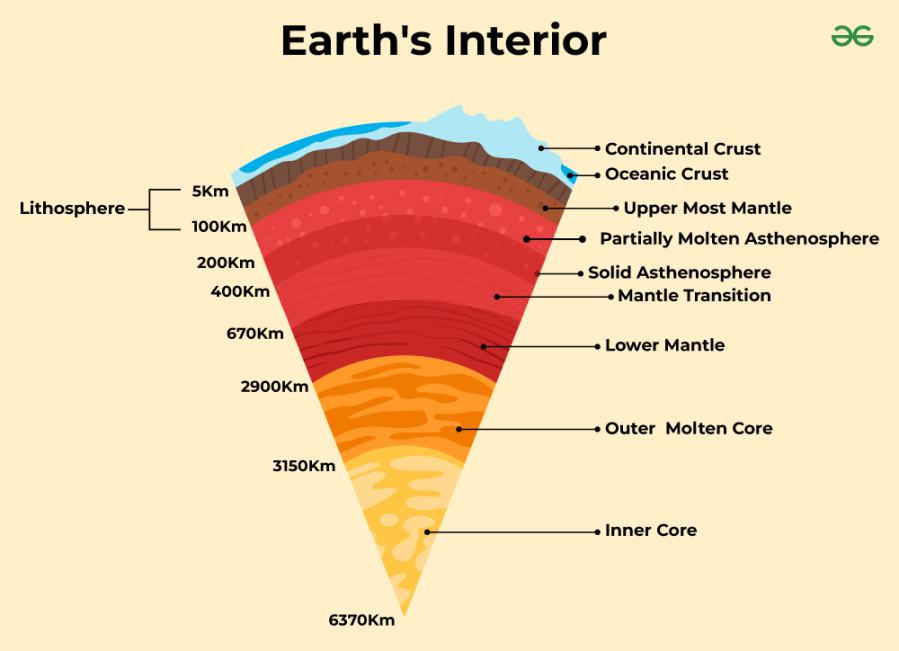
The spinning earth’s centrifugal motion forces the heavier elements iron and nickel to sink to the center. Despite temperatures as hot as the surface of the sun, the inner core remains solid because the pressure at Earth’s center is so extreme that it forces atoms into a tightly packed crystalline structure.
-
This validates the biblical and universal religious teachings of hell at the center of the earth being “everlasting / inescapable prison of fire prepared for the devil and his angels.” (Matthew 25:41).
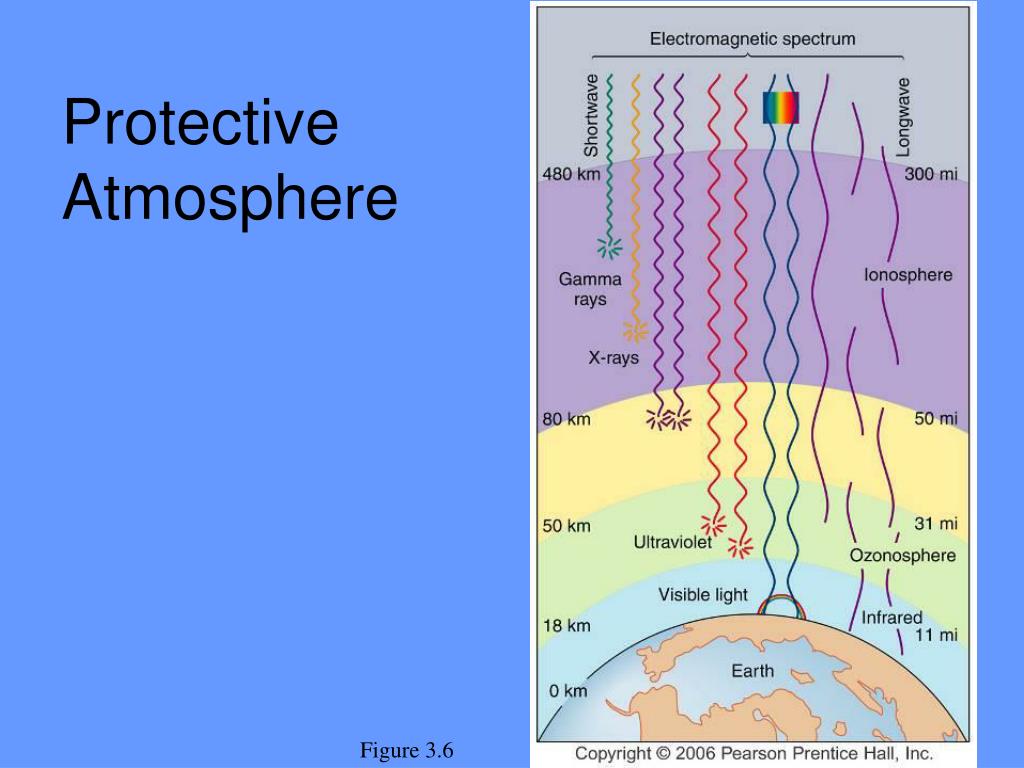
Day 2 Genesis 1:6-8: God made the firmament / atmosphere to protect against further astronomical assault, later opening “windows” for water-bearing incoming missiles during Noah’s flood.
-

-
This rock ranges in size from mountain ranges to the tiniest grains of clay from which human bodies were made in which to enshrine the Creator’s image and likeness.
The audacity! What an insult! The Creator responds to the Adversary’s brilliantly fiery, earth shattering and inundation weapons with – Adam!
This only works, of course, when we humans acknowledge our dependence on God as the source of all our power.
And we only demonstrate God’s power by battling the Adversary.
“Thine, O LORD is the greatness, and the power, and the glory, and the victory, and the majesty: for all that is in the heaven and in the earth is thine; thine is the kingdom, O LORD, and thou art exalted as head above all…and in thine hand is power and might; and in thine hand it is to make great, and to give strength unto all. Now therefore, our God, we thank thee, and praise thy glorious name.” (I Chronicles 29:11-13)
Physics encompasses not only matter but also the characteristic of mechanical energy, i.e. energy due to position or motion. For example, 1) a moving bowling ball contains mechanical energy, 2) applies force when it hits the bowling pins, and 3) does work by changing the position of the pins.
The science of geology focuses on earth’s mechanical characteristics which give the earth a dynamic quality exactly like a bowling ball hurtling down the alley instead of a lump that just sits. This occurs as a result of interaction between layers of earth.
.png)
-
Moving upward from the core, at the lower mantle the high pressure of the core, while reduced, still remains the dominant feature, squeezing the very molecules of the composite silicate-metallic rock into a solid wall blocking any movement between the core and the layers above.
The Asthenosphere, subjected to less pressure higher up in earth, is molten / melted,/ shifting sands.
The next layer up, the Lithosphere, is earth’s outermost layer consisting of the uppermost mantle and the crust. While rock solid, astronomical bombardments and volcanism broke it up into “plates” which slip and slide on the underlying Asthenosphere. These are experienced above ground as earthquakes when the plates bump and grind into each other, forcing one or the other to lurch upwards under the pressure.
Named from the Greek word “physis,” meaning the “nature” of something, Physics is the branch of science that studies everything that can be experienced – matter, energy, space, and time, and their interactions.
The physicist Albert Einstein famously summed up his conclusions as E=mc², where energy/movement and mass/substance are different manifestations of the same force, algebraically stated as e/m = c2 where c2 is the eternal controlling force.
Albert Einstein believed in a cosmic “lawgiver” AKA Spinoza’s God.” Developed in the 1600’s against a religious tradition that held that God exists outside of the universe, using reason, the philosopher Spinoza proves that God is the very substance comprising the universe, and for that reason the universe necessarily exists as it does. Einstein said, “My religion consists of a humble admiration of the illimitable superior spirit who reveals himself in the slight details we are able to perceive with our frail and feeble mind.”
The eternal force as the Creator God of the Bible is scientifically notated as c2=e/m. Eminent physicist Stephen Hawkins defined “c2” as the state where mass and energy. i.e. all that exists, are merged together, calling it the infinite Singularity.
Exactly what the Bible reports as “when all things shall be subdued unto him…that God may be all in all.” (I Corinthians 15:28)
Catch that rivalry? Humanist physicists’ search for knowledge for the purpose of allowing humanity to override otherwise irreversible destructive effects of nature, is replacing mindless amoral c2 for the intelligent moral God of the Bible.
This should sound familiar.
“your eyes / understanding shall be opened, and ye shall be as gods [powerful], knowing / controlling good and evil [able to cause desirable and counter undesirable natural effects, in particular, death].” (Genesis 3:5)
Some of the major specializations within physics include Classical Mechanics: the motion of objects and the forces acting upon them, Electromagnetism, Astrophysics: such as stars, galaxies, and black holes, Cosmology: the origin, evolution, and eventual fate of the universe as a whole, and Thermodynamics: the relationships between heat / energy in motion at the tiniest levels of matter, energy, and work.
One of the most important laws in all of science is the Second Law of Thermodynamics. This defines entropy as a fundamental property of everything in nature. In simple terms, entropy describes how how many ways the particles inside a system can be arranged.
Low entropy = few possible arrangements, so the system is organized and constrained. For example, a new army recruit’s bunk space has low entropy. High entropy = high number of possible arrangements, often associated with “disorder” or “chaos”, like a teenager’s bedroom.
The Second Law of Thermodynamics states that the total entropy of an isolated system can never decrease – become more orderly – over time. It either increases, i.e. becomes more disordered, or, in ideal cases, remains constant.
Day 3 Genesis 1:9-13: Dry land appeared when the waters were gathered together in one place, obviously by rising above the stable level of the water on the earth. The geological activity that caused this is still ongoing as volcanism and earthquakes.
This dry land makes up ~84% of the planet’s volume and 67% of its mass, with ~96% made of silicate minerals i.e. containing the elements silicon and oxygen. The wide variety of complex crystalline structures formed by just these two elements result in a wide variety of different properties. This is one example of the simplicity, symmetry, and underlying order consistent throughout nature so admired by scientists – especially theoretical physicists like Albert Einstein – referred to as the “Elegant Universe.
Consistent with the biblical account of creation, geologists confirm that all rocks begin as igneous – from the Latin word ‘ignis,’ which means ‘of fire’. Called “magma” while underground and molten, this forms rock with large crystals due to the slower cooling process. Called “lava” when it violently erupts above ground during a volcanic eruption, this cools faster so crystalizes into smaller grains forming a different kind of rock.