
As we read the following, compare Monotheism’s introduction to the Code of Hammurabi’s pagan preamble.
Monotheism
“I am / Ani the LORD / YHVH / Creator, and there is none else! there is no God beside me...
I the LORD do all these things…Woe unto him that striveth with his Maker!…Woe unto him that saith unto his father, What begettest thou? or to the woman, What hast thou brought forth?…
- I have made the earth, and created man upon it..
- I have raised him up in righteousness, and
- I will direct all his ways: he shall build my city, and he shall let go my captives, not for price nor reward, saith the LORD of hosts….in chains they shall come over, and they shall fall down unto thee, they shall make supplication unto thee, saying, Surely God is in thee; and there is none else, there is no God…
For thus saith the LORD that…formed the earth and made it; he hath established it, he created it not in vain, he formed it to be inhabited…I have not spoken in secret…
Assemble yourselves and come; draw near together, ye that are escaped of the nations: they have no knowledge that set up the wood of their graven image, and pray unto a god that cannot save….
who hath declared this from ancient time? who hath told it from that time? have not I the LORD? and there is no God else beside ME; a just God and a Saviour; there is none beside ME.
Look unto ME, and be ye saved, all the ends of the earth: for I am God / Power, and there is none else.” (Isaiah 45)
Tragically, as evidenced by God’s plea, many people chose Luciferian Humanism. We can track YHVH’s rival through name changes over history by his claimed attributes of being present in the light of the sun giving life and wisdom. As there was nothing which he did not see, he was the judge of all. Hammurabi’s law code (1792-1750 BCE) based its authority on this god’s power to create – and enforce – his laws.
We can even track this god into modern times through linguistics.
Luciferianism
When
- Anu the Sublime / Supreme, King of the
- Anu-naki/ sons of God and
- Bel / Lord Lucifer the lord of Heaven and earth, gave
- Marduk hybrid demi-god the over-ruling son of
- Ea, / Satan God of righteousness, dominion over earthly man, and made him great among the
- Igigi demigods
then Anu and Bel called by name
7. ME, Hammurabi, the exalted prince…to bring about the rule of righteousness in the land, to destroy the wicked and the evil-doers.
And human nature being naturally self-centered, every human ruler can’t stop him/her self from exploiting his/her subjects.
Consistent with the biblical report of the division of three main people groups at the same time as the division of language, social scientists categorize languages into three main language families: from Ham the Afroasiatic family including ancient Egyptian, from Shem the Semitic languages of Akkadian and Hebrew, and from Japheth the Indo-European.
The Indo-European language family is the largest in the world today, with 46% of the world’s population (3.2 billion people) first language speakers with even more people speaking an Indo-European language as a second language due to extensive colonialism.
All Indo-European languages are descended from a single prehistoric language, the Proto-Indo-European, spoken sometime in the Neolithic to Early Bronze Age.
The name of the Greek god “Zeus” can actually be traced all the way to Proto-Indo-European origins at the Tower of Babel.
In the Proto-Indo-European language, dyeus literally meant ”to shine”, a verb used to describe the action of the Sun.
‘Zeus’ is Latinized as dyeus (or sometimes the spelling variations of dieus or deiuo), the root word from which the Latin deus was derived, translated through Germanic cultures into the word ”God”.
Dyeus (with a capital D) was a deity of the Proto-Indo-European people. He was equated with many foreign weather gods. Thor is the Norse equivalent god of thunder, lightning, rain, and weather. Pausanias observed “That Zeus is king in heaven is a saying common to all men“
Dyeus is most directly translated as ”Sky Father”, and Hesiod’s Greek theogony equates Zeus with the allfather god from the earliest time in human history, respected chief of the gods who assigned roles to the others: “Even the gods who are not his natural children address him as Father, and all the gods rise in his presence.”
Utu the Sumerian sun god was believed to emerge from the doors of Heaven every day at dawn and ride across the sky in his chariot before returning to the “interior of heaven” through a set of doors in the far west every evening.
This is in blatant mimicry of the Hebrew son of God.
“The heavens declare the glory of God…In them hath he set a tabernacle for the sun, Which is as a bridegroom coming out of his chamber, and…His going forth is from the end of the heaven, and his circuit unto the ends of it.”(Psalm 19:1-6)
Sans writing, the images left behind tell the story. Actually, writing also uses imagery to tell the story. Note how Utu is depicted with a weapon in his hand and his foot on the earth, a stance of conquering, which is further emphasized by the depiction of two servants obsequiously holding the doors open for him.
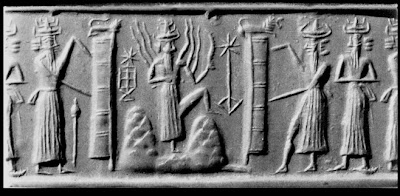
“I have pursued mine enemies, and destroyed them…yea, they are fallen under my feet…them that rose up against me hast thou subdued under me.” (II Samuel 21:33-40)
“Thou (God) has put all things in subjection under his [son’s] feet.” (Hebrews 2:8)
Utu’s rise to power is reported in the ancient Sumerian account Gilgamesh, Enkidu and the netherworld.
The Sumerian version of who was at fault is, of course, oppositional to the Bible’s, but we can pull out the directly aligned sequence of events.
- when An [Ani / YHVH] had taken the heavens for himself,
- At that time, there was a single / unique tree. A woman took the tree…
- At its roots, a snake…In its branches, the Anzud bird / winged serpent / dragon…Enki [Lucifer in Hebrew, Cronus in Greek, Saturn in Latin] set sail for the nether world of perpetual darkness,..
- the young warrior / cloned serpent son Zeus / Satan who rebelled against his father, Cronus / Lucifer, however, did not stand by her in the matter [did not participate so remained active in the affairs of men]”
- When dawn was breaking…the horizon became bright…[What a relief! We still have sunlight, because]
- Utu had left his bedchamber.
Worship of Utu by that name lasted for well over 3,000 years until common use of the post-flood Mesopotamian languages was supplanted first by Greek.
Utu’s name was naturally translated into the different languages that developed, but his identifying characteristics as the sun god remained the same in all the cultures. This provides strong validation of a once common culture – one nation under one god.
Called Shamash in the Akkadian language of Sargon’s Assyrian Empire and Hammurabi’s Code, he is typically portrayed with signature rays of light around the head and on the hat, and the sun disk. Of course, as super powerful being he is also portrayed as a giant.
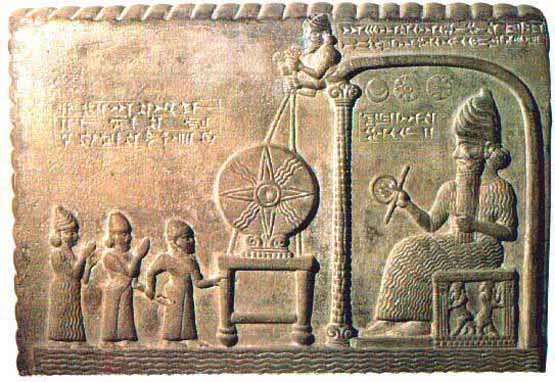
Moving east by a short trip by sea to the Indian subcontinent, we find Surya is an ancient Hindu god of the sun, light, day and wisdom.
Further east still by a long and arduous overland trip to Tibet, China and Japan we find a deva, or son of a god, named Marici in Mahayana and Vajrayana Buddhism, that goes by other names in the multitude of Eastern religions and sects. The origins of Marici are obscure; however, appear to be an amalgamation of
Indian and Iranian antecedents spanning 1500 years.
To the northeast, (colder so more clothes) Istanu is the Hittite Sun god of 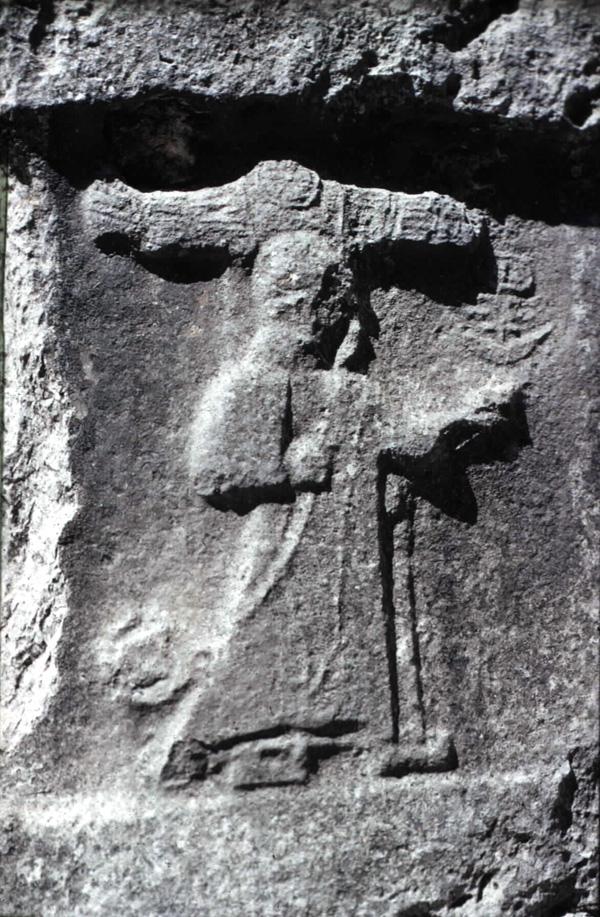 Heaven who rode across the heavens and was the patron deity of judges / arbiters of life and death, He was the foremost oath god in interstate covenants as well as the god of law and truth, identified on the royal seals by the winged solar disc.
Moving further north into Europe the Celtic sun god is 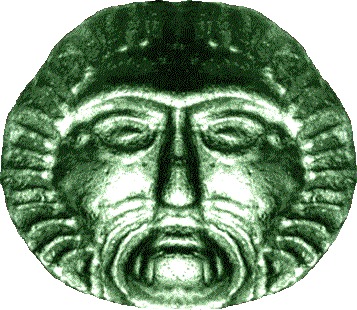 called Belenus,“The Shining One”, as a descriptive. His festival is Beltine (Fire of Bel), modern Sabbat of Beltane celebrated in earnest by Wiccans on May 1 and apparently ignorantly by most others during May Day festivities, in the same way December 25 is celebrated by Christians as the birth of the sun god.
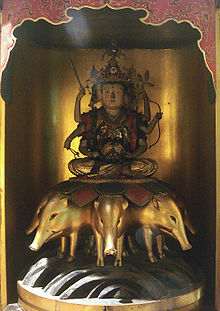 There is an interesting Indo-European link with the wild boar which is also part of the Celtic Belenus’ entourage.
Crossing the Atlantic Ocean to the Americas, which is not so far away as the inaccurate global map depicts, Huitzilopochtli is the sun god and deity of war and human sacrifice for the Aztecs, and Inti is the  name of the same god for the Incas. The most common origins story of Inti says that he is the son of Viracocha, the god of civilization.
Argentina, Bolivia, Ecuador and Peru still honor the sun god Inti in their stateinsignias.
He is the guardian of the primordial Waters of outer space.
Since the gods’ name are actually the titles of their attributes, we should immediately recognize in the cloned offspring of Lucifer / Enki (Sumerian) the exact same defining attributes as his father “Light Bearer” i.e. Lucifer (Hebrew).
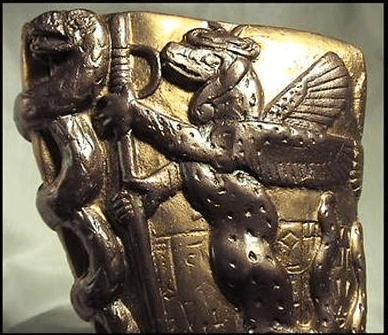 “In Aryan [Hitler’s vaunted antecedents recognizable as “Iran”] …the Asuras are also called Devas meaning “shining ones” and this epithet also becomes applied to both the members of the Anunnaki and the later fairies who descended from them.
Earlier scholarly sources have the name Anunnaki translated also as the variant ’Anunnagi’, meaning “shining ones” and here we have a relationship with the Vedic [India] Nagas. From the Sumerian [Iraq] Chronicles we learn that the children of Anu were “the Anunnaki who decree the fates” meaning that they themselves were also the mori or fata, the “Fairies” the scale-armoured leprachauns – the dragon kings who, in the Aryan Vedas appear alongside their divine companions.
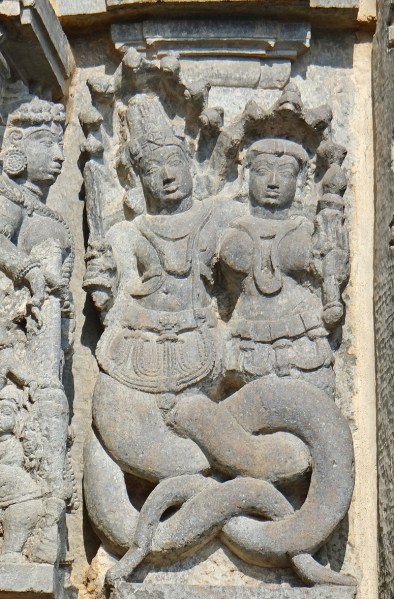 These are referred to as the Nagas, who became the snake deities of India who guard a submerged treasure…
Typhon, son of Gaia and Tartarus, whose other children included these vampiric Lamias – the meremaids or naiads, and whose name is closely associated with Tartaria in Transylvania, the original home of the Dragon Queens and Kings…
Several thousand years after the contest between between Typhon and Zeus, Typhon’s fairy descendants, Ygraine, Morgana and Melusine were still portrayed in medieval church architecture with his wings and double ended tail…
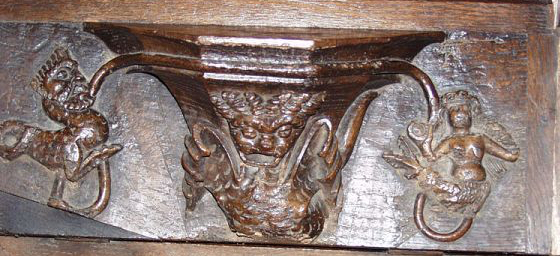
 In Typhon as a Dragon God, we remember Odin [Norse and German], who himself was often portrayed as a dragon or serpent, a Naga, and that he too was an Aesir, a member of the old, warlike order of gods… Every feature in the religion of the New World, discovered by Cortez and Pizarro, indicates an origin common to the superstitions of Egypt and Asia. The same solar worship, the same pyramidal monuments, and the same concomitant OPHIOLATREA [snake worship] distinguish them all.”
So the oldest post-flood religion attributed to the Sumerians is actually the resuscitated pre-flood worship of the fallen angels. After being broken up at the Tower of Babel this core religion then mutated into all the nationalized pagan religions spread throughout the world by the scattering of the nations, recognizable in the details despite name and cultural changes.


 Kingdom Come