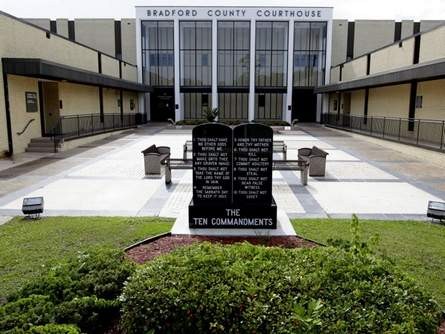
“All the commandments which I [Moses] command thee this day shall ye observe to do, that ye may live, and multiply, and go in and possess the land which the LORD sware unto your fathers…that he might make thee know that man doth not live by bread only, but by every word that proceedeth out of the mouth of the LORD doth man live.” (Deuteronomy 8:1-3, Matthew 4:4)
The divine authorship, therefore authority, of the word of God was achieved through God uniting his Spirit with a series of human writers. Since all of them were tapped into the same uniquely noncompetitive God, no God-authorized prophet contradicts, corrects, or cancels any previous writer. This consistency provides the means by which all holy scripture, including pre-Mosaic texts such as the books of Enoch and Jasher, can be deemed reliable history.
“Hearken unto me…I have not spoken in secret from the beginning; from the time that it was, there am I.” (Isaiah 48:12-16)
The record of judgments on code violations prove that the laws “Thou shalt perform proper sacrifices“, Thou shalt not kill, thou shalt not commit adultery, etc.” were disseminated from day 1 to Abel, Job, the Hebrews such as Abraham, Isaac, Jacob, and Jethro the priest of Midian, long before Moses appeared ~1500 BC.
We are not caving in to the claims of secular Higher Criticism by recognizing God’s standard practices and patterns of behavior of relying on the written word for his history of mankind in Genesis, and organization of religious practices in Exodus Deuteronomy under Moses, who did NOT establish a brand new religion, but RE-established the UNIVERSAL worship of YHVH.
Libraries in the ancient world were the centers of knowledge and learning that universities are today, specifically archiving past civilizations’ knowledge of construction, mathematics, astronomy and astrology and sacred writings on which emerging empires founded themselves. The famous Library of Nineveh, created by Ashurbanipal of the Assyrian Empire in the mid 600’s BC with the objective of gathering all the knowledge of his time from throughout ancient Mesopotamia and established Nineveh as a crucial center of learning in the ancient world.
Libraries were established as early as 2600 BC in in Egypt. The statement that “Moses was learned in all the wisdom of the Egyptians” is directly linked with “and it came into his heart to visit his brethren the children of Israel” (Acts 7:22-23) as through his studies in that library he would have encountered his heritage of birth.
Moses also assuredly received Joseph’s personal documents which would have included those passed down from Noah – Shem – Eber – Jacob…after being carried through the flood on the ark, going back to Adam himself, like Adam’s garments of skin are recorded to have been preserved.
But as the named compiler of the first five books of humanity’s history, established by the testimony that the LORD put his words in Moses’ mouth, Moses is God’s foundational spokesman, This gives these documents the highest religious authority for the stated purpose of mankind being created in God’s image and likeness for the purpose of deating the enemy of sin / death and restoring eternal life as permanent relationship with Creator God.
Additionally, the unity between Moses and the LORD / Jehovah, apparent in that both the “law” and the “voice” of God is interchangeable with that of Moses, gives Moses the utmost religious authority.
The following passage is but one example.
“I Daniel…prayed unto the LORD my God, and made my confession, and said, O LORD…We have sinned, and have committed iniquity, and have done wickedly, and have rebelled
- by departing from THY precepts and from THY judgments:
- Neither have we obeyed the voice of the LORD our God, to walk in HIS laws, which he set before us by his servants the prophets.
- Yea, all Israel have transgressed THY law,
- that they might not obey THY voice;
therefore the curse is poured upon us, that is written in the law OF MOSES the servant of God, because we have sinned against HIM. And HE hath confirmed HIS words, which HE spake against us…by bringing upon us a great evil: for under the whole heaven hath not been done as hath been done upon Jerusalem.
As it is written in the law OF MOSES, all this evil is come upon us: Therefore hath the LORD watched upon the evil, and brought it upon us…for we obeyed not HIS voice.” (Daniel 9:2-14)
If you think I’m pushing the limits of uniting Moses with God, remember that this is what God wants!
- “These words spake Jesus…thou hast given him power over all flesh,
- And the LORD said unto Moses, Rise up early in the morning, and stand before Pharaoh, and say unto him…I will stretch out my hand, that I may smite thee…and thou shalt be cut off from the earth…for this cause have I raised thee up, for to shew in thee my power.” (Exodus 9:13-16)
- that he should give eternal life to as many as thou hast given him.
- [Moses said] “I have set before you life and death…choose life, that both thou and thy seed may live:” (Deuteronomy 30:19)
- O Father, glorify thou me with thine own self with the glory which I had [as granted to mankind] with thee before the world began…
- Moses was transfigured: And he was there with the LORD forty days and forty nights…when Moses came down from mount Sinai with the two tables of testimony in Moses’ hand…the skin of his face shone…And there arose not a prophet since in Israel like unto Moses, whom the LORD knew face to face.” ( (Exodus 33:11-23, 34, Deuteronomy 34:10)
- That they all may be one; as thou, Father, art in me, and I in thee, that they also may be one in us.“ (John 17)
- “when he shall appear, we shall be like him; for we shall see him as he is.” (I John 3:2)
The theme of all scripture from Genesis to Malachi is the consistent pattern of God’s people falling away into apostasy followed by the equally consistent response of God’s prophets RE-minding and RE-introducing the original way to approach a holy God.
But according to mainstream contemporary Judaism, when Solomon’s temple was destroyed, “The destruction meant an end to the sacrificial system – a concept central to Jewish life and faith. This forced the Jewish community to adapt.”
Not true. Righteous Israelites could continue to perform the same sacrifices and rituals in a family or clan setting as was practiced before there was a temple, or inability to travel to the temple.
“And David said unto Jonathan, Behold, to morrow is the new moon, and I should not fail to sit with the king at meat: but let me go…If thy father at all miss me, then say, David earnestly asked leave of me that he might run to Bethlehem his city: for there is a yearly sacrifice there for all the family.” (I Samuel 20:5-6)
“when David saw that the LORD had answered him in the threshingfloor of Ornan the Jebusite, then he sacrificed there. For the tabernacle of the Lord, which Moses made in the wilderness, and the altar of the burnt offering, were at that season in the high place at Gibeon.” (I Chronicles 21:28-29)
But R. Isaac taught ‘Whoever occupies himself with the study of the Torah is regarded as if he offered up a sin-offering…a guilt-offering’… needs no burnt -offering nor sin-offering, no meal-offering nor guilt offering.’ ‘A Sage who sits and expounds (Torah) in public is accounted by Scripture as though he offered up fat and blood upon the altar. Rabban Johanan b. Zakkai declared that acts of charity and benevolence were Israel’s atonement, while others again looked upon fasts as substituting for and replacing sacrifices.
Can the parallel to Cain’s alternative to God’s demand for blood sacrifice be any more obvious?
“Now after these things, in the reign of Artaxerxes king of Persia, Ezra the son of…Aaron the high priest.
Which is to say, a legitimate priest. “Aaron and his sons…the priest’s office shall be theirs for a perpetual statute.” (Exodus 29:9)
“This Ezra went up from Babylon; and he was a ready scribe in the law of Moses, which the Lord God of Israel had given: and the king granted him all his request, according to the hand of the LORD his God upon him. And there went up some of the children of Israel, and of the priests, and the Levites, and the singers, and the porters, and the Nethinims, unto Jerusalem, in the seventh year of Artaxerxes the king.
From the Vatican’s New American Bible commentary: “It was in religious and cultic reform…that Ezra made his mark as a postexilic leader. Jewish tradition holds him in great honor; the Talmud even regards him as a second Moses, claiming that the Torah would have been given to Israel through Ezra had not Moses preceded him.
From Encyclopedia Britannica: “Ezra’s efforts did much to give Jewish religion the form that was to characterize it for centuries after, Ezra has with some justice been called the father of Judaism; i.e., the specific form the Jewish religion took after the Babylonian Exile. So important was he in the eyes of his people that later tradition regarded him as no less than a second Moses.”
When we compare these statements sourced from the heretic Roman Catholic Church, tradition and Humanist Encyclopedia Britannica we find them to be false.
Ezra did not reform Judaism. Ezra was dedicated to the study of the Torah for the purpose of following its commandments in the restored community.
The book of Deuteronomy occupies a place of singular importance in the Old Testament. Deuteronomy is presented as a series of addresses delivered by Moses to the new generation grown up during the forty years of eliminating their untrusting parents.
“And Joshua the son of Nun was full of the spirit of wisdom; for Moses had laid his hands upon him: and the children of Israel hearkened unto him, and did as the LORD commanded Moses.” (Deuteronomy 34:9)
Who wrote that? Certainly not Moses, considering the rest of the chapter describing Moses’ death, thirty days of mourning, and Joshua’s institution as the new leader.
The biblically sourced answer is that Joshua wrote, not just the ending, but possibly the entire book of Deuteronomy / “second law” following the LORD’s standing instructions to his leaders to “write him a copy of this law in a book out of that which is before the priests the Levites:” (Deuteronomy 17:18)
The opening phrase of the book: “These are the words that Moses spoke to all Israel…” is clearly from the perspective of Moses’ successor, serving as the legal foundation for his leadership. The concept of “second law” serves as a renewed covenant between God and His people, reiterating the significance of the law as they prepare to enter the Promised Land.
“And there arose not a prophet since in Israel like unto Moses, whom the LORD knew face to face.” (Deuteronomy 34:10)
And who wrote that? It couldn’t have been Joshua after his death, and, even more critically, the LORD did know Joshua face to face.
Without a doubt Ezra zealously read and reread the record of the Exodus and entrance into the Promised Land to follow in the steps of Moses and Joshua, and it should be expected that Ezra appended his mournful note that he was unable to live up to that achievement. Because back at Jerusalem in what remained a vassal state of the Gentile empire transferred from Assyria to Greece to Rome – the ruler was a nasi / prince whose authority derived from the overruling Gentile empire. Rabbi Yehuda Ha-nasi, “Judah the Prince” (c. 135 CE–217 CE), remarked that if the exilarch Mar Huna were to come to Israel, he would accord him great honor, but he would not relinquish the office of the nasi.
And in response, YHVH announces:
“Behold, I will send my messenger, and he shall prepare the way before me…he is like a refiner’s fire, and like fullers’ soap…and he shall purify the sons of Levi, and purge them as gold and silver, that they may offer unto the LORD an offering in righteousness…For I am the LORD, I change not…Return unto me, and I will return unto you, saith the Lord of hosts…Remember ye the law of Moses my servant, which I commanded unto him in Horeb for all Israel, with the statutes and judgments.” (Malachi 3-4)