“Those who cannot remember the past are condemned…” George Santayana
“For, behold, the day cometh, that shall burn as an oven; and all the proud, yea, and all that do wickedly, shall be stubble: and the day that cometh shall burn them up, saith the LORD of hosts / armies, that it shall leave them neither root nor branch.
But unto you that fear my name shall the Sun of righteousness arise with healing in his wings…And ye shall tread down the wicked…
Remember ye the law of Moses my servant, which I commanded unto him in Horeb for ALL Israel, with the statutes and judgments.
Behold, I will send you Elijah the prophet before the coming of the great and dreadful day of the LORD: And he shall turn the heart of the fathers to the children, and the heart of the children to their fathers, lest I come and smite the earth with a curse.” (Malachi 4)
As many times as the earth has been smitten with a curse of world war, it appears that God’s people still haven’t gotten, or at least implemented, the command to Remember The Law Of Moses.
As the composer of the first five books of humanity’s history from day one, it stands to reason that Moses is God’s foundational spokesman.
It is on Moses’ writings that the reliability of the entirety of the literary work of the Bible is based, the plot of which is restoration of humanity’s leadership in the Kingdom of God by defeating the enemy sin and death.
The internal testimony of God’s control over these documents is that God put his words in Moses’ mouth. This gives these documents, the foundation for all the rest of the Bible, the highest religious authority.
“And Moses said unto the LORD, O my LORD, I am not eloquent…And the LORD said unto him…I will be with thy mouth, and teach thee what thou shalt say.” (Exodus 4:10-12)
Additionally, the unity between Moses and the LORD / Jehovah, apparent in that both the “law” and the “voice” of God is interchangeable with that of Moses, gives Moses the utmost religious authority. The following passage is but one example.
“I Daniel…prayed unto the LORD my God, and made my confession, and said, O LORD…We have sinned, and have committed iniquity, and have done wickedly, and have rebelled
- by departing from THY precepts and from THY judgments:
- Neither have we obeyed the voice of the LORD our God, to walk in HIS laws, which he set before us by his servants the prophets.
- Yea, all Israel have transgressed THY law,
- that they might not obey THY voice;
therefore the curse is poured upon us,
- that is written in the law OF MOSES the servant of God,
- because we have sinned against HIM.
- And HE hath confirmed HIS words, which HE spake against us…by bringing upon us a great evil: for under the whole heaven hath not been done as hath been done upon Jerusalem.
- As it is written in the law OF MOSES, all this evil is come upon us:
- Therefore hath the LORD watched upon the evil, and brought it upon us…for we obeyed not HIS voice.” (Daniel 9:2-14)
If you think I’m pushing the limits of uniting Moses with God, remember that this is what God wants!
- “These words spake Jesus, and lifted up his eyes to heaven, and said…thou hast given him power over all flesh,
- And the LORD said unto Moses, Rise up early in the morning, and stand before Pharaoh, and say unto him, Thus saith the LORD God of the Hebrews…that thou mayest know that there is none like me in all the earth…I will stretch out my hand, that I may smite thee…and thou shalt be cut off from the earth…for this cause have I raised thee up, for to shew in thee my power; and that my name may be declared throughout all the earth.” (Exodus 9:13-16)
- that he should give eternal life to as many as thou hast given him.
- [Moses said] “I call heaven and earth to record this day against you, that I have set before you life and death, blessing and cursing: therefore choose life, that both thou and thy seed may live:” (Deuteronomy 30:19)
- I have glorified thee on the earth: I have finished the work which thou gavest me to do. And now, O Father, glorify thou me with thine own self with the glory which I had [promised to mankind] with thee before the world began…
- “Who is like unto thee, O LORD…glorious in holiness, fearful in praises, doing wonders?… Moses for the glory of his countenance…the Lord Jesus Christ…shall change our vile body…like unto his glorious body. (Exodus 15:11; II Corinthians 3:7, Philippians 3:20-21)
- that they may be one, as we are…That they all may be one; as thou, Father, art in me, and I in thee, that they also may be one in us… that they may be one, even as we are one…that they may be made perfect in one.” (John 17) “we know that, when he shall appear, we shall be like him; for we shall see him as he is.” (I John 3:2)
- “And Pharaoh said unto [Moses]…in that day thou seest my face thou shalt die…
- And the LORD spake unto Moses face to face…And [Moses] said [to the LORD], I beseech thee, shew me thy glory…And he said, Thou canst not see my face: for there shall no [four dimensional] man see me, and live…
- Moses was transfigured: And he was there with the LORD forty days and forty nights; he did neither eat bread, nor drink water. And he wrote upon the tables the words of the covenant, the ten commandments. And it came to pass, when Moses came down from mount Sinai with the two tables of testimony in Moses’ hand…the skin of his face shone; and they were afraid to come nigh him. And till Moses had done speaking with them, he put a vail on his face. But when Moses went in before the LORD to speak with him, he took the vail off, until he came out.“ (Exodus 33:11-23, 34)
- “And there arose not a prophet since in Israel like unto Moses, whom the LORD knew face to face.” (Deuteronomy 34:10)
The divine authorship of the word of God purposefully reflects the unity achieved in relationship between
- God and his spokesman / prophet
- and multiple human writers all tapped into the same – uniquely noncompetitive – God.
- “God spake unto Moses, and said unto him…I appeared unto Abraham, unto Isaac, and unto Jacob, by the name of God Almighty, but by my name Jehovah was I not known to them.” (Exodus 6:2-3)
- “All scripture is given by inspiration of God…” (II Timothy 3:16)
- “I am the LORD, I change not.” (Malachi 3:6)
- “I and my father are one.” (John 10:30)
- “If ye love [identify with] me, keep my commandments…I will not leave you comfortless: I will come to you…At that day ye shall know that I am in my Father, and ye in me, and I in you.” (John 14:15-20)
- “they [apostles Peter and John] lifted up their voice to God with one accord, and said,
- [quoting from scripture] thou art God, which hast made heaven, and earth, and the sea, and all that in them is: Who by the mouth of thy servant David hast said, Why did the heathen rage, and the people imagine vain things? The kings of the earth stood up, and the rulers were gathered together against the Lord, and against his Chosen One.
- [witnessing of current events matching prophecy] For of a truth against thy holy child Jesus, whom thou hast anointed, both Herod, and Pontius Pilate, with the Gentiles, and the people of Israel, were gathered together,
- [eternal word of God] For to do whatsoever thy hand and thy counsel determined before to be done…And when they had prayed, the place was shaken where they were assembled together…
- And the multitude of them that believed were of one heart and of one soul:“(Acts 4:24-32)ise, and shall deceive many. And because iniquity shall abound, the love of many shall wax cold. But he that shall endure unto the end, the same shall be saved. And this gospel of the kingdom shall be preached in all the world for a witnes unto all nations; and then shall the end come.” (Matthew 24)
“Let your light so shine before men, that they may see your good works, and glorify your Father which is in heaven.
- Think not that I am come to destroy the law, or the prophets: I am not come to destroy, but to fulfil.
- For verily I say unto you, Till heaven and earth pass, one jot or one tittle shall in no wise pass from the law, till ALL be fulfilled.
- Whosoever therefore shall break one of these least commandments, and shall teach men so, he shall be called the least in the kingdom of heaven:
- but whosoever shall do and teach them, the same shall be called great in the kingdom of heaven.” (Matthew 5:1320)
You can’t seriously think that “Thou shalt not kill, thou shalt not commit adultery…” were news to Moses? Why assume that sacrificial procedures were?
Rather than establishing a brand-new religion of Judaism, it is far more credible to recognize that Moses RE-established the worship of YHVH documented as being practiced by the Hebrews Abraham, Isaac and Jacob and Job and Moses’ father-in-law Jethro the priest of Midian in the rustic fashion limited by the pioneer era and in a far more fitting manner by Noah and Shem under Enoch in the antediluvian glory days.
As both the ruler of Egypt and the Melchizedek of his day, Joseph’s primary interest would have been using his access to an Egyptian library of the greatest collection of ancient pre-flood historical documents preserved through the flood in the pyramids, and would assuredly have sought out, collected and preserved records regarding his Hebrew nation.
Moses undoubtedly had documents handed down from Joseph and undoubtedly used these reliable and validated written records going back to Adam himself. We are not caving in to the claims of secular Higher Criticism by recognizing God’s standard practices and patterns of behavior of relying on the written word – for his history of mankind in Genesis, and organization of religious practices in Exodus – Deuteronomy.
Sound heretical? Isn’t it less heretical / more orthodox to acknowledge that God never changes?
“Behold, I will send my messenger, and he shall prepare the way before me: and the LORD, whom ye seek, shall suddenly come to his temple, even the messenger of the covenant.
- as in the days of old (this can only be the years prior to the flood: Job 8:8; Isaiah 46:9-10),
- and as in former years (prior to the exile to Babylon).
And I will come near to you to judgment; and I will be a swift witness against the sorcerers, and against the adulterers, and against false swearers, and against those that oppress the hireling in his wages, the widow, and the fatherless, and that turn aside the stranger from his right, and fear not me, saith the LORD of hosts. For I am the LORD, I change not…Even from the days of your fathers [before the flood and Shem, Eber, Abraham, etc.) ye are gone away from mine ordinances, and have not kept them. Return unto me, and I will return unto you, saith the LORD of hosts.” (Malachi 3)
The thousands of baked clay tablets found in archeological digs in Mesopotamia survived submersion in water. The Euphrates was in fact known simply as “the flood.” It makes one contemplate the possibility that the pagan gods who believed and trembled at Noah’s preaching of the coming flood, but also believed in their power to survive it, specifically developed the clay tablets as the medium to transmit their esoteric knowledge through the world-wide flood to humanity to restore their rule.
Well, hey, they did just that, didn’t they?
Interesting that throughout all ages the elite have never stopped identifying themselves with the “glorious” pagan theocracies.
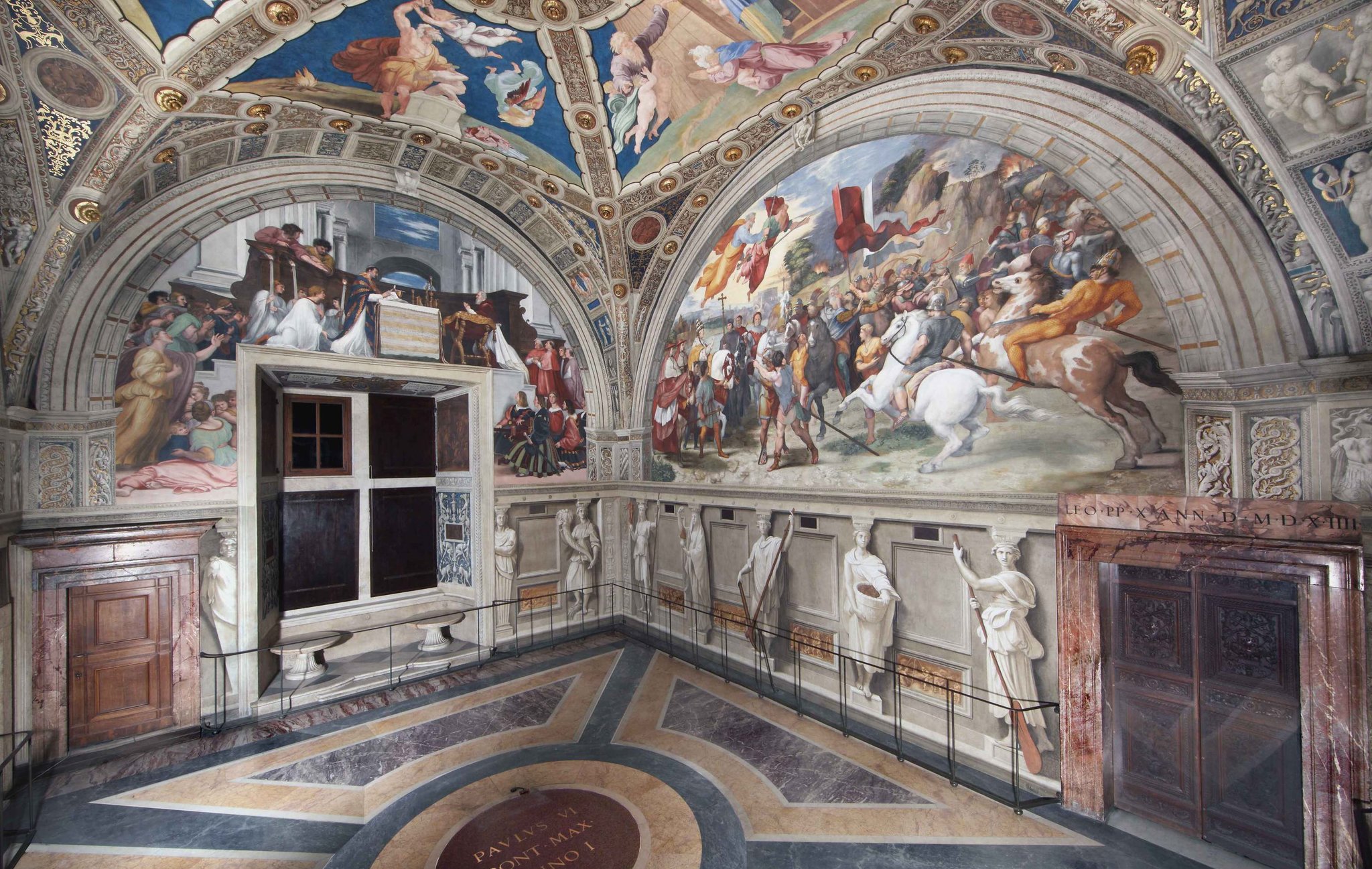
Their splendor is a tribute to the evil gods who empowered them to slaughter in endless wars and amass wealth through, pillage, enslavement of the masses, and impoverishment of other peoples through theft of their resources.
In stark contrast to the Fertile Crescent’s multiple conflicting historical records, the accounts of the God of the Bible and his people have remained consistently reliable and validated throughout thousands of years of uncountable discoveries and fulfilled prophecies that God can be trusted to stay true to his word.
Redemption or Wrath.
“Come ye near unto me, hear ye this; I have not spoken in secret from the beginning; from the time that it was, there am I: and now the LORD God, and his Spirit, hath sent me. Thus saith the LORD, thy Redeemer, the Holy One of Israel; I am the LORD thy God which teacheth thee to profit, which leadeth thee by the way that thou shouldest go.” (Isaiah 48:16-17)
The clearest support of the deduction that Moses re-established the pure worship of holy God rather than a brand-new religion is the consistent pattern documented in scripture of mankind falling away into apostasy followed by consistent response of God’s prophets RE-minding and RE-introducing the original way to approach a holy God,
This is documented in the books of the prophets from Genesis through Malachi, but provided in greatest detail in the account of Ezra who, like Moses, led an exodus, this time from Babylonian exile.
Israeli philosopher and Biblical scholar Yehezkel Kaufmann said “With the exile, the religion of Israel comes to an end and Judaism begins.”
Arab and Jewish sources show that the Rosh Galut / Exil-arch / legitimate Son of David ruler of the Exiles continued to exist for another 1,500 years in what is now Iraq, only ending in the eleventh century.
The Jews of the vassal state of Israel had a position similar to the exilarch, the nasi (“prince”), which was at times recognized by the Roman government. In fact, Rabbi Yehuda Ha-nasi, “Judah the Prince” (c. 135 CE–217 CE), remarked that if the exilarch Mar Huna were to come to Israel, he would accord him great honor, but he would not relinquish the office of the nasi.
And didn’t that happen when the Sanhedrin refused to relinquish their office to the legitimate Son of David, but trusted in their political alliance with the Roman Empire’s appointed king to remain in power.
In other words, he was a billionaire real estate developer.
- The port of Caesarea Palaestinae on the coast between Joppa (Jaffa),
- and Haifa, which was afterward to become the capital of Roman Palestine.
- Herodium where he built a great palace.
- In Jerusalem he built the fortress of Antonia, portions of which may still be seen.
- And a magnificent palace (of which part survives in the citadel).
- His most grandiose creation was the Temple, which he wholly rebuilt. The great outer court, 35 acres (14 hectares) in extent, is still visible as Al-Ḥaram al-Sharīf, the Muslim mosque
- He also embellished foreign cities—Beirut, Damascus, Antioch, Rhodes—and many towns.
- He patronized the Olympic Games, whose president he became.
Herod undoubtedly saw himself…as the protector of Jewry outside of Palestine, whose Gentile hosts he did all in his power to conciliate. This is a huge clue to the succeeding actor in this role during current events.
What is needed is the equivalent of Ezra who re-established the true worship of YHVH in Jerusalem, countering the corruption of Judaism.
He is also called a scribe, well-versed in the law of Moses (7:6), indicating Ezra’s dedication to the study of the Torah, which he sought to make the basic rule of life in the restored community. It was in religious and cultic reform rather than in political affairs that Ezra made his mark as a postexilic leader. Jewish tradition holds him in great esteem. The apocryphal 2 Esdras, sometimes included as an appendix to the Vulgate, where it is known as 4 Esdras, transforms him into a prophet and visionary. The Talmud regards him as a second Moses, claiming that the Torah would have been given to Israel through Ezra had not Moses preceded him.
He gave to his people a cohesion and spiritual unity which helped to prevent the disintegration of the small Jewish community settled in the province of Judah. Had it not been for the intransigence of Ezra and of those who adopted his ideal, it is doubtful that Judaism would have so effectively resisted Hellenism in later centuries. Ezra set the tone of the postexilic community, and it was characterized by fidelity to the Torah, Judaism’s authentic way of life.
Faith in the word of God has always been the power of salvation from the curse of sin and death, experienced as destructive forces now and eternal damnation to come.
“Zacharias was filled with the Holy Ghost, and prophesied, saying, Blessed be the Lord God of Israel; for he hath visited and redeemed his people, And hath raised up an horn of salvation for us in the house of his servant David; As he spake by the mouth of his holy prophets, which have been since the world began: That we should be saved from our enemies, and from the hand of all that hate us; To perform the mercy promised to our fathers, and to remember his holy covenant; The oath which he sware to our father Abraham, That he would grant unto us, that we being delivered out of the hand of our enemies [sin and death] might serve him without fear, In holiness and righteousness before him, all the days of our life. And thou, child, shalt be called the prophet of the Highest: for thou shalt go before the face of the Lord to prepare his ways; To give knowledge of salvation unto his people by the remission of their sins,” (Luke 1:67-77)


 Kingdom Come