
In the mid-fifth century BC, the Father of History Greek researcher Herodotus of Halicarnassus visited Tyre, spoke to a priest, and learned that the town and the temple of Melqart were, at that time, believed to be 2,300 years old. In other words, the city was founded in the twenty-eighth century BC, prior to the biblical date of the Flood ~2350 BC.
Herodotus does not mention a world-wide flood, but he would have known of it as he systematically gathered history from multiple cultures. It is likely he saw no reason to report the histories and wisdom of “the world that then was” which was already preserved through the Flood in vaults or on the ark, then gathered in libraries available to Herodotus and other sages.
In support of this consideration, Herodotus likewise does not give an account of Assyria’s origin or of the history of the Semites in Mesopotamia. It’s as if he consigns these records to the same category as known history in the collected works of the sages. Instead, Herodotus’ account most evidently picks up Japhethite / European history where the holy scriptures drops it to focus on the Hebrew nation, immediately after the dispersal of nations from Babel.
Herodotus reports that the Phoenicians / Canaanites had “recently come from that which is called the Erythraian Sea / Persian Gulf to this of ours / Mediterranean Sea, and having settled in the coastland where they continue even now to dwell, set themselves forthwith to make long voyages by sea.”
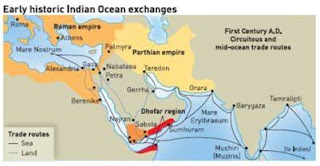
This account provides a reliable “absolute” vs “relative” date for this event as occurring during early emigration from the Mesopotamian / Land between Two Rivers and development into distinct people groups.
“And conveying merchandise of Egypt and of Assyria…”
This confirms the above date being after Asshur separated from Nimrod at Babylon and started his Assyrian Empire.
“they arrived at other places…”
Herodotus starts his history with the war fought between the one of the earliest nations of Japhethites / Europeans and the Hamite / Canaanite Phoenicians, getting much of his historical information from Homer the Greek poet.
Homer whose dates are unknown but possibly as early as the 12th century BC, This would place him in the same era as Moses, with the same role of compiling a concise account of pertinent history from volumes of existing sources, and in Moses’ case, “nice and accurate prophecies” to alert the readers how to avert doom.
Homer’s epic poems The Iliad and The Odyssey detail the war at Troy, called Ilium in the old days, and its tragic aftermath. They are considered to be the earliest work in the whole Western literary tradition, remaining among the best known and loved stories of all time and having enormous influence on Western culture as a whole.
Establishing the geographic and historical world-wide importance of this territory allows us to place Homer’s and Herodotus’ history in its proper perspective.
It is more common than not for sequential battles to be fought at the same strategic site in pursuit of the same resources. This pattern at Troy is confirmed by archeology.
Troy, is the first area where the prehistoric period excavations is done and turned into a science...The ancient city of Troy…has been continuously inhabited between the years 3.000 BC [500 years before the Flood] and 500 AC…10 different city layers and more than 50 building phases were identified. These cities in short:
- Troia I – III (Littoral Troia Culture): 3000 BC and ends in 2500 BC [date of the Flood].
- Troia IV – V begins in 2100 BC [after sufficient population and dispersal from Babel] and continues until the 1700’s BC.
We can assign Herodotus’ account to Troia IV in the Neolithic Stone Age reconstruction of civilization.
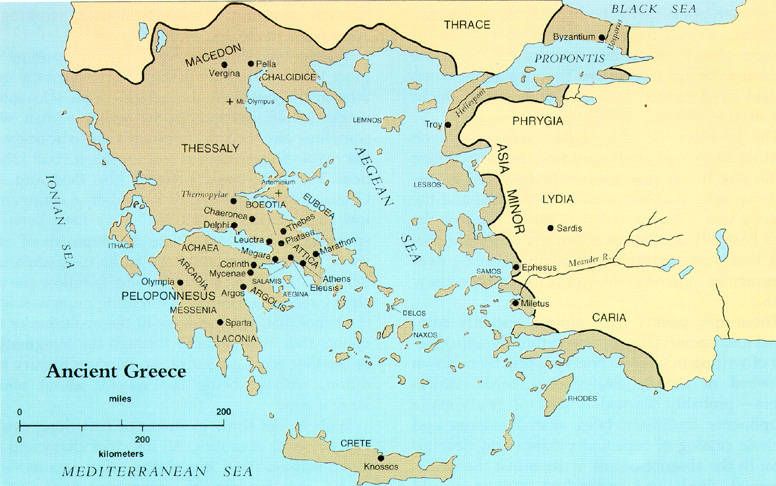
This territory north of the Promised Land was seized as quickly by the sons of Canaan as was grand central station by Canaan himself, for the same reason. – they held the pre-Flood cities ruled by the ancient gods and their giant children determined to seize control over the world. Just as San Francisco and New Orleans were rebuilt as soon as possible after their disasters to restore their former glory, so were the abodes of these gods of war after Noah’s Flood.

Pergamum in Asia Minor strategically located on a naturally defensible mountain top and still surrounded by defensive high walls.
The Troad or Troas is the Biga Peninsula in modern Turkey. As at Tyre and Sidon. The bulk of Anatolia / Asia Minor to the east is blocked from access to the seas by mountain ranges, forcing these interior dominions to be dependent for commerce and military protection on whoever controlled the coastline with its key access to the Black Sea on the north, the Aegean Sea on the west, and the Mediterranean Sea to the South.
Most important of all the maritime controls are the Dardanelles, known in antiquity as the Hellespont / ‘Sea of Helle‘. Famous from WWI as the Strait of Gallipoli, the Bosporus strait at Istanbul forms the continental boundary between Asia and Europe. These narrow waterways connecting the Aegean and Mediterranean seas to the Black Sea and points east and north via the Bosporus strait at Istanbul are easily defendable gateways between the Great Powers aligned into East and West. Whoever controls them has the advantage in winning war and reaping peacetime commercial profits.
Accordingly, the straits have been of paramount importance to world domination since the beginning of time, with the ancient city of Troy located near the western entrance of the strait to control the marine traffic entering this vital waterway.
The Greeks report that, prior to the Flood, during the incessant warfare between the gods, Poseidon had sent a sea monster against Troy, and during a later expedition the demi-god Heracles / Hercules and his followers sacked Troy.
Dardanus was an antediluvian demigod son of Zeus and the Pleiad Electra. According to tradition, after a flood, he became the founder of the royal house of Troy. As detailed in the previous post, this would have been accomplished through hybridization of hyperdimensional genes carried through the flood. Whether or not they were in fact Dardanus’ own genes is questionable, but then we know that “father” is a spiritual attribute as much, if not more, than a genetic lineage. He is the claimed ancestor of the Trojan Dardanians and, through Aeneas, of the Romans
After the Flood King Priam was reputedly “given” the throne of Troy by Heracles, which can be taken to mean he lived up to Heracles’ legacy when he reclaimed it in Heracles’ name.
It is noteworthy that Herodotus includes Homer’s presentation of the pre-flood peoples, their gods and hybrid demigods as a matter of natural history. If this part of his story can’t be taken at face value, can any of the rest of that era’s history?
Herodotus reports that the “Barbarian Canaanite Phoenician traders went to the first of the States within that land which is now called Hellas.” This detail, along with others, places this account shortly after the breakup of land and languages that occurred during Nimrod’s reign.
Hellene was mentioned for the first time by Homer in the Iliad, both as a territory, and its occupants, the companions of the demigod Achilles from this place. Even today the official name of the country Greece is The Hellenic Republic. The name “Greek” comes from Grecos, another demigod, son of Pandora and Zeus.
All the signs of the world still in the grip of a post-apocalyptic ice age described by Carl Sagan in “A Path Where No Man Thought are found in Homer’s description of the frontier of the habitable world as just a short distance north of Mesopotamia.
As depicted in Game of Thrones’ Free Folk, people prizing freedom struggled for existence in wilderness ecosystems. Like the Norsemen in the Middle Ages, these settlers traded natural commodities like furs and wood for produced goods like grains and weapons, or they raided.
Hence they were called Barbarians. by the citified peoples to the south. And the epithet has stuck.


According to Herodotus’ account of the Trojan War, the Hellenes / indigenous Greeks escalated a trade war into a pitched battle when “they sailed in to Aia of Colchis and to the river Phasis.”
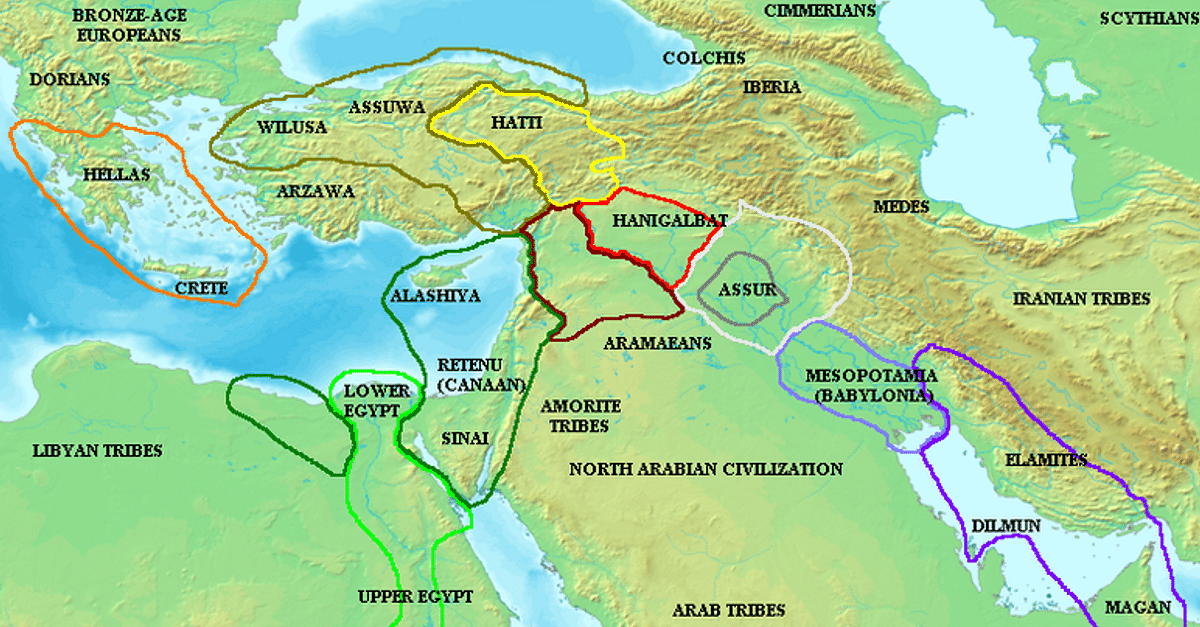
Colchis, which translates as “citadel”, was located at the eastern edge of the Black Sea, in the Caucasus mountains. Close as it was to Noah’s ark’s disembarkation point, this would have been one of the most ancient Archaic fortress settlements, a contemporary rival to Nimrod’s and Assur’s settlements southward in Mesopotamia. This was northeastern-most reach of the quest of the Greeks Jason and the Argonauts.
after they had done the other business for which they came, they carried off the king’s daughter Medea: and the king of Colchis sent a herald to the land of Hellas and demanded satisfaction for the rape / i.e. abduction and to have his daughter back;
but they answered that, as the Barbarians had given them no satisfaction for the rape of Io the Argive, so neither would they give satisfaction to the Barbarians for this.
Up to this point, they say, nothing more happened than the carrying away of women on both sides...
[Until] certain Hellenes…put in to the city of Tyre in Phenicia / Canaan and carried off the king’s daughter Europa;
these would doubtless be Cretans…
“One of themselves, even a prophet of their own, said, the Cretians are alway liars, evil beasts.” (Titus 1:12)
but after this the Hellenes were very greatly to blame…making an expedition [from Europe] into Asia before the [Phoenicians / Canaanites / Asians] Barbarians made any [their turn!] into Europe…and [in an inexcusable escalation of conflict] destroyed the dominion of Priam [i.e. Troy]…
and that from this time forward they [the Eastern peoples] had always considered the Hellenic race / Westerners to be their enemy:
Imagine Herodotus shaking his head and hear the tone of disgust and disbelief as he reports,
“[all] on account of a woman of Lacedaemon [whereas] the people of Asia, when their women were carried away by force, had made it a matter of no account.”
Now they say that in their judgment, though it is an act of wrong to carry away women by force, it is a folly to set one’s heart on taking vengeance for their rape / abduction, and the wise course is to pay no regard when they have been carried away.

The ancient Greeks considered war rape of women “socially acceptable behavior well within the rules of warfare”, and warriors considered the conquered women “legitimate booty, useful as wives, concubines, slave labor, or battle-camp trophy“…Conquering the…property of an enemy was regarded as legitimate reason for war in itself. Women were included with “property”…In this context, the rape of a woman was considered a property crime committed against the man who owned the woman.
Human trafficking is an essential aspect of the “oldest profession” of prostitution. Based on data gathered from 155 countries, the UNODC report on human trafficking exposes modern form of slavery [2009] offering the first global assessment of the scope of human trafficking.
The most common form of human trafficking (79%) is sexual exploitation…The victims of sexual exploitation are predominantly women and girls…almost 20% of all trafficking victims are children. However, in some parts of Africa and the Mekong region, children are the majority (up to 100% in parts of West Africa).


 Kingdom Come