56) Taking Dominion Is Taking Initiative

When my granddaughter was a preschooler I often kept her at my home. She had lots of creative activities at her disposal, and because the items for the activities were stored in her play space she didn’t have to wait on me to give requested resources or permission. 

She had the freedom to choose if she wanted to make soups or cakes from the ingredients in her toy kitchen, paint pictures or string jewelry from her art center, care for her lifelike babydolls with all their appurtenances or her mini dolls in their playhouses, play Tornado Warning! hiding herself and family of dolls under a blanket behind the sofa while the sound from a YouTube video of an approaching tornado with my Weather Station narration provided drama, relax at the end of the day with a favorite TV show, or go outside on the patio. 

In order for my granddaughter to have dominion not only over the environment – but most essentially over herself – she had to be free to take action. This was not a structured daycare or preschool where she was instructed what to do, when and how.

As a result my granddaughter’s productions were highly imperfect – the soups vile, the cakes edible only for a taste, the pictures gross caricatures, the jewelry usually abandoned as being too tedious to continue, the dolls never wearing coordinated clothes, and every room in complete disarray when she went home.

But the product was not what was important, it was the process of developing the skills, most of all the social skills for a healthy personality and relationships. She said she loved being here with me, and I loved having her here and the relationship we built while interacting. 

As the adult, I provided a healthy environment and set the rules for safety for an inquisitive child within her capabilities. As the child, she trusted my judgment. Our mutual respect is what allowed her to independently choose a TV show, get a snack or piece of candy from the pantry without asking my permission, go into any room or the patio outside without needing me to escort her everywhere.

Can we apply that to a relationship between God and his family?

Continue reading “56) Taking Dominion Is Taking Initiative”

57) Choosing To Give One’s Life To Another

Imagine Adam’s horror when he saw his wife after she was affected by her substance use. The above image of before and after methamphetamine use gives an idea of what Adam might have seen, what God certainly sees, and what ministers in God’s kingdom can ask God to open their eyes to see – the nature of everyone who is spiritually the “walking dead”, mindlessly straining to lay hold on an illusory source of life.

“and gave also unto her husband with her; and he did eat.” (Genesis 3:6)

When God asks Mr. Adam for an explanation for his action, he is often accused of blame-shifting to his wife.

“The woman whom thou gavest to be with me, she gave me of the tree.” (Genesis 3:12)

Plotted as it was by the Adversary, Adam’s act of eating the fruit was certainly condemned by “the accuser of the brethren” – and legalistic religionists – but it condemned by God?

A good ending has certain elements…the character has achieved their main goal.

Continue reading “57) Choosing To Give One’s Life To Another”
Imagine Adam’s horror when he saw his wife after she was affected by her substance use. The above image of before and after methamphetamine use gives an idea of what Adam might have seen, what God certainly sees, and what ministers in God’s kingdom can ask God to open their eyes to see – the nature of everyone who is spiritually the “walking dead”, mindlessly straining to lay hold on an illusory source of life.

“and gave also unto her husband with her; and he did eat.” (Genesis 3:6)

When God asks Mr. Adam for an explanation for his action, he is often accused of blame-shifting to his wife.

“The woman whom thou gavest to be with me, she gave me of the tree.” (Genesis 3:12)

Plotted as it was by the Adversary, Adam’s act of eating the fruit was certainly condemned by “the accuser of the brethren” – and legalistic religionists – but it condemned by God?

A good ending has certain elements…the character has achieved their main goal.

Continue reading “57) Choosing To Give One’s Life To Another”
58) Forgiveness Is Suffering The Consequences Of Another’s Sin

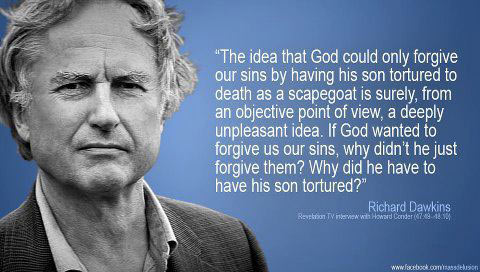
It doesn’t take much thought to refute his point of view.

The idea that deadly cancer can be cured without a major disruption to the system is, from an objective point of view, a very pleasant idea, but a fatal one, and so it is with sin. IT IS A MALIGNANT FORCE OF DEATH THAT HAS TO BE FOUGHT.

Whatever Mrs. Adam had been thinking when she ate the fruit, she now understood was a lie.

the eyes of them both were opened, and they knew that they were naked / defenseless against God’s judgment.

Dreams of being unaccountably naked in public, common to humanity, may be atavistic memories of this first day of exposure to judgment.

When you are without your clothes, you are also most vulnerable. The dream of becoming mortified at the realization that you are naked in public may reflect a waking situation where you fear being exposed and feelings of shame. 

and Adam and his wife hid themselves from the presence of the LORD God.”

Continue reading “58) Forgiveness Is Suffering The Consequences Of Another’s Sin”

59) Sacrificial Love Fulfills All The Law

SECTION X: Death Is Mortals’ Greatest Weapon Against Immortals

Death was not a legal punishment for eating the fruit. It was an unalterable consequence of the science of Physics which maintains order in the material world. As a manifestation of the Physics law of Entropy, it is the inexorable degradation from Order to Decay in the absence of constant input of Energy from the Singularity’s c2. 

In non-material spirit beings, the degradation from order to decay happens immediately, and immortal beings who separate themselves from the Singularity are forced to constantly hunt down sources of energy to maintain their autonomy from the surrounding energy chaos – think of it like avoiding falling into a fire – or being swallowed up by another hangry spirit being. Best case scenario, flash frozen into immobility.

No doubt this explains why the spirit being Lucifer enlisted a material equivalent serpent to act on his behalf.

“And the LORD God said unto the serpent, Because thou hast done this, thou art cursed above all cattle, and above every beast of the field; upon thy belly shalt thou go, and dust shalt thou eat all the days of thy life:” (Genesis 3:14)

But in material beings’ case, the toxin in the fruit consumed by the Adams was effected in their genetics. Their bodies did not instantly stop functioning, but the process of slow degradation of genetic control over cellular level function was set into motion over a lifetime of gradual degradation of the telomeres at the ends of the chromosomes.

Bearing in mind that the concept of time wasn’t yet in existence when the Adams ate the fruit, we can imagine Lucifer’s response – “Curses! Foiled again!” when the Adams didn’t flash freeze like Lucifer.

Continue reading “SECTION X: Death Is Mortals’ Greatest Weapon Against Immortals”

60) Transferred, Transformed, Transcended

Again with the Game Of Thrones analogy:

Davos, a sailor knowledgeable of all the ways and means around the island kingdom fiefdom of Land’s End, saved his Lord Stannis Baratheon’s realm from surrender to the enemy’s naval blockade with his smuggled foods.

Nonetheless, because the word had gone out of his mouth and Stannis never went back on his word, he cut off Davos’ fingers as punishment for the crime of smuggling.

BUT! Transferred the punishment to only the first digits of his left hand, leaving him fully functional.

For his exceptional loyalty, Stannis transformed him from a lowly commoner to a knight.

When Stannis became embroiled in a war to claim the kingdom, Davos single-handedly overcame resistance to Stannis’ request for an essential alliance with a potential supporter when he testified of the trustworthiness of Lord Stannis by showing his finger stumps, transcending from one of many knights to “the Hand of the King.” 

We can apply this course of human events to the Adams.

What came to be known as Newton’s Third Law Of Motion – “For every action, there is an equal and opposite to reaction” should have blown back on Adam when he ate the poisoned fruit.

#1: Instead, God transferred the immutable consequences of this when he said,

Continue reading “60) Transferred, Transformed, Transcended”

Again with the Game Of Thrones analogy:

Davos, a sailor knowledgeable of all the ways and means around the island kingdom fiefdom of Land’s End, saved his Lord Stannis Baratheon’s realm from surrender to the enemy’s naval blockade with his smuggled foods.

Nonetheless, because the word had gone out of his mouth and Stannis never went back on his word, he cut off Davos’ fingers as punishment for the crime of smuggling.

BUT! Transferred the punishment to only the first digits of his left hand, leaving him fully functional.

For his exceptional loyalty, Stannis transformed him from a lowly commoner to a knight.

When Stannis became embroiled in a war to claim the kingdom, Davos single-handedly overcame resistance to Stannis’ request for an essential alliance with a potential supporter when he testified of the trustworthiness of Lord Stannis by showing his finger stumps, transcending from one of many knights to “the Hand of the King.” 

We can apply this course of human events to the Adams.

What came to be known as Newton’s Third Law Of Motion – “For every action, there is an equal and opposite to reaction” should have blown back on Adam when he ate the poisoned fruit.

#1: Instead, God transferred the immutable consequences of this when he said,

Continue reading “60) Transferred, Transformed, Transcended”

61) Natality

“the LORD God said unto the serpent, Because thou hast done this, thou art cursed…And I will put enmity between…thy seed and her seed; it shall bruise / crush thy head [permanently destroy], and thou shalt bruise his heel [temporarily incapacitate].” (Genesis 3:14-15)

There is lyric quality, a poetry even in English to “bruise a head / bruise a heel” which the King James translators did a great job in transliterating from the Hebrew. In contrast to smashing a head which destroys, wounding a heel only disables, like an Achilles tendon injury,

To which warning the serpent froze in horror, not the least because he was unable to identify this enemy.

Seed? What’s seed??

This was a whole new element to the battle, completely unknown before death entered the world.

“Verily, verily, I say unto you, Except a corn / seed of wheat fall into the ground and die, it abideth alone: but if it die, it bringeth forth much fruit…now shall the prince of this world be cast out.” (John 12:23, 31)

Continue reading “61) Natality”

62) Bringing Many Sons Unto Glory Through Suffering

63) Immortal Beloved = Permanently Embraced By God’s Spirit

Beethoven’s endurance is expressed in the title of a movie about his life, “Immortal” Beloved.

While the title is based on his avowed eternal love for a woman, there is a broader application of the immortality of his own soul’s creativity and deep emotions living on through devotees of his music after his death. After 200 years Beethoven’s “Ode to Joy” still remains perhaps the most famous piece of music in history.

This is not simply conceptual. There is a material reality to im-mortal-ization as aspects of Beethoven’s soul are re-experienced, re-in-corp-orated and re-vitalized in the viewers’ em-bodied souls.

But not Beethoven’s own complete soul.

And the same situation is true in natality – where each parent going all the way back to the Adams is re-incorporated into their offspring, but not the owner’s complete soul.

Eventually, as ordained by YHVH and reiterated by Melisandre (in GOT, of course), “All men must die.”

Job, despite his conviction of having led the penultimate example of a righteous life, paints a grim picture of death.36

Continue reading “63) Immortal Beloved = Permanently Embraced By God’s Spirit”

64) The Re-Generation

The oldest clearly and unmistakably definite reference to re-generation from mortal to immortal was written before Moses compiled the Torah. Because of the consistency between Job’s and Moses’ accounts of Creation, we can be assured that they both drew their information from the same source documents, now lost to us.

The Book of Job is not only the finest expression of the Hebrew poetic genius; it must also be accorded a place among the greatest masterpieces of world literatureand was incorporated into Handel’s Messiah (1741), one of the best-known and most frequently performed choral works in Western music.

Job’s account, like any good literature, begins with, then wraps up with, a thesis. At the beginning we are informed that God and Satan begin a game of Risk.

Now there was a day when the sons of God / righteous angels came to present themselves before the LORD, and Satan came also among them [i.e. he is not one of them]

And the LORD said unto Satan…Hast thou considered my servant Job, that there is none like him in the earth, a perfect and an upright man, one that feareth God, and escheweth evil?

Then Satan…said, Doth Job fear God for nought? Hast not thou made an hedge about him, and about his house, and about all that he hath on every side? thou hast blessed the work of his hands, and his substance is increased in the land. But put forth thine hand now, and touch all that he hath, and he will curse thee to thy face.

And the LORD said unto Satan, Behold, all that he hath is in thy power.” (Job 1:6-12)

And Job loses all that he has – all his substance / wealth, his children, his health, his reputation, his friends, even his will to live.

Continue reading “64) The Re-Generation”