Table of Contents

    • Preface: Advance Care Directives

    • Forward: Scientific Research Methodology

    • BOOK 1 – Truth Is Reality

    • SECTION I: In What Do You Trust For Your Unknown Future?

  1. Endless Or Pointless Existence?
  2. Hyperdimensional Or Material?
  3. Knowledge Or Ignorance Of Death?
  4. Rebirth Or Renaissance?
  5. Reformation Or Retrogression?
  6. Intelligence Or Intelligentsia?
  7. Freedom Or Tyranny?
  8. God’s Word Or Humans’?
    • SECTION II: The Reality Option

  9. Scientific Constants Validate Creation
  10. Quantum Physics Validates A Creator-Sustainer
  11. Statistics Validate Belief In God
  12. Provenance Validates The Bible
  13. God Is Light
    • SECTION III: Science Falsely So-Called

  14. Evidence For Rapid Change
  15. Creation Science
  16. Time In Creation
  17. The Big Bang Theory Is Just A Show
  18. Dating The Earth
  19. Absolute Dating
  20. Relative Dating
    • SECTION IV: Evolution Is Unscientific Dogma

  21. The Bone Wars
  22. Evidence For Genus Homo Begins With Species Sapien
  23. The Human Genome Project Debunks Evolution
  24. The Genetic Mutation Factors Study Debunks Evolution
  25. The Missing Link From Past To Present
  26. What Darwin Got Right
    Continue reading “Table of Contents”

Preface: Advance Care Directives

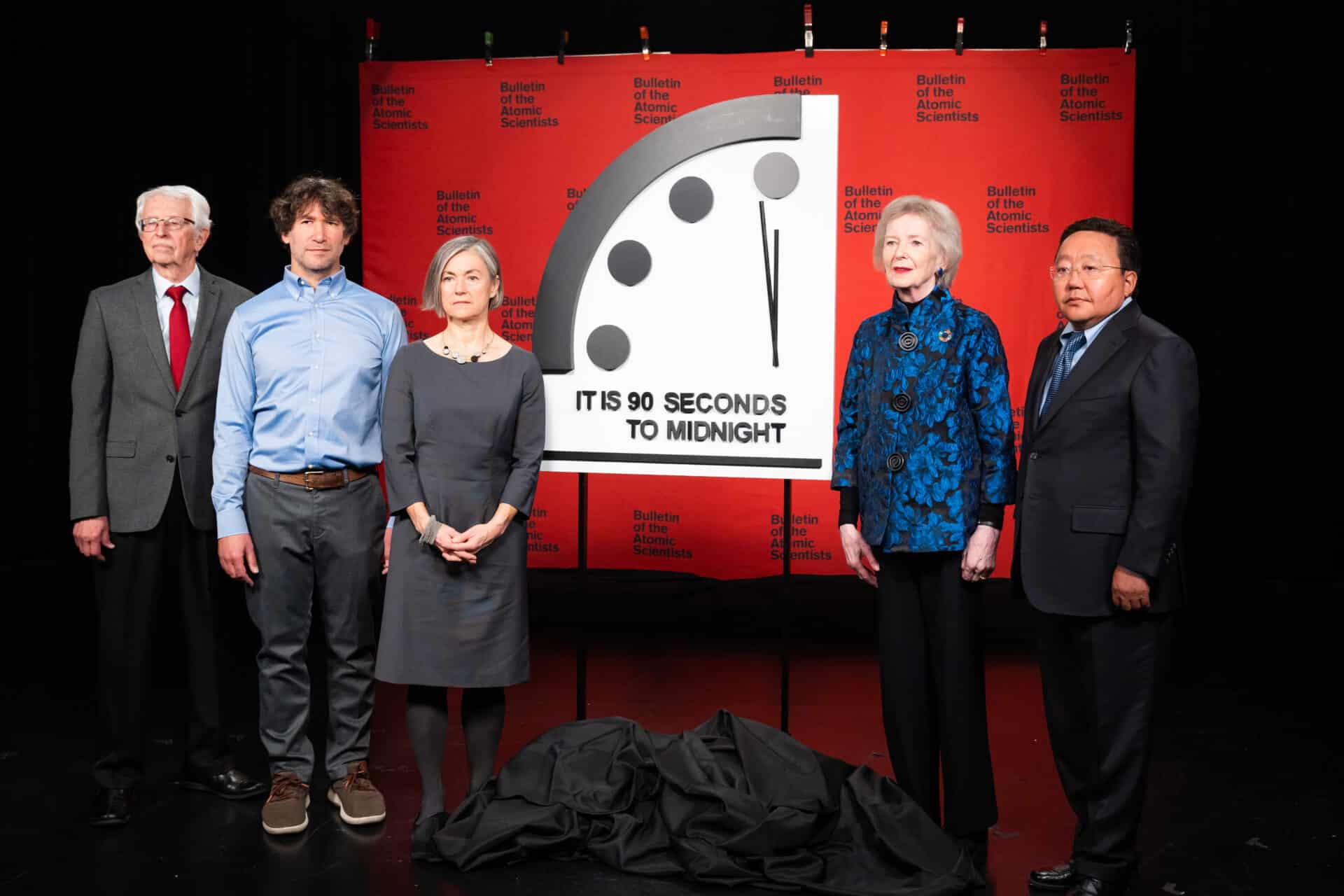
On January 2021 the Bulletin of the Atomic Scientists

reported “It is 100 seconds to midnight.”

This was due to the world-wide COVID pandemic which was life-threatening itself, but what was worse was that “In 2020, online lying literally killed…deliberate attempts (sometimes by national leaders) to disseminate misinformation and disinformation…a “massive ‘infodemic’—an over-abundance of information …makes it hard for people to find trustworthy sources and reliable guidance when they need it…” 

Four years later, with Donald Trump serving his second term as President of the United States under worsening conditions of disseminated misinformation and disinformation, we’ve jumped ahead.

Fact-checkers at The Washington Post documented 30,573 false or misleading claims during his first presidential term, an average of 21 per day. Commentators and fact-checkers have described Trump’s lying as unprecedented in American politics. Scholarly analysis of Trump’s X posts found significant evidence of an intent to deceive.

The Washington Post said his frequent repetition of claims he knew to be false amounted to a campaign based on disinformation. In February 2025, a public relations CEO stated that the “flood the zone” tactic (also known as the firehose of falsehood) was designed to make sure no single action or event stands out above the rest by having them occur at a rapid pace, thus preventing the public from keeping up and preventing controversy or outrage over a specific action or event.

Is The Hitchhiker’s Guide to the Galaxy your response to this very near and present existential threat?

“Protect me from knowing what I don’t need to know. Protect me from even knowing that there are things to know that I don’t know. Protect me from knowing that I decided not to know about the things that I decided not to know about. Amen.”

Continue reading “Preface: Advance Care Directives”

Foreword: Scientific Research Methodology

Let me begin with a disclaimer.

I do not claim to have the truth, the whole truth, and nothing but the truth.

I do claim to want to know the truth, and therefore rejecting the religious and social dogma dished out in my upbringing I investigated other options, and have changed many beliefs as additional or contradictory facts forced me to revise, not only my old beliefs, but even my revised beliefs, over the course of my study.

I encourage any reader who runs head-on into a thoroughly disagreeable concept to investigate that unaccepted idea in order to prove it is false, or true and important enough to adjust one’s belief system.

In stark contrast to emotion-based [i.e. anxiety and euphoria] religious strategies used to obtain and retain followers, this blog’s presentations are grounded in the same procedures used in scientific research,  and literary and legal hermeneutics to assess

  • the reliability – internal consistency,
  • and validity- external agreement of the historical and scientific statements

purportedly relayed by an infinite God.

Any reader who does not share my post-graduate training in research is not expected to read and comprehend the following, simply to scan over and, frankly, to be impressed with the rigorous methods applied to this blog’s evaluation of the claims made by rival authority figures.

Have you applied the same rigor to determining the trustworthiness of your believed means of salvation from catastrophe in this life and, especially, any possible after-life?

Continue reading “Foreword: Scientific Research Methodology”

SECTION I: In What Do You Trust For Your Unknown Future?

Every human is forced to trust that persons, places and things will perform as expected. At a minimum, we go through the activities of our daily life trusting that our past experiences will be replicated as our present condition merges into the unknown future minute by minute.

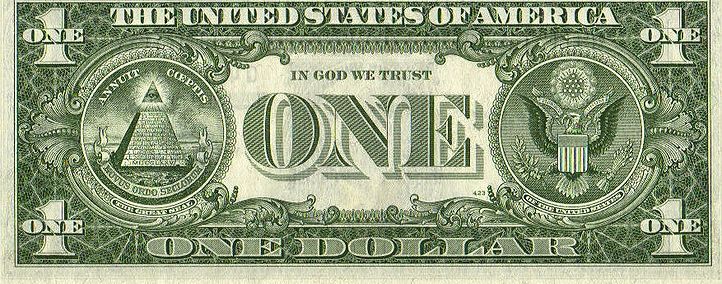
“In God We Trust” became the official motto of the United States when, as the country became ravaged by the Civil War, religious sentiment grew stronger. A Reverend M. R. Watkinson appealed to Secretary of the Treasury, Salmon P. Chase, to add the phrase to all U.S. coins with the argument that “This would place us openly under the Divine protection.”

Not true.

The belief that proclaiming a condition brings it into existence is magical thinking. Common in young children but considered psychotic or New Age religion in grownups.

Trust is formed by neurological connections in the brain through interactions with those who prove to be trustworthy over multiple encounters over time.

Erik Erikson, a developmental psychologist, researched the importance of trust development infancy. He noted that when caregivers are a consistent source of comfort, food, and affection, an infant learns trust. The baby develops a belief that others are dependable and reliable. If caregivers are neglectful the infant learns mistrust. The baby then develops a belief that the world is an unpredictable, undependable, and possibly a dangerous place.

We’re forced to trust others whose superior

  1. knowledge of facts that we don’t know
  2. can lead to understanding of the root problem
  3. with wisdom of which option
  4. is the best action 
  5. to resolve the problem.

Continue reading “SECTION I: In What Do You Trust For Your Unknown Future?”

1) Endless Or Pointless Existence?

Stephen Hawking is a genius physicist and “one of the most important scientists and public intellectuals of our time, if not all time.” 

But despite being a top ranked scientist among scientists, Stephen Hawking does not base his choice of belief system on evidence.

Note carefully that Stephen Hawking’s choice of belief is made to resolve his emotional response to the concept of an afterlife. As he states, he is grateful to conclude that there is no afterlife.

This is understandable, since he spent his entire adult life struggling with a severely debilitating physical disease, experiencing, in essence, the misery of a disembodied soul as postulated to be the condition of the afterlife.

But is someone’s emotionally disturbed coping mechanism a viable basis on which to base belief directing your own life’s choices and plans for your own soul’s fate after death? 

Continue reading “1) Endless Or Pointless Existence?”

2) Hyperdimensional Or Material?

Hyperdimensions – having more dimensions than observable by humans.

Material – in philosophy, the view that everything is caused by physical processes.

The choice would seem to be obvious. The conviction that there are parts of reality that can’t be observed by human senses – like, say, things way off in the distance, or things really tiny – is intrinsic to all scientific investigation. Aristotle articulated it as the logic that ‘nothingness’ cannot “be”.

The birth of modern science is the transformation it entrained in our conception of spacethe concept of empty space where ‘nothing’ can “be”, asserted by Galileo during the Renaissance in the 1600’s.

From Physics Forum online: The “fabric of space” is not made 0F anything- it is just space itself.

This is not a scientific finding. It is, obviously, impossible for science to prove the existence of nothing. This a philosophical argument deriving from humanism’s postulate that there is nothing that humans can’t perceive, ergo understand, ergo control, ergo no Higher Power than humanity.

But further scientific developments in the 1900s beginning with Albert Einstein’s quantum physics determined that what humans perceive as solid matter, i.e. mass, is due to humanity’s perceptual limitations. In reality, the atoms that form objects and substances that we call solid are actually made up of 99.99999% movement, one form of energy.

Einstein elegantly explains how energy can be perceived as solid substance in his famous mathematical sentence E=mc2, i.e.

Energy become mass when acted upon by c2 where c = the speed of light, the absolute upper limit of speed in our universe. Squaring it, i.e. multiplying it by itself cannot not realistically become meters2 per sec2 so is not a velocity but instead the crucial factor that unlocks one of the greatest secrets of the universe – the infinitely pervasive and powerful force outside the bounds of the laws of nature. 

This alone defines Creator God of the Bible.

And to further confound the sciences’ neat but kindergarten level classification of reality into energy OR matter:

Continue reading “2) Hyperdimensional Or Material?”

3) Knowledge Or Ignorance Of Death?

Hundreds of thousands of people died in the December 26, 2004 Indian Ocean tsunami. But as described in these news reports, others saw warning signs, and escaped with their lives…

a 10-year-old British girl saved more than 100 people because she had just studied the killer waves in school. When the sea suddenly began to boil, then pulled away from the resort she was visiting, leaving fish and boats stranded high and dry, Tilly Smith recognized that a tsunami was approaching. Fortunately, her frantic warnings were heeded, and the beach was evacuated just moments before the huge waves crashed ashore…

Many other people in the region were less attuned to nature and paid with their lives. 

As I’m typing, millions of people are tuned into live TV streaming news reporting on the progress of the latest hurricane barreling through Florida and up the east coast, making plans to save their and their loved ones’ lives.

Death is the biggest crisis we’ll face in life. The most important information, guiding our values and behaviors during our lifetime, is what happens after this lifetime.

Continue reading “3) Knowledge Or Ignorance Of Death?”

4) Rebirth Or Renaissance?

The Bible states that physical life, empowered by the mother’s mitochondria into growth and development of one cell into a complete human being capable of interacting in the physical domain, requires a second birth empowered by God in order to advance to a higher quality and length of life in the spirit domain.

Except a man be born again, he cannot see / perceive / experience the kingdom / realm / rule of  God / divinity.

We can translate this to current American politics by stating “Except you donate millions of dollars to my campaign you cannot get a place in my government”, flatly stating an absolute requirement for membership in this realm.

In God’s case, it is a matter of physics – the difference between matter and energy / spirit, scientifically validated by Einstein’s discovery of e=mc2: energy = mass acted upon by c2 / universal infinity / God.

“That which is born / created of the flesh / mass is flesh; and that which is born / created of the Spirit / Energy is spirit…

The wind / kinetic energy bloweth where it listeth / wishes...and thou hearest the sound thereof / perceive the effects, but canst not tell / know whence it cometh, and whither it goeth:

so [like the wind] is every one that is born of the Spirit/ incomprehensible to strictly fleshly humans…

For God sent not his Son into the world to condemn the world; but that the world through him might be saved…And this is the condemnation, that light is come into the world, and men loved darkness rather than light, because their deeds were evil.” (John 3:3-19)

This provides a clear distinction between

  1. the human new birth empowered by God’s Holy Spirit and
  2. the rebirth of the pagan gods into human flesh.

The best starting point to begin the Renaissance rebirth of the Classical World is with the Iliad and Odyssey, written in the earliest stages of Greek society, sometime between 1050 and 850 BC. 

Continue reading “4) Rebirth Or Renaissance?”

5) Reformation Or Retrogression?

Why Religion Matters: The Impact of Religious Practice on Social Stability 

When policymakers consider America’s grave social problems, including violent crime and rising illegitimacy, substance abuse, and welfare dependency, they should heed the findings in the professional literature of the social sciences on the positive consequences that flow from the practice of religion.

  • The strength of the family unit is intertwined with the practice of religion.
  • Churchgoers are more likely to be married, less likely to be divorced or single, and more likely to manifest high levels of satisfaction in marriage.
  • Church attendance is the most important predictor of marital stability and happiness.
  • Religious belief and practice contribute substantially to the formation of personal moral criteria and sound moral judgment.
  • Regular religious practice generally inoculates individuals against a host of social problems, including suicide, drug abuse, out-of-wedlock births, crime, and divorce.
  • In repairing damage caused by alcoholism, drug addiction, and marital breakdown, religious belief and practice are a major source of strength and recovery.
  • Regular practice of religion is good for personal physical health: It increases longevity, improves one’s chances of recovery from illness, and lessens the incidence of many killer diseases.

The overall impact of religious practice is illustrated dramatically in the three most comprehensive systematic reviews of the field.

  • Some 81 percent of the studies showed the positive benefit of religious practice,
  • 15 percent showed neutral effects,
  • and only 4 percent showed harm, seen generally by most Americans of religious faith as a mispractice of religion.

The Protestant Reformation is a vivid example of how religious transformation could set in motion institutional changes leading to profound consequences for nation-wide economic and political development.

Continue reading “5) Reformation Or Retrogression?”