From Forbes Magazine:
Scientific Proof Is A Myth
You’ve heard of our greatest scientific theories: the theory of evolution, the Big Bang theory, the theory of gravity. You’ve also heard of the concept of a proof, and the claims that certain pieces of evidence prove the validities of these theories. Fossils, genetic inheritance, and DNA prove the theory of evolution. The Hubble expansion of the Universe, the evolution of stars, galaxies, and heavy elements, and the existence of the cosmic microwave background prove the Big Bang theory. And falling objects, GPS clocks, planetary motion, and the deflection of starlight prove the theory of gravity.
Except that’s a complete lie...when it comes to science, proving anything is an impossibility.
Reality is a complicated place. All we have to guide us, from an empirical point of view, are the quantities we can measure and observe. Even at that, those quantities are only as good as the tools and equipment we use to make those observations and measurements…
In order to come up with a model capable of predicting what will happen under a variety of conditions, we need to understand a few things.
- What we’re capable of measuring, and to what precision.
- What’s been measured thus far, under specific initial conditions.
- What laws hold for these phenomena, i.e., what observed relationships exist between specific quantities.
- And what the limits are for the things we presently know.
If you understand these things, you have the right ingredients to formulate a scientific theory [bu]…nothing in science can ever truly be proven.
Like evolution, all scientific theories are a work in progress
From the 1920s up through the 1970s, scientists thought they had a satisfactory story for our cosmic origins…All of them, however…asked some variety of the question, “why did the Universe begin with a specific set of properties, and not others?”
- Why was the Universe born perfectly spatially flat,
- with its total matter-and-energy density perfectly balancing the initial expansion rate?
- Why is the Universe the exact same temperature, to 99.997% accuracy, in all directions, even though the Universe hasn’t existed for enough time for different regions to thermalize and reach an equilibrium state?
- Why, if the Universe reached these ultra-high energies early on, are there no high-energy relics (like magnetic monopoles) predicted by generic extensions to the Standard Model of particle physics?
- And why, since the entropy / chaos of a system always increases, was the Universe born in such a low-entropy configuration relative to its [organized] configuration today?…
In physics, we have two ways of dealing with questions like these. Because all of these questions are about initial conditions — i.e., why did our system (the Universe) begin with these specific conditions and not any others — we can take our pick of the following:
- We can attempt to concoct a theoretical mechanism that transforms arbitrary initial conditions into the ones we observe, including that reproduces all the successes of the hot Big Bang, and then tease out new predictions that will allow us to test the new theory against the old theory of the plain old Big Bang without any alterations.
- Or, we can simply assert that the initial conditions are what they are and not only is there no explanation for those values/parameters, but we don’t need one.
Although it’s not clear to everyone, the first option is the only one that’s scientific; the second option, often touted by those who philosophize about the landscape or the multiverse, is tantamount to giving up on science entirely.
I make the following argument where one of three propositions must be true regarding how the universe came to be. I can further prove which of the three propositions is true, thus demonstrating with irrefutable logic the origin of the universe. My approach uses a simple process of elimination where the universe came into being either by nothing, something, or someone. These three headings cover every option imaginable and no matter what your view, it will fit into one of these three headings…So let’s look at each option rationally…
The Nothing option
The idea that nothing actually caused anything is really impossible because nothing by definition is ‘no thing’. If it turns out that ‘no thing’ can actually do something, then it cannot be nothing in the true definition of that word, rather it had to be something all along. That alone makes this option a non-starter…However…the idea that nothing begat everything is still argued as a possible candidate as to the origin of the universe…
A look at Quantum theory and Heisenberg’s uncertainty principle, (according to some), provides an explanation for how energy may have come out of nothing. It has to do with ‘quantum fluctuations’. It assumes that particles and antiparticles form and quickly annihilate each other…One idea is that one fluctuation lived sufficiently long and had the right conditions for inflation leading to our universe. Of course if you delve deeper into such speculation, you have to conclude that in order for this to happen, there has to exist laws such as gravity, and/or particle pairs etc. That surely is not nothing…you don’t need to be a brilliant scientific mind to see that nothing cannot be the source of the universe…
The Something option
The Something option must be defined as a non-intelligent, non-aware, and non-living thing which produced the universe. This Something option could also include the universe itself. The Something option must also cater for the belief that this Something must be eternal, otherwise we are back to the Nothing option because something that was preceded by nothing brings us back to the Nothing option which we have already discovered is a non-starter…
The thing with the Something option is that because this option has to be non-intelligent, unaware, and possessing no consciousness…some questions need to be asked. How does an eternal dead something give birth to consciousness?…why is it that the non-thinking Something came up with better inventions and designs than humans who possess consciousness, a mind, and intelligence…. Albert Einstein or Sir Isaac Newton…would struggle to even understand 0.0001% of all that the universe had to offer, even if they could observe the universe from beginning to end. And considering that the whole universe was determined at the first moments of the Big Bang, then that gives this something with no intelligence less than a second to determine everything that the universe was, is now, and will be in the future…
One of the biggest hurdles with not including a consciousness of some kind in the creation process is the fact that consciousness exists. You are the proof of that. “I think, therefore I am” said the philosopher…If existence started with no life or intelligence, then would life and intelligence exist today? It is a bit like arguing that the Universe came from nothing to suggest that consciousness came from something non-conscious.
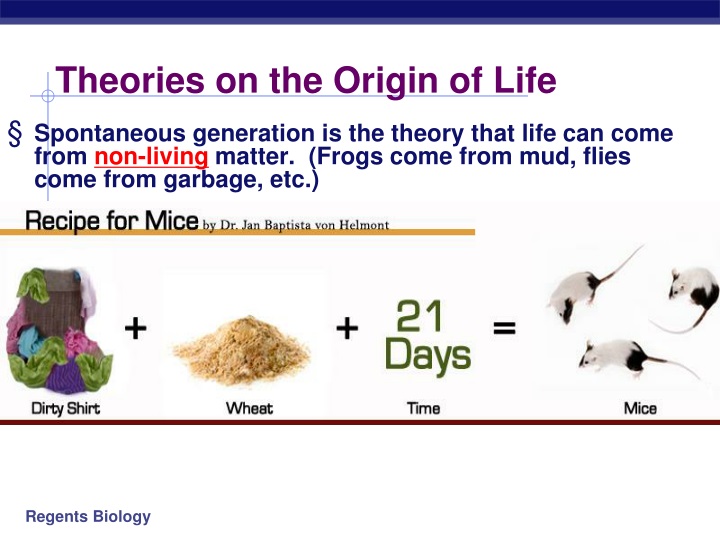
Further, we have all observed that life comes from life…If we follow the timeline backward, it is logical that someone or some life form had to be the oldest or the first living thing. Like all things, there had to be a first…then the first life could well be an eternal life. If not then that first life came from non-life. Thus the observable facts to date do not point to life coming from non-life, and while it has certainly been tried, no one has ever produced life from non-living matter, nor have they ever made a dead creature come alive again…
The Someone option
So this leaves us with the Someone option…it is the most believed of all the options and has been the standard premise in the history of the world. Even the early years of science was not about explaining the universe without God, but more about explaining how God created things. Some of the greatest scientists who have ever lived staunchly believed that God created the universe. Included are big names like the father of physics and creator of the scientific method, Sir Isaac Newton. Other big names include: Nicholas Copernicus, Sir Francis Bacon, Johannes Kepler, Galileo Galilei, Rene Descartes, Blaise Pascal, Robert Boyle, Michael Faraday, Gregor Mendel, William Thomson Kelvin, Max Planck, and Albert Einstein….Einstein never came to belief in a personal God, but he recognized the impossibility of a non-created universe.
To the Atheist though, the idea of a creator is almost as offensive as believing in the existence of the tooth fairy. However, as much as your intellect may or may not be offended, it has to be said that the Someone/God option is still one of three possible options and surely it wouldn’t be fair to just write this option off based on bias or conflicting belief, especially if you have no evidence, logic, or argument to the contrary. Unfortunately this is what many do. They discard this option because of bias even though nobody has proof that there is no God…
But let’s be rational about this….Could it be that you cannot measure an infinite God using finite tools of which we are limited to? But should we then just take it on faith that there is a God? Well we do believe in many things that we have never seen such as black holes or even the Big Bang itself. We often work out the existence of something in the universe if mathematics makes it possible and in mathematics we do have infinity. Some things are simply deduced by deduction while proof of their existence is often beyond actually seeing them. So which of the three options is the most likely then?…There is no theory as to the origin of the universe that doesn’t come under one of these three headings: Nothing, Something, or Someone.
The only option
Let’s start with some basic logic and a process of deduction to see which of the three ludicrous options must be true…
It is said that…numbers are the language of logic, so let’s see what we can deduce from them…If we start with infinity, then using simple sums, we can come up with every number imaginable including zero. This is also what we observe in the universe. We see a huge amount of phenomenon and things in the universe both big and small. But what happens if we start with zero? Well, we end in zero. Zero stays zero forever. Unless you add a finite number to zero somehow (apply a cause), you will stay with zero. So what does this prove? It simply means that even the most basic logic tells us that if there was truly nothing before the universe, then there would be no universe now….However, if the first cause was infinite, then it would explain the incredible amount of finites and zeros that we see. Thus, even the most basic of logic tells us that the first thing or cause of the universe had to be infinite, there is no way around this.
Whatever was first had to have no cause because that is the definition of first in this context. Once we understand that, then there are some interesting requirements that the original or first thing must have…If the universe has life, then life is part of the source of the universe. If the universe has order, then order is part of the source of the universe. If the universe has design, then the source of the universe has the ability to design. The ingredients and products of the universe must also be present in the source of the universe, otherwise they come from nothing which we already know is impossible.
The final analysis
God is described as a living conscious spirit (non-material being) that designed the universe, is intelligent, a law giver, programmer of code like DNA, eternal, and the source of love and life among an almost infinite amount of other things.
While the notion of a god creating the universe is offensive to some…that has no bearing on the existence of God at all.
When looking at what kick-started the universe and life, the following quote is very helpful: “When you have eliminated all which is impossible, then whatever remains, however improbable, must be the truth.” – Arthur Conan Doyle.

 Kingdom Come