Every human is forced to trust that persons, places and things will perform as expected. At a minimum, we go through the activities of our daily life trusting that our past experiences will be replicated as our present condition merges into the unknown future minute by minute.
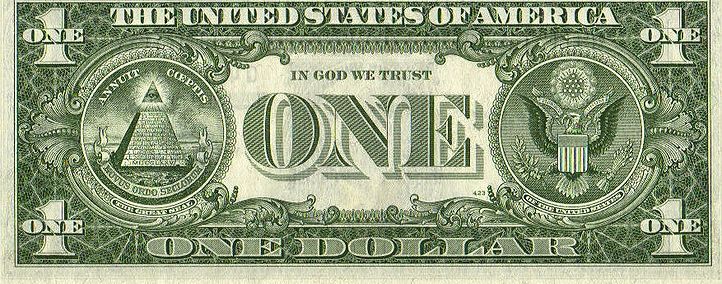
“In God We Trust” became the official motto of the United States when, as the country became ravaged by the Civil War, religious sentiment grew stronger. A Reverend M. R. Watkinson appealed to Secretary of the Treasury, Salmon P. Chase, to add the phrase to all U.S. coins with the argument that “This would place us openly under the Divine protection.”
Not true.
The belief that proclaiming a condition brings it into existence is magical thinking. Common in young children but considered psychotic or New Age religion in grownups.
Trust is formed by neurological connections in the brain through interactions with those who prove to be trustworthy over multiple encounters over time.
Erik Erikson, a developmental psychologist, researched the importance of trust development infancy. He noted that when caregivers are a consistent source of comfort, food, and affection, an infant learns trust. The baby develops a belief that others are dependable and reliable. If caregivers are neglectful the infant learns mistrust. The baby then develops a belief that the world is an unpredictable, undependable, and possibly a dangerous place.
We’re forced to trust others whose superior
- knowledge of facts that we don’t know
- can lead to understanding of the root problem
- with wisdom of which option
- is the best action
- to resolve the problem.
I had a patient with a history of schizophrenia admitted to the psych hospital for an episode of setting a fire in her apartment followed by bizarre preaching on a busy downtown street corner. On admission she raved that her parents were aliens and not real humans. Over a period of days medication didn’t change her delusions or highly distraught behaviors and her psychiatrist diagnosed her with severe schizophrenia with a treatment plan of long-term isolative hospitalization for her safety.
At that time I was not yet a trained psychiatric nurse practitioner, just a student nurse in one semester in psychiatric nursing, but I had the life experience to recognize the real-life hyper-religious references popping randomly through her illogical ravings.
This patient was raised in an Appalachian Mountains form of Christianity, where losing self-control was encouraged as a sign of Holy Spirit possession, preaching was always fanatical, and where sex outside of marriage was a mortal sin. Her bizarre ramblings of marriage and living beyond the stars came from the visionary teachings of a televangelist whose name the patient dropped.
She was highly intelligent and had a mental breakdown in college, a common prequel to the onset of schizophrenia. Because of their strict no-sex religious convictions, after taking legal custody her parents refused to allow her to live in a group home or socialize in any way, keeping her in virtual solitary confinement for her “safety”. This is known to induce severe mental harm and even psychosis in prisoners and is not allowed for long periods of time for the most heinous incarcerated criminals.
This innocent young woman could no longer trust her parents to meet her needs.
On the other hand, raised as she was in a hyper-religious household, she could not confess that she had slipped out of isolation, met an old friend from high school days, and engaged in sex. Her brain split her experience and created an explanation that made sense to her, but her attempt to make atonement for her sin by burning her bedding and nightgown in her bedroom and street preaching didn’t make any sense to her Hindu psychiatrist.
I proved to this patient that I was trustworthy because
- I had knowledge of the facts that her neurological miswiring was refusing to piece together when I patiently sat with her and listened to her illogical ramblings for hours, coaxing essential information with astute questions.
- I had understanding of the root problem by sharing my personal experiences of religious and parental prohibitions against premarital sex when I casually commented, “Yeah, my Dad went ballistic when he found out I had had sex with my boyfriend.
- Because I was living proof that I had overcome my similar problem, she chose to trust me to manage her situation, and her brain literally snapped back to reality, capable of remembering and revealing her reasons for her behavior.
- My advocacy of placement in a group home rather than isolation in an apartment to resolve the underlying problem of inhumane loneliness overrode her previous paranoia and she complied with prescribed medication in order to effect release from confinement.
Proven past trust-worthiness is the foundation for putting faith any individual or institution for a good future.
According to one Nolan Dalla, philosopher, “Trust is largely based on evidence that’s real according to the senses and to human reason. Trust is the core conviction of judgment based on knowledge, instinct, and experience.”
Agreed.
But then he says “I assert that faith and trust are contradictory...Faith has been called “the substance of hope.” It requires no evidence for belief nor practice. The very nature of faith surmises that tangible evidence doesn’t exist…Faith is the abandonment of scientific principles. Faith is the refutation of tangible evidence.”
This individual is using Orwellian New-speak: “the language of official propaganda” by the deliberate replacement of one set of words in the language for another.
As a Psychiatric Mental Health Nurse Practitioner working with acutely ill patients I followed the core process of listening to the ramblings of an institutionalized patient until the root of the problem surfaced, and like a district attorney in Law and Order, I pieced together the truth and resulting disposition. The result was that, instead of just adjusting medication to “stabilize” my patients, leaving them in the same mentally ill condition, many of my patients were quickly discharged with new diagnoses and new treatment plans backed by their own testimony validated by other sources and proven to be accurate by their efficacy.
The evidence of my effective work was highly respected by my MD colleagues, the medical directors, and the judges whose role was to determine if certain patients needed to be kept under lock and key or could be released to the community and they put their faith in my documented word as they signed agreement and followed through their on their required actions to effect my plan.
Continuing on with the original biblical source Dalla misquotes, we can discover the meaning of “faith” as used by that biblical source.
“Now faith is the substance of things hoped for, the evidence of things not seen.” (Hebrews 11:1)
In the King James Bible there are 336 statements made using the word faith or faithful. The consistency with which this term is used over multiple situations and across a wide span of time establishes the essential research condition of reliability, and provides a basis for trusting (haha) the same meaning of the word “trust” in this one occurrence:
- as written in the original language used in composing the Bible,
- and intended to be understood by all readers of the Bible regardless of language or culture.
The passage in Hebrews 11 goes on to provide examples of this definition, so anyone who isn’t educated on the earlier biblical references can readily learn that faith is, in fact, based on past evidence demonstrated by actions / practice.
- By faith Abel
- based on past evidence of his parents – Adam and Eve – being the two unique human creations of God put in charge of the earth
- demonstrated by his action of offered unto God a more excellent sacrifice than Cain i.e. according to instructions passed down by their parents.
- By faith Noah
- based on past evidence of gigantic monsters having almost succeeded in wiping out all of humanity
- demonstrated by his action of prepared an ark to save one family to repopulate the earth.
- By faith Abraham
- based on past evidence that YHVH has the power to deliver his people from what he learned from Noah, Shem and his own experience surviving a tyrant’s attempts to kill him
- demonstrated by his action of when he was called to go out of civilization to a dangerous frontier obeyed; and he went out
- etc.
This is consistent with Dictionary.com’s definition of faith: “confidence or trust in a person or thing:”
Consistent with the dictionary’s definition, faith is the essence of the scientific method – extrapolating the results of a small sample to a larger population to anticipate a future outcome.
Therefore,
- any action made towards a future result
- without faith based on evidence from the past
- is the abandonment of scientific principles
- of proof of reliability, consistency, guarantee of performance in one’s chosen course of action.
This is the complete opposite of what this guy is saying: “The best example of faith in practice is religion and all its intended and unintended fall-out. Billions of global citizens claim to be believers adhering to one faith versus another.”
These claims are so broad that small minds, or those with a bias, can be easily persuaded that they are accurate. Who can’t call to mind acquaintances whose idea of “faith” is exactly as this philosopher reports it to be?
But when we narrow the focus of the argument to the detail used by this philosopher, we discover that he is a sophist: a teacher who makes money by cleverly deceiving students who don’t know enough to realize that the instructor’s arguments don’t reach logical conclusions.
There is a crucial distinction between
- religion, of which there are many,
- and the singular Bible quoted by the “teacher” above.
This beguiler argued against the Bible’s definition of faith, and examination of the Bible proved his argument to be fallacious: containing a fallacy; logically unsound: deceptive; misleading: delusive.
According to the Bible, faith is the end result of reason. So we can’t categorize the Bible with dogmatic religious teachings.
He goes on to conclude “Whether it’s believing in angels or denying evolution, faith is folly.”
According to his personal definition of faith. But that requires us to abandon the universal definition of faith used in the Bible. Believing this guy is believing an unproven “revealer of secrets”.
Now that is folly.
If you’ve ever gone through a relationship breakdown you know what I mean. “I’m sorry, it won’t happen again.” Then it does. And then it does again. At some point you have to put your faith in your own experience and research for a secure future.
For your own survival you can’t put your faith in an untrustworthy person leading you into an unproven future as he asserts “the faithful place their lives at the supposed goodwill of a theoretical supreme being”.
Not true. Those who put their faith in the God of the Bible place their lives on the existence of legally admissible documentation evidence of the goodwill of a hyper dimensional being not only more powerful than mortal humans but supremely powerful over other hyper dimensional beings.
Your personal past experience of tyranny in families, workplaces, nations and world empires should drive you to – sensibly – distrust humanity in all its organized means of control. Possibly even to hope that the Bible’s documentation of a benevolent supreme being is true.
I’m not telling you to trust me. This blog investigates that possibility.


 Kingdom Come