
Let me begin with a disclaimer.
I do not claim to have the truth, the whole truth, and nothing but the truth.
I do claim to want to know the truth, and therefore rejecting the religious and social dogma dished out in my upbringing I investigated other options, and have changed many beliefs as additional or contradictory facts forced me to revise, not only my old beliefs, but even my revised beliefs, over the course of my study.
Don’t panic. This blog book is not an evangelical attempt to convert you to Christianity.
Absolutely not.
I grew up attending a Baptist church every Sunday for Sunday School where I memorized the books of the Bible and all the key verses, morning and evening church services where I was indoctrinated into the key beliefs, every Wednesday night for prayer meeting where I took part in the key practice of begging God for what we wanted. The longer I was in church the more I experienced the hypocrisy, outright lies and gross exploitation by narcissistic antisocial leaders of gullible believers.
After tossing out the whole package then realizing I really needed a higher power beyond my limitations in my life, I started to study just what God said. Not the religious leaders. Just God.
And I learned that the Bible conveys the most fascinating account of human history, full of the drama of the human condition – war and peace, despair and hope, agony and ecstasy, love and hate, life and death.
This blog investigates, by comparing and contrasting with other religious, scientific and philosophical sources, the revelation of a Creator-Sustainer God as given from the beginning of time “to infinity and beyond!”
In stark contrast to emotion-based [i.e. anxiety and euphoria] religious strategies used to obtain and retain followers, this blog’s presentations are grounded in the same procedures used in scientific research, and literary and legal hermeneutics to assess
- the reliability – internal consistency,
- and validity- external agreement of the historical and scientific statements
purportedly relayed by an infinite God.
Any reader who does not share my post-graduate training in research is not expected to read and comprehend the following, simply to scan over and, frankly, to be impressed with the rigorous methods applied to this blog’s evaluation of the claims made by rival authority figures.
- directed toward the solution of a problem…
- In this blog, the problem is determining if there is life after death, and what, if anything, can be done to guarantee it.
- emphasizes the development of generalizations principles, or theories that will be helpful in predicting future occurrences.
- In this blog, that apply to all humanity.
- based upon observable experience or empirical evidences.
- involves gathering new data from primary or first-hand sources or using existing data for a new purpose.
- characterized by carefully designed procedures that apply rigorous analysis.
- strives to be objective and logical, applying every possible test to validate the procedures employed the data collected and the conclusions reached.
Based on the nature of the topic being researched in this blog, the following types of research are employed.
Qualitative Research: doesn’t involve measurements or numbers. It focuses on how people react or behave when they are put in a real-life situation…hinges on the reality that things in general are coherent, consistent and predictable
Longitudinal Research includes historical recurrences.
Philosophical Research focuses on the vision of others such as founders of a religion, like Hinduism, Islam, Judaism, or Christianity.
Case-Study Research deals with unusual events like reported resurrection from the dead.
The process required to effectively carry out research:
(i) Formulating the Research Problem – Is there continued existence of the self after material death, and do I have any control over what happens?
(ii) Extensive Literature Survey – of various answers to this question.
(iii) Developing the Research Hypothesis – There is hyper-dimensional life after four-dimensional death and many religions document how to access it.
(iv) Preparing the Research Design – Qualitative observations of hyper-dimensional beings’ involvement with humanity as documented in various religious scriptures.
(v) Determining the Research Design – Compare and contrast the statements made about God / gods for reliability – consistency throughout the account – and validity – supporting evidence external to the account.
(vi) Collecting the Research Data – Read through the account systematically to develop a coherent record of God’s / gods’ involvement with humanity.
(vii) Execution of the Project – Compare and contrast internal statements against 1) themselves and 2) external evidence.
(viii) Analysis of Data – Statements that are consistent within the account establish reliability, statements that are consistent with known data outside the account establish validity.
(ix) Hypothesis Testing – If the account is shown to be reliable and valid, the hypothesis is determined to be true.
(x) Generalization and Interpretation – The account is a trustworthy document for using as a guide to life.
(xi) Preparing of the Report or Presentation of the Result – In my case, this blog.
Hermeneutics
“Hermeneutics is the theory and methodology of interpretation…The word “hermeneutics” is derived from Hermes, the Greek name for the ‘messenger of the gods’.”
Hermes was also the Greeks’ claimed inventor of language, and interpreter, using his isolated role to act as a liar and a trickster. As Socrates noted, words have the power to reveal or conceal and can deliver messages in an ambiguous way. This was the essence of Hermes, who was said to relish the uneasiness of those who received the messages he delivered.
This ambiguous aspect of hermeneutics is intrinsic to its counterpart term, exegesis, which may include the historical and cultural backgrounds of the author, text, and original audience.
This is the reason that as of 2024, with over 2 billion Christians in the world’s largest religion, there are ~45,000 different denominations with different beliefs, practices, and interpretations of scripture.
Every denomination is following a human leader’s personal hermeneutical interpretation of scripture, with – usually – poorly educated pastors depending on his personal knowledge of history and current local culture to interpret and apply scripture, always for the purpose of taking control of his people. Christianity has become closed membership in a cult. All of which eliminates personal responsibility for transforming into the likeness of Christ in order to witness of his life-giving power to society at large.
But the most egregious example of the abuse of hermeneutics is by a knowledgeable religious leader over ignorant masses is the conversion of the simplicity of the gospel of the Jewish Messiah to rampant paganism for the purpose of control by the Roman Emperor. Details in relevant posts.
The Protestant Reformation brought about a renewed interest in the interpretation of the Bible back to the texts themselves. Martin Luther and John Calvin emphasized scriptura sui ipsius interpres (scripture interprets itself).
But the problem with that is the lack of knowledge of any part of scripture. Jesus and his apostles constantly referenced what we call the Old Testament, which includes four thousand years of history. Most protestant denominations sweep away any need to understand the “Old Testament” so don’t bother studying an immense amount of information. How then can scripture interpret itself?
I set myself to studying everything I encountered in the Bible using as many appropriate resources as possible such as historical records and scientific findings using the eight rules of determining truth by applied hermeneutics.
- Definition – Define terms as they will be used in your research.
- The definition of science according to the Science Council:
- Evidence is collected
- Experiments and/or observations MUST be made
- Then a process that fails to gather evidence and conduct experiments and/or make observations can’t be science.
- The definition of science according to the Science Council:
 Usage – Foreign words, idioms, and slang (Short LANGuage) can confuse the meanings of words.
- cool, hot, wicked, cookies, mouse
- “I was in the Spirit on the Lord’s day”…(Revelation 1:10) Does John mean Sunday or the Day of the Lord?
- Context – The big picture. The truth, the WHOLE truth, and NOTHING BUT the truth. Matthew 16:24 “If any man will come after me, let him…

deny himself, and take up his cross and follow me.”

 Background – We can’t just read the Bible and interpret it from our way of life. Historical and cultural settings must be understood. For this reason I use a version that doesn’t update to contemporary culture, but is faithful to the original culture of the author while translating into the English language. The scholarship and lasting influence of the King James Bible translation is unparalleled for any publication, even Shakespeare’s masterpieces published at this same time.
- “The most widely published text in the English language, the King James Bible, was first released 400 years ago, this year. This version of the bible has had a lasting impact, not only on the Christian faith, but on the way English is spoken and written today.”
- The literary pedigree of the King James Version is so impressive that it was rumored that William Shakespeare had a hand in its creation. King James commissioned fifty-four of England’s leading Hebrew and Greek scholars from both sides of the religious divide. The issues that divided them paled in comparison to the sacred responsibility that lay before them. For the next seven years, they worked in groups to translate the text of the Old Testament from its original Hebrew and the text of the New Testament from the original Greek. Word by word, line by line, they made their way through the text, carefully considering what would be the most apt phrasing for each passage. When they finished a segment, they sent it around for peer review. In the end, they chose the best of the best.
- Logic – Building complex arguments from simple statements to prove something is true.
- Critical thinking uses logic to separate truth from falsehood and reasonable from unreasonable beliefs.
- Studying and judging for yourself “Is this true?” Don’t believe something just because a respected person said it.
- Break Complex information down into smaller pieces of simpler information. If one small piece is wrong, the whole thing is wrong.
- Uncover the source and recognize hidden agendas and bias. Is it to sell you something or use you? Especially in social media.
- Precedence – Once the evidence for a case has been examined and a decision made, this judgment covers subsequent similar cases.
- Basis of legal system in America.
- Basis of legal system in the Bible. Book of Romans describes God’s laws from the Old Testament applying to New Testament believers, stating 15 times “As it is written…”
- Unity – Any document must be understood as a unified message, and any part of the message must be consistent with the rest of it.
- Old Testament: “And the LORD said, I will destroy man whom I have created from the face of the earth.” Genesis 6:7
- New Testament: For God so loved the world…John 3:16
- Hermeneutical analysis requires searching for an explanation that brings consistency between destruction of mankind on one hand and love of mankind on the other.
- “There were giants in the earth in those days, and also after that, when the sons of God came in unto the daughters of men, and they bare children to them, the same became mighty men which were of old, men of renown….and the earth was filled with violence…

Believe me, the Bible becomes way more interesting when you set aside the boring memories of Sunday rituals and stories dumbed down to grade school level.
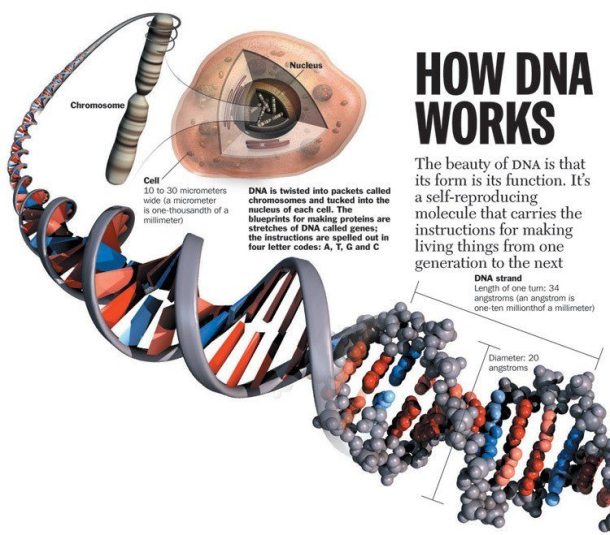
- Inference – Using observable facts and logical reasoning to prove non-observable truth. We can’t see God, but there is enough scientific evidence in the observable facts of an amazingly complex physical world to infer the existence of a Creator/Sustainer God who owns & controls it all.


 Kingdom Come