-
Beethoven’s endurance is expressed in the title of a movie about his life, “Immortal” Beloved.
While the title is based on his avowed eternal love for a woman, there is a broader application of the immortality of his own soul’s creativity and deep emotions living on through devotees of his music after his death. After 200 years Beethoven’s “Ode to Joy” still remains perhaps the most famous piece of music in history.
This is not simply conceptual. There is a material reality to im-mortal-ization as aspects of Beethoven’s soul are re-experienced, re-in-corp-orated and re-vitalized in the viewers’ em-bodied souls.
But not Beethoven’s own complete soul.
And the same situation is true in natality – where each parent going all the way back to the Adams is re-incorporated into their offspring, but not the owner’s complete soul.
Eventually, as ordained by YHVH and reiterated by Melisandre (in GOT, of course), “All men must die.”
Job, despite his conviction of having led the penultimate example of a righteous life, paints a grim picture of death.36
“my purposes are broken off, even the thoughts of my heart [activities of the soul]… the grave is mine house [for the body]…in the darkness...down to the bars of the pit [inescapable prison]…in the dust.” (Job 17:11-16)
Moses likewise reports that 1) the soul, a distinct entity in itself, separates from 2) the body at death, into a condition to be grieved.
“as her soul was in departing [her body], (for she died)…she called his name Benoni / Son of my sorrow.” (Genesis 35:18)
This place is in Hebrew called sheol translated variously into English as grave, pit, and hell, with the common feature that they are all underground and the souls there are imprisoned in misery.
“The sorrows of hell compassed me about; the snares of death prevented me;” (II Samuel 22:6)
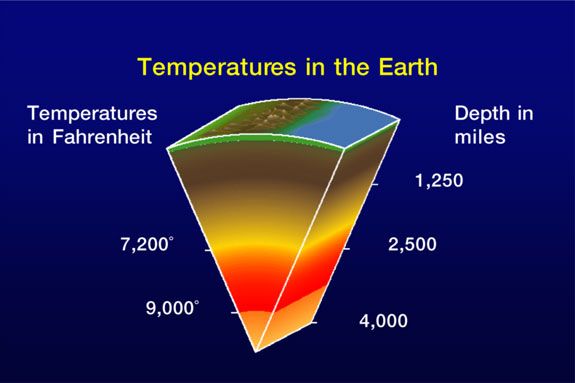 Consistent with geological knowledge of underground heat and high pressure, we can believe the reports of torment from the lack of shielding of the bodiless soul’s electrical field from the electrified grounded environment.
This information is found not only in the Bible, but is validated by virtually all ancient religious documents.
According to the Sumerians, after the death of the body, the soul entered an underworld, known as Kur, Arallû, Ganzer or Irkallu, the latter of which meant “Great Below”. “[D]ust is their food…they dwell in darkness” as merely weak and powerless ghosts in “a shadowy version of life on earth”. This was the fate of all humans, there was neither punishment nor a reward for humans based on the quality of the life they had lived.
In ancient Egyptian religion the immortal realm of the ka (body double, equivalent to the electrical pattern of the entire body’s neurological system) and the ba (personality / soul) was the Fields of Aaru. Unless the family provided a well-stocked tomb, Osiris demanded work as restitution for protection he could provide.
Día de Los Muertos ceremony that takes place in Mexico during which celebrants use unique symbology to connect with departed ancestors and family members to help the departed souls through the afterlife.
In Chinese folk religion, a shi, literally “corpse” is a “personator” who dresses up as the ancestor…consuming ritual offerings that relatives want to give to the departed.
The Buddhist holiday of Pchum Ben is one of the most important annual ceremonies in Cambodia…For 15 days each year, families create offerings of food, which they bring to…the Buddhist monks. The merit earned by making this donation to the monks is thought to transfer to departed ancestors in the spirit world.
Most people know of Samhain as the pagan version of Halloween. But…the Celts believed the spirits of ancestors could walk among the living at will. To honor the ancestors and protect yourself from negative faery encounters, celebrants can offer food and drink to the ancestors.
In Christianity…An indulgence is the extra-sacramental remission of the temporal punishment due…in Purgatory… An essential element in indulgences is the application to one person of the satisfaction performed by others.
There is only one proven remission of punishment due – the forensically proven, witnessed resurrection from the dead into an immortal body of the biblical Christ / Promised Savior of mankind from both death – and the cause of death – sin.
“we pray you in Christ’s stead, be ye reconciled to God. For he hath made him [YHVH’s Christ] to be sin for us, who knew no sin; that we might be made the righteousness of God in him.” (II Corinthians 5:20-21)
According to Sri Sri Paramahansa Yogananda, “Our real self, the soul, is immortal…we can never be destroyed…The wave comes to the shore, and then goes back to the sea; it is not lost. It becomes one with the ocean, or returns again in the form of another wave.
Hinduism and Buddhism teach reincarnation. Depending on the actions of the person while alive in their prior life – their Karma – they can come back in any form of life ranging from super nasty to a new and improved version of what they were previously. Buddha taught that all beings in animal form, were our family members and friends in past lives.
These accounts are not verifiable by any witnesses, nor is there any reliability among the multitude of pagan sources.
Scientist Dr Sam Parnia…director of the Human Consciousness Project at the University of Southampton, explained…“It’s important to understand that…we have this window of time where we can bring people [i.e. their bodies] back to life and the experiences that they have given us is an indication of what it is like to go through death…
“The evidence we have is that when a person [i.e. their body] dies, that part that makes us who we are – the soul or mind, or whatever you call it – it does not become annihilated.”
“Therefore did my heart rejoice, and my tongue was glad; moreover also MY flesh shall rest in hope: Because thou wilt not leave MY soul in hell, neither wilt thou suffer thine Holy One to see corruption.
Thou hast made known to me the ways of life; thou shalt make me full of joy with thy countenance…[through] the [forensically documented] resurrection of Christ…
Repent, and be baptized every one of you in the name of Jesus Christ for the remission of sins, and ye shall receive the gift of the Holy Ghost.” (Acts 2:26-39)
This “righteousness of God” is not morality as such, but a choice – as in marriage, where resources are shared – to accept his offer of permanent connection to the infinite source of life, merging one’s identity into his by accepting his authority and power over one’s life, AND acting on it.
But this decision can only be made by the soul during life. The eternal condition of the energy soul is fixed when the loss of the body makes any further changes impossible.
I wouldn’t count on Catholicism’s last rites to guarantee acceptance or Protestantism’s secretly raising a hand while “every head bowed, and every eye closed” to prevent personal embarrassment at the altar call. Read the Bible.
Becoming a “new creature” means being “in Christ” and “reconciled to God.” How many personal relationships have you found to be reconciled by the simple expedient of saying “I’m sorry”? Publicly changed behavior by the body confirms (get it?) reconciliation and converts the soul.
“Believe me that I am in the Father, and the Father in me: …And I will pray the Father, and he shall give you another Comforter, that he may abide [take up permanent residence in contrast to sojourn / temporary residence ] with you for ever; Even the Spirit of truth; whom the world cannot receive, because it seeth him not, neither knoweth him: but ye know him; for he dwelleth with you, and shall be in you.
Putting Jesus’ choice of the term “Comforter” in the pagan culture of that day enriches our understanding of exactly what he is saying. “You won’t go to hell!”
I will not leave you comfortless: I will come to you. Yet a little while, and the world seeth me no more; but ye see me: because I live, ye shall live also. At that day ye shall know that I am in my Father, and ye in me, and I in you.” (John 14:10-20)
“Repent ye therefore, and be converted, that your sins may be blotted out, when the times of refreshing / renewal / resurrection shall come from the presence of the Lord.” (Acts 3:19)


 Kingdom Come