-
It is profoundly significant that philosophers speculating on the origins of existence correspond to the Creator’s designation of himself as “I am” in stark contrast to physical science whose “Scientists simply don’t know where consciousness comes from, or what it’s made of.”
-
“We can’t exhaustively say other organisms, and even inanimate objects, don’t have consciousness. Humans relate to animals and can imagine, say, dogs and cats have some amount of consciousness because we see their body language and how they appear to make decisions. But just because we don’t “relate to” rocks, the ocean, or the night sky, that isn’t the same as proving those things don’t have consciousness.
This is where a philosophical stance called panpsychism comes into play…“This claims consciousness is inherent in even the tiniest pieces of matter — an idea that suggests the fundamental building blocks of reality have conscious experience. Crucially, consistent with the latest and most complex scientific findings of Quantum Entanglement, it implies consciousness could be found throughout the universe.
From the priests of the Egyptian temples to today’s secret societies…the physical world has always been conceived of as a series of thoughts emanating from the intelligent cosmic mind. Pure mind energy to begin with, these thought-emanations condensed into material gas, liquid and solids.
The reality of everyday experience is that consciousness – thoughts – are routinely introduced from ‘somewhere else’, i.e., from some-one else – Thought-Beings in other words.
At its most general, pantheism may be understood as the view that God is identical with the cosmos, the view that there exists nothing which is outside of God.
Many of the world’s religious traditions and spiritual writings are marked by pantheistic ideas and feelings. This is particularly so for example, in Hinduism of the Advaita Vedanta school, in some varieties of Kabbalistic Judaism, in Celtic spirituality, and in Sufi mysticism.
Quantum Physics has discovered Quantum entanglement. a bizarre property Einstein famously called “spooky action at a distance.”
When two particles, such as photons – light particle-waves – or subatomic particles like electrons – interact they become linked. Even when the particles are moved miles apart, their mechanical states (such as their spin, momentum, and polarization) remain mysteriously coupled. If the state of one entangled particle is changed, its faraway twin will be instantaneously affected.
-
Another strange thing about entanglement: The information seems to travel faster than light between the two objects, breaking the universe’s apparent speed limit. It is a mystery how exactly these particles can interact from such a far distance to share information without any “movement of data” through space.
Entanglement can also occur among a joined collection of hundreds, millions, and even more particles. The phenomenon is thought to take place throughout nature. When hundreds of particles become entangled, they still act as one unified object.
Like a flock of birds, the particles become a whole entity unto itself without being in direct contact with one another. A higher level of consciousness.

-
-
The Bible reports extensively about consciousness deriving from, and remaining linked to, the Singularity Creator.
“And God formed man of the dust of the ground, and breathed into his nostrils the breath / spirit of life; and man became a living soul.” (Genesis 2:7)
Significantly, another application of the Hebrew word for living is troop – a group of soldiers.
“the troop of the Philistines pitched in the valley of Rephaim.” 2 Samuel 23:13.
In a common literary learning exercise of “compare and contrast”, this passage is presenting LIFE as Community / Interdependency / Connection with either 1) Almighty God or 2) a group of human fighters.
“To whom then will ye liken me, or shall I be equal? saith the Holy One.
Lift up your eyes on high, and behold who hath created these things…by the greatness of his might, for that he is strong in power; not one faileth…
Hast thou not known? hast thou not heard, that the everlasting God, the LORD, the Creator of the ends of the earth, fainteth not, neither is weary?
there is no searching of his understanding.” (Isaiah 40:25-28)
-
“the invisible God…all things were created by him, and for him…and by him all things consist…And you, that were sometime alienated and enemies in your mind [soul] by wicked works, yet now hath he reconciled [brought thoughts and actions into unity with his.” (Colossian 1:15-17,21)
The concept of reconciliation is best understood in modern thought through Jungian psychology.
Carl Gustav Jung 1875 – 1961) founded the school of analytical psychology. Alongside contemporaries Freud and Adler, Jung became one of the most influential psychologists of the early 20th century.
Raised in a deeply religious household with generations of clergy and initially expected to become a minister in the Swiss Reformed Church, his interest was captured by Sigmund Freud’s new field of psychiatry combining the biological and psychological.
Jung’s own research and personal vision resulted in analytical psychology distinct from Freud’s psychoanalysis. While Freud focused on the “personal” unconscious filled with sexual fantasies and repressed images, Jung posits a collective unconscious encompassing the soul of humanity at large.
in addition to our immediate consciousness, which is of a thoroughly personal nature…there exists a second psychic system of a collective, universal, and impersonal nature which is identical in all individuals. This collective unconscious does not develop individually but is inherited.
The biological process of inheriting psychological elements has been determined by research to be “epigenetics”. See relevant post for details.
The collective unconscious exerts overwhelming influence on the minds of individuals…virtually every emotion and situation.
And the essential thing, psychologically, is that in dreams, fantasies, and other exceptional states of mind the most far-fetched mythological motifs and symbols can appear… These “primordial images” or “archetypes,” as I have called them…cannot be explained as personal acquisitions. Together they make up that psychic stratum which has been called the collective unconscious.
The collective unconscious comprises in itself the psychic life of our ancestors right back to the earliest beginnings. It is the matrix of all conscious psychic occurrences, and hence it exerts an influence that compromises the freedom of consciousness in the highest degree, since it is continually striving to lead all conscious processes back into the old paths.
The old paths are both good and evil.
-
The Bible documents this.
See, I have set before thee this day life and good, and death and evil; In that I command thee this day to love [identify with, bond with] the LORD thy God, to walk in his ways, and to keep his commandments and his statutes and his judgments, that thou mayest live and multiply: and the LORD thy God shall bless thee in the land whither thou goest to possess it.
But if thine heart turn away, so that thou wilt not hear, but shalt be drawn away…I denounce unto you this day, that ye shall surely perish…for he IS [the only option for] thy life, and the length of thy days:” (Deuteronomy 30:15-20)
-
The connection is made for us in the poetry of the Bible which does not use rhythm but rather parallels, which serve as a thesaurus for synonyms and antonyms.
- “The spirit / Ruach [pronounced as a gutteral “k” like ch of “school”] of God / El hath made me,
- and the breath of the Almighty hath given me life.” (Job 33:4)
The Bible spells out that this Almighty God is the only source of life, now and forever.
“And whosoever was not found written in the book of life [like a marriage certificate, joined in relationship to God] was cast into the lake of fire / pure energy in which there is no differentiation of pure energy souls.” (Revelation 20:15)
“And Moses said unto God, Behold, when I come unto the children of Israel, and shall say unto them, The God of your fathers hath sent me unto you; and they shall say to me, What is his name? what shall I say unto them?
And God said unto Moses…say unto the children of Israel, I Am hath sent me unto you.” (Exodus 3:13-14)
According to philosopher James (1890) “Me” reflects self-consciousness observed from a person’s point of view,
“I”, on the other hand, is rooted in one of the oldest branches of philosophy – meta-physics – which simply means beyond what can be observed, examining the nature of existence and the relationship between matter and mind, therefore is conceptual, unable to be proven by experimentation.
Held annually since 1994, The Science of Consciousness (TSC) is an interdisciplinary conference emphasizing rigorous approaches to the study of consciousness and its place in the universe. Topical areas include neuroscience, philosophy, psychology, cognitive science, biology, quantum physics and quantum brain biology, cosmology, meditation, altered states, artificial intelligence/machine consciousness, the nature of reality, culture and experiential phenomenology.
The Bible presents YHVH as a sentient Being by whom all things consist, with the purpose of forming a family of loved ones / connected individuals as one.
Individuation is the Jungian term for “growing up” – recognizing and rejecting unhealthy control of the collective unconscious and stablishing a persona—which can be understood simply as that portion of the collective psyche with which they identify, embody and perform.
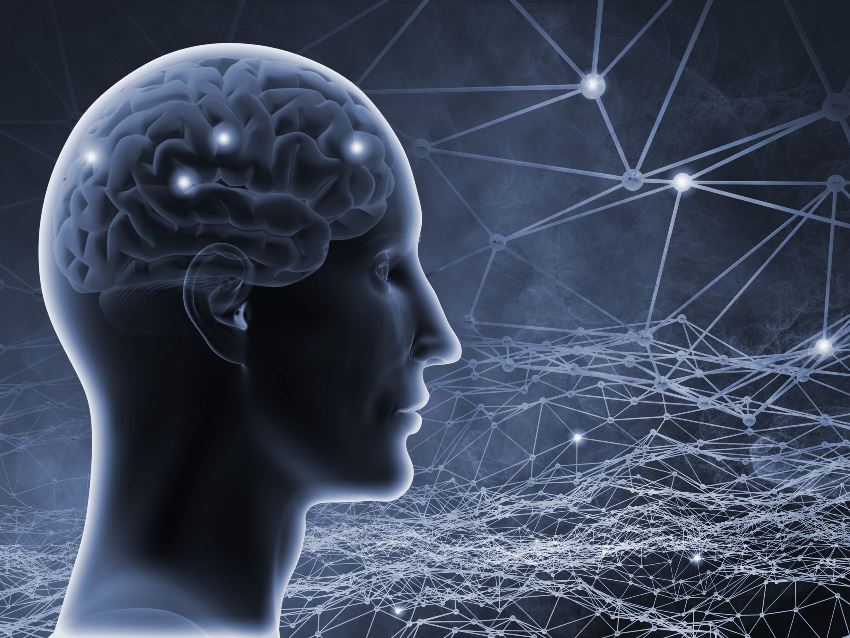
In a thought-provoking new paper, a physicist suggests the whole universe could be a single neural network. This is a very bold claim. We are not just saying that the artificial neural networks can be useful for analyzing physical systems or for discovering physical laws, we are saying that this is how the world around us actually works.
If we’re all nodes in a neural network, what’s the network’s purpose?
Can Creation actually be so hard for humans made in the likeness of the Creator to understand?
The old philosophical question can be reframed as “If God speaks and there is no-one to hear him, is there any sound?”
Carrying through this concept – if God is love, but there is no-one to love, can he love, i.e. have the character of being loving, in reality? Anyone else besides me experience what’s called unrequited love? It does take more than one person for love to exist.
Life is connection. The very idea that “you” or “I” exist independently of our connections to others makes little sense. We are dependent on relationships.


 Kingdom Come