“He that is not with me is against me; and he that gathereth not with me scattereth abroad. Wherefore…every idle word that men shall speak, they shall give account thereof in the day of judgment.
the blasphemy against the Holy Ghost shall not be forgiven unto men…whosoever speaketh against the Holy Ghost, it shall not be forgiven him, neither in this world, neither in the world to come…
For by thy words thou shalt be justified, and by thy words thou shalt be condemned.” (Matthew 12:30-37)
It’s easy to recite a creed “I believe in God, the Father Almighty, maker of heaven and earth…”, but if actions are not in accordance with the recited words, they are blasphemy.
Anyone in any denomination claiming to be “a born-again Christian / filled with the Holy Spirit without any evidence by changed behaviors in alignment with God’s Spirit is blasphemy.
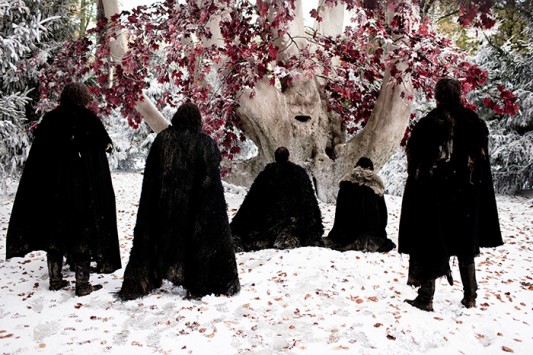
Game of Thrones does a spectacular portrayal of exactly how this ends.
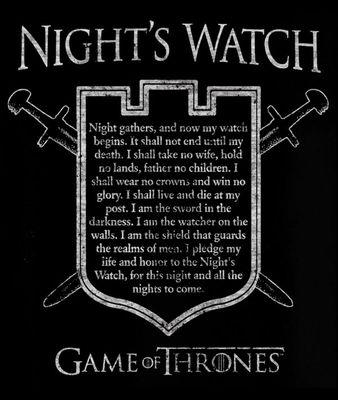
The very beginning of GOT relates how a deserter from the Night’s Watch is beheaded solely on the basis that his behavior was evidence that he lied, he broke what he claimed to be an unbreakable association.
A similar example is provided in scripture.
“Jephthah was the son of an harlot; and Gilead begat / made his heir Jephthah…his wife’s sons grew up, and they thrust out Jephthah, and said unto him, Thou shalt not inherit in our father’s house…
And it came to pass in process of time, that the children of Ammon made war against Israel. And it was so, that…the elders of Gilead went to fetch Jephthah…said unto Jephthah, Come, and be our captain, that we may fight with the children of Ammon…And Jephthah said unto the elders of Gilead,
- If the LORD deliver them before me,
- shall I [still] be your head?
And the elders of Gilead said unto Jephthah, The LORD be witness between us, if we do not so according to thy words. Then Jephthah went with the elders of Gilead, and the people made him head and captain over them: and Jephthah uttered all his words before the LORD in Mizpeh. And Jephthah judged Israel six years. Then died Jephthah the Gileadite.” (Judges 11:1-11, 12:7)
Scripture doesn’t document what Jephthah’s words were that he uttered first to the elders, then before the LORD, but we can be certain that he declared in advance his intention of condemning and executing every one of his brothers who rejected his leadership after he laid down his life for them.
Another, more famous, “uttering of words” / legally testifying in court “do you swear to tell the truth, the whole truth, and nothing but the truth, so help you God?” is provided at the famous turning point in history – the Exodus.
“And the children of Israel went into the midst of the sea upon the dry ground: and the waters were a wall unto them on their right hand, and on their left.
And the Egyptians pursued, and went in after them to the midst of the sea, even all Pharaoh’s horses, his chariots, and his horsemen…And the LORD said unto Moses, Stretch out thine hand over the sea, that the waters may come again upon the Egyptians, upon their chariots, and upon their horsemen…and the Lord overthrew the Egyptians in the midst of the sea.” (Exodus 14:22-27)
“Then sang [uttered all their words before the LORD] Moses and the children of Israel this song unto the LORD…
- The LORD / YHVH is my strength and song,
- and he is become my salvation:
- he / YHVH is my God [Spirit that give life],
- and I will prepare him an habitation [his Holy Spirit in my body]” (Exodus 15)
“And Moses said unto the LORD…
- thou hast said, I know thee by name [personal relationship], and thou hast also found grace in my sight.
- Now therefore, I pray thee…shew me now THY WAY, that I may know THEE / be united with thee like Adam “knew” his wife.
And the LORD descended in the cloud, and stood with him there, and proclaimed the name / way of the LORD…
- The LORD, The LORD God,
- merciful and gracious, longsuffering
- abundant in goodness and truth
- forgiving iniquity and transgression and sin,
- and that will by no means clear the guilty” (Exodus 33-34)
Here we find that the way of the God of the Bible is summed up as
- desire for unification / oneness with humanity motivating
- God’s forgiveness of sin and
- judgment for unredeemed sin.
This “way of the LORD” IS “the Law of Moses” on which every other rule rests.
The first five books of the Bible are known collectively as “the law” because it contains, not just rules, but the political constitution – not just of the nation of Israel – but of the entirety of God’s kingdom, beginning in Genesis with the establishment of the boundaries of the kingdom at creation and the assignment of kingdom leadership.
This makes Moses the human author of the constitution of God’s spiritual kingdom for all mankind.
“The LORD thy God will raise up unto thee a Prophet from the midst of thee, of thy brethren, like unto me; unto him ye shall hearken;” (Deuteronomy 18:15)
The whole of scripture ties together in one theme! The Prophet Like Moses is poised to lead salvation once again!
“In those days came John the Baptist, preaching…Repent ye: for the kingdom of heaven is at hand. For this is he that was spoken of by the prophet Esaias, saying, The voice of one crying in the wilderness, Prepare ye the way of the Lord, make his paths straight...
John not only quotes Isaiah but also Moses.
Then went out to him Jerusalem, and all Judaea, and all the region round about Jordan, And were baptized of him in Jordan, confessing their sins. But when he saw many of the Pharisees and Sadducees come to his baptism, he said unto them…Bring forth therefore fruits meet for repentance:” (Matthew 3:1-13)
In other words, read Deuteronomy 30 and return to the LORD and do his commandments and obey his voice.
What is this grace of God? Is it, as claimed, a new way of salvation distinct from the Mosaic law of the Old Covenant?
Not according to the Bible.
Grace is the fundamental covenant made with the first two humans by God himself to the parents of the entire human race promising to save them and their children from sin and it’s inevitable conclusion of death / separation from life through a specific Savior.
Why should it be thought a thing incredible with you, that God should repeat himself? You know, The One who said “I am the LORD, I change not!”
The Septuagint rendered the Hebrew torah by the Greek nomos (“law”), probably in the sense of a living network of traditions and customs of a people. The designation of the Torah by nomos, and by its Latin successor lex (whence, “the Law”), has historically given rise to the misunderstanding that Torah means legalism…
We should understand from our own chaotic marital, social and political situations that obeying the terms of an agreement is the only way unity, a necessary precursor to overcoming destructive forces, can be achieved.
Shavuot is a Jewish holiday that commemorates the single most important event in Israel’s history: the giving of the Torah (the first five books in the Hebrew Bible) to Moses at Mount Sinai….it is one of the three major festivals often called “pilgrim” festivals because all Jewish males were required to observe them at the Holy Temple in Jerusalem…
Since Shavuot occurs 50 days after the first day of Passover, it is sometimes known as Pentecost, which is a Greek word that means “fifty.” Jesus’ followers were in Jerusalem celebrating Pentecost when the Holy Spirit was given to them.
“Moses truly said unto the fathers, A prophet shall the Lord your God raise up unto you of your brethren, like unto me; him shall ye hear in all things whatsoever he shall say unto you…
Ye are the children of the prophets, and of the covenant which God made with our fathers, saying unto Abraham, And in thy seed shall all the kindreds of the earth be blessed. Unto you first God, having raised up his Son Jesus, sent him to bless you, in turning away every one of you from his iniquities.” (Acts 3:22-26)
“The grace of God that bringeth salvation hath appeared to all men, Teaching us [the essential Mosaic law] that, denying ungodliness and worldly lusts, we should live soberly, righteously, and godly, in this present world; Looking for that blessed hope, and the glorious appearing of the great God and our Saviour Jesus Christ…gave himself for us, that he might redeem us from all iniquity, and purify unto himself a peculiar people, zealous of good works.“(Titus 2:11-14)
“And the LORD said unto [Moses] …I will raise them up a Prophet from among their brethren, like unto thee, and will put my words in his mouth; and he shall speak unto them all that I shall command him.
And it shall come to pass, that whosoever will not hearken unto [act upon] my words which he shall speak in my name,

I will require it of him…” (Deuteronomy 18:17-19)



 Kingdom Come