
When we apply the little bit of God’s documented instructions to the Adams, we recognize the tremendous faith that Adam had in YHVH based on his actions.
Mrs. Adam – “Adam! Adam! I really messed up! Help me!!”.
- “Of every tree of the garden thou mayest freely eat /akal:
- But of the tree of the knowledge of good and evil, thou shalt eat / akal – not! / lo of it: for in the day that thou eatest thereof thou shalt surely die. (Genesis 2:16-17)
Adam – Horrified at her transformation and knowing YHVH is not going to go back on his word about this regardless of pleading for mercy.
That thought sticks in his head – “YHVH is not going to go back on his word.”
“If you eat the fruit you will die” was a warning of a consequence – not a commandment to be punished if broken.
There was only one command, and it was given to Adam, not to his wife.
- “Therefore shall a man leave his father and his mother, [that would be God himself in Adam’s situation]
- and shall cleave unto his wife: and they shall be one flesh.” (Genesis 2:24)
So in faith that as long as he follows God’s command, Adam remains one – now dead- flesh with her by eating the fruit.
Whoever will be saved from the dominion and destruction of sin in this life and after death must not only believe in God’s power, but act on their knowledge of God’s commandments, whatever their particular circumstances and degree of revelation.
Traces of this same basic faith in Creator God, proof that knowledge of the true God indeed was known to the whole world, can be found in “this quote from Weatenatenamy, Young Chief of the Cayuse nation, which seems to encapsulate this feeling which is at the heart of Native American spirituality:
I wonder if the ground has anything to say: [It does – “And the LORD said unto Cain…the voice of thy brother’s blood crieth unto me from the ground.” (Genesis 4:9)
I wonder if the ground is listening to what is said…the earth says, God has placed me here. [“And…the whole multitude of the disciples began to rejoice and praise God with a loud voice…Saying, Blessed be the King that cometh in the name of the Lord: peace in heaven, and glory in the highest. And some of the Pharisees from among the multitude said unto him, Master, rebuke thy disciples. And he answered and said unto them, I tell you that, if these should hold their peace, the stones would immediately cry out.” (Luke 19:37-40)]
The Earth says, that God tells me to take care of the Indians on the earth; the Earth says to the Indians that stop on the Earth feed them right. God named the roots that he should feed the Indians on; the water speaks the same way…the grass says the same thing… The Earth and water and grass say God has given our names [i.e. characteristics, function]
and we are told those names; neither the Indians nor the Whites have a right to change those names, [And God saw the light, that it was good: and God divided the light from the darkness. And God called the light Day, and the darkness he called Night.” (Gen 1:4-5) “Woe unto them that call evil good, and good evil; that put darkness for light, and light for darkness…Woe unto them that are wise in their own eyes, and prudent in their own sight!” (Isaiah 5:20-21)]
the Earth says, God has placed me here to produce all that grows upon me, the trees, fruit, etc. [“And God said, Let the earth bring forth grass, the herb yielding seed, and the fruit tree yielding fruit after his kind, whose seed is in itself, upon the earth: and it was so.” Genesis 1:11)]
The same way the Earth says, it was from her man was made [“And the Lord God formed man of the dust of the ground” (Genesis 2:7)].
God, on placing them on the Earth, desired them to take good care of the earth do each other no harm. [“And the Lord God took the man, and put him into the garden of Eden to dress it and to keep it.” (Genesis 2:15)]
God said.” [“…the worlds were framed by the word of God…” (Hebrews 11:3)]
Boncuklu Höyük in central Turkey is one of the earliest village sites found…Instead of following Cain’s nomadic, AKA marauding lifestyle, these settled villagers, like Abel, farmed and traded with other local communities.
It’s…basically, the development of our civilisations…This farming lifestyle then spreads around the world – it goes across Europe and it goes across Asia…Boncuklu is one of those very rare sites that allows us to investigate that time period.
Will Durant’s classic history series gives insight into the differences between marauding and settled cultures.
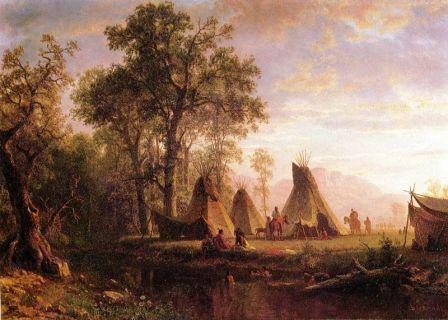
The North American Indians were described by Captain Carver as… “extremely liberal to each other, and supply[ing] the deficiencies of their friends with any superfluity of their own.” “What is extremely surprising,” reports a missionary, “is to see them treat one another with a gentleness and consideration which one does not find among common people in the most civilized nations. This, doubtless, arises from the fact that the words ‘mine’ and ‘thine,’ which St. Chrysostom says extinguish in our hearts the fire of charity and kindle that of greed, are unknown to these savages.” “I have seen them,” says another observer, “divide game among themselves when they sometimes had many shares to make; and cannot recollect a single instance of their falling into a dispute or finding fault with the distribution as being unequal or otherwise objectionable. They would rather lie down themselves on an empty stomach than have it laid to their charge that they neglected to satisfy the needy. . . . They look upon themselves as but one great family.” (Retrieved from Chapter II, Section III, Economic Organization)
This is the complete opposite of the economics of capitalism, which has brought America to its destruction by Christian Nationalism in 2025.
The Edenic way of life is only possible for people filled with God’s spirit, described as “godliness with contentment is great gain. For we brought nothing into this world, and it is certain we can carry nothing out. And having food and raiment let us be therewith content.” (I Timothy 6:6-8)
Mary Jemison was a teenage Irish immigrant to the British colony of New England when she was captured by Native Americans. After living with the Senecas about four years; “and though for the rest of her life she felt straddled between two cultures, she chose to remain with the Senecas.”
The story of her life surely puts the words of the Bible into action.
“I say unto you [command you], Love your enemies, bless them that curse you, do good to them that hate you, and pray for them which despitefully use you, and persecute you; That ye may be the children of your Father which is in heaven: for he maketh his sun to rise on the evil and on the good, and sendeth rain on the just and on the unjust.” (Matthew 5:44-45)
“Now the works of the flesh are manifest…they which do such things shall not inherit the kingdom of God. But the fruit of the Spirit is love, joy, peace, longsuffering, gentleness, goodness, faith, Meekness, temperance…And they that are Christ’s have crucified the flesh with the affections and lusts.” (Galatians 5:19-24)
“the end of the commandment is charity out of a pure heart, and of a good conscience, and of faith unfeigned:” (I Timothy 1:5)
the Bible I had read a little. I had also learned the Catechism, which I used frequently to repeat to my parents…for a number of the first years that I lived with the Indians, I repeated the prayers as often as I had an opportunity…a Missionary kindly gave me a Bible, which I am very fond of hearing my neighbors read to me…
Mary was at first distraught at the idea of marrying an Indian, but Sheninjee won her heart with his mild manner, his care of her when she was sick and his gentleness. She recalled that he was an agreeable husband and a comfortable companion. He became a friend…”I loved him…”
when the King of England offered a reward to people who brought prisoners of the Indians to a fort to free them. A Dutch trader named John Van Sice tried to cash in on the bounty by taking Mary against her will to Fort Niagara. She barely escaped his grasp when he chased her from the corn field she worked. She hid out for three days in an abandoned cabin near Gardeau Flats…
A new life began for Mary that year when she married Hiokatoo, a respected old chief and warrior. She felt safe under his kindness and protection. By him she had four daughters and two sons…”No people can live more happy than the Indians did in times of peace, before the introduction of spiritous
liquors amongst them.”
The Senecas lived in peace for about fifteen years before the start of the American Revolution. The chiefs of the Six Nations signed a treaty of neutrality with the rebels and looked forward to peace amidst war; but the next year the British…promised the chiefs great rewards of money and goods if they helped subdue the few outnumbered rebels. Each chief was given a suit of clothes, a brass kettle, a scalping knife, a gun and a tomahawk. A bounty was offered for scalps…
in the fall of 1779…General John Sullivan, under orders from George Washington, was on a punishing campaign to destroy Indian villages. The soldiers burned the houses, killed the cows, horses and hogs and burned acres of corn fields. Every tree in the orchards was cut down…
Carrying the two younger ones on her back, the other three children walked with her…[Mary] traveled to Gardeau Flats to the cabin she had hidden in when the Dutch trader sought her…
soon after the end of the American Revolution, her brother, Black Coals, came to her and offered her her freedom…But…I had got a large family of Indian children, that I must take with me; and that if I
should be so fortunate as to find my relatives, they would despise them, if not myself; and treat us as enemies; or, at least with a degree of cold indifference, which I thought I could not endure.”
Mary’s brother was pleased to hear her decision to remain with her adoptive family. He said in a few days he would join a Council…about giving her land of her own for her use and to pass on to her children…The lands Mary Jemison was awarded came to be known as the Gardeau Tract…
Mary strongly opposed alcohol and believed it to be “a poison that will soon exterminate the Indian tribes of this part of the country.”
Mary deeded over large tracts of her land to trusted friends and kept for herself a lot one mile by two miles…”to pass the remainder of her days in the midst of those whom her youth and middle age had been spent…. she felt [discontent and weariness] as the white people gathered around and her old Indian friends departed…”
When interviewed at the age of 80 she was observed to be] unusually fit…Such was the dress that this woman was contented to wear…was made and worn after the Indian fashion… Even in her old age she fed her own livestock and fowl, chopped wood, pounded corn and did her own cooking and baking…By the end of her life Mary had enough property to afford a very comfortable house and well-made clothes….She owned several houses in which share croppers lived…
She died as a Seneca woman in 1833, at the age of ninety-one.



 Kingdom Come