The Bible states that physical life, empowered by the mother’s mitochondria into growth and development of one cell into a complete human being capable of interacting in the physical domain, requires a second birth empowered by God in order to advance to a higher quality and length of life in the spirit domain.
“Except a man be born again, he cannot see / perceive / experience the kingdom / realm / rule of God / divinity.“
We can translate this to current American politics by stating “Except you donate millions of dollars to my campaign you cannot get a place in my government”, flatly stating an absolute requirement for membership in this realm.
In God’s case, it is a matter of physics – the difference between matter and energy / spirit, scientifically validated by Einstein’s discovery of e=mc2: energy = mass acted upon by c2 / universal infinity / God.
“That which is born / created of the flesh / mass is flesh; and that which is born / created of the Spirit / Energy is spirit…
The wind / kinetic energy bloweth where it listeth / wishes...and thou hearest the sound thereof / perceive the effects, but canst not tell / know whence it cometh, and whither it goeth:
so [like the wind] is every one that is born of the Spirit/ incomprehensible to strictly fleshly humans…”
For God sent not his Son into the world to condemn the world; but that the world through him might be saved…And this is the condemnation, that light is come into the world, and men loved darkness rather than light, because their deeds were evil.” (John 3:3-19)
This provides a clear distinction between
- the human new birth empowered by God’s Holy Spirit and
- the rebirth of the pagan gods into human flesh.
The best starting point to begin the Renaissance rebirth of the Classical World is with the Iliad and Odyssey, written in the earliest stages of Greek society, sometime between 1050 and 850 BC.
Homer is one of the world’s greatest literary artists and one of the most influential authors in the widest sense, for the two epics provided the basis of Greek education and culture throughout the Classical age. Through their revival under Byzantine culture from the late 8th century CE onward, and subsequently through their passage into Italy with the Greek scholars who fled westward from the Ottomans, the Homeric epics had a profound impact on the Renaissance culture of Italy.
It was probably through their impact on Classical Greek culture itself that the Iliad and the Odyssey most subtly affected Western standards and ideas. The Greeks valued them not only as a symbol of Hellenic heroism but also as an ancient source of moral and social instruction for leaders of society.
The Greek symposium can be viewed as the pulp novel version of Homer’s highbrow poetry. A key Hellenic social institution, it was the equivalent of social clubs for the aristocracy. Like Skull And Bones, an undergraduate senior secret student society at Yale University in New Haven, Connecticut. Skull and Bones has become a cultural institution known for its powerful alumni and conspiracy theories. Among prominent alumni are former presidents George H. W. Bush, and George W. Bush. There are no official rosters published after 1982 and membership for later years is speculative. Some news organizations refer to them as a power elite.[1]
Plato’s written work The Symposium opens to our view the heart and soul of aristocratic Greek culture. This is not the academia currently associated with this word, but a frat house party with lots of drunken sex. No family women in attendance, only slave girls and prostitutes. In Ancient Greece, most men would marry women in order to produce children with them, but there was often a closer emotional bond with male lovers. Male on male sex was socially acknowledged as a simple fact of life. Typically, a male-male relationship would exist between an older man (called the “lover”) and a younger man. The older man is usually the dominant partner in sexual intercourse. The younger man, usually in the age between puberty and that of growing a beard. Life-long partnerships are rare. Significantly, we see Plato rejecting the romanticization of sexual bonding.
Jean-Paul Sartre claimed that sexual desire aims to capture the other’s freedom (1943: pt. III, ch. 3]).
The Marquis de Sade (a philosopher of sorts) went to the opposite extreme, celebrating all types of vile sexual acts, including rape (1785; 1791; 1795).
Renaissance Machiavelli’s frankly amoral In “Il Principe” (written 1513) describes the technique of grasping and retaining power in predatory society.
Machiavelli is not an aberration with the Renaissance movement. Overall, while the Renaissance is often envisioned in terms of Italy’s resurgence of magnificent art depicting the Classical World, what is re-birthing is actually the ancient pagan concept of Mankind taking dominion from the Creator in the sense of domination.
Judging by the available evidence, the human appetite for sexual license is matched only by a concomitant lust for gruesome depictions of violence.
Mass carnage, as in contemporary movies, television and video games, was also a simple fact of life – in real life. I can’t help but remember how mesmerized we all were watching our American President-ordered horror on Baghdad’s population.
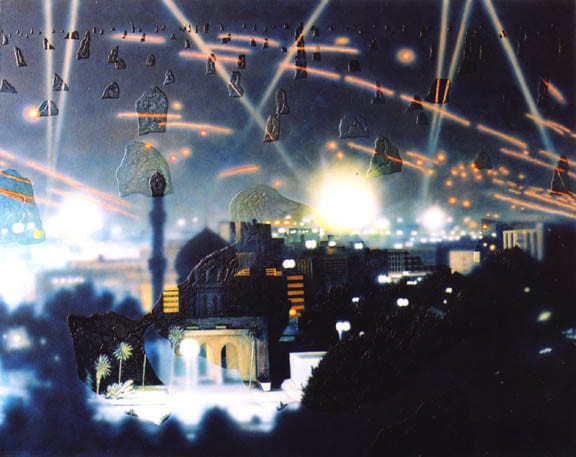
As each ruler vied to surpass his predecessor in staging grandiose scenes of indiscriminate slaughter, they campaigned by providing gruesome entertainment for their avid audiences. Crowds as vast as 150,000 in the Circus Maximus would use the occasion to shout out specific complaints or praises at their ruler, watching scenes such as women having sex with animals. I thought I was familiar with sexual abuse through my profession, but I discovered how innocent I was in thinking that women being mounted by bulls could only result in killing the women and had phased out with the rest of the Coliseum’s slaughters when I googled “pornography of woman having sex with a bull and received “About 53,900,000 results (0.47 seconds)”. It’s still a popular show.
The enduring appeal of sex and violence embedded in the history of Ancient Greece and Rome takes a prominent place in the Renaissance of Humanism and remains relevant to many contemporary controversies and conflicts.
As the concept of genius / genie / spirit emerged during the Renaissance and artists were increasingly seen as and portrayed themselves to be the recipients of divine [spiritual both good and evil] inspiration, those who possessed skills became integral to the purveyance of ideas through visual means and significantly shaped the impressions of society at large about religious stories, historical events, and political practices.
“The work of art, by making us grasp its expressive character instantaneously, wields a certain power over our minds and souls.”
Exactly as today with visual media, only today’s technology allows more rapid and widespread distribution of “media influencers” for a more rapid and widespread deterioration of society.
After Michelangelo, Caravaggio (1571-1610) exerted the most prodigious influence on Italian painting as it evolved…his lasting influence has continued to echo down the centuries, informing…a host of other artists…his Del Monte period are replete with “full-lipped, languorous boys…who seem to solicit the onlooker with their offers of fruit, wine, flowers – and themselves”…Louis Crompton, in his “Homosexuality and Civilization…”Caravaggio’s 1599 portrait of a Boy With Flowers is incontrovertibly androgynous, as are all eight versions he painted of St John the Baptist.
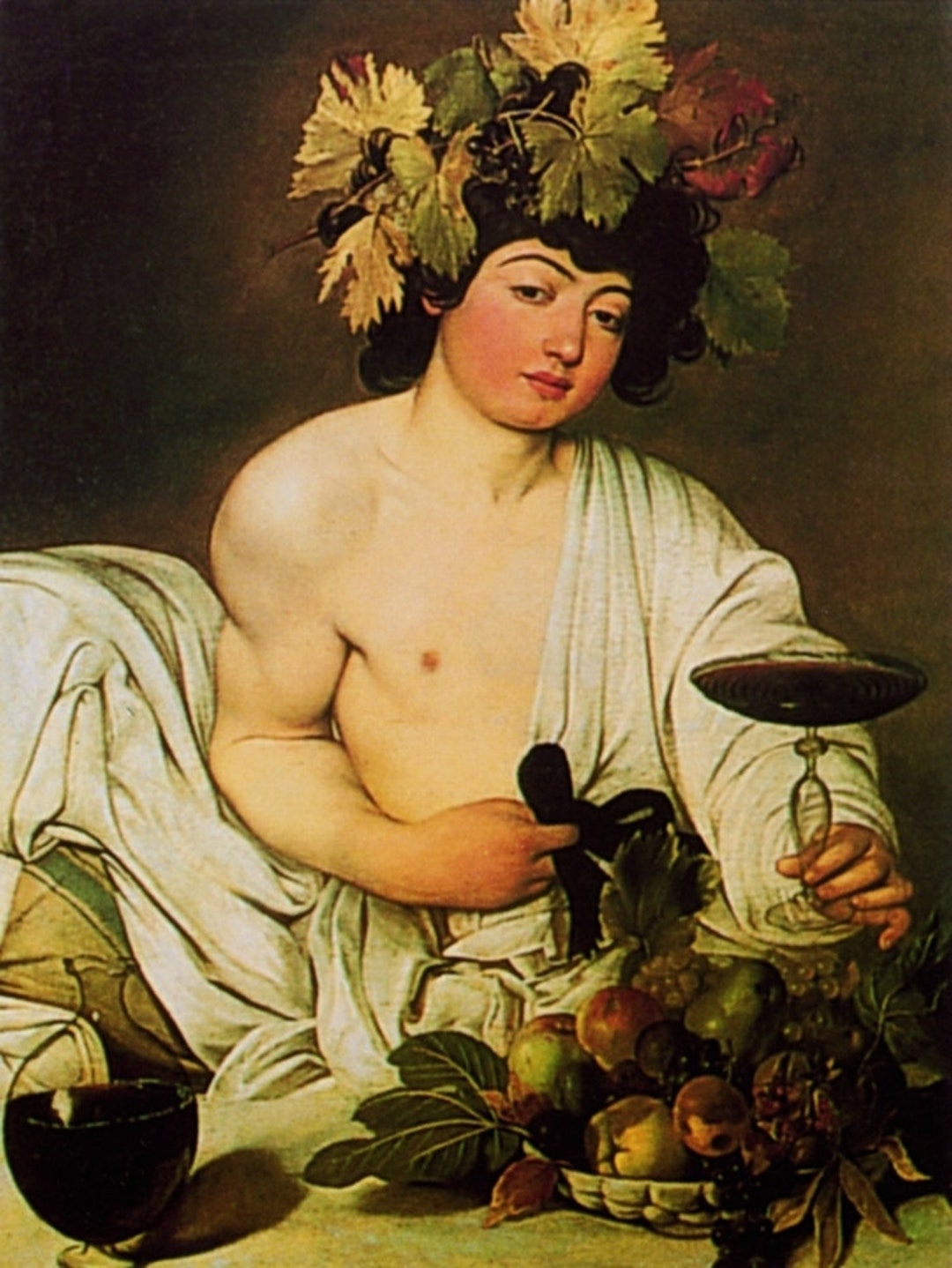

His work is certainly obsessive, and assuredly obscene by depicting the ascetic St. John the Baptist in his paradigm.
In doing so he reveals the nature of the Renaissance – transforming Christian society back to unbridled sexuality including what is still known today as Greek sex.
In 1789 the French Revolution began by proclaiming “Renaissance humanistic ideals” Promising
- enlightenment through scientific discoveries,
- freedom from religious dogma,
- and political democracy for all classes
the French Revolution in fact delivered a Reign of Terror headed by virtual dictator Maximilien de Robespierre lasting 13 months during which at least 300,000 suspects were arrested, nearly 17,000 were put to death and perhaps 10,000 died in prison or without trial.
A brutal military campaign brutally forced millions of confused and angry French citizens to convert from Christianity to The Cult of Reason. All crosses and statues were removed from graveyards, and all cemetery gates could bear only one inscription in denial of the biblical promise of resurrection: ”Death is an eternal sleep.”
Churches across France were transformed into Temples of Reason, with the cathedral of Notre Dame in Paris holding the largest ceremony featuring goddess figures portrayed by living women reported by contemporary accounts as a “lurid”, “licentious” affair of scandalous “depravities”.
Napoleon Bonaparte (ruled France 1799-1815) is a prime example of how Renaissance elitist values destroy society. Catapulting from the lowly position of lieutenant in the French Revolution to crowning himself Emperor of the Gallic portion of the Roman Empire, he furthered his personal ambition to rule the entire Roman Empire with 23 years of warfare resulting in an estimated total death count between 3,250,000 to 6,500,000 combatants and civilians.
Since 1800, more than 37 million people worldwide have died while actively fighting in wars. The number would be much higher still if it also considered the civilians who died due to the circumstances of war such as famine, disease and loss of shelter, and the deaths in smaller conflicts that are not counted as wars.


 Kingdom Come