
The Bone Wars, also known as the Great Dinosaur Rush,[1] was a period of intense and ruthlessly competitive fossil hunting…marked by a heated rivalry between Edward Drinker Cope (of the Academy of Natural Sciences of Philadelphia) and Othniel Charles Marsh (of the Peabody Museum of Natural History at Yale). Each of the two paleontologists used underhanded methods to try to outdo the other in the field, resorting to bribery, theft, and the destruction of bones. Each scientist also sought to ruin his rival’s reputation and cut off his funding, using attacks in scientific publications…
The paleontologists had a habit of making hasty telegrams eastward describing their finds, only publishing fuller accounts after returning from trips. Among the new specimens described by the men were Uintatherium, Loxolophodon, Eobasileus, Dinoceras, and Tinoceras. The problem was that many of these finds were not uniquely different from each other…
The Bone Wars of the mid-1800s resulted in a lot of dubious species
The original fossil evidence for Trachodon was limited to seven teeth…

Four bones were found on the Isle of Wight in 2019 and researchers from the University of Southampton believe they all belong to a dinosaur which comes from the same family as the Tyrannosaurus rex.
That’s a lot of speculation, not fact.
The dinosaur family tree is littered with dubious species like these.
Hagit asked: I would like to know how many whole skulls of dinosaurs have been found to date?
Has any dinosaur been found in its entirety; body and skull included?
Has a body been found in close proximity to its skull?
If not found in close proximity, how is the body associated with the head?
Let’s start by stating the work of a paleontologist is not an easy task. The paleontologist has to find fossils buried inside a rocky layer in the ground, with only fossilized hard body parts (mostly bones)…
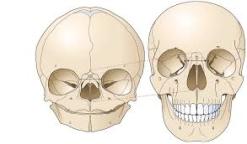
The skull is considered to be an extremely rare fossil, since it is composed of many parts, which fall apart and separate a short time after the animal dies. The average skull is composed of over twenty different parts, not including the teeth, and it has no joints to hold them attached to the rest of the skeleton after the meat has rotted away…
So, how is it possible to know what bone belongs to which dinosaur? It really isn’t that simple…[Emphasis added.]
Currently it is estimated that around 2,100 “good skeletons” have been found, and the number of known species is several hundred (300-500)…researchers often rely on the bone structure of contemporary reptiles and birds, which are the descendants of the dinosaurs and therefore their distant relatives…
Please do not quote parts of this article, but only cite it at its entirety.
For the sake of brevity in my writing I did not quote the above article in its entirety, but I did provide a link so my reader can confirm that the writer of this article never answered any of the questions posed by Hagit.
when it comes to complete dinosaur skeletons, there’s just one. Yes, one…it’s been over a century and a half since it was first uncovered…”and provides many new and unexpected insights concerning the biology of early dinosaurs and their underlying relationships…a shame that the work was not done earlier…”
SUE is the most complete Tyrannosaurus rex skeleton discovered to date, with 250 of the approximately 380 total bones in a T. rex.
What the writer of the above article does reveal is the circular reasoning used by Evolutionists to establish their belief system by substituting the bones of contemporary animals into incomplete fossil skeletons to “prove” that contemporary animals are descended from those extinct animals.

Of the 120 known varieties of sauropod, complete skulls have been found for only eight.
Paleontologists…recovered four skulls of the new species, two of them fully intact. All four skulls belonged to young dinosaurs…
Because they’re so rare, the skulls of the new species, called Abydosaurus mcintoshi, are revealing new information about sauropods in general, including how they ate.
“They didn’t chew their food,” Britt said. “They just grabbed it and swallowed it. The skulls are only one two-hundredths of total body volume and don’t have an elaborate chewing system…”
The new species is named in part after paleontologist Jack McIntosh, who debunked the Brontosaurus in 1975. He exposed the erroneous species as a skeleton with an Apatosaurus body and a Camarasaurus skull.
The following quotes are from scientific articles, not Bible apologists.
So they named a new dinosaur species last week…
Wonder how long this one will last?
News broke last week that paleontologists have determined that a set of bones found in Big Bend back in the 1980s is actually a hitherto unknown type of duck-billed dinosaur…
This caught my attention for a variety of reasons, not the least of which is the fact that whenever I hear of a new species, I can’t help but wonder how scientists can be sure they’ve got it right this time, and how long that new species identification will last.
There’s a reason the dinosaur family tree keeps changing
The 40-year delay implies that paleontologists are much more careful about these things now than they were in the past. In this case, at least part of the delay was due to the fact that the bones were stuck together in a way that kept scientists from properly examining them…
Still, there’s a reason that paleontologists like Jack Horner at the Museum of the Rockies in Bozeman, Montana devote at least part of their time to streamlining the dinosaur family tree.
Horner believes that at least some of the specimens declared in the past to be unique species are in fact juvenile versions of other, already defined dinosaurs. Not everyone agrees, but as even a rudimentary look at the history of paleontology can tell you, the dinosaur family tree is probably a royal mess.
 t doesn’t take a doctoral degree to
 “All birds directly evolved from a group of two-legged dinosaurs known as theropods.
See a rare baby dinosaur curled up in its fossilised egg. One of the most complete dino embryos ever found shows the ancient infant tucked into a position that’s strikingly similar to today’s unhatched chickens.
The embryo is a type of oviraptorosaur—a group of beaked therapod dinosaurs closely related to modern birds that lived about 130 million to 66 million years ago. These creatures share many traits with their avian relatives, and the embryo hints at one more: a curled pre-hatching position.
The infant dino comes from rocks estimated to be roughly 70 million years old, though its precise age remains uncertain.
“The evidence that birds are living theropod dinosaurs is, at this point, overwhelming.”
I’m finding the evidence underwhelming.
That estimated yet confident date OF THE ROCK places it prior to the advent of birds within the Evolutionary schema. This is circular reasoning.
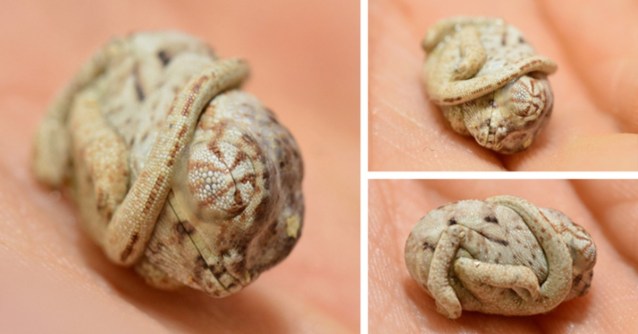
The fossil is also strikingly similar to today’s unhatched lizards. There’s just not much room in the egg to move around, is there?


 Kingdom Come