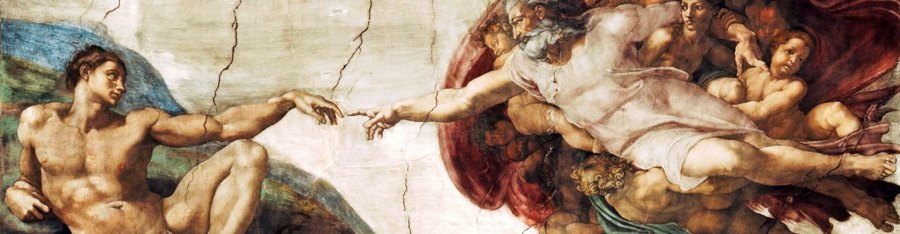
“And God said, Let us make man[kind] in our image, after our likeness: and let them have dominion over all the earth.” (Genesis 1:26)
- “Jesus Christ, who is the faithful witness [proving God’s documented plan for humanity],
- and the first [of many] begotten [heirs of God risen] from the dead,
- and the prince [ruler] of the kings of the earth…
- that loved us, and washed us from our sins in his own blood,
- And hath made us kings and priests unto God [All Power] and [who is also] his Father [Authority and Provider]…for ever and ever;” (Revelation 1:5-6)
Thales (d. ~550 BC) is known as the Father of Science because he used observation, scientific knowledge and logic, developing theories of mathematics, engineering, astronomy and medicine to find explanations for natural phenomena which had previously been attributed to the 12 Olympian gods. At the same time, he did not reject gods, and believed these energy beings were present in everything.
Pythagoras (d. ~500 BC), whose geometry theorem is still one of the most widely used, also contributed to the development of science. Pythagoras believed that souls are immortal.
Parmenides (d. ~450 BC) is considered the father of metaphysics. He believed that real existence could not be perceived through the senses, only through logic and reasoning. His main principle was that “everything is one”. This exactly matches Albert Einstein’s 20th century deduction that energy and mass are the same.
Anaxagoras (d. ~425 BC) argued that nothing can perish, the ingredients of the material world are constantly changing form and everything has a portion of everything. Again, matching Einstein’s Theory of Relativity.
Socrates (d. ~400 BC) is the Greek philosopher with the most profound effect on Western beliefs. Socrates was described as a man of great insight, integrity, self-mastery, and a powerful advocate of the examined life. He described the presence of a “divine sign”, “voice” or simply transliterated: “the daimonion” guiding him in morality and justice, without controlling his choices.
Aristotle, (d. ~325 BC), was one of the greatest figures of Western history. His intellectual range was vast, covering most of the sciences and many of the arts, including biology, botany, chemistry, ethics, history, metaphysics, rhetoric, philosophy of mind, philosophy of science, physics, poetics, political theory, psychology, and zoology. He was the founder of formal logic. Even after the intellectual revolutions of the Renaissance the Reformation and the Enlightenment, Aristotelian concepts remain embedded in Western thinking. In his Metaphysics, which is technically the study of all reality, and thus whether there is any supernatural element to it at all, while Aristotle was critical of traditional ideas of gods, asserting that they are made in man’s image and used by tyrants to subjugate a population, he logically argued for the existence of a divine Prime Mover responsible for the unity and purposefulness of nature.
Plato (d. ~350), the most renown of Socrates’ students, carried forward his teaching that absolute, eternal non-physical entities are more real than the natural world which is patently observed to be constantly deteriorating and changing, and that a proper understanding of the divine nature is essential to human virtue / power / self-mastery and happiness. God’s essential goodness is manifested above all in the cosmic structures created by divine intelligence.
While historians continue to debate when the Renaissance began or whether it began at all, there is no doubt that the style of philosophy was rather different in 1600 than it had been in the middle of the 14th century. There is no single philosopher of this time who compares in importance to Plato, Aristotle, Augustine, and Aquinas, or Descartes, Hume, and Kant; yet the period is significant as the time of transition when the medieval world ceased to be and the modern secular world began.
The word secular is important. The leading thinkers of the Renaissance were for the most part believing, practicing Christians; nevertheless, they contributed to the development of a way of thinking not opposed to theology but no longer in the service of theology. Their problems were still the traditional problems of the Christian tradition: God, man’s immortality, morals, predestination, and free choice, but with a greater emphasis on humanity.
- St. Thomas Aquinas combined faith in God with reason.
- Descartes provided arguments for the existence of God while shaping modern physics.
- Hume was primarily concerned with morality while developing empiricism and skepticism in his theory of knowledge acquired only through experience.
- Kant, the central figure in modern philosophy, held that human reason gives itself the moral law, which is our basis for belief in God, freedom, and immortality. Therefore, scientific knowledge, morality, and religious belief are mutually consistent and secure because they all rest on the same foundation of human autonomy.
These perspectives are all consistent with the biblical mandate to create mankind in God’s likeness and let mankind have dominion (Genesis 1:26)
At this same time, there was a movement of leaders who sought to revitalize European culture by discarding belief in the Bible’s authoritative God and way of life, and returning instead to classical pagan writings with its emphasis on human empowerment to “I will!“. Think Hitler’s Triumph of the Will.
The term humanism was first employed by 19th-century German scholars to designate the Renaissance emphasis on Classical studies consisting of grammar, poetry, rhetoric, history, and moral philosophy. This intellectual basis of the Renaissance movement was based on the Roman statesman Cicero’s concept of humanitas, meaning the development of human virtue in all its forms, to its fullest extent.
In the 19th century education and official writings were still in Latin, so we must understand the term “virtue”, not in the modern English meaning of goodness and morality, but in the Latin meaning “power”, as in “virility” specifically “the inherent power of a god, or other supernatural being. [13th-19th c.]”
Note – there is no study of the physical sciences. This movement is therefore more unscientific than what it seeks to replace.
In fact, it is not scientific at all. Humanism frankly states that it is not seeking to understanding the natural world, but to comprehensively reform culture by discarding what humanists termed the passive and ignorant society of the “dark” religious age into a new order that would reflect and encourage the grandest human potentialities freed from supernatural control.
In other words, transfer power from a supernatural god to human leaders.
Humanism has an evangelical dimension: to project humanitas from the individual into the state at large.
The wellspring of humanitas was Classical literature. Greek and Roman thought, available in a flood of rediscovered or newly translated manuscripts, provided humanism with much of its basic structure and method. Classical thought lacked the inhibiting dualism occasioned in medieval thought by the often-conflicting demands of secularism and Christian spirituality. Classical virtue, in examples of which the literature abounded, was not an abstract essence but a quality that could be tested in the forum or on the battlefield. Finally, Classical literature was rich in eloquence. As an effective means of moving leaders or fellow citizens toward one political course or another, eloquence was akin to pure power. Humanists cultivated rhetoric, consequently, as the medium through which all other virtues could be communicated and fulfilled.
Secular Humanism begins with denial or doubt concerning the existence of anything supernatural—including God—but then goes well beyond that secular stance by positively affirming and valuing the potential of human leaders to be kind, enact justice, solve problems, and make the world a better, safer, greener, and more humane place.
We can’t.
The eminent logician, philosopher, atheist and activist Bertrand Russell believed that what most drives us to action is selfish desire. In his Nobel Prize speech 1950, he proclaims that “all human activity is prompted by desire.”
There is a wholly fallacious theory advanced by some earnest moralists to the effect that it is possible to resist desire in the interests of duty and moral principle. If you wish to know what men will do, you must know not only, or principally, the whole system of their desires with their relative strengths.
His observations recall not only the realpolitik of Machiavelli, but the insights of that most prominent theorist of desire, Sigmund Freud.
Man differs from other animals in one very important respect, and that is that he has some desires which are infinite, which can never be fully gratified, and which would keep him restless even in Paradise.
Russell names four main political desires that cannot be satisfied: Acquisitiveness (“the wish to possess as much as possible), Rivalry (“a much stronger motive”), Vanity (“a motive of immense potency”), and Love of Power (“which outweighs them all”).
We may note the tremendous degree to which all four desires seem actively at work in shaping our current world under President Trump in 2025. All four of these qualities greet us every morning on our smartphones and never let up.
“We secular-humanists are FORCED to rely on each other. Accordingly, we are REQUIRED to have trust in each other — which is actually the noblest of virtues.”
Forced and required are simply softer ways of saying enslaved. This is the noblest of virtues?? Wow! massive Newspeak.
The Netflix series Welcome to Eden is a mesmerizing case study in being forced to trust an unknown entity for your future. There’s lots of sex, which accurately demonstrates one of the most dangerous trust risks we take.


 Kingdom Come