
- Origin – derivation of a source
- Source –
-
The history of ownership of a valued object, or work of art or literature
-
The provenance for any religious text or belief can only be derived from its Author Being
- the Origin of what it describes
- therefore the Autho-rity / Sustainer to prevent degenerate into chaos over time
- therefore the Sustainer of Life throughout eternity after Time ends.
The Written Word Is The Final Authority
In the medical and legal professions where life and death hang in the balance, before a diagnosis like “cancer” or a verdict of “guilty” can be made, the evidence on which the determination has been made has to be documented in writing and presented as proof.

The Bible follows, even more stringently, the same written documentation process. Significantly, the God of the Bible does not expect humans to take anything on blind trust in a revelation – even by himself.
-
“If I bear witness of myself, my witness is not true…Search the scriptures; for in them ye think ye have eternal life: and they are they which testify of me.” (John 5:31-39)
“we have not followed cunningly devised fables..but were eyewitnesses of his majesty…this voice which came from heaven we heard, when we were with him in the holy mount. We have also a more sure word of prophecy…the scripture / written word.” (II Peter 2:16-21)
What is the provenance of the Bible?
There have been complete libraries uncovered containing tens of thousands of documents inscribed on soft clay tablets which were then made virtually imperishable after drying or baking, many dealing with the beginning of the world and the gods’ relations with humanity, dated to at least 3,000 BC, i.e. the biblical era before Noah’s flood, including Adam’s lifetime.
Can we really imagine that the pagans kept historical records and God’s people did not? Can we really imagine that God depends on the written word when he imposes judgment, but didn’t start with Adam?
At the top of each ancient clay tablet was an area called the colophon reserved for inscribing the identifying information about the tablet.

A colophon typically contained the title, source information, the name of the owner of the tablet, and the date, as well as other practical information such as the number of tablets, and disposition of this document. As still followed today.
One famous example of a biblical colophon is the tablet written by God himself.
“the tables were the work of God, and the writing was the writing of God, graven upon the tables.” (Exodus 20:16)
This is an aberration from God’s standard use of human scribes, emphasized as such by repetition, so we have no reason not to recognize the human authors of the book of Genesis as the known “prophets / speakers for” God starting with Adam (Genesis 2), and continuing as “the book” – get it? – of the generations of Adam.” (Genesis 5)
Moses is understood to have written the Reader’s Digest Condensed version of 2,600 years of history. Born during Joseph’s lifetime, he was therefore able to obtain from Joseph all of the tablets passed down and safeguarded by Adam’s heirs through the flood by Noah, Shem, the Hebrews, Abraham, Isaac, and Jacob. During the 40-year wilderness hiatus he had time to compile all these tablets into one account of Beginnings / Genesis.
It is not until then, around 1400 BC, that is stated for the first time that “the LORD spake unto Moses face to face, as a man speaketh unto his friend.” (Exodus 33:11).
As the author of the first five books of the Jewish Torah and the Christian Bible Moses is claimed as a founding prophet of God by the monotheistic religions of Judaism, Christianity, and Islam. Over 50% of world religions base their faith on Mose’s revelations about a Singularity God.
-
Only the biblical account of Creation establishes a thorough social scientific basis for trust with:
-
- Supernatural proof of divine provenance
- Hundreds of prophecies coming true over long passages of time.
- None of its scientific or historical records ever having been proven wrong.
- Statistical proof by Incidence
- Its teachings have been accepted throughout all historical time and cultures.
- Statistical proof by Prevalence
- Its writings have been preserved for thousands of years despite many attempts to destroy them.
- Statistical proof via internal reliability
- Consistent reports in multiple documents written by multiple authors in diverse cultures separated by geography and thousands of years,
- Statistical proof via external validity
- Multiple disciplines in the physical sciences are revealing that the biblical version of creation is scientific, not imaginative.
- An entire literary discipline devoted to discrediting every book in the Bible from Beginnings to The End demonstrate the influence the Bible exerts over those who read it.
- Banning or severely restricting ownership of a Bible by autocratic governments, provides proof that this Word is more powerful than the Sword.
- Supernatural proof of divine provenance
- The Bible remains the best-selling book of all time with an estimated 5 billion copies sold.
- The next-best seller is Quotations from Chairman Mao Tse-Tung, lagging far behind at only 1.1 billion copies, with sales strongly boosted by required purchases among a huge population of Communist Chinese.
- The third ranked is the Quran at 800 million copies, which, as noted above, is based on the Bible, with cultural adaptations, primarily the preeminence of the Arabs over the Jews.
- The fourth and ninth best selling books are by Tolkien – The Lord of the Rings and The Hobbit, based on ancient religious beliefs.
- The fifth is The Little Prince by Saint-Exupery, a spiritualist story about the importance of looking beneath the surface to find the real truth and most importantly, the true meaning of life.
Clearly, humans are drawn to spirituality. Only the Bible reveals how to engage in a relationship with Creator God to permanently benefit from his creative power. Other religions’ writings express knowing about this Creator, but only the Bible documents the process by which we can know him.
-
“we know that we are of God…And we know that the Son of God is come, and hath given us an understanding, that we may know him that is true, and we are in him that is true, even in his Son Jesus Christ. This is the true God, and eternal life.” (I John 5:19-20)
Only the Bible provides a written document as a basis for trust. Religions and secret societies require their followers to place their trust in the intermediary human, AKA priest, regardless of the title he gives himself of pope, pastor, elder, master, etc.
“For we have not followed cunningly devised fables, when we made known unto you the power and coming of our Lord Jesus Christ, but were eyewitnesses of his majesty. For he received from God the Father honour and glory, when there came such a voice to him from the excellent glory, This is my beloved Son, in whom I am well pleased. And this voice which came from heaven we heard, when we were with him in the holy mount. We have also a more sure word of prophecy; whereunto ye do well that ye take heed, as unto a light that shineth in a dark place, until the day dawn, and the day star arise in your hearts…prophecy of the scripture.” (II Peter 1:16-20)
Only the Bible provides a means of validating the truth of his claims through the accuracy of future events coming to pass as predicted, or more accurately, pre-dictated, in the past. Only the Bible demonstrates infallible accuracy over the course of thousands of years. Unlike scientific theories, more properly defined as speculations, which change constantly within a few years and are hotly debated among scientific factions.
“Behold, the former things are come to pass, and new things do I declare: before they spring forth I tell you of them.” (Isaiah 42:9)
“Mathematicians have calculated the odds of Jesus fulfilling only 8 of the [approximately 300] Messianic prophecies as 1 out of 1017 (a 1 followed by 17 zeros).This is equivalent to covering the entire state of Texas with silver dollars 2 feet deep, marking one of them, mixing them all up and having a blindfolded person select the marked one at random the first time –What Are The Odds?”
Creation is the only real basis for trust in the Bible’s author-ity in what it author-izes its authors to report what God did in the past, and said he will do in the future.
Every statement made in the Bible, every theological belief drawn from the Bible, derives its credibility (the virgin birth) and legitimacy (ye must be born again) from the first statement that a pure energy Being brought into being mass and the laws of physics, so can control, all substance and activity.
-
I encourage you to give this book a fair hearing. Ignore the patently hypocritical politicization of Christianity. Put aside what other people have said about it and find out for yourself if there is a reality to a relationship with a powerful hyper-dimensional Being.
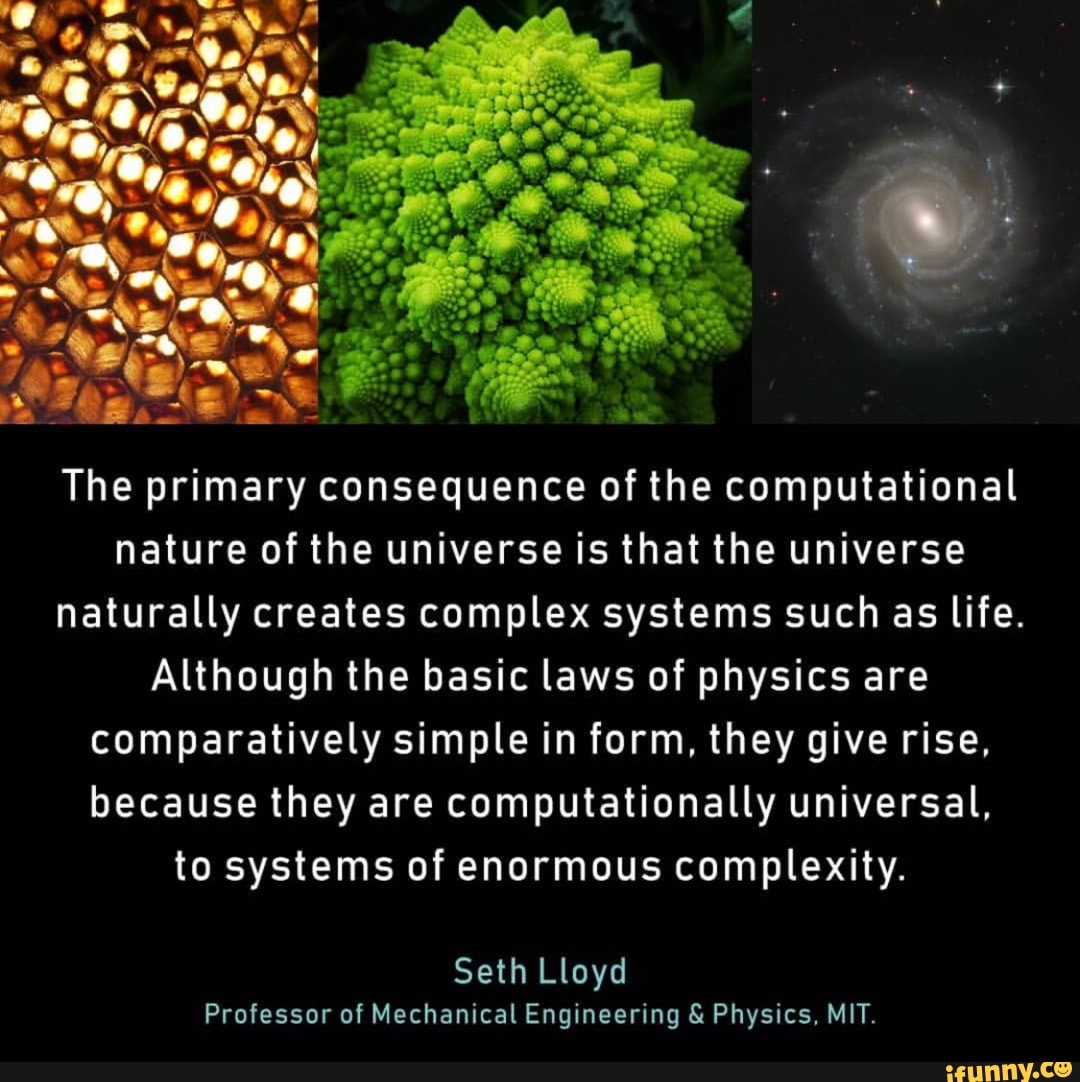
Creation, with its unsearchable complexity and utter mysteriousness of life can be appreciated by every human being from the simplest illiterate hunter-gatherers to the most intelligent physicists and philosophers. Perhaps that is one reason the concept is rejected by elitists who insist on posing as superior to the masses.


 Kingdom Come