
“Think not that I am come to send peace on earth: I came not to send peace, but a sword. For I am come to set a man at variance against his father, and the daughter against her mother, and the daughter in law against her mother in law. And a man’s foes shall be they of his own household.” (Matthew 10:34-36)
Think about that. The household of the scripturally legitimate King of Israel was his cadre of ministers.
Jesus is declaring war on the establishment.
By Jesus’ day both the Aaronic lineage of priests and the Davidic royal dynasty had been supplanted by first the Hasmoneans then the Herodians. If scripture was going to be fulfilled, they had to be replaced.
The Hasmonean dynasty [established by a priest, the brother of Judah nicknamed the Maccabee / the Hammer who led the victorious revolt against foreign rule] …was a ruling dynasty of Judea and surrounding regions during classical antiquity. Between c. 140 and c. 116 BCE the dynasty ruled semi-autonomously from the Seleucids in the region of Judea. From 110 BCE, with the Seleucid Empire disintegrating, the dynasty became fully independent, expanded into the neighbouring regions of Samaria, Galilee, Iturea, Perea, and Idumea, and took the title “basileus” [Greek for “king” or “emperor]. Some modern scholars refer to this period as an independent kingdom of Israel.
The dynasty had survived for 103 years before yielding to the Herodian dynasty in 37 BCE. The installation of Herod the Great (an Idumean) as king in 37 BCE made Judea a Roman client state and marked the end of the Hasmonean dynasty. Even then, Herod the Great tried to bolster the legitimacy of his reign by marrying a Hasmonean princess, Mariamne, and planning to drown the last male Hasmonean heir at his Jericho palace. In 6 CE, Rome joined Judea proper, Samaria and Idumea (biblical Edom) into the Roman province of Iudaea. In 44 CE, Rome installed the rule of a Roman procurator side by side with the rule of the Herodian kings (specifically Agrippa I 41–44 and Agrippa II 50–100).”
“While the Pharisees [judiciary] were gathered together, Jesus asked them, saying, What think ye of Messiah / Christ? whose son is he? They say unto him, The Son of David.” (Matthew 22:41-42)
Legally defensible, but not completely honest. Continuing in Dr. Gibb’s account of history:
Once more the emphasis shifted when the king as priest was challenged by the growing claims of the professional clergy…As a result of what Aage Bentzen calls ‘a sort of “secularisation” of kingship in later pre-exilic periods’, not only did the priests deny certain cultic rights to the king, but, according to Bentzen, even the function of lawgiving became less intimately associated with the Davidic kingship; the priests (that is, the Levites in the Deuteronomic sense) increasingly rivalled the king in this association. Thus we can see that, at the least, the rich meaning of the idea of the king as the son of God tended to fade in practice as time passed…
The Greek era had impacted Israel as much as the pagan nations in eliminating the concept of a national god ruling through his “son” the human representative. For the sake of the commoners, the rulers still gave lip service to Marduk or YHVH or “whoever, yawn” but all the rulers had become secular humanists, full of themselves.
So what the Pharisees / legal experts / scripturally knowledgeable academics left out of their answer was “YHVH reigns supreme through his human representative.” They knew the scriptural answer was “the Son / Representative of YHVH” because the prophecies were clear. Messiah’s credentials preceded David’s.
The reason the King List in Luke 3:23-38 goes all the way back in time to Adam, and not just to David, is to prove that Jesus of Nazareth inherited not only
- the right to rule over Israel from David,
- but also the authority to rule over the whole earth in God’s Kingdom of Heaven and Earth / Creation as Melchizedek / Son of God from Adam.
Jesus’ Melchizedekian role over the whole earth is also expressed in the immediate continuation of Luke’s biography.
“And Jesus returned in the power of the Spirit into Galilee…[That it might be fulfilled which was spoken by Esaias the prophet, saying…Galilee of the Gentiles; The people which sat in darkness saw great light; and to them which sat in the region and shadow of death light is sprung up. From that time Jesus began to preach, and to say, Repent: for the kingdom of heaven is at hand. (Matthew 4:14-17)]
The Spirit of the Lord is upon me, because he hath anointed me to preach the gospel to the poor; he hath sent me to heal the brokenhearted, to preach deliverance to the captives, and recovering of sight to the blind, to set at liberty them that are bruised, To preach the acceptable year of the Lord. And he closed the book, and…began to say unto them, This day is this scripture fulfilled in your ears.” (Luke 4:14-21)
That scripture being:
“The Spirit of the Lord God is upon me; because the LORD / YHVH hath anointed me to preach good tidings unto the meek; he hath sent me to bind up the brokenhearted, to proclaim liberty to the captives, and the opening of the prison to them that are bound; To proclaim the acceptable year of the Lord, and the day of vengeance of our God; to comfort all that mourn…
And strangers shall stand and feed your flocks, and the sons of the alien shall be your plowmen and your vinedressers [instead of the nation of Israel working for the strangers]. But ye shall be named the Priests of the LORD: men shall call you the Ministers of our God: ye shall eat the riches of the Gentiles, and in their glory shall ye boast yourselves [instead of the other way around]…For I the LORD love judgment, I hate robbery for burnt offering; and I will direct their work in truth, and I will make an everlasting covenant with them…so the Lord God will cause righteousness and praise to spring forth before all the nations.” (Isaiah 61)” (Isaiah 61)
We must recognize that this is calling out to the entire nation of Israel. This is a reprise of the initial offer at Mount Sinai through Melchizedek Moses.
“And Moses went up unto God, and the LORD called unto him out of the mountain, saying, Thus shalt thou say to the house of Jacob, and tell the children of Israel…
- if ye will obey my voice / commandments indeed, and keep my covenant,
- then ye shall be…unto me a kingdom of priests, and an holy nation.
And all the people answered together, and said, All that the Lord hath spoken we will do.” (Exodus 19:3-8)en
Which we all know didn’t happen, so replay under this everlasting covenant.
YHVH’s coming King of Israel was no other than Moses’ replacement, the Melchizedek Prophet-Priest-King of the whole earth,
He was the whole package of Son of God supreme and total authority like the original kings were, eliminating the power structure of the government officials.
“The sceptre shall not depart from Judah, nor a lawgiver from between his feet, until Shiloh come; and unto him shall the gathering of [all] the people be [not just the one nation].” (Genesis 49:10)
“And the LORD said unto me…I will raise them up a Prophet from among their brethren, like unto thee and will put my words in his mouth; and he shall speak unto them all that I shall command him. And it shall come to pass, that whosoever will not hearken unto my words which he shall speak in my name, I will require it of him.” (Deuteronomy 18:16-19)
“For the LORD is our judge, the Lord is our lawgiver, the Lord is our king; he will save us.” (Isaiah 33:22)
With this background information, we can best understand the open hostility in the exchanges between Jesus and the Pharisees / lawyers.
“Then spake Jesus to the multitude, and to his disciples, Saying The scribes and the Pharisees sit in Moses’ seat [i.e. in MY seat!]…
- they bind heavy burdens and grievous to be borne, and lay them on men’s shoulders; but they themselves will not move them with one of their fingers…
- all their works they do for to be seen of men…And love the uppermost rooms at feasts, and the chief seats in the synagogues, And greetings in the markets, and to be called of men, Rabbi, Rabbi.
- But be not ye called Rabbi: for one is your Master, even Christ [that’s ME, folks!]…
- Neither be ye called masters: for one is your Master, even Christ / ME!…
- But woe unto you, scribes and Pharisees, hypocrites! for ye shut up the kingdom of heaven against men: for ye neither go in yourselves, neither suffer ye them that are entering to go in…
- Woe unto you, scribes and Pharisees, hypocrites! for ye devour widows’ houses, and for a pretence make long prayer: therefore ye shall receive the greater damnation…
- Woe unto you, scribes and Pharisees, hypocrites! for ye compass sea and land to make one proselyte, and when he is made, ye make him twofold more the child of hell than yourselves…
- Woe unto you, ye fools and blind guides…
- Woe unto you, scribes and Pharisees, hypocrites! for ye pay tithe of mint and anise and cummin, and have omitted the weightier matters of the law, judgment, mercy, and faith: these ought ye to have done, and not to leave the other undone…
- Woe unto you, scribes and Pharisees, hypocrites! for ye make clean the outside of the cup and of the platter, but within they are full of extortion and excess…
- Woe unto you, scribes and Pharisees, hypocrites! for ye are like unto whited sepulchres, which indeed appear beautiful outward, but are within full of dead men’s bones, and of all uncleanness.
- Woe unto you, scribes and Pharisees, hypocrites! because ye build the tombs of the prophets, and garnish the sepulchres of the righteous…ye are the children of them which killed the prophets..Fill ye up then the measure of your fathers.
- Ye serpents, ye generation of vipers, how can ye escape the damnation of hell?…(Matthew 23)
The Pharisees, who we often think of as Jesus’ opponents, were in fact the fundamentalist Bible-believers of the day. Many searched the scriptures in search of the truth of Jesus’ claims that he was the fulfillment of prophecy. The writer of Hebrews, unquestionably a Pharisee given his knowledge of the law, figured out what Jesus was claiming.
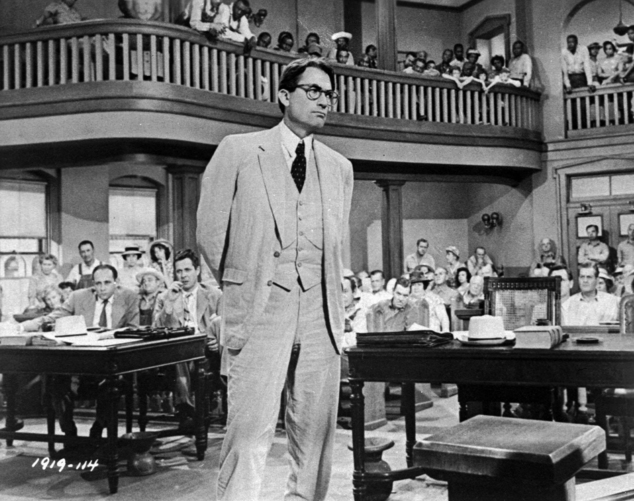
Hebrews is a legal defense of Jesus’s claim to be, not just the king of Israel, but the Melchi-zedek, righteous human ruler of all creation. Visualize a lawyer delivering his opening argument in a courtroom filled with biased opponents and oppressed people yearning to breathe free.
“God, who at sundry times and in divers manners spake in time past unto the fathers by the prophets, hath in these last days spoken unto us by his Son, whom he hath appointed heir of all things…
For unto which of the angels said he at any time, Thou art my Son, this day have I begotten thee? And again, I will be to him a Father, and he shall be to me a Son…unto the Son [of David] he saith, Thy throne, O God, is for ever and ever: a sceptre of righteousness is the sceptre of thy kingdom. Thou hast loved righteousness, and hated iniquity; therefore God, even thy God, hath anointed thee with the oil of gladness above thy fellows…
But to which of the angels [i.e. ancient gods like Enki or Zeus] said he at any time, Sit on my right hand, until I make thine enemies thy footstool?” (Hebrews 1:1-13)
One of the most significant issues Jesus and his followers were dealing with is that the praiseworthy revolt by devout Levitical priests against the false king Antiochus Epiphenes turned into a coup d’etat against the true king Melchizedek. This is the historical context that the writer obviously has in mind in the following passage.
- “For every high priest taken from among men is ordained for men in things pertaining to God, that he may offer both gifts and sacrifices for sins: Who can have compassion on the ignorant, and on them that are out of the way; for that he himself also is compassed with infirmity. And by reason hereof he ought, as for the people, so also for himself, to offer for sins. And no man taketh this honour unto himself, but he that is called of God, as was Aaron. So also Messiah / Christ glorified not himself to be made an high priest; but he that said unto him, Thou art my Son, to day have I begotten thee. [Don’t miss that! The Son of God as the likeness of God, is God’s representative AKA the high priest.] As he saith also in another place, Thou art a priest for ever after the order of Melchisedec.” (Hebrews 5:1-6)
- “Called of God an high priest after the order of Melchisedec. (Heb 5:10)
- “Whither the forerunner is for us entered, even YHWH’s Savior / Jesus, made an high priest for ever after the order of Melchisedec.” (Hebrews 6:10)
- “If therefore perfection were by the Levitical priesthood, (for under it the people received the law,) what further need was there that another priest should rise after the order of Melchisedec, and not be called after the order of Aaron?” (Hebrews 7:11)
- “For he testifieth, Thou art a priest for ever after the order of Melchisedec.” (Heb 7:17)
- “(For those priests were made without an oath; but this with an oath by him that said unto him, The LORD sware and will not repent, Thou art a priest for ever after the order of Melchizedek:)” (Heb 7:21)
- “For the law maketh men high priests which have infirmity; but the word of the oath, which was since the law, maketh the Son, who is consecrated for evermore.“ (Hebrews 7:28)
“The oath” is the evidence that the lawyer pulls out with a flourish as the ultimate proof of the validity of Jesus’ claim. This only has legal proof in this court case because the documents in which it is found had already been accepted into evidence as being the Word of God, inspired scripture, TRUTH. Where is this oath? Originally relayed to David by the prophet Nathan in II Samuel 7, in Psalm 89 quoted above, and again in Psalm 132.
“Arise, O LORD, into thy rest; thou, and the ark of thy strength. Let thy priests be clothed with righteousness; and let thy saints shout for joy. For thy servant David’s sake turn not away the face of thine anointed.
The Lord hath sworn in truth unto David; he will not turn from it; Of the fruit of thy body will I set upon thy throne.
For the LORD hath chosen Zion; he hath desired it for his habitation. This is my rest for ever: here will I dwell; for I have desired it…
I will also clothe her priests with salvation: and her saints shall shout aloud for joy. There will I make the horn of David to bud. [David’s offspring]…His enemies will I clothe with shame: but upon himself shall his crown flourish.” (Psalm 132:8-18)


 Kingdom Come