
As with the resolution of the many Unsolved Mysteries, the advent of genetic analysis has allowed scientists to determine that hybridization was practiced by the earliest civilization in Mesopotamia.
The genetic identity of the earliest human-made hybrid animals, the kungas of Syro-Mesopotamia
SCIENCE ADVANCES • 14 Jan 2022 • Vol 8, Issue 2 • DOI: 10.1126/sciadv.abm0218
[I]in the late third millennium BCE, contemporary cuneiform tablets and seals document intentional breeding of highly valued equids called kungas for use in diplomacy, ceremony, and warfare. Their precise zoological classification, however, has never been conclusively determined. Morphometric analysis of equids uncovered in rich Early Bronze Age burials at Umm el-Marra, Syria, placed them beyond the ranges [i.e. larger than] reported for other known equid species.

We sequenced the genomes of one of these ~4500-year-old equids, together with an ~11,000-year-old Syrian wild ass (hemippe) from Göbekli Tepe and two of the last surviving hemippes. We conclude that kungas were F1 hybrids between female domestic donkeys and male hemippes, thus documenting the earliest evidence of hybrid animal breeding.
Biblical Cherubim and other heavenly beings described with compost human-animal features bear such striking similarities to the mythical creatures in pagan religions that it must be considered that each account validates the others.

Ancient carvings of cherubim by Assyrians, Babylonians and Syrians all depict cherubim as guards of the tree of life, just as reported Genesis 3, as well zoomorphic features described in Ezekiel and Revelation – man, calf, eagle and lion.
…they had
- the hands of a man under their wings…
- the face of a man,
- and the face of a lion,
- and the face of an ox…
- the face of an eagle…
This is the living creature that I saw under the God of Israel…they were the cherubims.” (Ezekiel 1:10, 10:10-20)
“…and in the midst of the throne, and round about te throne, were four beasts [i.e. unknown species of living creature, similar to but different from Ezekiel’s description of cherubim]…
- And the first beast was like a lion,
- and the second beast like a calf,
- and the third beast had a face as a man, and the fourth beast was like a flying eagle.
And the four beasts had each of them six wings about him…(Revelation 4:6-8)
The amatory adventures of the Roman gods under the outward semblance of animals – i.e. the hyper dimensional spirit inserted into and controlling the animal – cannot but be regarded with the suspicion that an undercurrent of truth runs through the fable, when the general laxity of morals of that age is taken into account.
- Jupiter…under the form of a bull…an eagle…a swan…a speckled serpent…a satyr (half man, half goat),
- Neptune transformed into a fierce bull, raped Canace; he changed…himself into a ram, and begat on [another woman] the ram with the golden fleece. As a horse he had connection…took the form of a bird…as a dolphin.
- Saturn begat the centaur (half man, half horse) Chiron on Phillyra whilst he assumed the appearance of a horse;
- and many more examples could be added to the list.

Most of the Egyptian gods were represented as combination animal and human. Determinedly materialistic modern anthropologists doing their best to eliminate spirituality from history claim that the ancient artists were attempting to portray abstract concepts like fertility. The historic reality is concrete.
Like the Egyptians, the Canaanite gods have hybrid features.
“it came to pass, when Solomon was old, that his wives turned away his heart after other gods…For Solomon went after
 Ashtoreth
apparently 100% hyper dimensional being, identified as both male and female- Milcom the abomination of the Ammonites often connected with bull imagery.
- Chemosh, the abomination of Moab
- Molech, the abomination of the children ofAmmon. “Moloch” has been figuratively used in reference to a person or a thing which demands or requires a very costly sacrifice.(I Ki 10:23-24, 11:1-9)

 “
“
We should take these accounts at face value – that through hybridization the gods produced earthly beings that were more similar in appearance to their own hyperdimensional appearance, which their spirits could most comfortably indwell and control for their evil machinations against mankind.
Since hyper dimensional beings are immortal – changeless – they are incapable of meiosis – half of the chromosomes in a cell dying off to create a gamete (N) that combines with a different gamete (N) to procreate an entirely new individual with the same number of chromosomes (2N) as, and mixed features of, the parents.
Hybridization is the hyperdimensionals’ work-around.
As it happens, even on earth meiosis does not have to occur with each partner. Parthenogenesis is a reproductive strategy that involves development of a female (rarely a male) gamete (sex cell) without fertilization. resulting in unisexual species, i.e all the members of that species are female.
And polyploidy is also a common variation on the usual pairing of 2N, diploid, number of chromosomes in a functional cell.

Polyploidy actually occurs naturally in certain human tissues – liver, heart muscle, bone marrow and the placenta – where the additional genes expand the production capability, as in a wartime factory, to quickly and continuously reproduce certain tissues which are most needed to regenerate during routine rapid cell turnover and acute injury reconstruction.
In unisexual salamanders different levels of polyploidy are a result of multiple hybridization events, involving two to four species.[4] Ambystoma nothagenes is a unisexual, triploid hybrid of Ambystoma laterale, Ambystoma texanum and Ambystoma tigrinum. Mole salamanders (mostly triploids) are all female and reproduce by kleptogenesis,[45] “stealing” spermatophores from diploid males of related species to trigger egg development but not incorporating the males’ DNA into the offspring. Mature egg cells are produced by mitotic divisions, and these cells directly develop into embryos.
 In order for a species to perpetuate, there must be females because only the female’s gamete, the egg cell, maintains possession of mitochondria, the power generators essential for energizing the division of the single cell into billions of newly differentiated and incredibly organized cells. In the sperm cell, the power-producing mitochondria are in the tail section to provide mobility, and are discarded at the end of the ride once the fuselage delivers the chromosomes to the egg.
In addition, our experience with cloning has taught us that only the egg cell is programmed to accept and use DNA differently from the stem cell from which the egg was developed.
While a hyper dimension being is capable of reproducing through stem cells that function as a diploid egg cell independently of the parent body, like reptile eggs in water or a bird’s egg, or through the process of budding while still attached to the parent body, like Zeus is reported to have accomplished, only a mortal female is capable of accepting a single microscopic cell into her uterus that through a process involving constant turnover of cells, i.e. death and regeneration develop into billions of highly specialized cells coordinated to work together seamlessly in a new organism.

And this is where the mysterious power of the woman is revealed. Women are essential for the natality that makes new beginnings possible. This is one reason why Messiah is called “the seed of the woman.”
While ignoring the highly speculative and scientifically unsubstantiated dating of some of the findings, support for the Genesis account of angel/human hybridization is found in all sources of ancient history.
- Ancient legends around the world
- Ancient pagan religious practices like hieros gamos – sexual intercourse between a divine being and a human. While this was – and is – thought to be exploited by humans for their own benefit, it is more credible to track this practice back to a time when it was a reality for the gods’ benefit.
- Paleontology
- Archeology
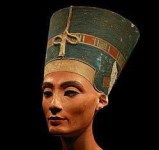
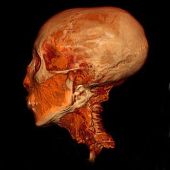 Elongated skulls, allowing for a much larger brain and therefore greater intellectual and possibly even paranormal abilities, may be one evidence of cross-breeding humans with angels. Some of the Egyptian royals has been determined to have elongated skulls, leading to the speculation that the signature elongated Egyptian headdress was originally designed for such skulls.
This and other angelic traits would have been genetically diluted out of existence by successive generations of human breeding once further infusions of angelic genes were taken out of play. The loss of prized traits could be countered by inbreeding, and this is what is found in royal dynasties from ancient through modern times.

Even after the actual genes were gone, the association of elongated heads with the royal hybrids is likely the reason for the practice of head-binding infants, found in cultures all around the world.


 Kingdom Come