
After Moses the Levite dies he is succeeded by Joshua the Ephrathite who leads the newly constituted nation of Israel into the Promised land. He is succeeded by a variety of tribal leaders within the scattering and burgeoning twelve tribes.
“And Joshua the son of Nun, the servant of the LORD, died, being an hundred and ten years old…And also all that generation were gathered unto their fathers: and there arose another generation after them, which knew not the LORD, nor yet the works which he had done for Israel.“
Ironically, the social peace brought about by following God’s ways, which by natural law allows prosperity, by human nature relaxes one’s reliance on God, promotes a prideful conviction of achievement by one’s one efforts with a sense of entitlement and results in a cycle of domestic violence on a grand scale.
If you’ve ever poured your life into improving someone else’s only to have them put you down, you’ll understand how God feels.
“And the children of Israel did evil in the sight of the LORD, and…forsook the LORD God of their fathers, which brought them out of the land of Egypt, and followed…the gods of the people that were round about them…
- the Canaanites,
- Hittites,
- Amorites,
- Perizzites,
- Hivites,
- Jebusites:
And they took their daughters to be their wives, and gave their daughters to their sons, and served their gods…Therefore the anger of the LORD was hot against Israel:
And the anger of the LORD was hot against Israel, and he delivered them into the hands of spoilers that spoiled them, and he sold them into the hands of their enemies round about, so that they could not any longer stand before their enemies.” (Judges 2)
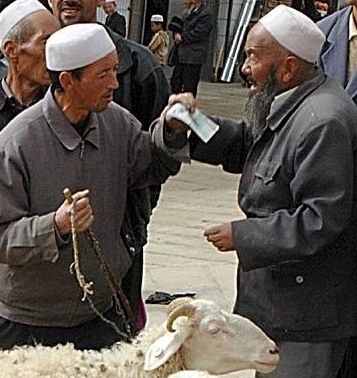 When you read “sold” don’t think fixed prices in a modern department store. In that time everywhere, and in that culture even now, selling means bargaining.
“Bargaining is an integral part of most Middle Eastern cultures…The key to being good at bargaining is understanding what purpose it serves – it is not about money… – but more about building relationships.”
When God “delivered” and “sold” his people to the enemy he was engaging in negotiations like those transacted by Chamberlain with Hitler to minimize the damage to his people!

Despite God’s people rejecting him, he never rejects them, but stays on the sideline waiting for his people to return to him after they’re hurting enough to call out for his help.
“For the LORD thy God is a merciful God); he will not forsake thee, neither destroy thee, nor forget the covenant of thy fathers which he sware unto them.” (Deuteronomy 4:31)
“And when the children of Israel cried unto the LORD, the LORD raised up a deliverer to the children of Israel, who delivered them.” (Judges 3:9)
-
Othniel the son of Kenaz, Caleb’s younger brother went out to war against Chushanrishathaim king of Mesopotamia.
-
Ehud the son of Gera, a Benjamite, assassinated Eglon the very fat king of Moab with trickery, being left-handed.
-
Shamgar the son of Anath, which slew of the Philistines six hundred men with an ox goad:
-
Deborah, a prophetess, the wife of Lapidoth, she judged Israel at that time. She called Barak the son and said the LORD will deliver Sisera, the captain of the army of Jabin, king of Canaan, with his chariots and multitude into thine hand. And Barak said unto her, If thou wilt go with me, then I will go: but if thou wilt not go with me, then I will not go. And she said [what a waste of pants,] the LORD shall sell Sisera into the hand of a woman. Jael the wife of Heber the Kenite hid Sisera in her tent then drove a tent spike through his head as he slept.
-
Gideon, called Jerubbaal because he threw down Baal’s altar and delivered God’s people against a host of Midianites and the Amalekites and the children of the east with only 300 men shouting “The sword of the LORD and of Gideon!”
-
Tola a man of Issachar judged / was warlord over Israel twenty and three years
-
Jair, a Gileadite, judged Israel twenty and two years.
-
Jephthah the Gileadite who smote twenty cities with a very great slaughter and subdued the children of Ammon.
-
Ibzan of Bethlehem judged Israel.
-
Elon, a Zebulonite, judged Israel ten years.
-
Abdon a Pirathonite judged Israel.
- Last, but not least, Samson who slew about 3,000 Philistines at once at his death alone, more than he slew in his life.
“In those days there was no king in Israel: every man did that which was right in his own eyes.”
There was, however, the Levitical priesthood, established at Mount Sinai. This is another inherited position specific to Israel, supporting the king, laying the groundwork for the implementation of the joint Priest-King position granted to the One Chosen to be Melchizedek over the whole world.
“take thou unto thee Aaron thy brother, and his sons with him, from among the children of Israel, that he may minister unto me in the priest’s office, even Aaron, Nadab and Abihu, Eleazar and Ithamar, Aaron‘s sons.” (Exodus 28:1)
“And Nadab and Abihu died before the LORD, when they offered strange fire before the LORD.” (Numbers3:4),
As a point of interest, Moses had two sons but they could not be assigned inheritance from Moses because his Melchizekian vs Levitical priesthood is a chosen, i.e. elected position based on merit – earned leadership, not inherited. Moses’ sons are included in the general category of Levites set apart at Mount Sinai and organized by King David.
“Now the Levites were numbered from the age of thirty years and upward…
- to set forward the [house]work of the house of the LORD,
- officers and judges:
- porters
- to praise the Lord with the instruments which I made, said David
And David divided them into courses among the sons of Levi, namely, Gershon, Kohath, and Merari.” (I Chronicles 23)
“And the LORD said unto Moses, Whosoever hath sinned against me, him will I blot out of my book.” (Exodus 32:33) and “For unto whomsoever much is given, of him shall be much required:” (Luke 12:48)
Taken at face value, Nadab and Abihu were “blotted out of the book”, as was Eli, who own lineage is not documented and his sons were executed
Eli was a negligent father and, worse.
“Now the sons of Eli were sons of Belial; they knew not the LORD. And the priest’s custom with the people was, that, when any man offered sacrifice, the priest’s servant came…give it me now: and if not, I will take it by force. Wherefore the sin of the young men was very great before the LORD: for men abhorred the offering of the Lord…Now Eli was very old, and heard all that his sons did unto all Israel; and how they lay with the women that assembled at the door of the tabernacle of the congregation. And he said unto them, Why do ye such things?… And there came a man of God unto Eli, and said unto him, Thus saith the LORD, Did I plainly appear unto the house of thy [fore]father [Aaron]…And did I choose him out of all the tribes of Israel to be my priest, to offer upon mine altar, to burn incense, to wear an ephod before me? and did I give unto the house [descendants] of thy father all the offerings made by fire of the children of Israel? Wherefore…honourest thy sons above me, to make yourselves fat with the chiefest of all the offerings of Israel my people?
Wherefore the LORD God of Israel saith…them that honour me I will honour, and they that despise me shall be lightly esteemed. Behold, the days come, that I will cut off thine arm, and the arm of thy father’s house, that there shall not be an old man in thine house…all the increase of thine house shall die in the flower of their age. And this shall be a sign unto thee, that shall come upon thy two sons, on Hophni and Phinehas; in one day they shall die both of them.
And I will raise me up a faithful priest, that shall do according to that which is in mine heart and in my mind: and I will build him a sure house; and he shall walk before mine anointed for ever.” (I Samuel 2)
And that is Samuel. Note, he is a Melchizedek from the tribe of Ephraim, not a Levite.
Once again, as with Moses’s mother, we really have to give credit to Hannah for her part in him becoming the extraordinary man he became.
“Now there was a certain,,,Ephrathite: And he had two wives; the name of the one was Hannah…And this man loved Hannah: but the LORD had shut up her womb…And she was in bitterness of soul, and prayed unto the LORD, and wept sore. And she vowed a vow, and said, O Lord of hosts, if thou wilt indeed look on the affliction of thine handmaid, and remember me, and not forget thine handmaid, but wilt give unto thine handmaid a man child, then I will give him unto the LORD all the days of his life.” (I Samuel 1)
“And [the child] Samuel grew, and the LORD was with him, and did let none of his words fall to the ground [fail to come to pass]. And all Israel from Dan [northern border] even to Beersheba [southern border] knew that Samuel was established to be a prophet of the LORD.“ (I Samuel 3:19-21)
During Samuel’s rule, the primary enemy was the dreadnaught Philistines, in battle after battle after battle.

“And the Philistines put themselves in array against Israel: and when they joined battle, Israel was smitten before the Philistines:” (I Samuel 4:2)
This drove the people of Israel to insist on a king to lead them in battle during war and enhance their prosperity during peace.
“all the elders of Israel gathered themselves together, and came to Samuel unto Ramah. And said unto him, Behold, thou art old, and thy sons walk not in thy ways: now make us a king to judge us like all the nations…And the LORD said unto Samuel…hearken unto their voice: howbeit yet protest solemnly unto them, and shew them the manner of the king that shall reign over them.” ( I Samuel 8)
Judah was destined for kingship, but the 10 generation hiatus was not yet completed. Judah had taken Benjamin under his protection, and that relationship had remained close, with the tribe of Judah effectively amalgamating into Judah. So it makes sense that, barring the tribe of Judah, the first king came from the tribe of Benjamin.
“Samuel also said unto Saul, The LORD sent me to anoint thee to be king over his people, over Israel: now therefore hearken…Thus saith the LORD of hosts / armies, I remember that which Amalek did to Israel…
Now go and smite Amalek, and utterly destroy all that they have, and spare them not…[and] ox and sheep, camel and ass.
But Saul and the people spared Agag [undoubtedly to ransom, or force a military alliance benefitting Israel] and the best of the sheep, and of the oxen, and of the fatlings, and the lambs, and all that was good [again the profit motive], and would not utterly destroy them: but every thing that was vile and refuse, that they destroyed utterly.
- Problem #1, rebellion / disobedience: And Samuel came to Saul…Wherefore then didst thou not obey the voice of the LORD?
- Problem #2, stubbornly denying he did wrong, which is even worse, because we can be forgiven and restored only when we confess our sin. And Saul said unto Samuel, Yea, I have obeyed the voice of the Lord, and have gone the way which the Lord sent me…
- Problem #3, blame shifting: But the people took of the spoil, sheep and oxen, the chief of the things which should have been utterly destroyed,
- Problem #4, dissociating himself from God: and have brought Agag the king of Amalek to sacrifice unto the LORD thy – THY!!! – God in Gilgal.
And Samuel said…rebellion is as [equal to] the sin of witchcraft, and stubbornness is as iniquity and idolatry. Because thou hast rejected the word of the LORD, he hath also rejected thee from being king…The LORD hath rent the kingdom of Israel from thee this day, and hath given it to a neighbour of thine, that is better than thou.” (I Samuel 15)
“Then Saul, (who is also called Paul)..said, Men of Israel, and ye that fear God, .give audience. The God of this people of Israel…gave unto them Saul the son of Cis, a man of the tribe of Benjamin, by the space of forty years. And when he had removed him, he raised up unto them David to be their king… ” (Acts 13)
I can’t help but sidebar here to note that the Apostle Paul had a reason for mentioning his namesake King Saul in his first recorded sermon. Being from the same tribe of Benjamin, he may have been a direct descendant. He certainly was named after him, and had much in common with him. It does lead me to wonder if both Paul and God didn’t have a soft spot in his heart for King Saul. Certainly Samuel did. For certain God must have mourned being forced to set Jonathan aside.
Perhaps, a thousand years later, Jesus recruited Saul of Tarsus so persistently in order to restore kingship to this family, and to once again enjoy the eternal love that his Spirit had experienced in David with Jonathan, surviving through the ages in their descendants. This concept is nicely presented in the movie Cloud Atlas.


 Kingdom Come