
“I will raise them up a Prophet from among their brethren, like unto thee, and will put my words in his mouth; and he shall speak unto them all that I shall command him.” (Exodus 19:3-6, 32:1; Deuteronomy 18:15-16)
The King James Bible capitalizes “Prophet” in this passage, suggesting that Jesus Christ is the single person being referenced here. But none of the ancient languages used capital letters, so that is a late-date interpreter’s imposition.
True, Jesus the Christ is targeted here, as detailed in the New Testament.
“Jesus Christ, which before was preached unto you…which God hath spoken by the mouth of all his holy prophets since the world began. For Moses truly said unto the fathers, A prophet shall the Lord your God raise up unto you of your brethren, like unto me; him shall ye hear [as in “Hear! Hear!” – be in agreement] in all things whatsoever he shall say unto you.” (Acts 3:20-22)
But we can’t overlook the mention in the same breath of
“all the prophets from Samuel and those that follow after, as many as have spoken, have likewise foretold of these days when…” (Acts 3:23).
So we can’t understand “the days” of Jesus without first being grounded in the prophets.
“We have found him, of whom Moses in the law, and the prophets, did write,” (John 1:45)
Heads up. There is more than one iteration of The Prophet Like Moses.
Moses’ first successor is easy to spot. He was personally trained and anointed by Moses.
“And Joshua the son of Nun was full of the spirit of wisdom; for Moses had laid his hands upon him:” (Deuteronomy 34:9)
He was the logical choice, being a ruler of the tribe of Ephraim, who very possibly knew his famous forefather Melchizedek Joseph. In any case, he would certainly have known of his heritage, which was Jacob’s Melchizedekian blessing on Ephraim and his offspring,
Each of Moses’ successors is recognizable by his likeness to Moses as “the same did God send to be a ruler / Melchizedek and a deliverer / savior” (Acts 7:35) by, most essentially, hauling them back from the sin that inexorably led to the oppression.
Their weapon was the same sound energy that God used to create the world and will use to destroy it.
“Repent; or else I will come unto thee quickly, and will fight against them with the sword of my mouth.” (Revelation 2:16)
Another recognizable likeness to Moses is the reliability of his word coming to pass.
“And it SHALL come to pass, that whosoever will not hearken unto my words which he shall speak in my name, I will require it of him.” (Deuteronomy 18:19)
“But the prophet, which shall presume to speak a word in my name, which I have not commanded him to speak, or that shall speak in the name of other gods, even that prophet shall die. And if thou say in thine heart, How shall we know the word which the LORD hath not spoken? When a prophet speaketh in the name of the LORD, if the thing follow not, nor come to pass, that is the thing which the LORD hath not spoken, but the prophet hath spoken it presumptuously: thou shalt not be afraid of him.” (Deuteronomy 18:18-22)
Can we not recognize Melchizedek David is following in Moses’ steps?
“Cast me not away from thy presence; and take not thy holy spirit from me. Restore unto me the joy of thy salvation; and uphold me with thy free spirit. Then will I teach transgressors thy ways; and sinners shall be converted unto thee.” (Psalm 51:9-13)
Isaiah’s style of writing reveals a well-educated background. “For versatility of expression and brilliance of imagery Isaiah had no superior, not even a rival. His style marks the climax of Hebrew literary art” (“Isaiah,” vol. II, p. 885). The style of writing of epigrams, metaphors, interrogation, dialogue, hyperbole and parables “characterize[s] Isaiah’s book as the great masterpiece of Hebrew literature” (ibid.).
- the Lord Jehovah is my strength and my song; he also is become my salvation.” (Isaiah 12:2)
- this is our God…the LORD; we have waited for him, we will be glad and rejoice in his salvation.” (Isaiah 25:1-9)
- Israel shall be saved in the Lord with an everlasting salvation: ye shall not be ashamed nor confounded world without end…there is no God else beside me; a just God and a Saviour; there is none beside me. Look unto me, and be ye saved, all the ends of the earth: for I am God, and there is none else.” (Isaiah 45:17-23)
Isaiah successfully kept the nation of Judah from being conquered by Tiglathpileser of Assyria even after King Ahaz had everything prepared in readiness for the man of sin, the son of perdition, to sit himself in the temple of God, showing himself to be God.
Like the names Jezebel, Joshua, Jesus and, occasionally Jehovah / YHVH, the name Isaiah could have been changed when the letter “J” was incorporated into English in 1633 (after the 1611 King James Bible.)
If it had, the comparison with the name Jesus would have been more obvious.
The noun and verb portions of the name/attribute are simply reversed. Perhaps, as in English, the reason is to emphasize one over the other. – “who” vs “what”, but the message is unchanged.
Jesus = Iēsoús the Greek transliteration of the Hebrew term, 3091 “Yeho-shua”/Jehoshua, contracted to Ye-shua / Joshua which means “Yahweh saves.”
The New Testament opens with a clear match between Isaiah and Jesus.
- “The LORD hath called me [Isaiah] from the womb; from the bowels of my mother [quoting David] hath he made mention of my name...(Isaiah 49:1)
- Fear not, Mary: for thou hast found favour with God. And, behold, thou shalt conceive in thy womb, and bring forth a son, and shalt call his name Jesus…for he shall save his people from their sins. Now all this was done, that it might be fulfilled which was spoken of the Lord by the prophet…Behold, a virgin shall conceive, and bear a son, and shall call his name Immanuel…which being interpreted is, God with us.” (Luke 1:30-35, Matthew 1:21-23, Isaiah 7:14)
Jesus himself makes the unequivocal connection between himself and Isaiah.
- The Spirit of the Lord God is upon me; because the LORD hath anointed me to preach good tidings unto the meek; he hath sent me to bind up the brokenhearted, to proclaim liberty to the captives, and the opening of the prison to them that are bound; To proclaim the acceptable year of the LORD.“ (Isaiah 61:1-6)
- “Now when all the people were baptized, it came to pass, that Jesus also being baptized…And Jesus returned in the power of the Spirit into Galilee…and, as his custom was, he went into the synagogue on the sabbath day, and stood up for to read. And there was delivered unto him the book of the prophet Esaias. And when he had opened the book, he found the place where it was written, The Spirit of the Lord is upon me, because he hath anointed me to preach the gospel to the poor; he hath sent me to heal the brokenhearted, to preach deliverance to the captives, and recovering of sight to the blind, to set at liberty them that are bruised, To preach the acceptable year of the Lord. And he began to say unto them, This day is this scripture fulfilled in your ears.” (Luke 4:16-21)
None of the other prophets besides Isaiah were successful in bringing about deliverance during their tenure. Not even Jesus. So, the intervention is always – always – chastisement of his people.
Hosea, during the same time frame as Isaiah:
- “I will no more have mercy upon the house of Israel; but I will utterly take them away….But I will have mercy upon the house of Judah, and will save them by the LORD [because he is still] their God…
- Yet…in the place where it was said unto them, Ye are not my people, there it shall be said unto them, Ye are the sons of the living God.” (Hosea 1)
Joel, prophesying of the terrible day of vengeance:
“Blow ye the trumpet in Zion, and sound an alarm in my holy mountain: let all the inhabitants of the land tremble: for the day of the Lord cometh…the LORD shall utter his voice before his army: for HIS camp is very great: for HE is strong that executeth his word: for the day of the LORD is great and very terrible; and who can abide it? (Joel 1)
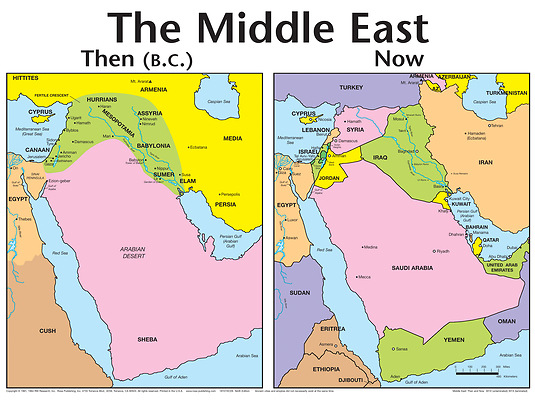 Amos, a nobody herdsman who transformed what could have been a brain-numbing and soul-devastating experience during World War in his day – by staying his heart, soul and mind on the LORD. History repeats itself, in case you haven’t noticed. Read Amos and see if anything he reports sounds familiar to us in our day. The following is my personal identification of current nations based on geography and political actions.
- Syria: “because they have threshed Gilead with threshing instruments of iron: the people of Syria shall go into captivity unto Kir, saith the LORD…
- Egypt: because they carried away captive the whole captivity, to deliver them up to Edom [Saudi Arabia]…I will send a fire on the wall of Gaza [strip/ under Egyptian control]…and the remnant of the Philistines [still the Arabic pronunciation of “Palestinian] shall perish…
- Lebanon: because they delivered up the whole captivity to Edom, and remembered not the brotherly covenant…I will send a fire on the wall of Tyrus [Lebanon], which shall devour the palaces [the elites profiting from exploiting the masses] thereof.
- Saudi Arabia: because [Edom / Esau / Saudi Arabia] did pursue his brother with the sword, and did cast off all pity, and his anger did tear perpetually, and he kept his wrath for ever [perpetual victimization of the Palestinian people to support their elite international status]…I will send a fire upon Teman [center of government, like “Washington”, which shall devour the palaces of Bozrah / wealth of the elites..
- Palestinians: because [Ammon / Amman Jordan composed predominantly of Palestinian nationals] have ripped up the women with child of Gilead [Golan Heights] [committed atrocities], that they might enlarge their border [unsuccessfully as Israel has always won more territory]…I will kindle a fire in the wall of Rabbah, and it shall devour the palaces [places of government]…And their king / leaders shall go into captivity, he and his princes together.
- Jordan: because Moab / Jordan burned the bones of the king of Edom [Saudi Arabia] into lime [to extinquish him forever / conspired to dispossess the king of Saudi Arabia during WWI]: I will send a fire upon Moab, and it shall devour the palaces of Kirioth: and Moab shall die with tumult, with shouting, and with the sound of the trumpet:
- Israel: because they have despised the law of the LORD, and have not kept his commandments, and their lies caused them to err, after the which their fathers have walked…because they sold the righteous for silver, and the poor for a pair of shoes…and commanded the prophets, saying, Prophesy not…You only have I known / united with of all the families of the earth: therefore I will punish you for all your iniquities…prepare to meet thy God, O Israel…Woe to them that are at ease in Zion, and trust in the…named chief of the nations [that would be the United States in our day], to whom the house of Israel came!”
Obadiah – one small chapter packs a wallop against Edom / Esau / Saudi Arabia
“The pride of thine heart hath deceived thee…that saith in his heart, Who shall bring me down to the ground? Though thou exalt thyself as the [Roman] eagle, and though thou set thy nest among the stars [on the American flag], thence will I bring thee down, saith the LORD…All the men of thy confederacy / alliance have brought thee even to the border: the men that were at peace with thee have deceived thee, and prevailed against thee…For thy violence against thy brother Jacob / Israel shame shall cover thee, and thou shalt be cut off for ever…in the day that the strangers carried away captive his forces, and foreigners entered into his gates, and cast lots upon Jerusalem [refer to Sykes-Picot agreement], even thou wast as one of them. But thou shouldest not…there shall not be any remaining of the house of Esau; for the LORD hath spoken it.
Hasn’t happened. Yet. But should people who claim to believe the Bible expect it to happen sometime?
Jeremiah is called the Weeping Prophet.
Not only did he experience the horrors of war, starvation, siege, and captivity, he was called upon to tell the people of it, urging them to repent. Worst of all, they didn’t listen.
Jeremiah’s family turned against him and even plotted to kill him (Jeremiah 1:8, 11:21-23, 12:6). Over the years, he was whipped and put in the stocks (Jeremiah 20:1-3), attacked by a mob (Jeremiah 26:1-9), threatened by the king (Jeremiah 36:26), and ridiculed (Jeremiah 28). Some of Zedekiah’s princes had Jeremiah arrested, beaten, accused of treason, and thrown in jail (Jeremiah 37:1-15), from whence he was then thrown in a deep empty well (Jeremiah 38:1-6). He lived through the siege of Jerusalem along with the rest and was there as the people were taken away as captives.
Perhaps worst of all, Jeremiah was alone. He was not allowed to marry (Jeremiah 16:2), and his family abandoned him. The people turned against him and didn’t believe him. He was alone with the knowledge of the horrors coming for Judah.
And so was YHVH. So they kept each other company.
- I will make a new covenant with the house of Israel, and with the house of Judah: After those days [of chastisement], saith the LORD,
- I will put my law in their inward parts, and write it in their hearts; and will be their God, and they shall be my people.
- for I will forgive their iniquity, and I will remember their sin no more.” (Jeremiah 31:31-34)
But there does seem to be a statement singling out Moses as a unique prophet.
“And there arose not a prophet since in Israel like unto Moses” (Deuteronomy 33:1-3)
However, the time frame, although posted – like an account ledger – in Deuteronomy – can’t apply to that time in Deuteronomy at Moses’ death.
Describing as it does successor prophets to Moses, it had to have been added after all successors had been accounted for up the time of the writing, so was assuredly added in by Ezra after the return from captivity.
Ezra flourished 4th century BC, Babylon and Jerusalem, religious leader of the Jews who returned from exile in Babylon, reformer who reconstituted the Jewish community on the basis of the Torah (Law, or the regulations of the first five books of the Old Testament). His work helped make Judaism a religion in which law was central, enabling the Jews to survive as a community when they lost the Temple and were dispersed all over the world. Since his efforts did much to give Jewish religion the form that was to characterize it for centuries after, Ezra has with some justice been called the father of Judaism; i.e., the specific form the Jewish religion took after the Babylonian Exile. So important was he in the eyes of his people that later tradition regarded him as no less than a second Moses.
However, Ezra himself refutes, either at the time of writing or editing the statement in Deuteronomy 33, any attribution of himself as being a second Moses, i.e., being “the Prophet” who would bring in the new covenant with Israel explicitly putting God’s law in human hearts for unity between God and man by forgiving – taking on the suffering caused by the transgressor – on himself. The only covenant Ezra was part of was “to put away all the wives, and such as are born of them… according to the law.” (Ezra 10:1-3)
Christianity errs on the other extreme from Judaism by insisting that Jesus is exclusively THE prophet like Moses, with other Mosaic successors being only types. This results in an intrinsic “unhitching” of the significance of the Old Testament to the following New Testament, even by those who deplore the open “unhitching” of the Old from the New, and allows Christianity to discard Moses’ authority and application of Old Testament prophecies of judgment – and salvation – to Christians.
“Jesus taketh Peter, James, and John his brother, and bringeth them up into an high mountain apart, And was transfigured before them: and his face did shine as the sun, and his raiment was white as the light. And, behold, there appeared unto them Moses and Elias talking with him…behold, a bright cloud overshadowed them: and behold a voice out of the cloud, which said, This is my beloved Son, in whom I am well pleased; hear ye him.” (Matthew 17:1-6)
“we have not followed cunningly devised fables, when we made known unto you the power and coming of our Lord Jesus Christ, but were eyewitnesses of his majesty.” (I Peter 3:16-18)
The only reason the disciples’ experience of Jesus’ glorification by the father could be acknowledged as coming from YHVH is that it was validated as having happened first to Moses.
“And it came to pass, when Moses came down from mount Sinai with the two tables of testimony in Moses’ hand…that Moses wist not that the skin of his face shone while he talked with him. And when Aaron and all the children of Israel saw Moses, behold, the skin of his face shone; and they were afraid to come nigh him.“ (Exodus 34)


 Kingdom Come