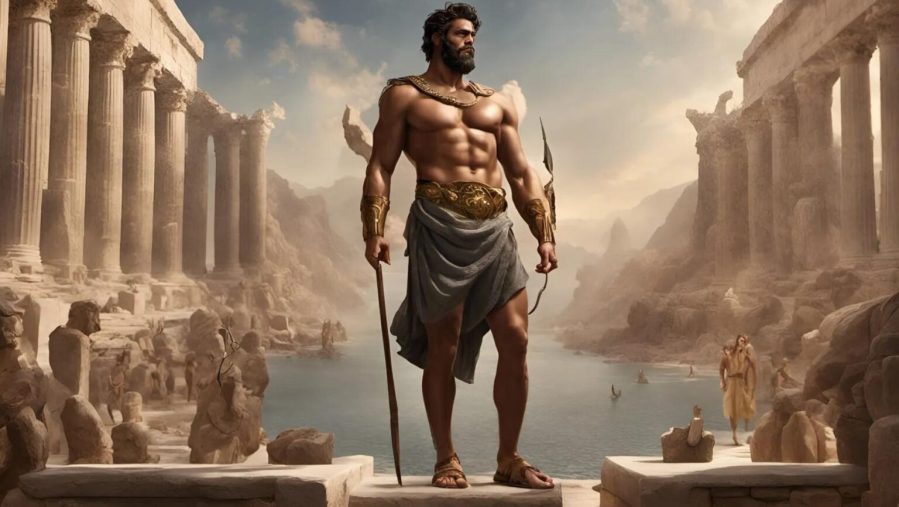
Hesiod’s Age of Heroes is the transition between the Bronze Age in which gods and immortal giants inhabited the world and the current “Age of Iron,” defined by purely human toil and corruption. Based on oral history written down by Hesiod’s fellow poet, following a great flood which wiped out the previous rule of the gods and demigods, these lesser demigods traced their power, not directly from parent gods, but from their lineages of the pre-flood demigods.
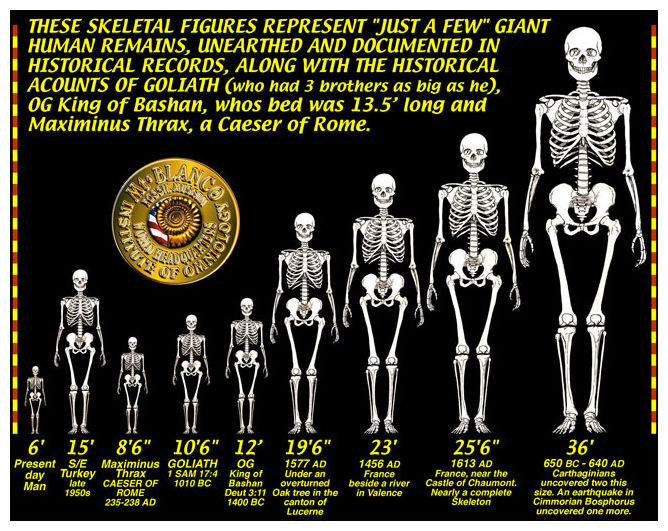
Compelling reports and traces of fierce giants terrorizing the local population are found in virtually every ancient culture.
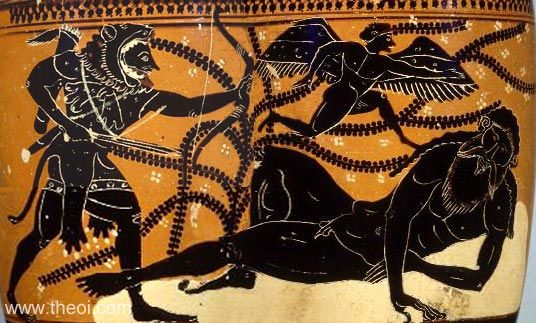
After the original reference in Genesis 6, the same word nephilim is used to refer to giants encountered by the Israelites scoping out the land of Canaan who are identified as being offspring of other giants, not hybrids of angel-human conception.
“We saw the giants/nephilim, the sons of Anak, which come of the giants/nephilim:” (Nu 13:33)
Recognizing that the name Anak expresses the notable attributes of the individual to whom it was first designated, we discover that it derives from the root noun “neck” and the root verb “to suck”. We can link this with Enoch’s description of the pre-flood nephilim as biters, (Enoch 10:13) to conclude that Anak and his descendants were biting into the jugular veins at the neck to suck out the life-blood.

“Why,” you might ask, “would God allow giant zombies to survive the flood when he had just used the flood to eliminate them?” Well, for starters, the flood was not a judgment against giants. The flood was a judgment against the wickedness and violence of humans. The destruction of the giants was collateral damage, fallout from the wickedness of mankind.
“And God saw that the wickedness of man was great in the earth, and that every imagination of the thoughts of his heart was only evil continually…And the LORD said, I will destroy man whom I have created from the face of the earth…And God looked upon the earth, and, behold, it was corrupt; for all flesh had corrupted his way upon the earth. And God said unto Noah, The end of all flesh is come before me; for the earth is filled with violence through them; and, behold, I will destroy them with the earth.” (Genesis 6:5-13)
Obviously “all” flesh means all “types” of flesh, because at least two of every creature, clean and unclean, survived the flood in the ark to repopulate the earth.
Including the hybrid giants who cannibalized pure humans for nutrients not made by their incomplete human genome because that genome proved they were a species of human.
Howbeit, the giants who proceeded from angel fathers killed each other off prior to the flood.
“To Gabriel also the Lord said, Go to…the offspring of the Watchers, from among men; bring them forth, and excite them one against another. Let them perish by mutual slaughter; for length of days shall not be theirs.” (Enoch 10:13)
The phrase “length of days shall not be theirs” explains the purpose for not allowing any giants to survive the flood. The eight persons who survived the flood, along with their first generations of offspring, continued to experience the exceptionally long life-spans genetically preserved by the lessened solar damage of the ecosystem prior to the “windows of heaven” being opened. Any long-lived giant and giant offspring would have wiped out the human race before we got out of the starting gate.
“And they brought up an evil report of the land which they had searched unto the children of Israel, saying, The land, through which we have gone to search it, is a land that eateth up the inhabitants thereof; and all the people that we saw in it are men of a great stature.” (Numbers 13:32)
These panic-stricken warrior spies were not using hyperbole when they reported that the inhabitants were being eaten up.
Anthropological discoveries of cannibalistic raiders are found all around the world.
During the 10th and 11th centuries, Chaco Canyon, in western New Mexico, was the cultural center of the Anasazi, ancestors of the highly spiritual Hopi, Zuni and Pueblo people. The Anasazi built magnificent villages such as Chaco Canyon’s Pueblo Bonito, a tenth-century complex that was as many as five stories tall and contained about 800 rooms. The people laid a 400-mile network of roads, some of them 30 feet wide, across deserts and canyons to connect a population of as many as 30,000 people.
Sand Canyon Pueblo in southwest Colorado 50 miles to the east comprised 420 rooms, 90 to 100 kivas (underground chambers), 14 towers and several other buildings, all enclosed by a stone wall. It was created and abandoned in a lifetime, between 1240 and about 1285. Fifty to 75 other large villages like Sand Canyon were in the Mesa Verde, Colorado, region.
Castle Rock, a large complex of 37 rooms, 16 kivas and nine towers that housed perhaps 75 to 150 people, was built and occupied from 1256 to 1274—an even shorter period than Sand Canyon Pueblo existed. a major massacre ended its occupation.
In the 11th and early 12th centuries there is little archaeological evidence of true warfare, but “There seem to have been goon squads roaming the area as late as 1700. Vivid and grisly accounts have been recently gathered from elders.
Signs that indicate groups of people were killed, butchered, then the flesh cleaned from their bones. Tendons carefully cut away and the meat roasted. Long bones halved, stirred in pots and boiled, with the marrow extracted. Skulls with the top cut out, placed on hearths and cooked. Brains removed.
Turner contends that a “band of thugs”–Toltecs, for whom cannibalism was part of religious practice–made their way to Chaco Canyon from central Mexico. Finally, the Anasazi fled the oppressive cultists and sought safe haven deep in remote canyons. The next time any part of the culture appeared, these Pueblo people were found to have constructed elaborate dwellings adhered to the sheer sides of cliffs.
Generations of scientists have postulated that such suspended villages–located far from water–represented a fear of a great foe.
But about 1250, many of the people began constructing settlements high in the cliffs—settlements that offered defense and protection. Anglo explorers who found them in the 1880s name the absent builders the Cliff Dwellers.
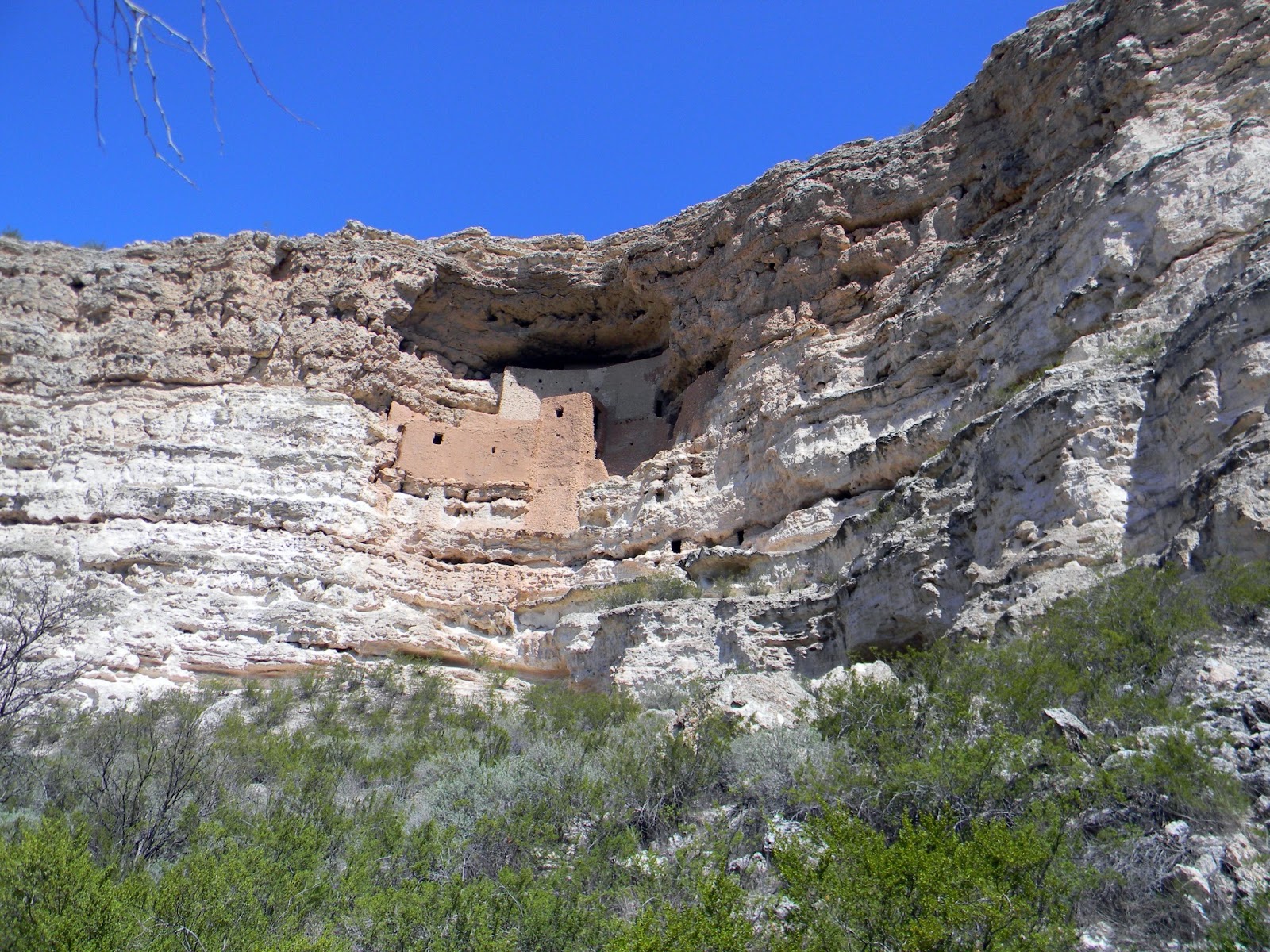
Toward the end of the 13th century, some cataclysmic event forced the Anasazi to flee those cliff houses and their homeland and to move south and east…Today’s Pueblo Indians have oral histories about their peoples’ migration, but the details of these stories remain closely guarded secrets. Within the past decade, however, archaeologists have wrung from the pristine ruins new understandings about why the Anasazi left… “After about A.D. 1200, something very unpleasant happens,” says University of Colorado archaeologist Stephen Lekson.
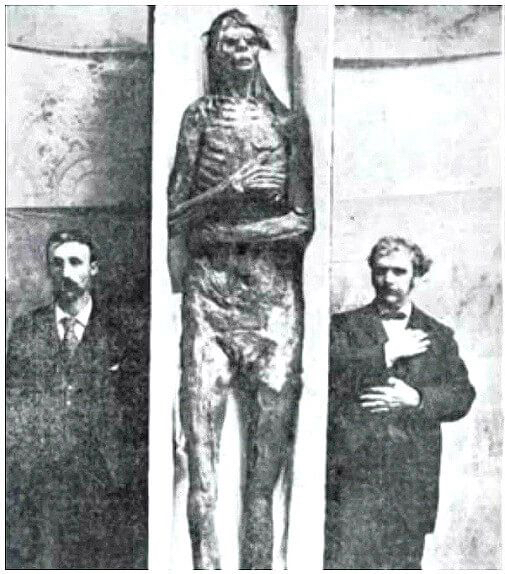 Many Native American tribes from the Northeast and Southwest still relate the legends of the red-haired giants and how their ancestors fought terrible, protracted wars against the giants…
Others, like the Aztecs and Mayans recorded their encounters with a race of giants to the north, i.e. central Mexico, when they ventured out on exploratory expeditions.
They have been unearthed in Virginia, New York state, Michigan, Illinois, Tennessee, Arizona and Nevada.
The Paiutes, a Native-American tribe indigenous to parts of Nevada, Utah and Arizona, told early white settlers about their ancestors’ battles with a ferocious race of white, red-haired giants who stood as tall as 12-feet and ate captured Paiutes as food. All the tribes in the area finally joined together to rid themselves of the giants…
In 1924 when the Lovelock Caves were excavated archaeologists came to the inescapable conclusion that the local history was true when thousands of artifacts recovered, including .two very large skeletons, one 8.5-feet tall and.one nearly 10-feet tall.
Consistent with the biblical reports of hybrid giants resurfacing after the flood, Herodotus’ travelogue through the civilized world of his time c. 400 B.C. reports their continued existence in “the land of giants” in what is now South Sudan. The Makrobioi, “Long-Lifed” were exceptionally tall people with an average lifespan of 120 years. Herodotus also reported the existence of human-animal hybrid Hemikynoi, “Half-Dogs,” Anubis-like people with dogs’ heads, and an entire nation of werewolves in Ukraine.
Pliny the Elder, a Roman writing in the 1st Century AD, relays an earlier report of a tribe of people in that same area of Africa with an average height exceeding twelve feet, which he called Syrbotai. These can certainly be the ancestors of today’s Dinka tribe, whose homeland, in South Sudan, continues to be called “the land of giants”. While loss of height over successive generations is to be expected, the Dinka people are still exceptionally tall in comparison to the other African tribes, and considered to be the tallest people in the world.

In the Roman era, a staff member of Roman Emperor Hadrian (117-138) documented his examination of an embalmed Centaur – half man half horse – that had been killed in Arabia about 100 years previously, embalmed and sent to Claudius Caesar (A.D. 41-54) and maintained in the Empire’s treasury.
Satyrs reported in Roman times are are similar to the Greek fauns, but were more humanoid with vestigial horns and unlike fauns who looked more like their goat father Pan, did not have goats’ heads or legs. As with the shortening height of the giants, this is consistent with increased human percentage of DNA over time in successive generations of fauns breeding with humans. The Greek geographer Pausanias (d. c. 180 A.D.) reported that a live Satyr from Libya was exhibited in Rome. In the 4th Century Saint Jerome reported that Emperor Constantine traveled to Antioch to view the preserved remains of a Satyr.


 Kingdom Come