
Canaan’s people were the ambassadors / evangelists / missionaries for the worship of a universal Seed of the Serpent to draw humanity away from the worship of the one true Seed of the Woman. Any features distinguishing between the gods of the nations can be attributed, not to different individual gods, but language and ecologically based cultural differences as the Canaanite nations were spread throughout the world.
According to the Canaanite pantheon the creator was known as Elion / עֶלְיוֹן “the most high / powerful” Elion was acknowledged by the Canaanites to be the father of the [lesser] divinities. However, in what is clearly the corruption of the sacred union of the Most High God with Jerusalem: “the holy city, new Jerusalem, coming down from God out of heaven, prepared as a bride adorned for her husband.” (Revelation 21:2), the Canaanites presented him as having engaged in a sacred union / marriage with Beruth (Beirut in English), meaning “Our [Canaanite] City”. Each city’s supreme god was likewise grounded to his territory.
- Melqart and Tyre
- Chemosh and Moab
- Tanit and Baal Hammon in Carthage
- Baal Hadad and El can be distinguished amongst earlier Amorites and the neighboring Arameans to the east to have been almost identical in form and function to the Canaanite divinities.
Carried west by Phoenician sailors, ancient Canaanite culture can be seen not only in later Greek mythology but social morals embedded in many people groups.
The Girgasite
The name of this people has been discovered in the Ugaritic inscriptions as grgs and bn-grgs, that is, Girgash and the sons or children of Girgash.They are also known to us in the Hittite documents as the karkm; and in Egyptian records as the Kirkash.
The same multitude of transliterations of the guttural pronunciation is found with Gaddafi / Kadafi / Qaddafi].
The Girgasites settled to the east of the river Jordan between Galilee and the Dead Sea…a tribe known as the Karkisa were mentioned in the Hittite Annals, as existing in Asia Minor. Another rendering of that tribe is Qarqisha. Perhaps they migrated to the steppes near the Caspian Sea which was known as the “Sea of the Girgashites” anciently and thence on to south-east Europe.
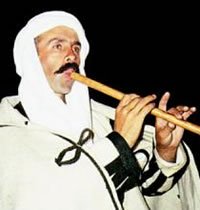 This proposition is substantiated by recent genetic findings of an Albanian people group called the Ghegs who are 72% MENA neolithic farmer and 28% I-E/WHG, where MENA is “Middle east/North Africa” in the genetic analysis of haplogroups.
It appears that the Girgasites were indeed run out of town. The culture of the 20th century European Ghegs provides a window to their ancient culture in the Middle East and the reason why they were driven out of their original homeland.
The Ghegs of Northern Albania are one of only two tribal societies which survived in Europe until the middle of the 20th century. The other consists of the Serb highlanders in Montenegro and southern Serbia whose idealized tribal identity of “a mountain renegade” and self-complimentary stereotype as one who, in a conflict with authority “reaches for the sword”, provoked “the bloodiest war in Europe since World War II”.
This does not bode well for neighbors of the Ghegs.
 Like the Serbs, the Ghegs pride themselves on rejecting any authority other than themselves. The Ghegs are the most faithful supporters of their own set of traditional laws (Kanun). These are based on ancient oral laws which anthropologists including Edith Durham have dated back to the Bronze Age, i.e. immediate post-flood era, linking the Ghegs with the Gergasites.
The most infamous clan laws are those regulating blood feuds.
In Albania blood feuding is a tradition, and has returned in rural areas after more than 40 years of suppression by Albanian communists. More than 3000 Albanian families are currently engaged in a blood feud, more than 1,600 families live under an ever-present death sentence because of them, and since 1992 at least 10,000 Albanians have been killed in them.
Another way they harm the society in which they live is their traditional livelihood of imposing protection rackets. In particular the Gheg clan known as “Tigers of Dibra” had a reputation for intimidating landowners and peasants.

The Hivite
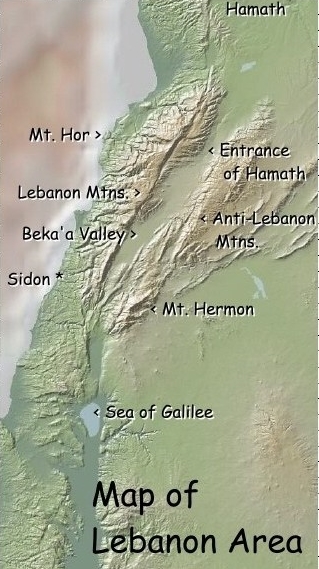
“Known to the ancient Greeks as the Ηευαιος, Heuaios, this people moved to the foothills of Lebanon during the Israelite conquest of Canaan.” This is evident in King David’s census tour of Lebanon.
“And Joab and the captains of the host went out from the presence of the king, to number the people of Israel…and they came to Danjaan, and about to Zidon/Sidon, And came to the strong hold of Tyre, and to all the cities of the Hivites, and of the Canaanites:” (II Samuel 24:4-8)
“…all the cities of store that Solomon…desired to build in Jerusalem, and in Lebanon, and in all the land of his dominion…all the people that were left of the Amorites, Hittites, Perizzites, Hivites, and Jebusites…whom the children of Israel also were not able utterly to destroy, upon those did Solomon levy a tribute of bondservice unto this day.” (I Kings 9:19-21)
But before you get all holier-than-thou against biblical Israel realize that “tribute” is taxation to pay for the benefits of coming under the protection of the kingdom, and bond service is an opportunity to work off a debt that one can’t afford from personal income.
The Hivites were driven out of the Middle East by the Philistines according to Peter Tompkins. Many readers would be familiar with Peter Tompkins’ stimulating work Mysteries of the Mexican Pyramids. In it, Tompkins uses Ordoez, Naez, and native Mexican sources to show that they carried their culture to South America by either sailing across the Atlantic, or being carried there when Pangea broke up “in the days of Peleg” in this timeframe.
The Arkite
These peoples begin the listing of lesser known, undoubtedly smaller Canaanite nations. They named their settlement of Arka / Arqa / Irqata a short distance due north of Damascus. The earliest level of the archeological site dates to the Neolithic, AKA pre-flood, period, another suggestion that Ham’s descendants were all rebuilding known pre-flood prosperous cities.
This city-state was powerful enough to be involved in international affairs, mentioned during the 14th Century B.C. in the Egyptian Annals, and specially in the Egyptian Tell al-Amarna Letters. Hushai the Arkite was a minister in King David’s government and a crucial ally during Absolom’s rebellion. This relationship gives yet another indication of the multinational character of God’s kingdom in the golden age of King David and early days of King Solomon. Hushai is characterized as a counsellor, he may well have specialized in commerce.
The Sinite
Most authorities consider that they settled at this early stage of history in the northern part of Lebanon where there are various localities with similar names, such as Sinna, Sinum or Sini, and Syn. In keeping with the Canaanites’ commercial practices, these are undoubtedly the western posts for eastern trade routes following The Steppe Route, precursor to The Silk Road to Sino-, AKA China.

The Arvadite, AKA Arwad,
These lay claim to a fishing and commercial city in the north of what is now Lebanon (see map of Lebanon above).
The Zemarites
In the Amarna tablets (B.C. 1400) Zemar, or Zumur, was one of the most important of the Phoenician cities, but it afterwards almost disappears from history, leaving behind just a remnant in the town of Sumra, at the western base of the Lebanon range.
The Hamathites
Their original settlement was on the Orontes River in northern Lebanon. “Sargon II of Assyria tells us how he conquered the city, and it was at Hamath that Nebuchadnezzar defeated the Egyptian armies. Like their cousins the Gergasites, the Hamathites migrated to northern Greece and Macedonia, becoming known as the Emathians (in English). The territory they settled became known as Emathia.”
The Perizzites
The name means “villagers” and denotes rural dwellers in contrast to cityfolk. Think Texas ranchers. Abram and Lot herded cattle on Perizzite land.
The Kenizzites
No further mention is found in either scripture or archeological records. They either amalgamated, emigrated or died out.
Kenites
As detailed in the post The Exodus, many of the Kenites absorbed into Abraham’s Hebrew nation through Midian and then Moses during the Exodus so became citizens in the Promised Land. Those who did not join themselves to the God of Abraham were carried away into captivity during the Assyrian conquest of Israel.
The Kadmonites
Minor tribe. There are suggestions that they emigrated.
The Jebusites
These are unknown outside the Bible, probably because they occupied such a small city-state on an seemingly unassuming hilltop. Nonetheless, we can assume that they followed the same guiding principle as their brothers in high-tailing it to a prized pre-flood location. And rather than being unassuming, it was the greatest prize of all.
The Jebusite’s claim was, in fact, nothing less than God’s heavenly gateway to earth.
“And David and all Israel went to Jerusalem, which is Jebus; where the Jebusites were, the inhabitants of the land. And…David took the castle of Zion / Tsiyyon,the stronghold…” (I Chronicles 11:3-67)


 Kingdom Come