
Given its location, the Middle East has always served as the crossroads of empires.
From the beginning of history it has been a battlefield of conquest and culture between the East and the West. Across this narrow bridge the religion, art, and civilisation of the East found their way into Greece; and adapted by the Greeks, the civilisation of Greece passed back again across the same bridge to conquer the East and revolutionise Asia as far as the heart of India.
For the last 5,000 years the Middle East has been the most accessible, ergo profitable, commercial connector between contrasting climates providing desirable products for nations that can’t produce these themselves.
Just one sticking point. The eastern sub-basin of the Mediterranean, known as the Levantine Sea, is surrounded on its three sides by natural barriers.

- To the south in Africa is the vast expanse of the Sahara and Libyan Deserts.
- To the north, in Asia Minor / Turkey are the high and rugged Taurus Mountains, with a mean elevation of 6,500 feet but rising at intervals to 10,000 feet or more.
- To the east is another line of mountains from the Amanus Range in northern Syria to the towering Mount Sinai (8,530 feet) in the south, with a second line of mountains paralleling the first, rising to the imposing height of Mount Hermon (9,020 feet) in the north, beyond which stretch the Syrian and Arabian Deserts to the banks of the Euphrates.
There are only two partial breaches at each extremity of the eastern mountain ranges.
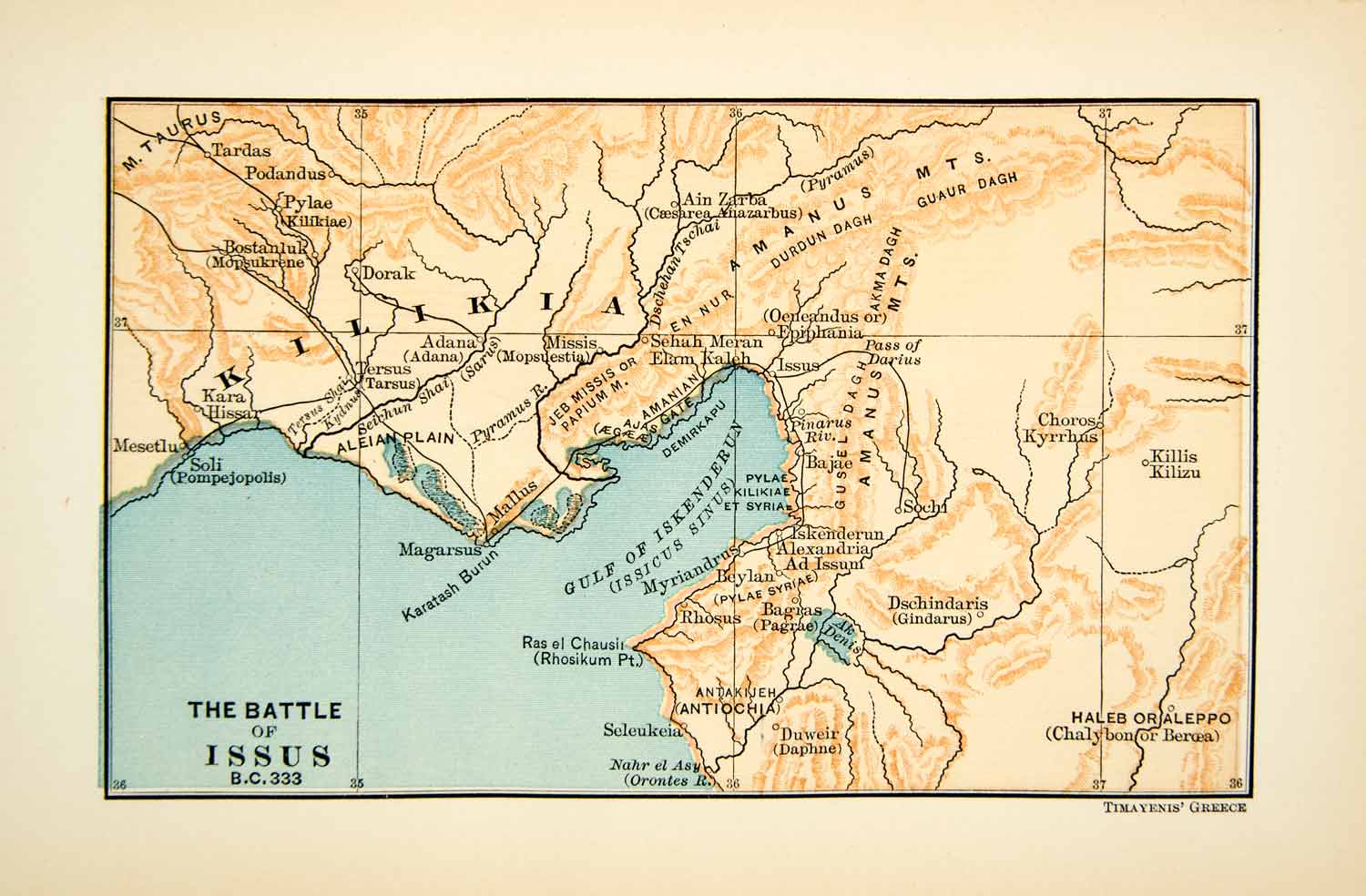
The Gulf of Alexandretta (Iskenderun), the ancient Gulf of Issus, drives a marine wedge fifty miles back into the coast line of northern Syria. The mountain barrier also contracts and drops to the single, relatively low chain of the Amanus Range. This was crossed in ancient times by three pass routes.
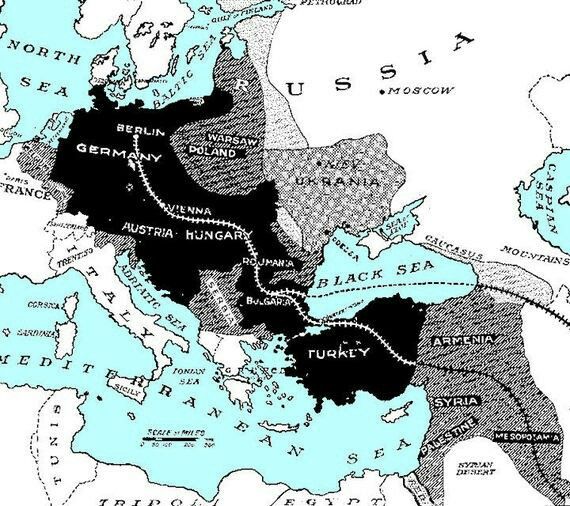
One is the route used for Germany’s Bagdad Railroad during its alliance with the Ottoman Empire.
The second route was used by Darius’ army after being routed by Alexander’s army at the battle of Issus in 332 BC.
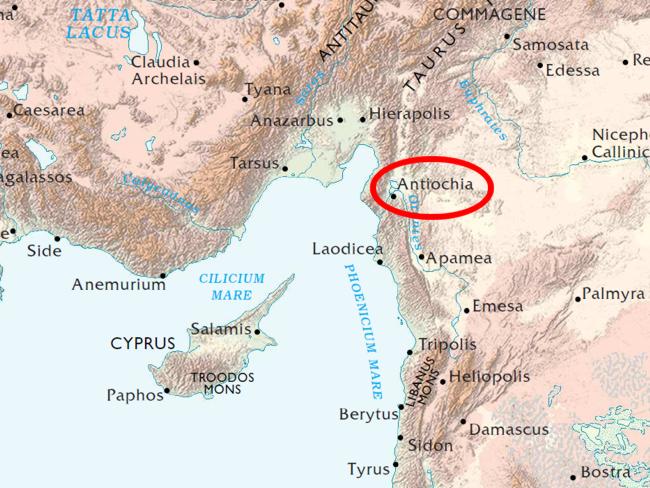 But it was the great pass city of Antioch and its port Selucia which exploited their geographical position as the natural western termini of the great trade route to the East.
On the side – this explains why Antioch was the first city in which pagan Gentiles were evangelized into salvation by YHVH’s Savior. This city and its traveling salesmen were in position to proselytize the entire known world.
There is just 100 miles through a short low section of the Amanus Range, across a grassy plain from Selucia to a western bend of the Euphrates River, giving access to the great valley of the twin rivers, stretching southwest for 800 miles to the Persian Gulf.
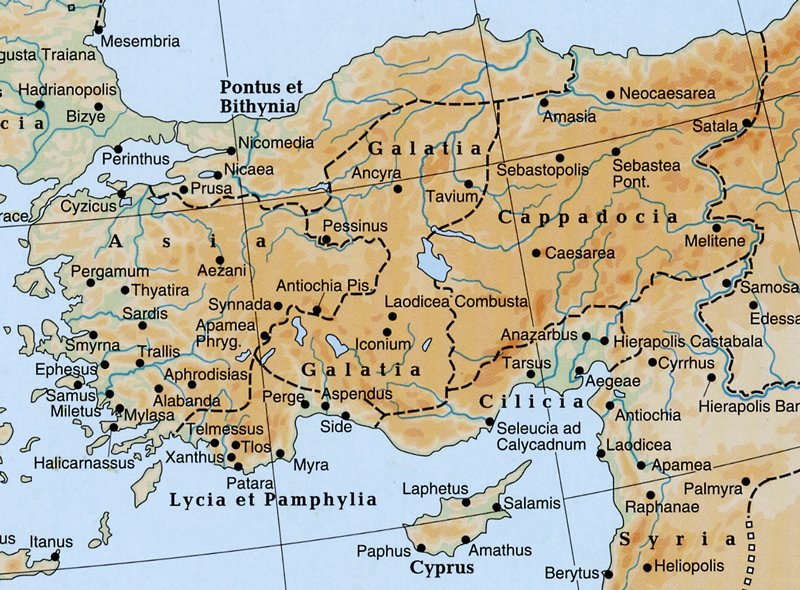
Unless otherwise referenced the following is taken from CHRONOLOGY OF ASIA MINOR (ANATOLIA) 500.000 BC – 330 AD. See the post Father Abraham for more details.

- 10,000 BC – preflood or even pre-human era, Gobekle Tepe, billed as the oldest temple and astronomical observatory in the world. Who but fallen angels would map out their heavenly home world and continually seek a means of returning?
- 3000 BC – preflood era, Troy and Hattusa are established.
- 2500 BC – earliest post flood era, descendants of Heth, son of Canaan son of Ham, settle colonies established by Semite Asshur from home base at Ninevah in Mesopotamia.This is more likely than not following the standard MO of resettling defeated foes to use as slave labor to enrich the empire. Exactly like Europeans resettling Africans on plantations in the Americas or Americans exploiting cheap Asian labor on the cross-continental railroad.
- 2400 BC – brought under sphere of influence of the Semitic Akkadian Empire of Sargon I.
- 1750 BC – 1600 BC – Hittite kingdom – from Heth, hybrid giant son of Canaan – founded and becomes leading power in the Middle East.
- 1500 BC – Hittite king Mursilli “went to Babylon and destroyed Babylon. He took the deportees from Babylon and its goods to Hattusa.”
- 1275 BC – Hittites defeats Egyptians at Kadesh, earliest known international peace treaty which requires Egyptian withdrawal from Syria to allow Hittite hegemony in the region.
- 1250 and 1200 BCE the Sea Peoples invaded, further weakening the Hittites, whose giant genealogy had already been lost and corrupted over 500 years of inbreeding.
- 1112 BC – Assyrian king Tiglath Pileser defeats Hittites in Urartu.
- 1000 BC – Greeks settle permanent colonies on the Aegean coastline of Anatolia.
- 717 BC – Assyria captures fortress of Carchemish and gains control of Anatolia
- 550 BC – Persia takes control of Anatolia under Cyrus the Great, pushes into mainland Greece in 490 BCE but repelled at the Battle of Marathon.
- 400 BC – Xenophon, elected commander of one of the biggest Greek mercenary armies, the Ten Thousand, marched through Anatolia to join Cyrus the Younger’s campaign to claim the Persian throne from Artaxerxes II of Persia.

Although the campaign has gone down in military history as one of, if not the, most spectacularly failed campaign ever, they came close to re-capturing Babylon and Xenophon is still considered a military genius with established precedents for many logistical operations. His detailed campaigns in Asia Minor and in Babylon outlining both military and political methods was used by Cyrus the Great to conquer the Neo-Babylonian Empire in 539 BC and inspired Alexander the Great.

- 331 BC – Alexander the Great reclaims Anatolia for Greece and continues on to conquer Babylon and the Achaemenid Empire in Persia. On his death Alexander’s empire divided up by his four generals who, as well as other kingdoms, engage in constant bloody wars to expand their territory, wealth and power.

- ~300 BC – Antioch just around the bend “in Syria” to distinguish it from the many cities named after her founder throughout Asia, becomes the seat of the head of government of the sixteen provinces of the Seleucid Empire, named for the Alexander’s general whose allotment was the Near East. Its geographical, military, and economic position for the spice trade, the Silk Road, and the Royal Road brought power rivaling Alexandria as the chief city of the Near East.
- At the Seleucid Empire’s height it covered Anatolia, Persia, the Levant, Mesopotamia, and what are now Kuwait, Afghanistan, and parts of Turkmenistan. As happened more recently with English domination, an urban Greek elite formed the political class, and civil and economic investments were reinforced by steady immigration from Greece.
- The empire’s western territories were repeatedly contested with its rival Hellenized kingdom, Ptolemaic Egypt.
- Conflict with Chandragupta of the Maurya Empire led to a political alliance ruled by a dynasty of Emperors named Antiochus 1 – X1I1. Who surnamed themselves Soter / Savior, Theos / God, Epiphanes / God Made Manifest.
- 263 – 230 BC – Rise of Pergamum kingdom which becomes strong ally in Rome’s regional interests against the Seleucid Greeks.
- 189 BC – Seleucid hegemony over Asia ended as in battle after battle Rome methodically incorporates the Hellenized city-states of Asia.
- 130 BC – City-state of Pergamum becomes the first Roman province in Asia Minor.
- 101 BC – Cilicia (southern Anatolia) becomes a Roman province.
- 84 BC – Lycia incorporated into Roman province of Asia
- 81 BC – Pontus annexed into Roman province
- 74 BC – Bithynia bequeathed to Rome
- 64 BC – the last Seleucid king Antiochus XIII Asiaticus executed by Pompey the Great. The Romans make Antioch the seat of the governor of the province of Syria. Antioch was called “the cradle of Christianity” as a result of its longevity and the pivotal role that it played in the emergence of both Hellenistic Judaism and early Christianity. The city may have had up to 250,000 people during Augustan times, but declined to relative insignificance during the Middle Ages because of warfare, repeated earthquakes, and a change in trade routes, which no longer passed through Antioch from the far east.
- 53 BC – 44 BC The Battle of Carrhae (present-day Harran, Turkey), one of the earliest and most important battles between the Roman and Parthian / Persian Empires triggered civil war raging across the Roman world.
- Crassus, the richest man in Rome, funded and led the expedition to win military glory and amass the finances needed for a coup against Republican Rome by the “first” triumvirate including himself, Julius Caesar and Pompey.
- When Crassus was killed and and his legions wiped out, a balance of power could not be maintained between the two remaining powers Julius Caesar and Pompey, and civil war erupted.
- Julius Caesar won, only to be assassinated in 44 BC for his authoritarian ambitions.

- 43 BC – After Caesar’s assassination Caesar’s grand-nephew and adopted son and heir Octavian and Caesar’s military general Marc Antony openly avenged the assassination of Rome’s populist leader while secretly strategizing to complete his transformation of the chaotic and ineffectual Republic into an efficient and powerful Dictatorship. To most effectively wage civil war, they split the over-extended empire into West ruled by Octavian and East ruled by Antony.

- Not surprisingly, their alliance soon imploded into war between rivals for supreme authority.
- 37 BC – Antony logically allies with Egypt’s resources to support his bid, meets with Cleopatra at Tarsus in Asia Minor to form an alliance. Yep, as in “Saul of”.
- 32 BC – Antony the soldier and Cleopatra the queen get married at Antioch, the agreement being that this capitol of the Eastern Roman Empire and the capitol of the Western Roman Empire in Rome would be transferred to Alexandria in Egypt. Rome responds to this outrage by declaring war on Queen Cleopatra’s Egypt.
- 31 BC – Cleopatra and Antony defeated by Octavian at the battle of Actium.
- 30 BC – Octavius visits Antioch to flex his muscles, Cleopatra and Antony commit suicide.
- 30 BC – Roman Senate rewards the man of peace who ended a decade of world war by voting him (with a white stone) into a new political position with higher authority and bestowing on him a new name / title of Augustus projecting his new way / power. He was now Augustus / godlike, the first emperor of the new Roman Empire. Previously only applied to Roman deities of the Empire, this ushered in the Roman Imperial cult.
- A deceased emperor…could be voted a state divinity (divus, plural divi) by the Senate and elevated as such in an act of apotheosis. The granting of apotheosis…allowed living Emperors to associate themselves with a well-regarded lineage of Imperial divi…This proved a useful instrument to Vespasian in his establishment of the Flavian Imperial Dynasty following the death of Nero and civil war, and to Septimius in his consolidation of the Severan dynasty after the assassination of Commodus.
- The imperial cult was inseparable from that of Rome’s official deities, whose cult was essential to Rome’s survival and whose neglect was therefore treasonous. Traditional cult was a focus of Imperial revivalist legislation under Decius and Diocletian. It therefore became a focus of theological and political debate during the legalization of Christianity under Constantine I.
- 29 BC – Ephesus replaces Pergamum as capital of the Roman province of Asia.
- 48-58 AD – Paul naturally crossed the same bridge to revolutionize the West with the Eastern Semitic religion of YHVH’s Savior, leaving behind congregations of believers throughout the Roman province of Asia.
- 70 AD – Antioch becomes the main center of Hellenistic Judaism after the Second Temple is destroyed.
- 379-395 – Theodosius I adopts Christ as the imperial cult figure and Aryan Christianity as Rome’s state religion, anathemizing other Christian doctrine, and perpetuating the Augustinian pagan rites and practices.
- The name Asia Minor (from the Greek Mikra Asia = Little Asia) was first coined by the Christian historian Orosius (l. c. 375-418 CE) in his work Seven Books of History Against the Pagans in 400 CE to differentiate the main of Asia from that region which had been evangelized by Paul the Apostle.
Islam was founded in the mid 7th Century AD, defending the faith of One God against paganism, including the Christian false doctrine of the Trinity and the use of idols in its churches.
This Back To The One True God faith spread rapidly through most of the Roman Empire in the next 100 years. There is no way this hugely significant world-changing religious and political condition splitting the Roman Empire’s territory into two legs is not included in Daniel’s prophesy of world history.
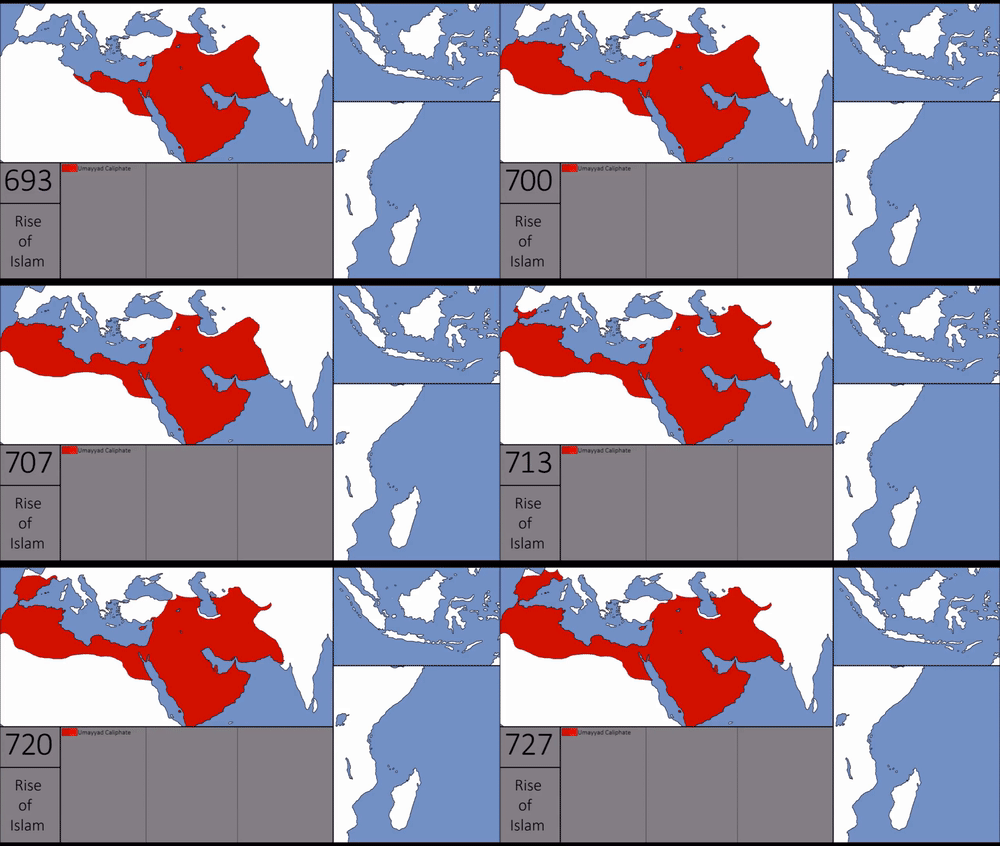
- 5th-11th centuries the Byzantine Empire based in Greece’s Constantinople battled for control of the area against the Arab Islamic Caliphates. The Byzantine Empire referred to the region as East Thema which meant, simply, Eastern Administrative Division, and later sailors called it The Levant which meant ‘the rising’ or ‘to rise’ referring to how the land rose up out on the horizon of the sea.
- 1090 – While one motley crew of illiterate peasants seizing control of a wilderness island at the edge of the known world at the Battle of Hastings was heralded as a great feat, the Seljuq Turks in a whirlwind advance seized control of the most civilized and wealthy territories of what is known today as Iran, Turkmenistan, and northern Afghanistan, and kept on going.

The Great Seljuk empire was made up of an astoundingly diverse range of linguistic and ethnic groups, and religions including Muslims, Christians, Jews, and Zoroastrians in a loose political confederation meeting mutual interests. Like OPEC.
Christianity vs Islam, which together comprise over 50% of world religions, became the main factor splitting the world into two legs along religious lines.
Oh but the Christians are the good guys and the Muslims are the terrorists!
Really?
- “I have raised up one from the north, and he shall come:
- from the rising of the sun [east] shall he [another] call upon my name: and he shall come upon princes as upon morter, and as the potter treadeth clay [crushing the northern king].
Does this make the victorious king righteous because he is UNWITTINGLY doing God’s will?
“Who hath declared from the beginning, that we may know? and beforetime, that we may say, He is righteous? yea, there is none that sheweth, yea, there is none that declareth…
Behold, they are all vanity; their works are nothing…(Isaiah 41:25-29)
What then? are we [Jews / Christians] better than they [Gentiles / Muslims? No, in no wise: for we have before proved both Jews and Gentiles, that they are all under sin; As it is written, There is none righteous, no, not one: There is none that understandeth, there is none that seeketh after God…their feet are swift to shed blood: Destruction and misery are in their ways: And the way of peace have they not known: There is no fear of God before their eyes.” (Romans 3:9-18)

The discovery of oil fueling the 19th century’s Industrial Revolution intensified rivalries between a succession of Western Empires looking to exploit the essential resource found primarily in the Middle East. The Islamic powers can only stay in power by joining forces with one or another of the Great Powers.
The two legs of the Fourth and Last Empire.
As detailed above, the primary passage through the Middle East was through the northern mountain breach. There was a second pass however, to the south, where the Suez Isthmus affords a short and level passage to the Red Sea. However,
- year-round violent northwest winds in the Gulf of Suez and the upper half of the Red Sea,
- a broad belt of coral reefs along the shores,
- desert coasts, and for the most part desert hinterland
all combined to make navigation dangerous for sailing vessels and to reduce the profits of commercial voyages. Therefore, the time and cost of sailing 7,000 kilometres from the Mediterranean circumnavigating the entire continent of Africa to the southern Indian ocean was mandatory.
A canal through the Suez Isthmus, envisioned and even attempted from very ancient times, was only finally realized during Industrial Revolution under the British. And thereby becoming a major asset drawing political, international, and military attention.

The 193.30 km (120 miles)-long Suez Canal is an artificial sea-level waterway located in Egypt connecting the Mediterranean Sea with the Gulf of Suez, a northern branch of the Red Sea, and from there to all points east.
Officially opened in November 1869, the Suez Canal was vital to the British Empire’s economy as it provided a shorter sea route to its colonies and the oilfields of the Persian Gulf.
Britain strengthened its control over Egypt in 1875, invaded Egypt in 1882 sending forces to protect the canal until 1922 following WWI when Britain provided nominal independence to Egypt. In 1936 with the winds of WWII blowing Britain resumed complete control of the Suez Canal, again deploying troops. In 1956 Egyptian President Gamal Abdel Nasser nationalized the Suez Canal which caused the invasion of Egypt by the UK, France, and Israel. It was only after the intervention of the United Nations, the three forces withdrew from Egypt, allowing the country to reopen the canal for commercial shipping.
The Suez Canal is one of the most heavily used shipping routes in the world, witnessing the passage of thousands of vessels every year. According to Reuters, the Suez Canal generated revenue of $5.3 billion in 2017.
Making the Suez Canal an essential asset for any aspiring world ruler.


 Kingdom Come