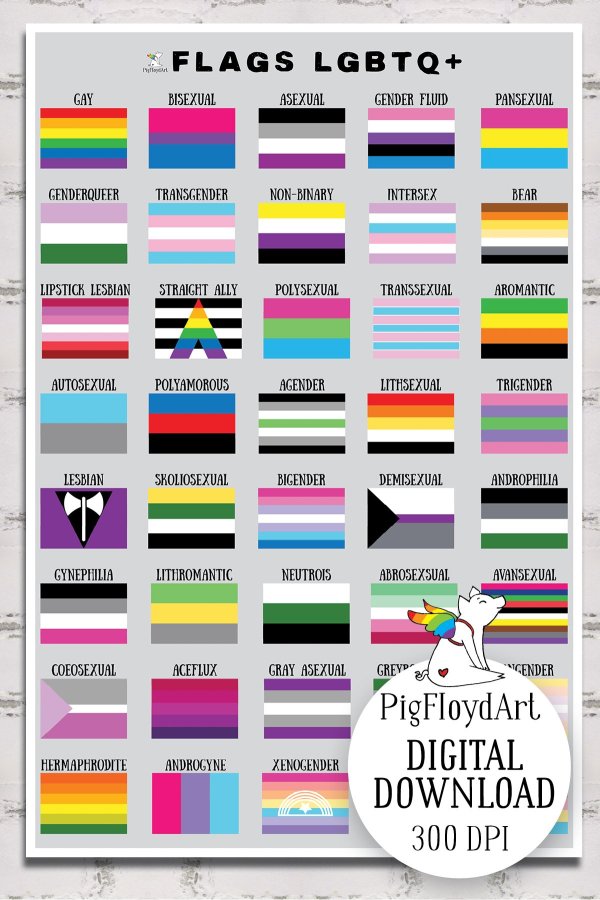
The very definition of LGBTQUIA is updated constantly so current definition has to be discovered via an online glossary collectively built by the LGBTQUIA Resource Center since the early 2000’s: “always evolving and changing and often mean different things to different people.”
This is chaos, exactly as in the chaos energy of the hyperdimensional sea of outer space – always changing and evolving as the energy transfers from one individual to another. As in spirit being sucking the energy out of each other and human beings. See relevant post for details.
One sign of the clear and present danger that LGBTQIA+ poses to society is that the fundamental definitions of psychological reality are being burned.
The Diagnostic and Statistical Manual of Mental Disorders (DSM) is the handbook used by health care professionals in the United States and much of the world as the authoritative guide to the diagnosis of mental disorders. DSM contains statistically derived descriptions, symptoms and other criteria for diagnosing mental disorders. Determining an accurate diagnosis is the first step toward being able to appropriately treat any medical condition, and mental disorders are no exception.
As you read the following example you can use your gut reaction to test your own use of analytical thinking vs blind association with social trends to guide your beliefs. Do you find yourself stressed, distancing yourself from this argument therefore this presenter of the argument, or are you willing to consider all sides of an issue?
- 1952 – the American Psychiatric Association published its first edition of the Diagnostic and Statistical Manual (DSM-1), the definitive criteria for diagnosing behaviors as psychiatric illnesses. At that time it classifed “homosexuality” as a “sociopathic personality disturbance.”
- 1968 the second edition (DSM-2) reclassified homosexuality as a “sexual deviation.”
- 1973 – DSM-III created a new category called “Ego Dystonic Homosexuality”.
- 1987 – DSM-IV completely removed homosexuality by a vote.
In just 35 years the DSM changed from pronouncing adult homosexuality to be a sociopathic condition to being a normal variant of sexual behavior.
There is absolutely no doubt about the fact that the decision to remove homosexuality from the DSM was not based on standard scientifically based diagnostic criteria but for political reasons due to gay activism.
Psychiatrists from the psychoanalytic community did object to the decision, and have repeatedly tried to discredit the referendum’s outcome by declaring, “science cannot be decided by a vote.”
The determination that LGBTQUI+ is a personal and healthy identify choice is not made on the basis of research-based statistical evidence linking cause to effect, and most of all, the baseline criteria of mental health being rooted in reality and expressed in ways and means common with one’s culture.
Take the diagnosis of Schizotypal personality disorder, for just one example. Out of nine criteria in this diagnosis, only five need to be met to determine this mental illness.
Let’s compare the diagnosis and criteria of Schizotypal personality disorder with the self definition of LGBTQUIA+ with it’s self-acknowledged counter-cultural behavior and thought patterns.
- A pervasive pattern of social and interpersonal deficits marked by acute discomfort with, and reduced capacity for, close relationships as well as by cognitive or perceptual distortions and eccentricities of behavior, beginning by early adulthood and present in a variety of contexts,
- Ultimately it is most important that each individual define themselves for themselves and therefore also define a term for themselves.
- as indicated by five (or more) of the following:
- ideas of reference – the false belief that irrelevant occurrences or details in the world relate directly to oneself.
- Womxn: some womxn spell the word with an “x” as a form of empowerment to move away from the “men” in the “traditional” spelling of women.
- odd beliefs that influence behavior, bizarre fantasies or preoccupations
- Transition is the process of taking steps to live as one’s true gender identity…may involve complex changes such as medically transitioning through hormones or surgery, can also involve changing legal documents to match one’s authentic sense of self.
- Bondage and Discipline, Dominance and Submission, Sadism and Masochism not always overtly sexual
- unusual perceptual experiences, including bodily illusions
- Having two genders in one body
- odd thinking and speech (e.g., vague, circumstantial, metaphorical, overelaborate, or stereotyped)
- Cisgender: a gender identity, or performance in a gender role, that society deems to match the person’s assigned sex at birth. A term used to highlight the unfair privilege of people who are not transgender.
- Cissexism/Genderism: The pervasive system of discrimination that oppresses people whose gender and/or gender expression falls outside of cis-normative constructs…cisgender people are the dominant group and trans/ gender non-conforming people are the oppressed group.
- Identifying as transgender, or trans, means that one’s internal knowledge of gender is different from conventional or cultural expectations based on the sex that person was assigned at birth. While transgender may refer to a woman who was assigned male at birth or a man who was assigned female at birth, transgender is an umbrella term that can also descrbe someone who identifies as a gender other than woman or man, such as non binary, genderqueer, genderfluid, no gender or multipe genders, or some other gender identity.
- always evolving and changing and often mean different things to different people
- suspiciousness or paranoid ideation
- As a staff, we’ve been intentionally moving away from using words like “transphobic,” “homophobic,” and “biphobic” because (1) they inaccurately describe systems of oppression as irrational fears, and (2) for some people, phobias are a very distressing part of their lived experience and co-opting this language is disrespectful to their experiences and perpetuates ableism.
- terms, such as ableism and disability, that may not be considered directly related to identities of sexuality or gender… are important to acknowledge as part of our mission to challenge all forms of oppression that affect the multiple, intersectional identities held by members of our community.
- inappropriate or constricted affect
- expressing dysphoria at society’s oppression even when accepted and adored by one’s own social group.
- behavior or appearance that is odd, eccentric, or peculiar
- groomed and dress contrary to genetics or social norms
- lack of close friends or confidants other than first-degree relatives
- LGBT persons defined themselves by their relationships with other LGBTs, not their family of origin, but the essence of the criteria remains the same.
- excessive social anxiety that does not diminish with familiarity and tends to be associated with paranoid fears rather than negative judgments about self.
- Socialization: The process by which societal norms influence a number of aspects that frame how members of a community live – including how they might think, behave, and hold certain values. Socialization can give power to systems of oppression.
- ideas of reference – the false belief that irrelevant occurrences or details in the world relate directly to oneself.
Gay men are famous for rampant promiscuity and loss of self-esteem from abandonment in a social setting where youthful physical attractiveness is king.
Once again we find that every other criteria matches the signs – objective observations of dysfunction vs reported symptoms of distress – of LGBTQUIA+ in Borderline personality disorder.
- unstable or changing relationships
- unstable self-image, including struggles with sense of self and identity
- stress-related paranoia
- anger regulation problems, including frequent loss of temper or physical fights
- consistent and constant feelings of sadness or worthlessness
- self-injury, suicidal ideation, or suicidal behavior
- frequent mood swings
- impulsive behaviors such as unsafe sex and substance abuse
- fear of abandonment
There is clear medical evidence connecting mental illness with transgender identification.
LGB adults [and youth] are more than twice as likely as heterosexual adults to experience a mental health condition. Transgender individuals are nearly four times as likely as cisgender individuals (people whose gender identity corresponds with their birth sex) individuals to experience a mental health condition.
Substance Use
Substance misuse or overuse, which may be used as a coping mechanism or method of self-medication, is a significant concern for members of this community. LGB adults are nearly twice as likely as heterosexual adults to experience a substance use disorder. Transgender individuals are almost four times as likely as cisgender individuals to experience a substance use disorder. Illicit drug use is significantly higher in high school-aged youth who identify as LGB or are unsure of their identity, compared to their heterosexual peers.
Suicide
Many people in this community struggle in silence — and face worse health outcomes as a result.
- The LGBTQI population is at a higher risk than the heterosexual, cisgender population for suicidal thoughts and suicide attempts.
- High school students who identify as lesbian, gay or bisexual are more than four times as likely to have attempted suicide compared to their heterosexual peers.
- 40% of transgender adults have attempted suicide in their lifetime, compared to less than 5% of the general U.S. population.
Inadequate Mental Health Care
While stated as a factual relationship of cause (discrimination) and effect (severe depression), the association of mental and social problems with society’s disapproval of this behavior is statistically a simple correlation. We find one occurring with the other. There is no proof that disapproval is the major reason for mental and social problems, simply a biased opinion that that is the case.
However, when the psychiatric profession’s definitive Diagnostic and Statistical Manual updated version 5 replaced Gender Identity Disorder with Gender Dysphoria / unhappiness this dramatically shifted the cause of the problems experienced by the individual – high rates of homelessness, underemployment, and STD illnesses and AIDS deaths –
- from the individual’s personal choices of gender identity and consequence lifestyle
- to social discrimination – like racial discrimination.
This effectively removes these behaviors from consideration as being, at baseline, “at risk for danger to self or others“, the baseline criteria of mental health being rooted in reality and expressed in ways and means common with one’s culture, and most of all, the opportunity to provide medical – and spiritual – treatment because the solution to the problems experienced by individuals with this diagnosis then is also shifted
- from the individual
- to society,
which must transform itself into a radically gender diverse culture to resolve these individuals’ problems through social support of the individual’s variant sense of self,
“For many LGBTQI people, socioeconomic and cultural conditions negatively impact [their admitted] mental health conditions. Many in the LGBTQI community face discrimination, prejudice, denial of civil and human rights, harassment and family rejection, which can lead to new or worsened symptoms, particularly for those with intersecting racial or socioeconomic identities.”
Wow. This sounds serious. Let’s get down to the statistics.
- 40% of LGBT adults have experienced rejection from a family member or a close friend.
I’m not being a smart aleck when I question the value of this statistic. Are you trying to claim that the other 60% of LGBT adults have not experienced any rejection at all for any other reason? Are you trying to claim that significantly less than 40% of straight adults have experienced any rejection for reasons other than sexuality?
Scientifically, unless you can prove these claims to be true, then the rejection experienced by LGBT can’t be the reason they have more mental health problems than straight people because both populations experience rejection. We have to compare apples to apples, not fruit to vegetables. (Lighten up, take a joke. After all, fruit is more well-liked than vegetables.)
- A 2022 report from The Trevor Project found that just 37% of LGBTQ youth identified their home as an LGBTQ-affirming space, i.e. 63% said they weren’t affirmed at home.
Seriously? Feeling alienated is the gold standard for defining the teenage years. Or to quote the experts: Alienation is common among teenagers.…Adolescent alienation is only considered a symptom of a problem if it accompanies other disorders, such as a phobia or a personality disorder. See DSM diagnoses above requiring multiple criteria.
More significantly, this study on LGBTQ youth reporting that 37% of LGBTQ youth report affirmation at home contrasts sharply with a study showing that over 50% percent of teens in general report they suffered either emotional or physical abuse at home.
There is insufficient epidemiological evidence to blame lack of social support for causing the self-harming behaviors endemic to the LGBTQ+ population.
Laying behavioral, mental and personality problems at society’s door fails to provide appropriate treatment for the individual so perpetuates the individual’s problem while also promoting the latest fad for young people looking for a more interesting identity than reality provides.
Thousands of children in the United States now openly identify as a gender different from the one they were assigned at birth, their numbers surging amid growing recognition of transgender identity…placing them at the center of a vitriolic national political debate over what it means to protect youth who identify as transgender.

At least 121,882 children ages 6 to 17 were diagnosed with gender dysphoria from 2017 through 2021.
Gender dysphoria is defined as the distress caused by a discrepancy between a person’s gender identity and the one assigned to them at birth.
Gender-affirming care for youths takes several forms, from social recognition of a preferred name and pronouns to medical interventions such as hormone therapy and, sometimes, surgery. An increasing number of U.S. children diagnosed with gender dysphoria are choosing medical interventions to express their identity and help alleviate their distress.
These medical treatments don’t begin until the onset of puberty, typically around age 10 or 11.
The ultimate step in gender-affirming medical treatment is surgery, which is uncommon in patients under age 18. Among teens, “top surgery” to remove breasts is more common than genital surgeries.
The White House has been a top national advocate for irreversible gender transition procedures and drugs for children in the country, despite the fact that there is little evidence the interventions work, and a growing amount of evidence that they are actually harmful.
The Human Rights Campaign, the nation’s largest and most powerful gay lobby, also threw their support behind Kamala Harris saying she would be a trusted activist for their priorities in office.
The following fact-based perspective from experience contrasts sharply with the social scientists’ failure to engage in scientifically conducted research.
Written 2023
Gay men in America currently enjoy more freedom and acceptance than at any time in our nation’s history. But while not everyone in the gay community is willing to admit it, there is a significant “party” culture that inhabits the homosexual community in America and still lies outside the mainstream of American culture.
The “Party and Play” scene has been growing in popularity over the past decade…generally organized on Craigslist or other websites feature intense drug taking and sex with multiple partners. There is a “community feel” to the use of crystal meth and other drugs…that makes it difficult for many gay men to abstain or seek out drug rehab treatment. Many rehab facilities report high levels of relapse among gay men because they fear being ostracized from their peer groups or being unable to take part in the social activities that they enjoy. Because drug addiction is a group problem, it is up to the gay community as a whole to change the behavior of its citizens. Until this community stands up and says “crystal meth is bad” in a committed, organized way, the levels of addiction – and subsequent health problems – will continue on at a high level.
Only behavior changes can change suffering caused, most of all, by a lifestyle that intrinsically, invariably, incessantly, inevitably channels the individual into isolation, bereft of the resources only obtainable through stable relationships made and nurtured throughout a lifetime of commitments to partners and families and society.
The evidence is piling up that the gay lifestyle is a positive loop system that, like a rope winding around and around your body, begins with one turn, one taste, one trial of a new experience and through the dopamine rush released in the full package of experienced risk taking, drug taking, even pain, binds the gay individual not with ties to a partner who supports and empowers but to a serial killer.


 Kingdom Come