

–National Gay and Lesbian Task Force Policy director,
Paul Ettelbrick (Kurtz, 2003)
Michelangelo Signorile describes the campaign “to fight for same-sex marriage and its benefits and then, once granted, redefine the institution completely–to demand the right to marry not as a way of adhering to society’s moral codes, but rather to…radically alter an archaic institution.”
It must be remembered that in the gay world the only real criterion of value is physical attractiveness…The young homosexual will find that his homosexual brothers usually only care for him as a sexual object. Although they may invite him out to dinner and give him a place to stay, when they have satisfied their sexual interest in him, they will likely forget about his existence and his own personal needs.
This is the antithesis of “society” defined as a group in which the vulnerable are protected and cared for by the stronger.
The Problem Of Sexual Sameness
In homosexual sex, the “body parts don’t fit.” Therefore sex must be “individually enjoyed rather than mutually experienced” (p. 214) by a technique of “my turn – your turn” (p.214) and “you do me, I do you.” (Masters and Johnson, 1979). Where orgasmic episodes are experienced separately, considerable discussion is required for their negotiation…
This “new order” approach advocated by gay activists is part of a general cynicism toward mainstream values and the… Judeo-Christian influence in society. His work in the social-science literature reveals a deep hopelessness about the possibility of enduring relationships, either homosexual or heterosexual…
For additional data, see “Romantic Relationship Difficulties,” (pages 70-71), “Interpersonal Relationships,” (page 80-81) and “Promiscuity as a New Social Norm,” (pages 81- 83), in the Journal of Human Sexuality, Vol. 1, 2009, published by NARTH, www.narth.com.
The desire for sexual fidelity in relationships and the benefits of such a commitment are universal. In the long history of man, infidelity has never been associated with maturity.
From this perspective, the essence of homosexuality is not about the sex act.
It is the smothering of the maturation process, begun at puberty’s first step of gaining sexual capacity, regardless of whatever chronological age a man might be stuck in hedonistic self indulgence, eliminating vital members of society in adult roles of responsibility for others in family relationships, undercutting society at its very foundations.
Homosexuality is in total opposition at every level of relationship in heterosexual bonding’s objective of existential transformation from an autonomous being into a blended unit where two become one in all aspects of being, and one’s goal in life reverses course from self indulgence for the short term of your own life to self sacrifice for the well being of your spouse and offspring for infinite generations of life of all of society.
McWhirter and Mattison believe that gays must redefine “fidelity” to mean not sexual faithfulness, but simply “emotional dependability.”
How can a relationship without sexual fidelity remain emotionally faithful? Fidelity as such is only an abstraction, divorced from the body. The agreement to have outside affairs precludes any possibility of genuine trust and intimacy.
Since part of the compulsion of homosexuality seems to be a need on the part of the homophile to “absorb” masculinity from his sexual partners – thereby depleting this resource from his partner – he must be constantly on the lookout for new partners.
- Sexual promiscuity is one of the most striking, distinguishing features of gay life in America
- Only 1 percent of the sexually active men had had fewer than five lifetime partners.
- The average number of new partners was several dozen a year
- Almost half of the white homosexual males said that they had had at least 500 different sexual partners during the course of their homosexual careers,
- 28 percent of homosexual males had had sexual encounters with one thousand or more partners.
- 79 percent said more than half of their sex partners were strangers as a result of attaining the maximization of numbers of partners and orgasms going to places known for a particular clientele and immediate consummation
- the most successful homophile “marriages” are those where there is an agreement between the two to have affairs on the side while maintaining the semblance of permanence in their living arrangement.
- In the gay world the only real criterion of value is physical attractiveness.
- Aging is also viewed particularly negatively in the homosexual culture,
- The young homosexual will find that his homosexual brothers usually only care for him as a sexual object. when they have satisfied their sexual interest in him, they will likely forget about his existence and his own personal needs
- Despite intense longing for relationships with stability, sexual continuity, intimacy, love and affection only one couple in one study had been able to maintain a monogamous relationship for ten years.
- Sexual activity outside the relationship often raises issues of trust, self-esteem, and dependency.
It really seems to me that MSM are blind to their own self-destruction in this latest program to clear out those deemed to be of no value to the elite through the entire health-deteriorating package of their lifestyle.
Sexually transmitted diseases (STDs) are a major public health problem in the United States. Nearly 12 million Americans are infected with an STD annually; approximately 43 million have viral STDs, which cannot be cured and thus infect the individual for life.1 For virtually all STDs, the number of documented cases has increased in the last 10 years.2 The number of Americans infected with the human immunodeficiency virus (HIV), for example, has increased steadily since the 1980s, and in 1993, more than 40,000 U.S. residents died from AIDS-related illnesses.3 Further, STDs cost society more than $3.5 billion each year.4
This alone constitutes a public health problem.
During the last century, extraordinary medical advances in the ability to diagnose STDs have not led to tremendous success in controlling them. For example, even though penicillin has been an important and effective part of the public health campaign against syphilis and gonorrhea for more than 40 years the incidence rates of these infections have risen dramatically in some populations. Social changes like overwhelming acceptance of nonmarital sexual behavior overwhelm the effects of medical treatments.
The reality of health care is that changing human behavior is the only effective prevention and cure for disease. Medicines can help, but they only work with a functional immune and metabolic system.
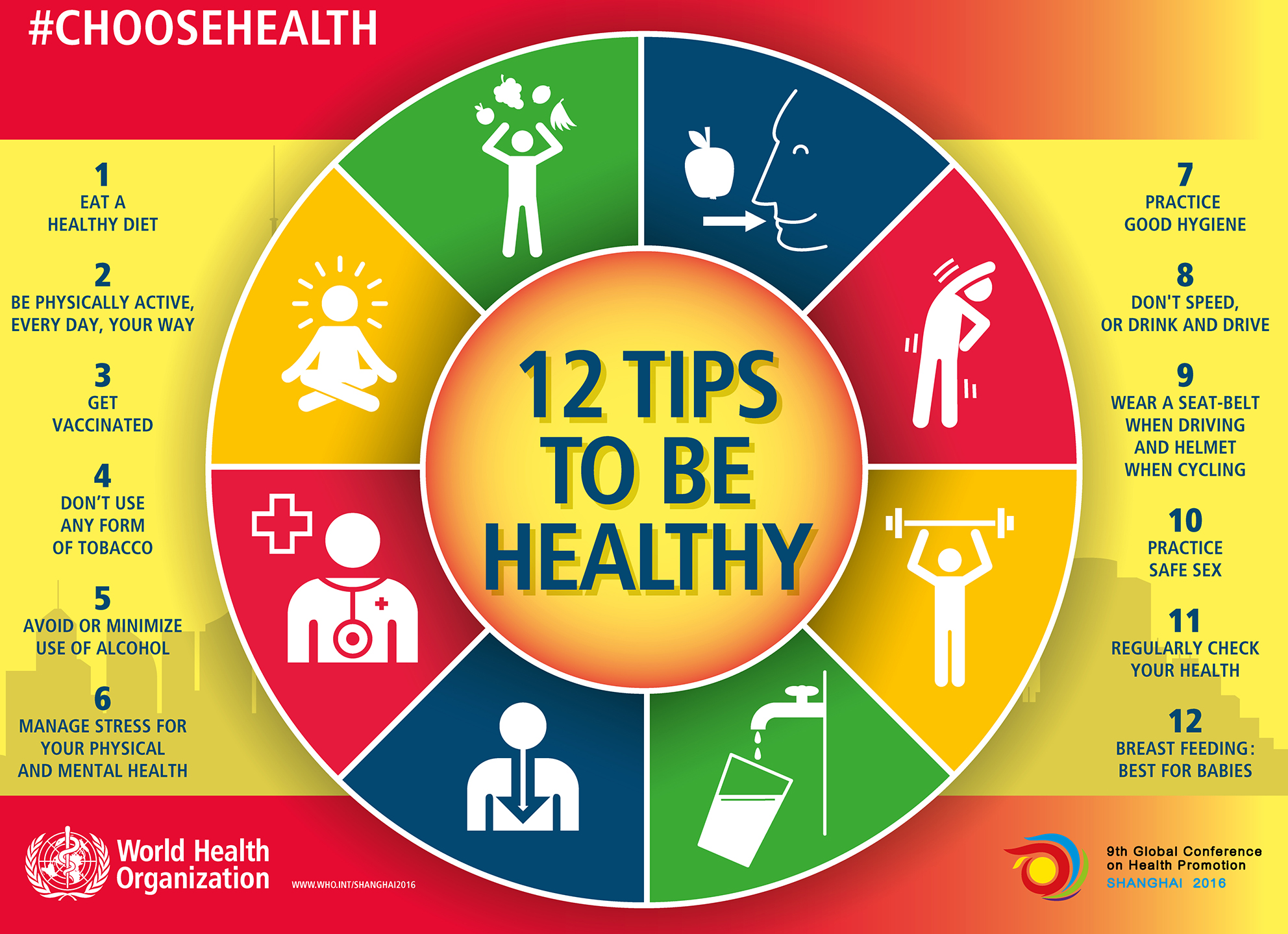
Examination of 20-39-year-old men’s sexual and health care behavior and behavior changes following the diagnosis of an STD confirm the role of behavioral factors in the persistence of STDs in the United States. Sizable proportions of the men in the study continued to have sex while they were infected, did not tell their sex partners that they were infected, did not return to their doctor to be rescreened following therapy and did not change their sexual behavior or condom use in any way.
The spread of STDs among men who have sex with men (MSM) has been labeled a syndemic because in this population a number of different and interrelated health problems have come together and interact with one another. The various elements of the syndemic have an additive effect, each one intensifying the others.
A blind acceptance of newly minted explanations that socially aberrant behaviors are “free choices” or rooted in “genetics” ignores the reality of experience molding patterns of behaviors.
The cause – effect perpetuation of sexual abuse is well established. A society that protects its vulnerable members has to put restraints on aggressors and provide care for its victims.
Men reporting childhood sexual abuse were 8 times more likely than unabused men to be involved in prostitution, 2.4 times more likely to have multiple partners, and 1.2 times more likely to have anonymous partners, more likely to engage in unprotected sex, to exchange sex for money or drugs, and to be HIV or syphilis positive.
The availability of the internet is known to have caused a surge in sex additions and grooming of children into sexual partners by pedophiles.
According to one physician, 75 percent of his gay male patients have experimented with illegal substances to make it possible to engage in the sexual excesses of the gay community, including weekend-long circuit parties.
Drugs lead to disinhibition, feelings of invincibility, and unsafe sex.
Ecstasy or MDMA (crystal meth) acts as a stimulant and a hallucinogen, gives users a sense of well-being and sensory distortion…it is cheap and can keep a user high for 48–72 hours at a time…addiction to crystal meth is difficult to overcome…
[Inhaled] poppers, a slang term for nitrites (amyl nitrite, butyl nitrite, isopropyl nitrite, and isobutyl nitrite) “more than double[s] the receptive partner’s risk of HIV infection during unprotected anal intercourse…” [because it relaxes the greater accommodating of anal intercourse leads to greater trauma of the mucosal lining].
Viagra or other drugs prescribed for erectile dysfunction are used to facilitate multiple sexual encounters, creating risk of cardiovascular damage.
Everything You Need to Know About Poppers and How to Stay Safe
Their popularity among the LGBTQ+ community has made them as much of a cultural artifact as a widely-used drug. From their frequent appearance in the original Queer as Folk to their strong presence at Pride events and gay clubs, poppers are well embedded in queer spaces.
When their fumes are inhaled, they can relax smooth muscle tissue, including the muscles found in the anus.
Ahh, that’s the politically correct way of saying less painful.
Do you like getting jackhammered till your hole is raw? Do you take pleasure in your partner’s pain—turned on by their moans during rough sex?
Within popular culture anal sex has moved from the world of pornography to mainstream media. It is no longer considered an extreme behavior but increasingly portrayed as a prized and pleasurable experience. The proportion of 16- to 24-year-olds in the US engaging in heterosexual anal intercourse has risen over recent decades from 30% to 45%. Women have less robust anal sphincters and lower anal canal pressures than men. Studies in the UK reveal that women are suffering injuries and other health problems as a result of the growing popularity of anal sex among straight couples.
what makes our community tick when it comes to pain between the sheets.
- 36% said that they have enjoyed pain during anal sex.
- “I enjoy the pain because it puts me in a submissive head space. I feel like I’m being used for someone else’s pleasure.”
- as the result of pinching/twisting/hair pulling/flogging/restraint that is part of sex but not from anal penetration
- “Fast, deep ‘pounding’ rough sex with pain as the side effect
- the intensity is high and my senses feel like they’re on overload
- aroused by a partner’s pain / submission (“I like to make my bottom moan while I rough fuck him.”
So the new social order is all about BDSM.


 Kingdom Come