
When Jeremiah’s and Ezekiel’s preaching to the conquered and ravaged nation of Judea failed to bring about the critical mass remnant of repentance to God by the Babylonian Empire, Daniel laid out the consequences.
More chastisement to come through three more Satanically controlled brutal empires on the grounds that “whomsoever ye yield yourselves a servant to obey, his servant ye are, whether unto death…”
The first message was given through Nebuchadnezzar’s dream of the image depicting a total of four world empires on earth from the purest form of power by the ruler, degrading to interior qualities of economic wealth and therefore power.
The second message was given through Daniel’s dream of four beasts / alien beings arising from the chaotic “sea” of energy surrounding the earth, the abode of spirit beings.
These are overlapping perspectives of the same world history, the human and the spirit, in combination the hybrid god-men for those who have eyes to see.
“Daniel spake and said, I saw in my vision by night, and, behold, the four winds of the heaven strove upon the great sea [of the heaven]. And four great beasts came up from the sea, diverse one from another.
- The first was like a lion
- a second, like to a bear…and they said thus unto it, Arise, devour much flesh
- another, like a leopard…and dominion was given to it.
- a fourth beast…devoured AND brake in pieces, i.e. like a toddler in a temper tantrum, destroyed without benefit
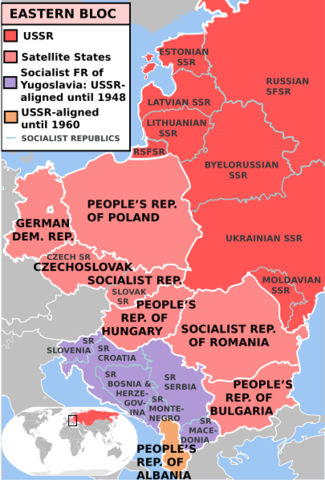
The phrase “devoured” indicates that each successive empire incorporates the previous empire into an ever-expanding territorial reach under its rule. Think Communist Russia’s incorporation of eastern European nations into the USSR after WWII.
Daniel’s detail is unparalleled in prophetic literature and can be used to identify the players until the end of time.
1792 BC, taking over ‘the country of Akkad’, Hammurabi rules over the empire of “Babylonia” from Babylon. His reign is detailed in the relevant post.
1595 BC – 1155 BC Hittites in Asia Minor, modern day Turkey, sacks and takes rule over Babylon.
~1300 BC Aeneas, a prince of the city of Troy in Asia Minor, a hero, i.e. carrying the genes of a pre-flood demigod, and possessed by the spirit of Aphrodite / Venus. after the sacking of Troy traveled to the western frontier of civilization where, after consulting the he founded the settlement that would become Rome.
1220 BC – 729 BC Babylon is under Neo-Assyrian control ruling from Ninevah.
753 BC – on the Italian Peninsula Rhea, daughter of a rustic king, is impregnated by hybrid carrier of the spirit of the god of war, Asshur / Roman Mars and gives birth to the twins Romulus and Remus. After killing his rival brother, Romulus founds his eponymous capitol city of Rome. In what was a common practice at that time, he ensured the continuity of his tribe by the Rape of the Sabine Women. The westernmost location of this primitive outpost of Mesopotamian civilization delays the rise of Rome as an international force to be reckoned with.
612 BC Assyrian Empire obliterated when its capitol and most dazzling city in the world, Nineveh is sacked and burned and buried by combined forces of Babylonians and Medes, not to be unearthed until the mid-19th century
605 BC Nebuchadnezzar becomes king of Babylon, capitol of the Neo-Babylonian Empire.

539 BCE Babylon is conquered by Cyrus of Persia who incorporates it into the Medo-Persia Empire.

509 BC – overthrow of the Roman kings by the early Roman Republic res publica: “thing of the people”, rule by representatives chosen by citizens entitled to vote. We should recognize that the Romans weren’t expelling the rule of a human dynasty. They were expelling the supervision of a national divinity over humans. The democratic Greeks and republican Romans were Humanists, assuming human jurisdiction over determining right and wrong, rewards and punishments. This republic lasted for about 250 years, the same time period as 1776 – 2026.
450’s BC – Due to unrest by the majority of the population losing out on the wealth, the Decemviri / Commission of 10 men prepared 10 tables of law based on the laws of Athens, which established the foundation for all subsequent Roman law. However, no real power was shared under an increasingly powerful aristocracy who took the law into their own hands.
400’s BC – Greece creates the foundations of uniquely western civilization in all domains of culture, including philosophy, music, drama, rhetoric and even a new politics called democracy / rule of the people, changing the history of the world to a Western rather than Eastern orientation.
331 BC Alexander the Great wins the last Greco-Persian war and incorporates Persia into Greece, ruling from Babylon, amalgamating Western and Eastern into a one-world culture.

168 BC and onwards, the Romans army moves east, first absorbing Greek city-states and Anatolia/ modern Turkey, still a major economic crossroads for war and peace between East and West.
133 BC – The Gracchi brothers were well-born yet eloquent advocates for social reform in Rome. Foreshadowing John and Robert Kennedy, they were both assassinated by a reactionary political system, precipitating a series of domestic crises which are viewed as unsettling the Roman Republic and contributing to its collapse.
64 BC Pompey incorporates Babylon as the eastern-most boundary of Rome.
45 BC Julius Caesar becomes dictator of Rome during widespread civil unrest and international war (think de facto President Trump’s political actions) but is assassinated one year later by one of his closest associates.
27 BC After 14 years of world war by the disputing claimants for Rome’s crown of Imperator / Successful Commander-In-Chief, Caesar’s Chosen Heir Octavian wins and is duly elected to the offices of consul and censor and granted permanent privileges as princeps senatus (leader of the Senate) and the religious office of pontifex maximus (chief priest of the College of Pontiffs). It had long been the custom for a general to be hailed with shouts of “Imperator!” / Victorious General after a notable battlefield victory, but Augustus took this as a permanent part of his formal name, and it transmogrified into “emperor”.
Next Octavian took on a plethora of titles, none of which individually seemed autocratic as they had republican or culturally acceptable grounds, but which collectively bestowed unprecedented status and prestige upon him.
These allowed Octavian achieved an extraordinary concentration of what had been separate powers and offices that were extant in the Republic, while maintaining the illusion that the Republic remained intact because these offices remained intact, and the powers of these offices remained attached to his successors.
The most interesting was the title of Augustus, bestowed upon Octavian by a vote of the Senate. While this term was commonly used to describe someone as “godly” in the sense of a deeply pious individual, it was also applied to deities. Augustus wanted to be seen as a god and after his death was in fact included in the Roman pantheon.

Likewise, the honorific princeps civitatis, embodies contradictory meanings that can be viewed alternately as expressions of modesty or self-aggrandizement.
Augustus also had bestowed upon himself the title Pater Patriae, meaning “Father of the Country. This seems like a warm and fuzzy acknowledgment that he cared deeply about his metaphorical children, however, in Roman culture, the father was a figure of enormous authority and dignity who wielded absolute power over the members of his family—even to kill them.
Under Augustus / god-man, Pontifex Maximus became the ultimate ruling title, also held by his successors until Gratian surrendered it in AD 382 to Pope Siricius.
Augustus himself, not any vote, chose and actively prepared his successor, as did all the Roman emperors.
66 AD The Roman Emperor Nero visited Greece where the rules against non-Greek participation were waived on his behalf. Performing in every contest at the Olympic Games, he was honored with a victory every time, (think coveted Nobel Peace Prize) returning the favor by proclaiming the freedom of the Greeks, which changed their status from conquered peoples to citizens in a One World Government.
166 AD Trajan incorporates Babylon into the Roman Empire, profoundly influencing Rome’s religion into a New Age by adopting or and aligning several Babylonian deities into their pantheon, such as the goddess Ishtar syncretized with Venus, incorporating celebrations and adapting rituals, and adopting Babylonian advanced astrology in zodiac signs and divination methods.
285 AD The Crisis of the 3rd century, a fifty-years period during which the Empire nearly collapsed from invasion, civil war, plague, and economic depression, the first division of governance of the Roman Empire – not the empire itself – was made. Emperor Diocletian, the notorious persecutor of Christians, formed an administrative federation as the Tetrarchy, or Four [Under-]Rulers, equivalent to State Governors.

You know the Christians were expecting Christ’s return at any moment back then. And didn’t Constantine show up and save the day.
324 AD – During the Crisis, a child was born, a son was given: and the government was put upon his shoulder: and his name was called Wonderful, Counsellor, The Prince of Peace, The Everlasting, Undeviating, Constant-ine – all characteristics of Apollo, Make no mistake, this was deliberate. Constantine’s father had raised himself up by his bootstraps to the rank of Augustus / god-endowed senior emperor and after his death, Constantine emerged victorious in a series of civil wars against rival Emperors to become sole ruler of the Empire, thus beginning a New World Order under the Roman Empire as Constantine the Great. Constantine relocates the primary seat of Roman government to the bridge between East and West, naming the new Roman capitol after himself as Apollo / the Constant One.

So that would be Nebuchadnezzar’s two-legged feature of the fourth empire, right? Legs of iron: Rome and Constantinople…
 No it would not.
The terms Western Roman Empire and Eastern Roman Empire were coined in modern times. The Roman Empire remained a single polity governed by two geographically separated imperial courts as an administrative expediency.
476 – the barbarian Odoacer deposed the sitting Western Emperor Romulus Augustus Zeno, who left behind no named heir (“the Caesar” like the British “Prince of Wales”) to the Western half of the Roman Empire.
Ostensibly Bible-believing conservative Christians believe that the Roman Empire ceased to exist.
In the prophetic eyes of God, the Roman Empire…fell from world dominion but…a confederacy or union of leadership will arise out of a revival of the remains of the Roman Empire to step into the prophecy role that leads to fulfillment of the Last Days prophecies.
The European Union has risen up from the remains of the Roman Empire so to lead the world into the Great Tribulation.
However, biblical prophecy indicates a continuation of this fourth kingdom to the end of human rulers when the stone cut out without hands destroys them all. If this can be believed – and it is certainly credible given the Bible’s track record on foretold history for the last 2,500 years – this fourth beast must have left a trail of his scat.
It is simply our failure to recognize its essential features, despite changes in territory, incorporation of different cultures, even name changes, that leaves us unsuspecting victims of stalking and sudden destruction.
The fact is, when the barbarian Odoacer deposed the sitting Western Emperor Romulus Augustus Zeno he wisely restrained his ambitions to only being crowned King of one state in the Empire. Exactly like Herod, who had been King of Judea,
The Senate in Rome sent an embassy to the Eastern Emperor and bestowed upon him the Western imperial insignia. The message was clear: “the West no longer required a separate Emperor, for “one monarch sufficed [to rule] the world”. In response, Zeno accepted his submission… conferred upon Odoacer the title of Patrician and granted him legal authority to govern Italy in the name of “Rome” / i.e. Constantinople.
Odoacer settled so many Germanic tribes into Roman territories, granting them Roman citizenship, that he and his successors were henceforth called the “King of the Germans.”
Now there’s a clue. 
Odoacer’s coins struck in the name of Emperor Zeno, testifying to the formal submission of Odoacer in the West to Zeno in the East.

527-565 Emperor Justinian in Constantinople devoted his reign to restoring Roman rule to all its old expanse, much of which had been seized by Germanic tribes fleeing the Hun invasion of their northern European homelands. Justinian’s general, Belisarius, considered an equal with such military genii as Alexander, Julius Caesar and Napoleon, took northern Africa from the Vandals, reclaimed Italy from the Goths, and fought the Persians.
The Code of Justinian systematized the confused accretion of Roman laws and remained in force for a thousand years, becoming the foundation of all modern European and Neo-European (American, Canadian, Australian) legal / i.e. political systems.
800 on Christmas Day Pope Leo III crowned King Charlemagne of the Franks the Roman emperor of the West in return for political protection, while the Byzantine Empire was still ruling the East from Byzantium. Charlemagne moved his capitol from Rome to Aachen, Germany.
But it’s not finished until the Christ returns to face off mano a mano with Antichrist.
So the question is, what is the current manifestation of the Roman Empire, and how does its relationship with Israel line up with prophecy?


 Kingdom Come